Free GPT, Claude, and Grok in China Without a VPN? Think Twice About This AI Aggregator Site

Debunking a viral Chinese video promoting fake "free AI access" sites with fabricated model versions.
A viral Bilibili video claims to offer free, VPN-free access to GPT 5.5, Claude 4.7, and other nonexistent AI model versions from within China. This article exposes the scam: fabricated version numbers create false urgency, shared account pools pose serious privacy and legal risks, and the entire operation is designed to harvest followers and engagement through classic traffic monetization tactics.
Free GPT, Claude, and Grok in China Without a VPN? Think Twice About This AI Aggregator Site
A video recently went viral on Bilibili with a title that throws out a dazzling string of AI model names—"free, no VPN needed to use Grok 4.2, Claude 4.6, GPT 5.4 Pro"—claiming you can freeload off the world's top ten AI models from within China without any VPN. Sounds tempting, right? Hold on—let's flip this "free lunch" over and see what's written on the bottom.
Version Number Inflation: A Creator Who Time-Traveled from 2027
The video opens with a bombshell: "OpenAI has released GPT 5.5, with major improvements in response quality and image generation." It then goes on to mention Grok 2.2 series, Claude Opus 4.7, Gemini 3.1 Pro, DeepSeekAd V4…
Good grief—this creator must have time-traveled back from 2027.
As of July 2025, OpenAI's latest actual models are GPT-4o and the o3 series. There is no such thing as GPT 5.5. Anthropic's latest Claude version is the Claude 4/Sonnet 4 series—"Opus 4.7" is a version number nobody has ever heard of. Google's Gemini has reached 2.5 Pro; "3.1 Pro" is pure fiction. As for "Grok 4.2" in the title—xAI's Grok currently tops out at the Grok-3 series.
These version numbers are inflating faster than Zimbabwean currency.
Let's be blunt: this is manufacturing an information gap using fabricated future version numbers, making viewers who don't closely follow AI industry news think they've stumbled upon something groundbreaking. The service actually provided is most likely current existing versions wrapped in a flashy shell.
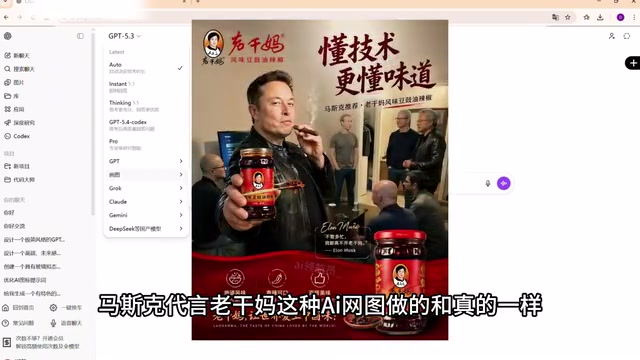
"Free Unlimited Use"—Manna from Heaven or a Data Privacy Nightmare?
The video introduces a so-called "super navigation site," claiming it's not an ordinary AI mirror site but a platform that lets you jump directly to global AI official websites without a VPN. In the site's free section, you can supposedly freeload off ChatGPT, Grok, Claude, DeepSeek, and all other mainstream AI models—unlimited times, completely free.
"Unlimited free use"—the credibility of these words on the internet is roughly on par with "no offense, but..."
A site that integrates all mainstream AI models—free, unlimited, no VPN required—this isn't freeloading, this is manna from heaven landing in a cornucopia. But here's the question: Where is your conversation data running naked on which server? This question is ten thousand times more important than using it to generate Genshin Impact crossover art.
Technically speaking, "accessing official sites without a VPN" is typically achieved through reverse proxying—your requests pass through the platform's servers before being relayed to the AI's official site. This means all your conversation content passes through a third-party server, making the risk of privacy leaks a plain fact staring you in the face.

"Full-Power" GPT Generating Mini-Games? What's Actually in the Bottle?
The video also demonstrates using "GPT 5.5" to generate an interactive mini-game—the model thinks, generates complete code, and you can play it directly in a preview panel on the right. The creator emphasizes, "This is a feature only the full-power version of GPT has—a 1:1 recreation of the official website experience."
This is like someone holding up a bottle of grape juice with a "1982 Château Lafite" label, telling you, "Look at these legs on the glass—only real Lafite does this." The problem is, you have absolutely no way to verify what's actually in the bottle.
"Full-power version" (满血版) is Chinese internet slang borrowed from gaming terminology, meaning a complete version with full functionality and no performance throttling. But on a platform that can fabricate model version numbers at will, how can you be sure that what's answering you is actually the model it claims to be, rather than some re-skinned substitute?
Cross-Model Switching with Memory Retention: Five Hats, One Intern
The video highlights a feature: switching between different AI models within the same chat window while maintaining context memory. For example, after switching from one model to "GPT 5.5," the new model can see all previous conversation content and offer suggestions based on it.
This feature does have some technical merit. Its implementation isn't complicated—it essentially stuffs the conversation history into the new model as a prompt. Plenty of AI aggregation tools can do this.
But the question is: How do you know that what's answering you after switching is actually a different model? It's like thinking you're getting a consultation from five different specialists, when behind the scenes it might be the same intern wearing five different hats. On a platform where even version numbers are made up, the credibility of model labels deserves a giant question mark.
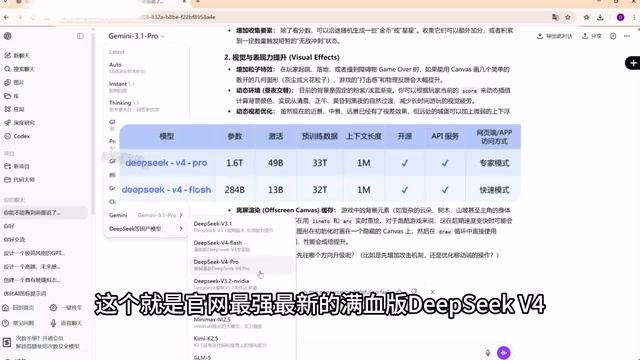
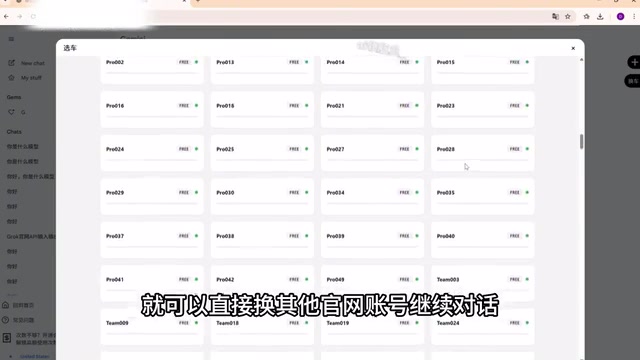
Hundreds of Shared Accounts: The Feeling of Running in Someone Else's Underwear
The most "honest" part of the video is actually a slip-up when introducing the Gemini official site entry: "There are hundreds of built-in official accounts you can freely switch between. When one account runs out of uses, just click to switch and continue."
Finally, a moment of truth—though this moment of truth exposes more problems than it solves.
Where did these hundreds of accounts come from? Who can see your conversation history? Could these accounts suddenly get mass-banned by Google or OpenAI? Using someone else's account to chat is like running in someone else's underwear—sure, you can run, but are you really sure there's no problem with this?
This shared account model carries multiple risks:
- Violates Terms of Service: Nearly every AI platform explicitly prohibits account sharing; discovery leads to account bans
- Data security concerns: Your conversation content may be visible to other shared users or the platform operator
- Could fail at any time: Once the platform provider tightens risk controls, the entire account pool could be wiped overnight
- Legal gray area: This business model itself operates on the edge of legality
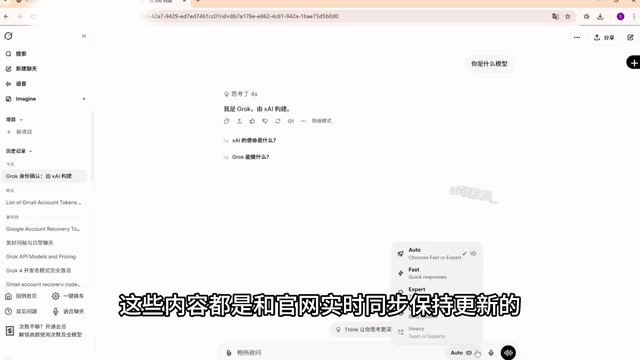
Grok Is "Most Human-Like"? Get the Version Number Right First
The video also specifically introduces Elon Musk's Grok, calling it "fast in responses, more human-like, the most personable, suitable for daily tasks and writing."
Saying Grok is human-like isn't wrong—after all, Musk himself is the most un-AI-like human on the internet, and his products inevitably carry a bit of that vibe. Grok is indeed known for its humorous, direct response style and deep integration with X (formerly Twitter), with the ability to access real-time platform information. These are genuine strengths.
But placing these advantages within a demo where the version numbers don't even match up is like writing a five-star review praising a restaurant you've never actually visited—everything you say might be correct, but it has absolutely nothing to do with what you're actually showing.
The Classic Ending: Follow + Like + Subscribe to Get the Link
The video's closing move is completely unsurprising—"All materials and links have been packaged and organized; follow + like + favorite to receive them."
The entire video's business model finally comes full circle here:
- Create anxiety with nonexistent version numbers—"Everyone else is already using GPT 5.5 and you didn't know?"
- Create greed with "free freeloading"—"Something this good is actually free!"
- Create urgency with "limited-time sharing"—"Save it now, it might disappear any day"
- Finally harvest follows, likes, and personal data
This isn't tech sharing—it's a textbook lesson in traffic monetization. The only thing that's truly "full-power" here is this creator's marketing ability.
If You Actually Need to Use These AI Models
Rather than risking your privacy on shared accounts of dubious origin, consider these legitimate options:
- ChatGPT: Register on OpenAI's official site; the free tier gives you GPT-4o access, Plus subscription is $20/month
- Claude: Register directly on Anthropic's official site; free quota is sufficient for everyday use
- Gemini: Log in with a Google account; the free version is already quite powerful
- DeepSeek: A Chinese-made model, directly accessible within China, free and excellent
- Grok: Integrated into the X platform, basic features are free
Most mainstream AI models offer free quotas that are more than enough for average daily use. If you truly need heavy usage, spending a couple hundred yuan per month on a legitimate subscription buys you data security and a stable, reliable experience—no matter how you do the math, it's a better deal than "free freeloading."
Final Thoughts
On the internet, when something is free, you're not the consumer—you are the product. And when it's so free that they've even pre-fabricated version numbers for you, you're not even the product—you're just traffic.
Next time you see a video with a title stuffed with nonexistent AI version numbers promising "100% guaranteed free access," remember to take a deep breath and ask yourself one question: If this thing is really that good, why does it need to fabricate version numbers to get you to click?
Related articles
 Product Reviews
The Programmer's Desk Setup Guide: Building a Workspace That Feels Like Home
Discover how programmers build productive, comfortable workspaces. From multi-monitor setups to ergonomic design, explore the desk philosophy that drives focus and flow.
 Product Reviews
Qoder vs Cursor Real-World Comparison: Which $20/Month AI IDE Is Better?
Hands-on comparison of Qoder vs Cursor AI IDEs: Agent autonomy, human interaction count, and architecture decisions. Qoder needed only 2 interactions vs Cursor's 8.
 Product Reviews
Cursor Cloud Agent Demo: Eliminating Bottlenecks Across the Entire Software Development Lifecycle
Deep analysis of Cursor's Cloud Agent demo showing how cloud VMs, automated test artifacts, and a full-chain control plane systematically eliminate human bottlenecks across the software development lifecycle.