From Demo to Enterprise-Grade Agent: The Project Details Interviewers Care About Most

Interviewers now probe project deliverability—master multi-agent architecture, evaluation systems, and security boundaries.
The article notes that from June to September, interviewers shifted from asking "what model did you use" to "how are metrics calculated, how is cross-validation done, are permissions and tenant isolation considered"—screening for the gap between demo-level and enterprise-deliverable projects. It discusses Multi-Agent collaboration and high-concurrency architecture, and mentions the Hannis Engineering architecture emerging after February 2026. Addressing the frequent interview question of whether off-the-shelf tools can replace custom Agents, it contrasts CS and BS architectures, noting enterprise systems need deployment integration, data security, and iteration autonomy—about 80% of enterprises still choose custom development. Finally, it offers practical advice on strengthening three areas: evaluation systems, security boundaries, and architectural scalability.
Recently, I've been talking with a lot of job seekers and noticed a common signal: interviewers are scrutinizing project details much more intensely. Especially from June to September this year, questions no longer stop at "what model did you use"—they cut straight to harder dimensions: How are your agent metrics calculated? How do you ensure users are satisfied with the answers? Did you do cross-validation? Have you considered permission control, tenant isolation, and data security boundaries?
Behind these follow-ups is a screening logic: is your project a demo-level project, or an enterprise-deliverable, deployable project? The gap between the two is not small. And to push a project from demo to deliverable, an unavoidable topic is the design of Multi-Agent collaboration and high-concurrency architecture, as well as the recently much-discussed Hannis Engineering architecture.
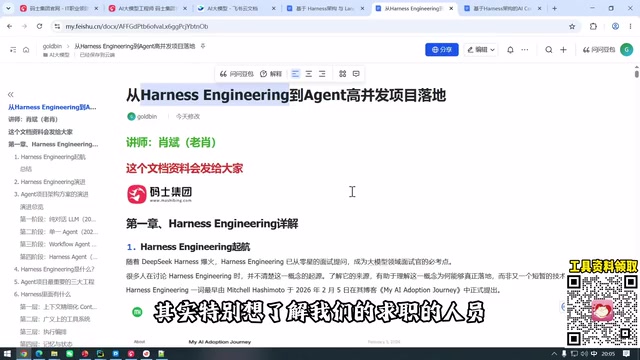
Why Interviewers Are Starting to Ask About "Deliverability"
In the past, when talking about projects in interviews, the usual rhythm was to explain what you did and what tech stack you used, and that was about it. Now it's different—interviewers dig deeper with a "challenging" angle. For example, regarding an agent's evaluation metrics, if you only answer "accuracy," you'll most likely be pressed further on how the samples were constructed, what proportion was manually labeled, and whether multi-round cross-validation was done.
The essence of such questions is to test engineering rigor. A demo can get away with just one main path working, but an enterprise-grade project must be able to answer how exception paths are handled, how data from different tenants is isolated, and how the permission model is designed. What interviewers want to confirm is not whether you can call an API, but whether you treat the system as a product that will run long-term.
Practical advice: when preparing your project, write out the three areas—metric calculation definitions, validation methods, and permission boundaries—as details you can narrate in advance, and proactively bring them up in the interview instead of waiting to be asked.
Hannis Engineering: A New Architecture Worth Watching
The livestream mentioned a new architecture that emerged after February 2026, called Hannis Engineering. It was brought up for discussion because the pain points of enterprise-grade agents are concentrated in collaboration and concurrency: how multiple agents divide responsibilities, how they share context, and how they avoid dragging each other down when request volume spikes.
This kind of architectural thinking usually revolves around a few points—responsibility boundaries between agents, message-passing mechanisms, and resource scheduling strategies under high concurrency. For those working on Multi-Agent projects, the practical value of understanding this kind of architecture is that it helps you think through scalability at the design stage, rather than having to refactor after load testing.
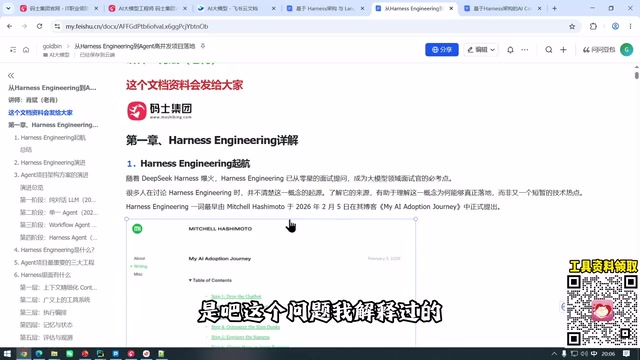
One of the core challenges of Multi-Agent collaboration is context sharing and state consistency. When multiple agents process tasks in parallel, how to ensure they see the same latest data and how to avoid duplicate computation or conflicting writes are questions the architecture design must answer. Common solutions include shared memory/blackboard patterns, eventual consistency driven by message queues, and concurrency control based on version numbers or optimistic locking. In high-concurrency scenarios, you also need to consider priority scheduling of agent tasks, timeout retries, and circuit breaking/degradation to prevent a single slow Agent from dragging down the entire chain. Together, these mechanisms form the dividing line between enterprise-grade Agent systems and demos: a demo can run serially, but a production system must handle concurrency, failure, and recovery.
Off-the-Shelf Tools vs Custom Development: A High-Frequency Interview Question
A student in the livestream asked a very typical question: since tools like Codex and Claude Code are already so powerful, is it still necessary for companies to develop their own Agents? Interviewers also like to ask this. The key to answering lies in distinguishing software architecture forms.
Products like Codex and Claude Code are essentially desktop-level software, belonging to the CS architecture. Enterprise systems, however, are mostly BS architecture—they need deployment and integration with existing business systems. If you use a desktop tool to build a procurement assistant for a client, once business logic changes or prompts need to be upgraded, you'd have to send someone to operate on every client computer—which is unrealistic in enterprise scenarios.
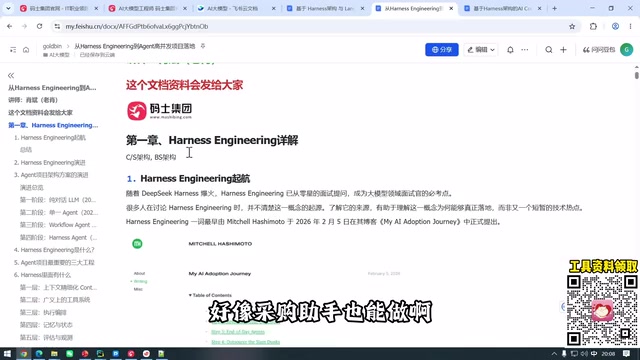
Some will say these tools can also run on servers. True, but integrating with existing systems requires developing a large number of plugins, and the total cost ends up similar to developing an agent yourself—plus data security, software copyright, and the initiative for upgrades and iteration are not in your hands. So the selection logic is clear: if data security, copyright compliance, and high-frequency iteration are involved, customization is almost the only solution; if it's for small-company internal use with simple requirements, off-the-shelf tools are completely sufficient.
Reality confirms this too—currently about 80% of enterprises still take the custom development route, while the remaining 20% use ready-made agent products on the market. The implication for job seekers is: enterprise-grade delivery capability is still scarce, and mastering Multi-Agent collaboration and high-concurrency architecture is a differentiating advantage in interviews.
CS architecture (Client-Server) refers to a software form where client and server are separated and a desktop client must be installed, such as Codex and Claude Code; BS architecture (Browser-Server) is accessed through a browser without installing a client, facilitating centralized deployment and upgrades. Enterprise systems generally adopt BS architecture because IT departments can manage uniformly, scale on demand, and centralize permissions and auditing. When desktop-level tools are used in enterprise scenarios, upgrades require operating each machine, data may remain local, and integration with existing SSO/permission systems is difficult—these are natural limitations of CS architecture. Understanding this distinction lets you clearly answer interview questions like "why do enterprises still build their own Agents?"
From Demo to Deliverable: Fill In These Three Areas
The first is the evaluation system. Don't just mention accuracy—be able to explain how the test set was built, how manual and automatic evaluation are combined, and how cross-validation was done.
The second is security boundaries. Tenant isolation, user permission control, and data access auditing are mandatory questions in enterprise projects; even if your project is small, you should clearly explain your approach in the design.
The third is architectural scalability. Multi-agent collaboration is not just stitching several Agents together; responsibility division, context passing, and degradation strategies under concurrency all need to be reflected in the design document.
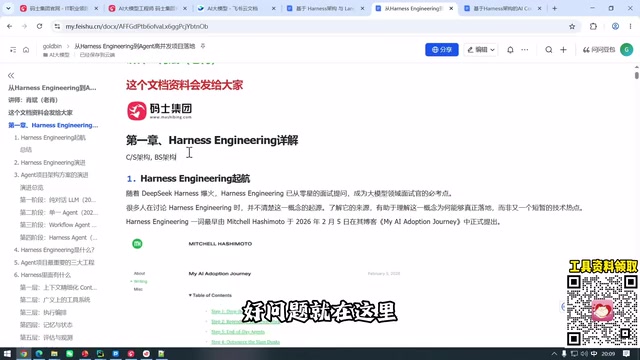
Once you fill in these three areas, the quality of your project narrative will be completely different. What the interviewer hears is no longer a demo that runs, but an engineering solution that has considered real-world deployment issues.
Cross-validation in agent evaluation usually refers to using multiple independent test sets or multiple evaluation methods (automatic metrics + manual review) to corroborate each other and avoid overfitting to a single metric. Common practices include: constructing holdout sets and adversarial sets, combining LLM-as-Judge with manual spot checks, and estimating confidence intervals for key metrics. When asked in an interview "how did you do cross-validation," the essence is to test whether you understand the reliability boundaries of evaluation, rather than just reporting a good-looking number.
Related articles

Is the Agent Harness Dead? Cursor's Early Engineer Breaks Down the Real Architecture of AI Coding Agents
Cursor early engineer Jediah breaks down the real architecture of the agent harness: why "the harness is dead" is only half right, how the data flywheel lets the harness obsolete itself, and how Grokbot, software factories, and primitive design open new frontiers for agents.
Python Visitor Pattern and Better Alternatives Explained
A deep dive into Python's visitor pattern and four alternatives: method pattern, pattern matching, dictionary mapping, and functools.singledispatch. Choose the best decoupling design by change frequency.

357 Days of Deep Experience: Why Omarchy Made Me Stop Distro-Hopping
A 357-day deep dive into Omarchy: 59-second install, out-of-the-box audio and GPU support, the Quattro QuickShell rewrite migration pains, and why Arch users should try it.