From Gobbler to Sloppy Joe: The Hit-Making Playbook of a New Jersey Deli Institution

New Jersey institution Milburn Deli turns sandwiches into hits through density of detail, a shouting culture, and regional flavor.
This article uses NYT Cooking's "Sandwich City" report on Milburn Deli to analyze how a New Jersey institution founded in 1946 builds hits through product strength. The signature Gobbler was inspired by Thanksgiving leftovers and sells best after Thanksgiving, consistently ranking in the store's top five; its success relies on specific standards like tomato size, bread sliced to order, sauce spread to the edges, and sandwiches cut into three segments. The whole store shouting "Gobbler" turns a transaction into a social event, and customers return for the participation. The Sloppy Joe is a local Essex County specialty—three layers of rye with turkey, Swiss cheese, and house-made coleslaw, with a Russian dressing recipe that was once a family secret. The Godfather went from a customer suggestion to a permanent menu item, reflecting rapid response to real demand. The conclusion notes that behind the growth are 150 to 200 gallons of house-made iced tea daily, a head chef who has taken only two days off in 22 years, and the repetition of simple things until flawless.
In the NYT Cooking "Sandwich City" series, Milburn Deli's current owner Andrew Morgan says straight to camera: "How hard is it to make a sandwich? Harder than almost anyone can imagine." Founded in 1946 by the Jacobs family and bought by the Morgans in 1991, this New Jersey institution makes its case for true product strength with one turkey sandwich—the Gobbler—and one local specialty—the Sloppy Joe.
The Birth of a Hit Sandwich
The Gobbler was inspired by Thanksgiving leftovers—a late-night idea to stuff the taste of the holiday into bread. It's made with fresh-roasted turkey, house-made stuffing, house-made cranberry sauce, lettuce, mayo, and black pepper, stacked between two slices of rye.
A counterintuitive fact: this sandwich sells best after Thanksgiving. Andrew once joked that November should be the slow season—instead, "we sell more than ever." It consistently ranks in the store's top five sellers, alongside the Godfather, Griller No. 8, Gossip Girl, and Chicken Bruschetta.
Thanksgiving Leftover Sandwich is an informal American food tradition: after the big turkey dinner, people stuff leftover roast turkey, stuffing/dressing, cranberry sauce, and gravy into bread to make a cold sandwich. It usually appears the day after Thanksgiving and carries a sense of family memory and holiday continuity. The Gobbler commercializes this seasonal home-style practice, offering it year-round, and elevates it with fresh-roasted turkey and house-made stuffing. Because people still have strong holiday flavor cravings after Thanksgiving while home leftovers have run out, this sandwich hits its sales peak in late November—explaining the counterintuitive "sells best after Thanksgiving" phenomenon described in the article.
The Density of Detail Sets the Ceiling on Experience
Andrew repeatedly stresses that a sandwich's success or failure lives in countless "very specific" actions: tomatoes must be ordered in the right size, washed, and cut correctly; bread must be sliced to order; mayo must be spread until you can't see the bread; stuffing must be spread evenly so every bite tastes the same.
"Someone orders and says no pickles. People who say no pickles are passionate people. I guarantee you they'll come back and tell you that you gave them pickles."
Even the cut matters. Milburn Deli cuts its sandwiches into three segments—the middle crustless soft triangle is the "dessert" that regulars ("OGs") save for last. This nearly obsessive standard gives a simple action a sense of ritual.
The "Gobbler" Call: Turning a Product into Social Currency
Whenever someone orders a Gobbler, the entire staff—and even in-the-know customers—shout "Gobbler!" together. Andrew says during Thanksgiving season he sometimes shouts himself hoarse. One customer admits: "I come half for the sandwich, half to hear them yell Gobbler."

This group call isn't some marketing scheme—it grew organically out of daily operations. It turns a transaction into a highly participatory live event, and gives the Gobbler natural virality in the social media age.
Sloppy Joe: A Misunderstood Local Specialty
Most Americans hear "Sloppy Joe" and think of ground meat on a bun. But Milburn Deli's Sloppy Joe is something entirely different: three layers of rye bread filled with turkey, Swiss cheese, and house-made coleslaw, with Russian dressing spread on both sides.
The dressing was once a family secret—Andrew's father refused to reveal the recipe for years. It's made with extra-thick mayo, chopped pickles, and chili sauce—spicier and thicker than ketchup, with a certain "zing."
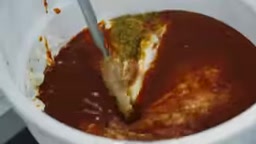
The Sloppy Joe is an intensely regional product, popular only in parts of Essex County. Precisely because of this, it becomes a taste link between expats and their hometown—one family in hospice once wrote in saying their last wish was a bite of Milburn's Sloppy Joe.
Russian Dressing is a common American salad dressing. The traditional recipe is based on mayonnaise and ketchup, with chili sauce, horseradish, minced onion, or chopped pickles mixed in; it has a pinkish-orange color and a mildly spicy, tangy flavor. It doesn't originate from Russia—the name may come from a Russian-style salad dressing introduced to America in the early 20th century or from a Russian-born chef. In American sandwiches, Russian dressing is often paired with the Reuben, and is also used on burgers and salads. Milburn Deli's version deliberately reduces the ketchup ratio and increases thick mayo and chopped pickles, making the texture thicker and the heat more pronounced—creating a "zing" that sets it apart from commercial products. As a family secret recipe, this dressing effectively forms a flavor barrier that makes the store's Sloppy Joe hard to replicate.
Can a Hit Be Planned?
The Godfather's rise was an accident. An eighth-grader who was a regular kept begging them to put his own creation on the menu, and Andrew made a bet: "Put it on for a week; if it doesn't sell, it's gone." The kid brought enough friends to buy it into a permanent menu item.

This reveals a product logic: hits are often not designed from the top down but are rapid responses to real demand. Milburn Deli is willing to make exceptions for customers' ideas—and willing to lock them in quickly once validated. Today they have six locations, with a seventh about to open.
Conclusion
"In business, you're either growing or dying—there's no in-between." That's Andrew's father's creed. But what sustains the growth is 150 to 200 gallons of house-made iced tea every day, a head chef who has taken only two days off in 22 years, and that one knife stroke that cuts a sandwich into three segments. Making a sandwich is hard—the hard part is repeating simple things until they're flawless.
One-line Summary
New Jersey institution Milburn Deli turns sandwiches into hits through density of detail, a shouting culture, and regional flavor.
Paragraph Summary
Drawing on NYT Cooking's "Sandwich City" series report on Milburn Deli, this article analyzes how a New Jersey institution founded in 1946 builds hits through product strength. The signature Gobbler was inspired by Thanksgiving leftovers and actually sells best after Thanksgiving, consistently ranking in the store's top five; its success depends on specific operational standards like tomato size, bread sliced to order, sauce spread to the edges, and sandwiches cut into three segments. The whole store shouting "Gobbler" turns a transaction into a social event, and customers return for the sense of participation. The Sloppy Joe is a local Essex County specialty—three layers of rye with turkey, Swiss cheese, and house-made coleslaw, with a Russian dressing recipe that was once a family secret. The Godfather went from a customer suggestion to a permanent menu item, reflecting rapid response to real demand. The conclusion notes that behind the growth are 150 to 200 gallons of house-made iced tea daily, a head chef who has taken only two days off in 22 years, and the repetition of simple things until flawless.
Related articles

GLM-5.4 vs. Opus and Neon: How Far From the Top?
No official benchmarks for GLM-5.4. Based on a YouTube deep test and developer trials, we analyze its gap vs. Claude Opus 5.5 and Gemini Neon, the speed bottleneck from marathon-style thinking, and its real position in enterprise agent scenarios.
In the Age of AI Programming, When Do You Still Need to Write Code by Hand?
Is handwritten code still valuable once AI programming agents are widespread? This article outlines three scenarios where handwriting is essential—learning, style development, and prototype validation—and provides a division-of-labor framework between AI and humans to help developers balance efficiency and skill growth.
AI Data Center Construction Hits Roadblocks: The Neoclouds Winter and Nvidia's New Bar
Nvidia says it won't support unfinished AI data centers, leaving neoclouds squeezed by construction delays and rising debt costs. We analyze what this means for AI infrastructure.