From Punch Cards to AI Software Factories: The Programming Paradigm Is Being Rewritten

Programming is shifting from humans writing code to humans building software factories that produce code, with the abstraction layer rising again.
The article traces how programming's abstraction layer has risen over time: from punch cards, assembly, and high-level languages to today's natural language prompts, humans keep encapsulating complexity at higher levels. AI writing code is only an intermediate stage — top engineers are building "software factories" that self-produce and iterate code via goals, constraints, and verifiers (self-improving software). Engineering-wise, these systems support the model spectrum and BYO models, using model routing to balance quality and cost. Programmers' core skills shift to intent expression, verifier debugging, and system design.
Programming is undergoing a fundamental identity shift — from "humans writing code" to "humans building systems that can write code."
A video from YouTube retraces this history with a minimalist narrative: the earliest programming meant punching holes in paper cards, each card carrying a single instruction fed into a computer for execution. Punch one hole in the wrong position, and the entire program crashed. And the first true "computer bug" in history was a literal flying insect. Today, human-readable code is a world away from that era, and AI has started writing code for us — we just need to supply a prompt.
But the story doesn't stop at "AI writes code."
A Brief History of Programming: From Physical Holes to Natural Language
Programming in the punch card era was physical. Programmers didn't hold keyboards — they held punches; debugging wasn't about reading error logs, but holding cards up to the light to check whether the holes were aligned. According to the video, a single mistake in that era was enough to invalidate an entire program — "fault tolerance" simply didn't exist.
From punch cards to assembly, from assembly to high-level languages, from high-level languages to frameworks and libraries, every leap did the same thing: encapsulate lower-level complexity so humans could express intent at a higher level of abstraction. What we call "human-readable code" today is itself the product of the previous round of abstraction.
And now the abstraction layer is rising once again. Natural language prompts are becoming the new "source code."

Punch Cards were the primary input medium of early computers. Operators punched holes at fixed column positions on stiff paper cards — a hole represented 1, no hole represented 0, and a single card typically carried one line of instruction or one piece of data. Programs were read in card order, so the physical sequence of cards dictated the execution order of the program. Completed cards were usually stacked and fed into a card reader, and any card that was lost, bent, or had misaligned holes could render the entire program inoperable. The famous anecdote about "the first computer bug being a flying insect" dates to a relay failure in the Harvard Mark II computer in 1947, when an operator taped the moth into the log and wrote "first actual case of bug being found" — and the term has stuck ever since.
AI Writing Code Is a Way Station, Not the Destination
One line from the video is worth mulling over repeatedly: "You no longer write code directly, even with AI." It doesn't mean "you shouldn't use AI to write code" — it means that even with AI's help, writing code directly is no longer the optimal approach.
The logic behind this: once AI can generate code, the bottleneck shifts from "writing" to "defining correctness." Getting AI to write a function is easy, but getting the functions AI writes to remain correct, maintainable, and verifiable within a complex system is actually harder. Generating code line by line is essentially using new tools with the manual mindset of the old paradigm.
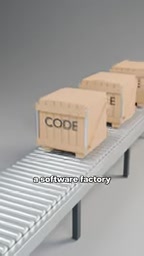
Verifiers in the software factory context are not unit tests in the traditional sense, but a set of mechanisms that can automatically determine whether produced artifacts meet expectations. They may include test suites, formal assertions, static analysis rules, contract-based checks, or even another model acting as a reviewer. The key difference is this: when writing code, humans focus on "how to implement," but when writing verifiers, humans focus on "what counts as correct." Because AI can rapidly generate a large number of implementation options, the truly scarce resource becomes high-quality criteria for judgment. Once a verifier is written, it simultaneously serves as both a correctness gatekeeper and a source of iteration signals — the system automatically corrects its output based on its feedback, forming a self-improving loop.
Software Factories: Building Systems That Produce Code
The video introduces a core concept: the Software Factory. The evolutionary direction for the world's top engineers is no longer to write code personally, but to build a "factory" that produces code.
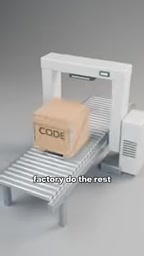
The specific approach involves three actions: define goals, constraints, and verifiers, then let the factory do the rest. The elegance of this structure lies in how it transforms the human role from "executor" to "rule-maker" and "quality gatekeeper."
Goals answer "what needs to be achieved," constraints answer "where the boundaries are," and verifiers answer "how to judge whether it's done right." Together, the three form a closed loop that enables the system not only to generate code but also to evaluate and iterate on its own output. This is what the video calls "self-improving software."
Model Routing and Anti-Lock-In: The Engineering Details of the Factory
According to the video, the company Factory has been doing software factories since day one, and is the originator of the term "software factory." On the engineering side, it supports the full spectrum from frontier models to open-source models, and also allows users to bring their own model, thereby avoiding lock-in to any single lab.
The accompanying capability is model routing: automatically selecting the most suitable model for a task, balancing effectiveness and cost. This design philosophy reflects a reality — no single model is optimal for all tasks, and giving the choice to the system rather than hard-coding it is the more sustainable engineering approach.

Model Routing refers to maintaining a dispatch layer at the system level that dynamically distributes requests to different models based on task type, input length, latency requirements, and cost budget. For example, simple format conversion can be handled by a cheap small model or open-source model, while complex architectural reasoning goes to a frontier large model. The premise of this approach is that models are interchangeable — the so-called "anti-lock-in": through unified interfaces and abstraction layers, avoiding hard-coding business logic into any single lab's API. When a new generation of models emerges, you only need to update the routing strategy rather than rewrite the entire system. This follows the same line of thinking as "encapsulating points of change" throughout programming history — except this time, the thing being encapsulated is the model itself.
Redefining the Programmer's Role
If software factories become mainstream, the core competency map for engineers will shift noticeably:
From syntax proficiency to intent expression. Being able to break down vague requirements into clear goals and constraints matters more than being able to hand-write a red-black tree.
From debugging code to debugging verifiers. When code is generated by the system, what humans directly engage with is the criteria for judgment — how well the verifiers are written determines the output quality of the entire factory.
From single-point delivery to system design. Your output is no longer a module, but a production line that can continuously produce modules.
This path may not apply to every team, and the video itself carries an obvious product-promotion flavor. But the direction it points to — abstraction layers continuously rising, and human roles migrating toward rule-makers — is consistent with the programming history of the past several decades.
From punch cards to AI software factories, what has always changed is the abstraction layer; what has never changed is humanity's dependence on "articulating complex problems clearly."
One-line Summary
Programming is shifting from humans writing code to humans building software factories that can produce code, with the abstraction layer rising once again.
Paragraph Summary
The article reviews the rise of abstraction layers throughout programming history: from punch cards, assembly, and high-level languages to today's natural language prompts, humans have always encapsulated lower-level complexity in higher-level expression. It points out that AI writing code is only an intermediate stage — the real transformation is top engineers beginning to build "software factories" that produce and iterate on code autonomously through defined goals, constraints, and verifiers — that is, self-improving software. On the engineering side, such systems support the full spectrum of models and bring-your-own-model, and use model routing to balance effectiveness and cost. As a result, programmers' core competencies shift from syntax proficiency to intent expression, verifier debugging, and system design. Despite the product-promotion flavor, the direction is consistent with programming history.
Related articles

Chain of Thought Isn't Just for AI: How Humans Can Use CoT to Improve Thinking Quality
Chain of Thought isn't just a prompt trick for large models. Starting from a Hacker News discussion, this article analyzes why CoT works for human thinking too, breaks down actionable ways to transfer it, and highlights the key differences between human CoT and machine CoT.
Cloudflare Teams Up with OpenAI: Closi…
Cloudflare Teams Up with OpenAI: Closing the Loop from Vulnerability Discovery to Defense with AI
Cloudflare uses OpenAI Daybreak to investigate security vulnerabilities and generate reviewable remediation plans, while developers use Codex to boost coding efficiency and quality.

Orca Multi-Agent Orchestration in Practice: A Guide to Parallel Collaboration with Claude and Codex
Orca is Stable AI's free open-source agent workbench supporting 34 agents like Claude Code and Codex in parallel. Learn its Git worktree isolation, multi-model orchestration, and mobile management.