From Skeptic to Fan: A Journey with a Phone Grip

A butter-shaped phone grip sparks reflection on the practicality and personal expression of accessories.
This article starts with a butter-stick-shaped phone grip to explore how small accessories find balance between practicality and flashiness. Through first-person experience, the author finds that grips improve grip stability on large-screen phones by adding a back bump, reducing drop risk and spawning additional uses like stands and ring holders. Though the butter shape is flashy and even "obnoxious," it makes people "learn to love" it by solving real pain points. The article further analyzes the tug-of-war between "invisibility" and "expression" in accessory design, noting that functional value can overcome initial aesthetic resistance, while emotional connection and social buzz are becoming key to accessory retention. The ultimate takeaway: manufacturers need to find the "obnoxious but useful" balance point between ergonomics and personal expression.
Phone accessories often walk a tightrope between "practical" and "flashy." Recently, a phone grip shaped like a stick of butter sparked discussion—is it a productivity booster or an unnecessary decoration? Based on a first-person experience article from a tech media outlet, this piece explores how this seemingly insignificant little accessory changes usage habits.
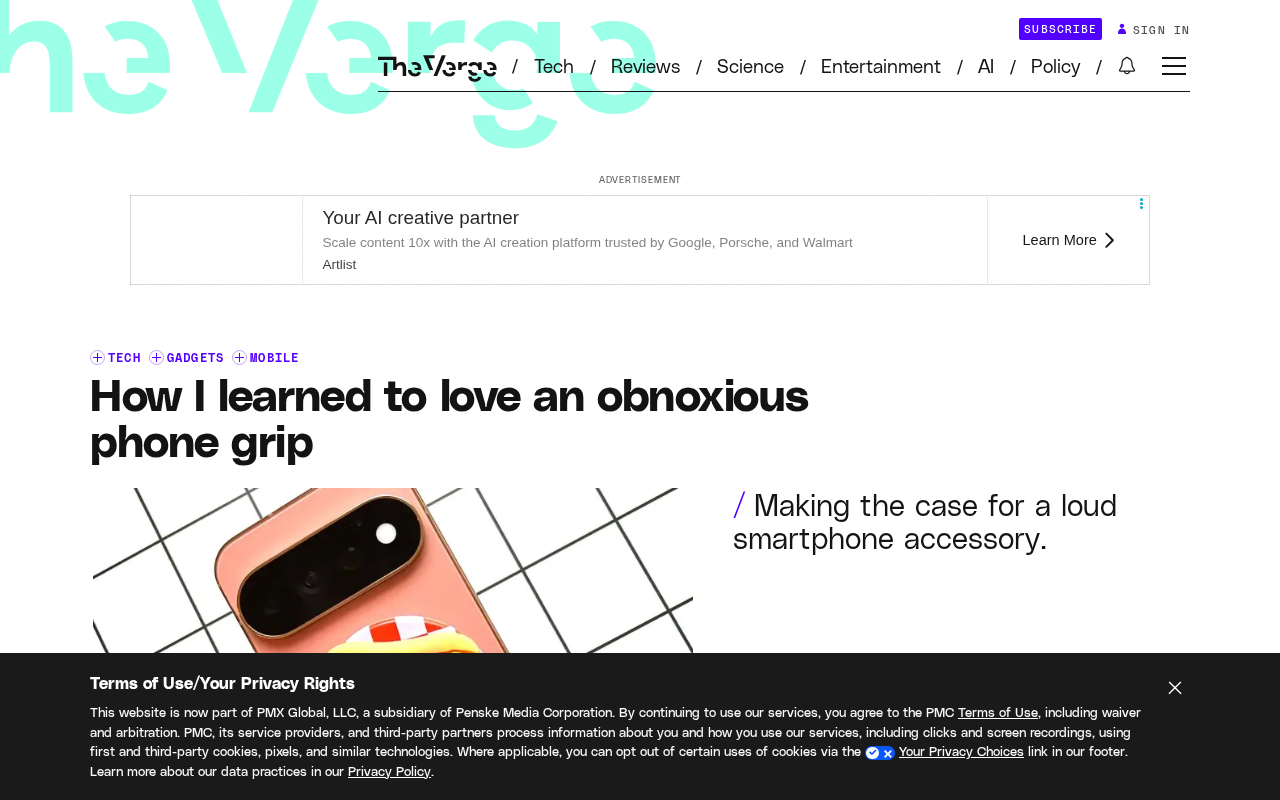
Reflections Sparked by a Stick of Butter
The story begins with a friend's new phone grip, paired with a striped phone case. The author mentions that "butter" is currently trending—at least, a 12-year-old told him so a few months ago. This grip is labeled "butter," and its appearance is eye-catching enough to be borderline "obnoxious." But it's precisely this jarring quality that made the author start re-examining the value of phone grips.
With smartphone sizes constantly expanding, one-handed operation is becoming increasingly difficult. Grip accessories have emerged to fill this need, improving grip stability and reducing the risk of drops by adding a bump on the back. But early products were often clumsily designed, sacrificing aesthetics. This butter-shaped grip clearly challenges that balance: it doesn't hide itself—it amplifies its presence.
Phone grips (PopSocket-type products) work on a core principle: by adding a retractable or fixed bump on the back of the phone, fingers (usually the index and middle fingers) can clamp onto it, thereby distributing the phone's weight and reducing the load on the pinky finger. This design was first popularized by PopSockets around 2014, and has since spawned various forms including ring holders, airbag stands, and magnetic grips. The ergonomic rationale: when holding a large-screen phone one-handed, the thumb needs to span a larger arc, and the pivot point provided by a grip allows the palm to stabilize the device with less muscle tension while giving the thumb freer access to the screen edges. For phones 6.5 inches and above, a grip can significantly reduce the probability of drops and improve stability for selfies and landscape viewing.
How Grips Change Interaction Habits
From a practical standpoint, the core function of a phone grip is to provide a more secure grip point. For large-screen phone users, this means more comfortable one-handed typing, more stable shooting postures, and a lower probability of drops. Although the original article doesn't provide specific performance data, the author's experience suggests that adding a grip makes daily operations feel "natural"—once you're used to it, it's hard to go back to a bare phone.
Interestingly, grips have also spawned new interaction methods. For example, they can serve as a stand for watching videos, or as a ring holder to assist with selfies. These added values upgrade grips from mere "drop-protection accessories" to "multi-functional tools." When the design is distinctive enough, it even becomes an extension of personal style—like that butter stick, which, though flashy, is memorable.
The Tug-of-War Between Aesthetics and Function
The design of phone accessories has always oscillated between "invisibility" and "expression." Transparent cases and ultra-thin cases pursue invisibility, while grips and stands actively express. The butter-shaped grip clearly chose the latter. It doesn't try to blend in with the phone—it declares its presence. This "obnoxious" trait is precisely what makes it memorable.
The author ultimately "learned to love" this grip, demonstrating that functional value can overcome initial aesthetic resistance. When an accessory genuinely solves a pain point (like unstable grip), its aesthetic shortcomings get re-evaluated—and may even transform into a personality label. This perhaps reveals a pattern in the accessory market: practicality is the foundation, but emotional connection is the key to retention.
In industrial design, the oscillation between "invisibility" and "expression" corresponds to two product philosophies: the former pursues blending into usage scenarios and minimizing presence (like transparent cases and ultra-thin protective covers), while the latter actively becomes a visual focus and social symbol (like exaggeratedly shaped grips and collaboration editions). The butter-shaped grip is a classic example of "expressive" design—it borrows from the "butter" meme in popular culture (often used among teenagers to describe something smooth, eye-catching, or slightly absurd), creating buzz through highly recognizable form. This strategy is not uncommon in the accessory market: once a product becomes social currency, users will proactively take photos and share, creating low-cost传播. But the risk is that flashy designs may deter users who prefer understated aesthetics, so manufacturers often adopt a modular approach of "base functionality + interchangeable appearances" to strike a balance.
Implications for the Accessory Industry
The popularity of this butter grip (at least within the author's friend circle) hints at a trend: users' expectations for accessories are no longer limited to protection—they seek a combination of function and personality. When designing, manufacturers need to consider not only ergonomics and materials but also whether the product can spark conversation and become social currency.
Of course, this strategy isn't a panacea. Overly flashy designs may put off conservative users, while pure functionalism struggles to differentiate. Finding that balance point of "obnoxious but useful" may be the new challenge for accessory designers.
Conclusion
The story of a phone grip reflects our relationship with tech products: from tools to companions, and then to self-expression. Next time you see a "strange" accessory, don't rush to dismiss it—it might be quietly solving a pain point you haven't yet realized.
One-line Summary
A butter-shaped phone grip sparks reflection on the balance between practicality and personal expression in accessories.
Paragraph Summary
Starting from a phone grip shaped like a stick of butter, this article explores how small accessories find balance between practicality and flashiness. Through first-person experience, the author finds that grips improve grip stability on large-screen phones by adding a back bump, reducing drop risk and spawning additional uses like stands and ring holders. Though the butter shape is flashy and even "obnoxious," it makes people "learn to love" it by solving real pain points. The article further analyzes the tug-of-war between "invisibility" and "expression" in accessory design, noting that functional value can overcome initial aesthetic resistance, while emotional connection and social话题性 are becoming key to accessory retention. The ultimate takeaway: manufacturers need to find the "obnoxious but useful" balance point between ergonomics and personal expression.
Related articles

Michael Nielsen Takes Down His Classic Neural Network Textbook, Sparking Community Discussion
Michael Nielsen's classic free textbook Neural Networks and Deep Learning has been taken offline, sparking discussion on Hacker News about the reasons and impact.

Inside the AI Training Data Market: The Trade-off Between Exclusivity and Discounts
G2i founder Gabe Greenberg reveals the dual-track pricing of the AI training data market: labs pay a premium for exclusive data or accept discounts that allow others to buy it.

SessionGraph: Unifying All Coding Agent Sessions in One Interactive Graph
SessionGraph aggregates coding agent sessions into an interactive graph, helping developers review, debug, and manage AI coding workflows across sessions. This article examines its positioning, value, and open questions.