From Workflow Graphs to Distributed Protocols: Dissecting Multi-Agent System Architecture Paradigms

Comparing LangGraph's workflow graphs vs. Cosmonapse's event-driven distributed protocols for multi-agent systems.
As multi-agent systems grow in complexity, LangGraph's centralized workflow graph can become a bottleneck. This article examines how the open-source project Cosmonapse offers an alternative — an event-driven, peer-to-peer agent architecture using typed Signals instead of a central graph definition. It breaks down the trade-offs between both paradigms and when each approach makes sense.
From LangGraph to Distributed Protocols: An Architectural Paradigm Shift
In the practice of building Multi-Agent systems, LangGraph is undoubtedly one of the most popular frameworks today. Developed by the LangChain team, LangGraph models LLM workflows using directed acyclic graphs (DAGs) or cyclic directed graphs. Its Checkpointing mechanism is essentially a serialized snapshot of the graph's execution state, allowing tasks to resume precisely after interruption — a critical feature for production systems that include human review nodes. It excels at handling Explicit Graph and Human-in-the-loop workflow scenarios. For applications that naturally map to fixed processes, LangGraph is an excellent choice.
The concept of Multi-Agent Systems originates from distributed AI, referring to multiple autonomous agents completing tasks — through interaction, collaboration, or competition — that a single agent cannot accomplish alone. However, a developer with extensive LangGraph experience shared their observations on Reddit: as agent systems grow in scale, more and more Coordination Logic inevitably accumulates within the workflow definition — routing decisions, dependencies, interrupt handling, and execution paths all become part of the Graph.
This raises a thought-provoking question: Does coordination logic have to be expressed as a graph? What changes if we think of it as communication between independent participants? Based on this line of thinking, the open-source project Cosmonapse was born — an attempt to reconstruct multi-agent collaboration using "distributed protocols" rather than "workflow graphs."
Where Do Workflow Graphs Fall Short?
The core mental model of a workflow graph is: "what edge executes next?" When the system is relatively simple, this explicit path definition is clear and intuitive. But as the number of agents and interaction complexity continue to grow, problems begin to emerge.
Centralized Accumulation of Coordination Logic and the "God Object" Problem
The God Object is a classic anti-pattern in object-oriented design, where a single object carries too many responsibilities, resulting in high coupling and low cohesion. In a graph structure, all coordination decisions must be encoded into a single, centralized workflow definition — a situation closely analogous to the monolithic application problem in microservices architecture. As business complexity grows, the workflow graph definition file often evolves into exactly this anti-pattern. This creates several concrete pain points:
- Every new capability requires extending this central coordination object;
- Routing, retry, and dependency logic become tightly coupled with business nodes;
- The cost of system evolution scales non-linearly with complexity.
In other words, the graph definition itself gradually becomes a "God Object," carrying too many responsibilities. When teams need to frequently adjust collaboration patterns, this centralized structure becomes a bottleneck for evolution.
Cosmonapse: An Event-Driven Peer Agent Architecture
Event-Driven Architecture (EDA) is a classic design pattern in distributed systems: publishers and subscribers are decoupled through an event bus, with no need to know of each other's existence. Systems like Apache Kafka and RabbitMQ have pushed this pattern into large-scale production practice. Cosmonapse brings this thinking to the AI Agent domain, essentially implementing an Actor model — where each Agent is an independent computing unit that collaborates through message passing rather than shared state.
Cosmonapse adopts an event-driven Agent-to-Agent approach. Its core philosophy is: all agents are Peers on a Shared Bus.
- Any node can dispatch work;
- Any node can react to results;
- Coordination happens through typed Signals, not centralized workflow definitions.
The most critical architectural difference is: the dispatcher and worker use the same primitive, and there is no special "manager" role in the system. You can still implement a centralized Orchestrator, but it's just another ordinary node in the system — not a separate abstraction layer.
This design shifts the mental model from "what edge executes next" to "which node should react to this Signal?" Adding a new capability means introducing a new participant that can communicate on the bus, rather than modifying a large central coordination object.
The Neural System Metaphor: Component Design
Cosmonapse's naming directly borrows from biological neuroscience — this is not decorative naming, but a precise mapping of five foundational distributed computing capabilities. Each component corresponds to a well-defined responsibility, making architectural intent self-explanatory at the code level:
Core Components
- Neuron: Executes computation; the basic unit that performs actual work;
- Axon: Fires Signals; responsible for output;
- Dendrite: Responds to signals; handles reception and triggers reactions;
- Synapse: Provides the shared event bus; the medium of communication;
- Engram: Provides shared memory; handles state persistence. The term Engram comes from neuroscience, referring to the physical trace of memory in the brain — here it maps to the system's persistence layer.
This naming system reduces cognitive load for team members, accurately mapping the five foundational capabilities of distributed systems — compute, output, input, communication, and memory. Compared to abstract graph nodes and edges, the neural system metaphor better aligns with the engineering intuition of "independent participants collaborating."
How Traditional Agent Capabilities Are Decomposed into Events and Hooks
The most interesting aspect of Cosmonapse is how it thoroughly decomposes the traditional agent framework's "Harness" into Events and Hooks:
Signal-Based Reconstruction of Capabilities
- Tool calls: Decomposed into two independent signals —
TOOL_CALLandTOOL_RESULT; - Memory management: Implemented via recall and imprint hooks surrounding model calls;
- Human approval: Becomes clarification and permission signals, which any node can respond to;
- Retry, routing, and policies: All become independent nodes that react to events.
The core value of this decomposition is decoupling and composability. In traditional frameworks, tool calls, memory, and approval are often embedded in fixed logic within the agent's main loop. In Cosmonapse, they all become signals flowing on the bus that any node can subscribe to, intercept, or respond to. Extending the system no longer requires "modifying central logic" — it simply means "adding a new listener."
The Trade-offs Between the Two Architectural Paradigms
It is worth emphasizing that the author explicitly states: LangGraph excels within its intended design domain. This is not a competition of "who replaces whom," but a rational trade-off between two Agent architecture paradigms suited to different scenarios.
It's important to note that the core challenge of event-driven systems is non-determinism in execution order and increased debugging difficulty — when multiple nodes concurrently respond to the same signal, race conditions and out-of-order message problems arise. The industry typically mitigates these issues through distributed tracing (OpenTelemetry), event sourcing, and idempotency design. In contrast, LangGraph's directed graph structure provides a fully deterministic execution path, giving it irreplaceable advantages in compliance scenarios that require strict auditing and visual debugging.
| Dimension | Workflow Graph (LangGraph) | Distributed Protocol (Cosmonapse) |
|---|---|---|
| Coordination | Centralized graph definition | Event-driven signals |
| Node roles | Explicit orchestration layer | All peers, no special manager |
| Scaling | Extend the central coordination object | Add new bus participants |
| Debugging | Deterministic paths, visual | High non-determinism, requires distributed tracing |
| Best fit | Fixed processes, visual debugging needed | Dynamic collaboration, frequent evolution |
For scenarios with well-defined processes that require strict checkpointing and visual debugging, the graph structure remains the more robust choice. For systems where collaboration patterns are highly dynamic and need to evolve continuously, an event-driven distributed protocol may offer better scalability.
Conclusion
Cosmonapse represents a noteworthy direction in multi-agent architecture exploration: rather than treating agent collaboration as a pre-drawn roadmap, it treats it as spontaneous communication between independent participants. This reflects a natural return of distributed systems thinking — "message bus" and "event-driven" concepts — to the AI Agent domain. Its intellectual lineage can be traced back to Erlang's Actor model and the event bus designs in Enterprise Integration Patterns.
The project is open-sourced under the Apache 2.0 license, with code hosted on GitHub (Cosmonapse/cosmonapse-core) and accompanying documentation available. For developers struggling with the "complexity explosion" of centralized workflows, this may offer a fresh perspective. Of course, event-driven architecture comes with its own classic challenges — increased debugging difficulty and non-deterministic execution order. Ultimately, which paradigm you choose depends on whether your system looks more like a pipeline or a collaborative network.
Related articles
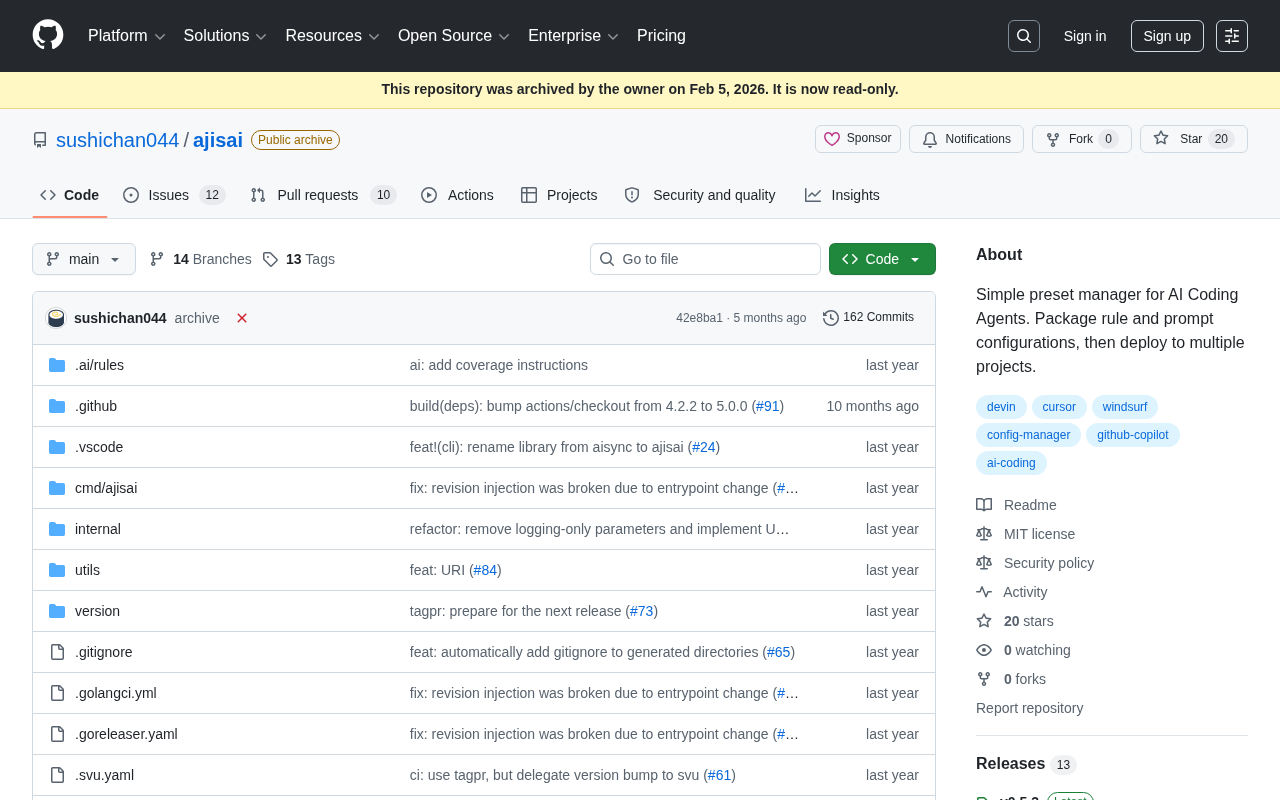
ajisai: A Preset Management Tool for Unifying Rules and Prompts Across AI Coding Assistants
ajisai is a Go-based preset manager for AI coding assistants like Cursor and Claude Code. Package rules and prompts once, deploy everywhere. Early-stage but promising.
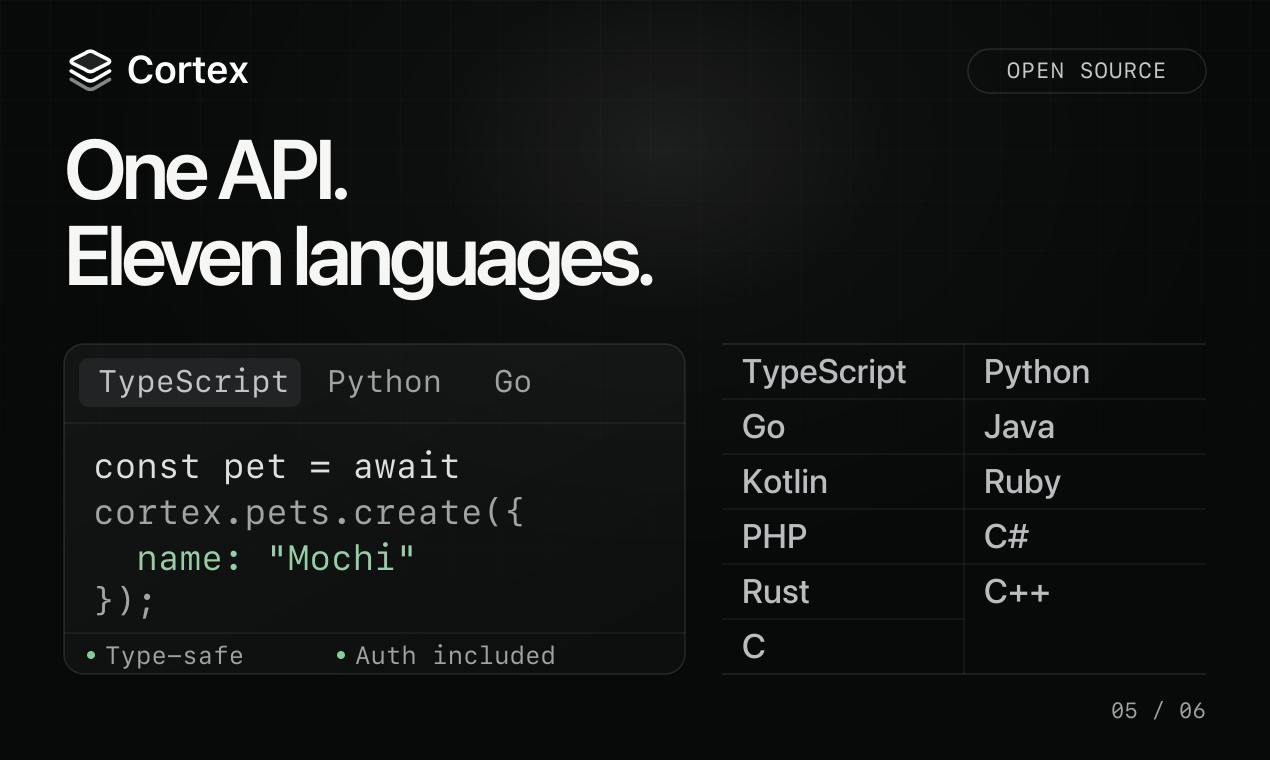
Cortex: Convert API Specs into Docs, SDKs, and MCP Servers in One Click
Cortex is an open-source tool that converts OpenAPI, GraphQL, gRPC and more into interactive docs, typed SDKs in 11 languages, and MCP servers for AI agents.
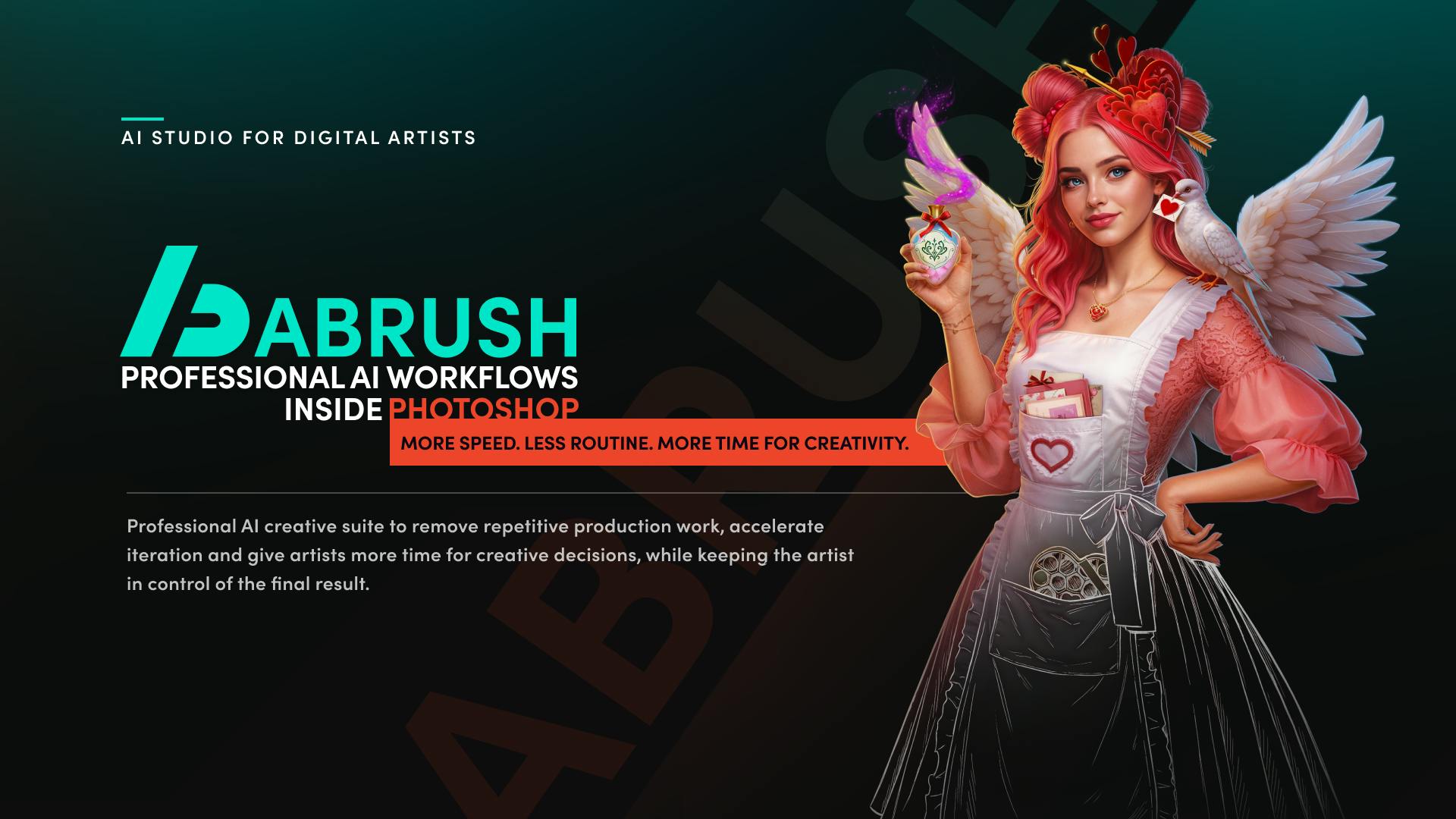
ABrush: An AI Studio Built for Digital Artists
ABrush is an AI studio for digital artists, ranked #4 on Product Hunt. It embeds leading AI models into existing workflows to remove repetitive tasks, speed up iteration, and keep artists in control.