Gardening Blogger Turns 20 Years of Experience into an AI Coach App: A Home Grow Case Study

A gardening YouTuber turned 20 years of expertise into an AI coach app, showcasing a new creator monetization path.
Renowned gardening YouTuber Mark launched Home Grow, an AI coach app that encapsulates 20 years of growing experience and nearly 1,000 videos into an interactive knowledge product. Built with a team called Studio, the app likely uses RAG technology to deliver personalized gardening advice at scale. This case demonstrates how content creators can evolve from one-way content producers to scalable knowledge service providers using AI.
A Gardening Blogger's AI Transformation
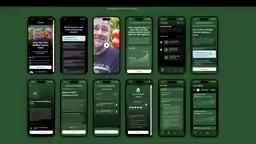
Renowned self-sufficient lifestyle YouTuber Mark (channel "Self Sufficient Me") recently launched a gardening coach app called Home Grow. The app's core positioning is clear: put a gardening expert with 20 years of growing experience "in your pocket," providing users with personal coach-level guidance.
For those who closely follow the intersection of content creators and AI, this case is quite representative. It demonstrates how a non-technical content creator can leverage AI technology to productize and scale their accumulated knowledge, breaking through the physical limitations of personal bandwidth.
Why Build Such an App
Starting with "Comments I Can't Reply To"
Mark admits that the direct motivation for building this app was a real dilemma he's faced over the past decade since gaining social media fame: the inability to reply to every user's question. He says he receives tens of thousands of comments each month, and "there's only one of me" — something he finds genuinely regrettable.
This is actually a shared pain point for all major content creators — the greater your personal influence, the thinner your connection with individual users becomes. The influence paradox of social media creators is a widely discussed industry phenomenon. When a channel grows from 10,000 to 1 million subscribers, the creator's interaction density with individual viewers inevitably drops sharply. The industry average YouTube comment reply rate is only 5-10%, and it's even lower for top creators. Traditional solutions include hiring community management teams, launching paid communities (like Patreon), or hosting offline events — but these approaches either dilute the creator's personal touch or remain limited by time and manpower.
AI offers an entirely new path forward: by "training" a personal knowledge system into an application, creators can maintain interactions with thousands of people simultaneously, answering the questions they truly want answered — while preserving the creator's personal style and professional depth, achieving virtually unlimited concurrent service capacity.
The Underlying Logic of Knowledge Productization
Mark mentions that his original motivation for YouTube and blogging was to share hard-won experience from his own trial and error, helping others avoid the same mistakes. Home Grow can be seen as an advanced version of this philosophy: no longer one-way video output, but rather interactive, queryable, structured knowledge services.
He emphasizes that he's already "done all the hard work" — users don't need to endure lengthy trial-and-error processes. This approach of "turning pitfalls into products" is the classic paradigm for personal brands transitioning to knowledge services.
App Content and Technical Implementation
"Digital Encapsulation" of 20 Years of Experience
According to Mark's introduction, the app integrates all the content assets he's accumulated over 20 years — numerous articles, social media posts, and nearly a thousand videos, all "loaded into the app's brain." The use of "brain" as a metaphor suggests the backend likely employs an AI Q&A system based on proprietary content (such as RAG — Retrieval-Augmented Generation — or fine-tuned models), enabling the app to respond to user queries using Mark's knowledge and voice.
From a technical perspective, RAG (Retrieval-Augmented Generation) is one of the most mainstream knowledge Q&A architectures in current AI applications. Here's how it works: first, all of the creator's content (articles, video subtitles, posts, etc.) is segmented into small passages and converted into vector embeddings, stored in a vector database. When a user asks a question, the system first uses semantic search to find the most relevant content fragments, then passes these fragments as context to a large language model, which generates a coherent answer. Compared to directly fine-tuning a model, RAG's advantage is that the knowledge base can be updated at any time without retraining, and answers are traceable, reducing the risk of AI "hallucination." This perfectly aligns with Mark's "continuous updates" product promise — whenever he produces new content, it simply needs to be added to the knowledge base to take immediate effect.

Coverage Scenarios and User Segmentation
The app's design philosophy is to "serve everyone," specifically reflected in two dimensions:
- Experience levels: From beginners to advanced gardening enthusiasts, everyone can find relevant content;
- Scenario coverage: Whether it's a small backyard, balcony, patio garden, suburban large lot, or even a farm, there's corresponding guidance.
Content topics are quite extensive, including how to raise chickens, orchard site selection, vegetable garden layout, how to maximize yields, and post-harvest preservation and storage, among other topics. In essence, it attempts to break down the broad theme of "self-sufficient living" into a structured curriculum and activity plan.
Notably, AI applications in the gardening domain face unique technical challenges. Plant growth is affected by highly localized factors such as microclimate, soil pH, rainfall patterns, sunshine hours, elevation, and local pest ecology. A planting plan that works effectively in Queensland, Australia (where Mark is located) may be completely unsuitable for users in Northern Europe or Southeast Asia. To provide truly personalized advice, an AI system needs to integrate external data sources like local weather data, plant hardiness zone classifications (such as the USDA Hardiness Zone system), and soil type databases, cross-matching them with the creator's experiential knowledge. How the app handles this geographic variability will be a key factor in determining its long-term value.
A Commitment to Continuous Iteration
Mark specifically mentions a noteworthy point: the app will be continuously updated. "The more I learn, the more this app learns." He hopes the app can be as close to the real him as possible, "even including many of my flaws." He also acknowledges that the product still has room for improvement, with many optimizations to be completed through user feedback. This candid "co-creation" approach is quite helpful for building user trust in an early-stage product.
Commercialization and Cold-Start Strategy
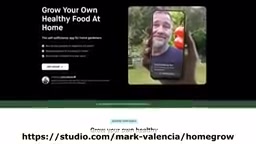
Mark developed this app in collaboration with a team called Studio. Studio represents an emerging category of infrastructure service providers in the Creator Economy. These companies specialize in providing content creators with the technology stack for AI productization, including content ingestion and processing pipelines, AI model configuration and tuning, app frontend development, payment and subscription management, and more. Creators only need to provide raw content and brand authorization, while the technical team handles transforming it into a commercially viable product. This model is similar to how early MCNs (Multi-Channel Networks) helped creators monetize advertising revenue, but the product form has evolved from "helping you land sponsorships" to "helping you build products." The global creator economy market is estimated to exceed $250 billion, with AI tools creating new growth layers.
In terms of commercialization, Mark has adopted a relatively gentle strategy:
- Offering a free trial with emphasis on a "no obligation" experience;
- Launching a limited-time (approximately one week) 20% discount as a new product promotional offer;
- Pricing and promotions are controlled by partner Studio, with the creator not directly intervening.
Pricing strategies for personal AI coach apps typically face a dilemma: pricing too high discourages user trial, while pricing too low makes it difficult to cover AI inference costs (each API call incurs computational expenses) and ongoing content update investments. Common industry models currently include: freemium (basic Q&A free, in-depth guidance paid), monthly/annual subscriptions, and usage-based billing. Mark's free trial + discounted launch strategy essentially lowers the first-payment barrier to validate product market acceptance and user retention — this is the application of classic SaaS (Software as a Service) cold-start methodology to creator products.
This division of labor model — "content creator provides knowledge and trust endorsement, technical team handles product development and operations" — is becoming a mature path for personal IP monetization. Creators don't need deep technical capabilities to transform their influence into sustainable paid knowledge products.
Observations and Reflections
Value and Limitations of This Product Category
Home Grow represents an emerging category: AI coach apps based on individual expert knowledge. Its value lies in using AI to scale what was previously scarce one-on-one expert guidance. For users, this means more immediate, more personalized answers.
However, it's important to rationally acknowledge the limitations. AI Q&A quality is highly dependent on the underlying content quality and the maturity of retrieval/generation technology. Gardening involves complex variables like climate, soil, and geography — whether AI can truly provide location-specific advice still requires real-world usage validation. Mark's promise to "continuously update" is, to some extent, a response to this limitation.
Implications for Content Creators
What's most worth borrowing from this case is the clear progression path it demonstrates: from content producer to knowledge service provider. When a creator has accumulated a sufficient volume of quality content (Mark's nearly thousand videos being the best "training data"), AI becomes a powerful lever for reactivating and monetizing that content.
The underlying economics of this path are also worth considering. Traditional content creation monetization relies primarily on advertising (CPM model) and brand partnerships, with income directly tied to view counts — creators need to continuously produce new content to maintain their revenue stream. AI knowledge products create the possibility of "inventory monetization" — content accumulated over the past decade is no longer just old videos gradually sinking on YouTube, but becomes digital assets that continuously generate subscription revenue. This fundamentally changes the ROI (Return on Investment) calculation for content creation.
In the future, we'll likely see more and more domain experts — whether in gardening, cooking, fitness, or personal finance — launching similar "personal AI coaches." Those who possess unique and systematic knowledge assets will be better positioned to seize the advantage in the AI era.
Key Takeaways
Related articles

Getting Started in Machine Learning Research: Essential Paper Reading List and Research Internship Application Path
A complete path from zero to research internship for ML beginners, covering essential classic papers (AlexNet, ResNet, Transformer), paper reading methods, reproduction tips, and practical advice for research internship applications.

Claude Code Hands-On Tutorial: Complete Guide from Installation to Automated Development
Complete guide to Claude Code covering environment setup, permission configuration, Go Goals autonomous loops, Skills system, MCP protocol integration, and version control for automated development.

Gemini 3.7 Flash Release and GPT-5.6 Ultra-Fast Mode: AI Open Source Enters the Ecosystem Era
Google releases Gemini 3.7 Flash for coding and Agent optimization while OpenAI launches GPT-5.6 Ultra-Fast mode with 14x speed gains. AI open source shifts from open models to open ecosystems.