Gemini 2.0 Flash Breaks Records in Its First Week: A Complete Breakdown of Google's Fastest-Growing Model

Gemini 3.7 Flash broke all previous Gemini growth records in its first week and is already deployed in Google Search and the Gemini App.
Google announced that Gemini 3.7 Flash broke growth records across the entire Gemini model family in its first week, becoming Google's fastest-growing model ever. Already integrated into Google Search and the Gemini App, it's powering core products — not just serving as a developer API. Built around low latency and low cost, the Flash series has generated strong enthusiasm in the developer community, validating Google's rapid iteration strategy and its unique advantage of pairing model capability with unmatched distribution reach.
Gemini 3.7 Flash Sets a New Growth Record
Google recently shared performance data from Gemini 3.7 Flash's first week on the market, announcing that the new model broke all previous Gemini version growth records within days of launch — making it Google's fastest-growing model to date. The news was shared through Google's official Twitter channel, with the team also highlighting that the model is already running inside Google Search and the Gemini App.
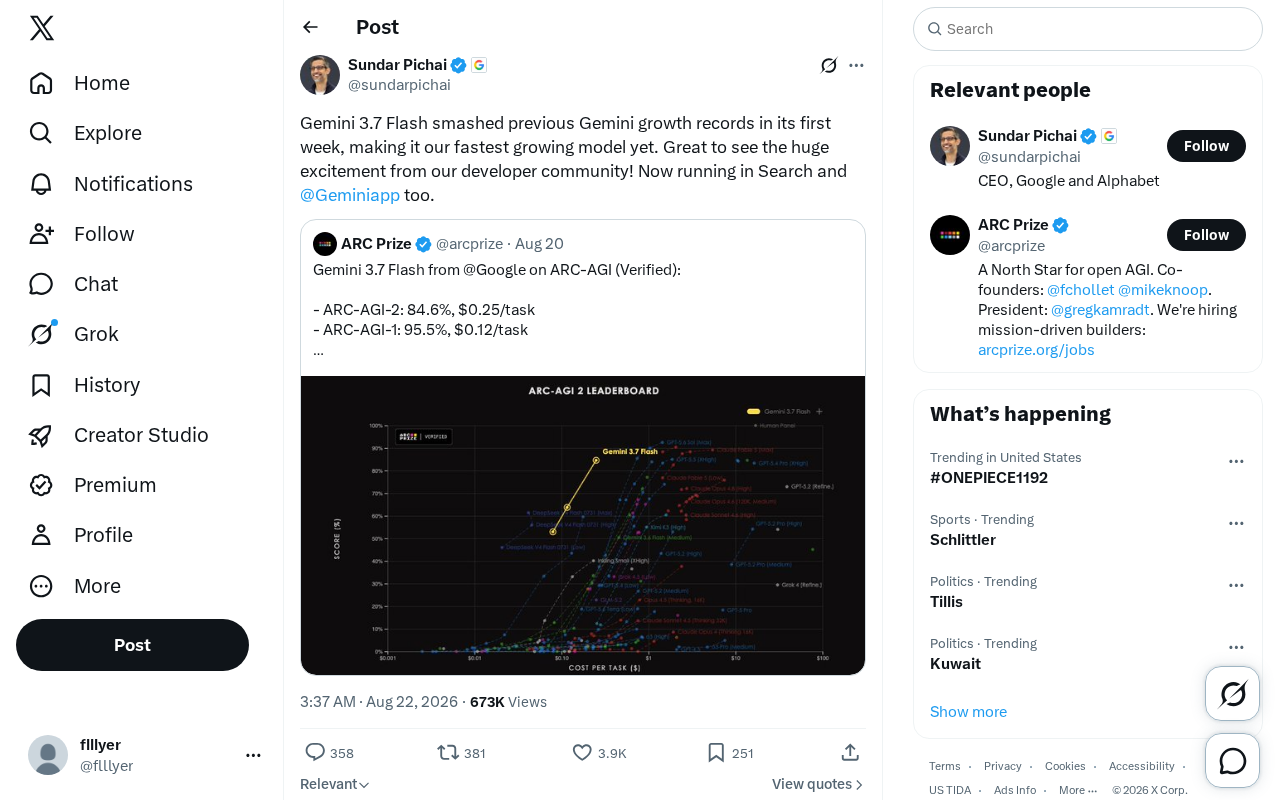
For a model family, "first-week growth" is often a reliable signal of genuine adoption among developers and end users. The fact that Gemini 3.7 Flash surpassed all previous versions so quickly suggests that Google has found the right rhythm with its lightweight, cost-efficient model line.
The Flash Series: Positioning and Significance
Why the Gemini Flash Models Generate So Much Interest
Since its debut, the Gemini Flash series has been positioned as a low-latency, low-cost efficiency-focused model line. Compared to the flagship Pro versions, Flash prioritizes response speed and the economics of large-scale deployment. For developers building high-concurrency, real-time, or cost-sensitive applications, the Flash series is often the more practical choice.
This explains why Gemini 3.7 Flash gained traction so quickly: it delivers strong reasoning and generation capabilities while keeping costs low, making it an ideal foundation for production-grade AI applications. Google's post specifically called out "enormous enthusiasm from the developer community" — and that enthusiasm is the core driver behind Flash's growth.
From the Lab to Real-World Applications
It's worth paying attention to Google's emphasis that Gemini 3.7 Flash is already running in Search and the Gemini App. This means the model isn't just available as an API for developers — it's been directly integrated into two of Google's most critical products.
Search is Google's core business. Deploying a new model in that environment is a strong vote of confidence in its stability, cost efficiency, and response speed. Meanwhile, its integration into the Gemini App means everyday users can directly experience the capability improvements the latest model brings.
The Strategic Logic Behind the Growth
A High-Frequency Iteration Strategy
Looking at the evolution of the Gemini model family, it's clear that Google is pursuing a rapid iteration approach. By continuously releasing updated Flash and Pro versions, Google can respond quickly to competitive moves while steadily delivering performance and cost improvements to developers.
The benefit of this strategy is that each version update brings tangible, noticeable improvements — keeping the community active and engaged. Gemini 3.7 Flash breaking growth records is a direct market-side validation of this "move fast in small steps" approach.
The Synergy of Google's Ecosystem
Google commands a vast product ecosystem spanning Search, Android, Workspace, Google Cloud, and more. When a new model can be rapidly and seamlessly embedded across these products, its reach to users is on a scale that few other companies can match. By landing in both Search and the Gemini App simultaneously, Gemini 3.7 Flash is essentially using Google's own distribution channels to amplify its capabilities to hundreds of millions of users almost instantly.
This dual flywheel of model capability + distribution reach is one of Google's most important competitive moats in the AI race.
Guidance for Developers Evaluating AI Models
For developers and organizations currently assessing which AI model to build on, Gemini 3.7 Flash's performance offers a few useful takeaways:
- Prioritize cost efficiency: In most production scenarios, Flash-class models deliver more practical value than flagship models;
- Watch for official product integration: When a model is adopted by a company's own core products, it's usually a strong signal that its stability has been rigorously validated;
- Stay current with iteration cycles: Google's rapid release cadence means developers need to continuously monitor new versions for capability and pricing changes.
Closing Thoughts
Gemini 3.7 Flash's record-breaking first week is both a testament to Google's technical capabilities and a reflection of the enormous real-world demand for lightweight, efficient models. As the model continues to deepen its presence in Search and the Gemini App, Google is well-positioned to capture an increasingly strong foothold in the wave of mainstream AI adoption.
It's worth noting that this article is based on information disclosed in Google's official posts. Specific performance benchmarks, pricing details, and head-to-head comparisons with competing models still await further third-party evaluations and official technical documentation.
Related articles
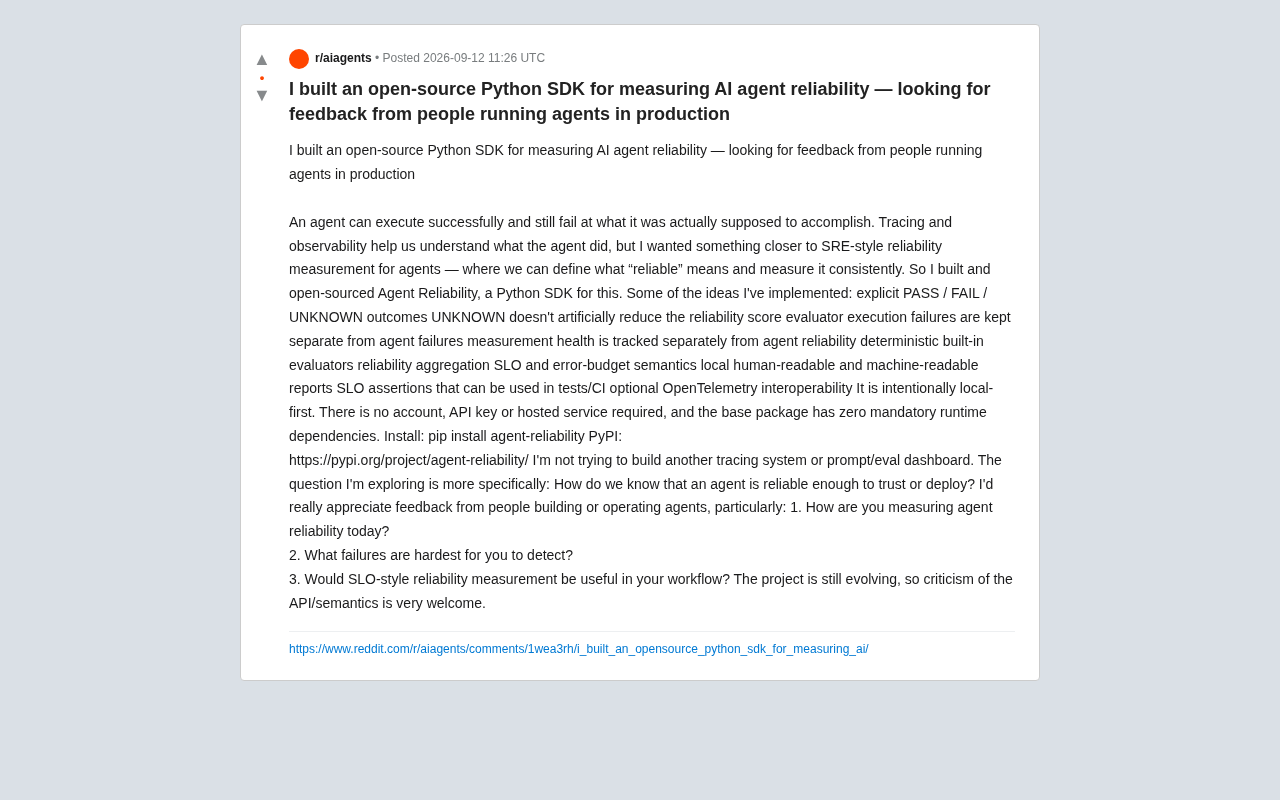
Open-Source Python SDK: Measuring AI Agent Reliability with SRE Principles
Agent Reliability is an open-source Python SDK that applies SRE's SLO and error budget concepts to AI Agent evaluation, with PASS/FAIL/UNKNOWN states, CI assertions, and zero forced dependencies.
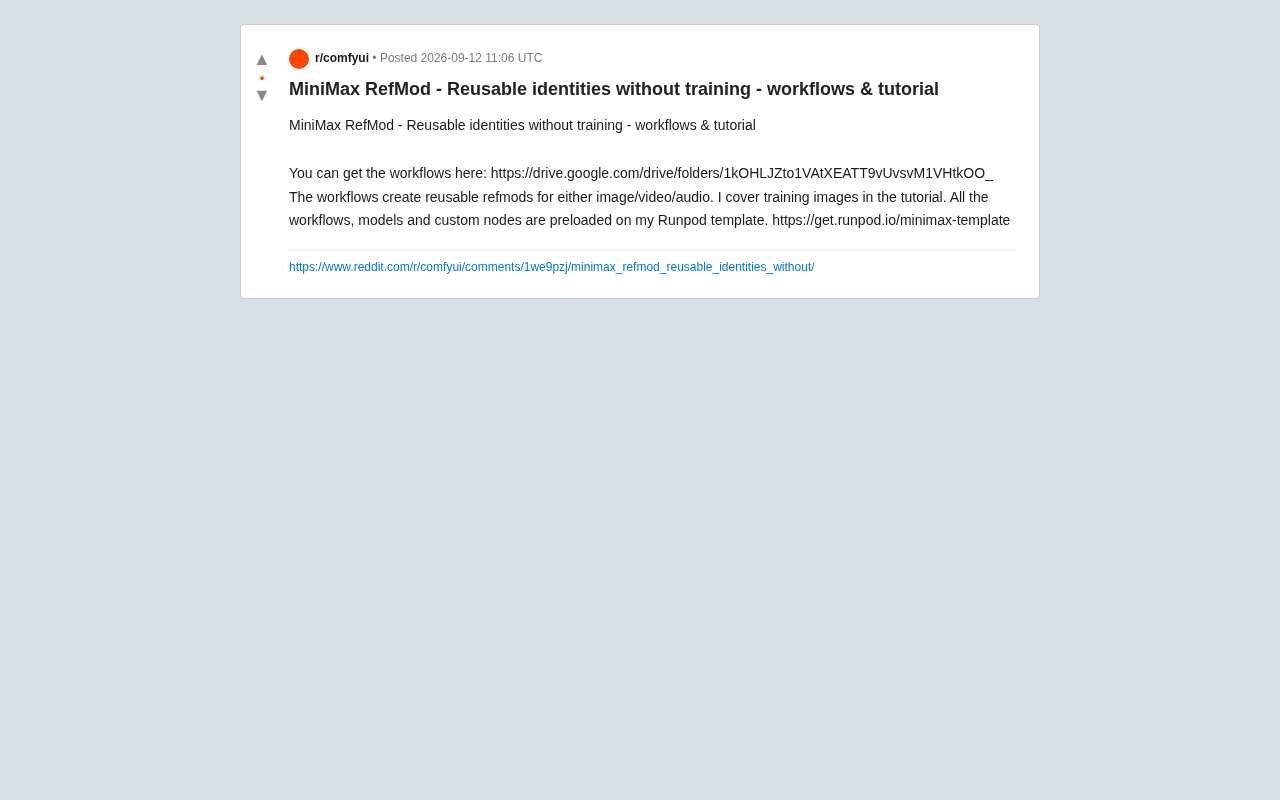
MiniMax RefMod: A Complete Guide to Training-Free Reusable Identity Workflows
MiniMax RefMod offers training-free reusable identity workflows for image, video, and audio generation. Includes Runpod template and tutorial for quick setup.

Invalid Source Material Notice
The source material provided lacks substantive information and is unrelated to AI/tech topics, making it impossible to produce a complete professional article.