Gemini 3.5 Flash Hands-On: Fast, Cheap, and Crushing 90% of Models in Arena Rankings

Gemini 3.5 Flash delivers near-Pro quality at Flash pricing, excelling in code generation and 3D tasks.
Google's quietly upgraded Gemini 3.5 Flash model shows remarkable performance in hands-on testing — generating web-based Mac OS interfaces, Three.js 3D models scoring 9/10, and complex particle animations. Appearing frequently in LMSys Arena blind tests, it approaches Pro-level quality at a fraction of the cost, signaling Google's strategy to dominate both performance and value tiers ahead of I/O 2025.
Gemini 3.5 Flash Hands-On: Fast, Cheap, and Crushing 90% of Models in Arena Rankings
When a "budget alternative" starts threatening the position of its own flagship product, you should be glad that this internal competition is happening within Google's own walls. Recently, Gemini 3.5 Flash (or its early test version) quietly appeared in AI Studio and the Arena, and hands-on testing revealed jaw-dropping results: a Flash-tier model whose output quality is nearly catching up to Pro.
Let me break down the full testing process and findings.
Google's Silent Upgrade: Flash Model Performance Surges, Approaching Pro
With less than three weeks until Google I/O 2025, Google has been making moves behind the scenes.
The Gemini 1.5 Flash model in AI Studio was quietly updated — the model's Slug identifier remained unchanged, but output quality clearly stepped up a tier. Multiple testers reported a leap in reasoning capabilities, performing more like Gemini 1.5 Pro than the original Flash.
This "silent upgrade" strategy is quite shrewd. Keeping the Slug unchanged means developers can enjoy the upgrade without changing a single line of code, while Google collects feedback data in real-world scenarios without bearing the PR risk of a formal release going wrong — essentially, global developers become a free testing team.
But what's worth pondering is: what does Flash approaching Pro-level performance actually mean? Either Pro's moat isn't as deep as imagined, or Google has achieved a qualitative breakthrough in model distillation and compression. Either way, it's not great news for OpenAI and Anthropic — if the "budget option" can deliver 80-90% of the results, who's going to pay for the flagship?
Meanwhile, Google has already emailed Vertex AI enterprise customers, notifying them that Gemini 1.5 Flash will soon be fully available.
Arena Blind Testing: New Flash Appears Frequently, Performs Impressively
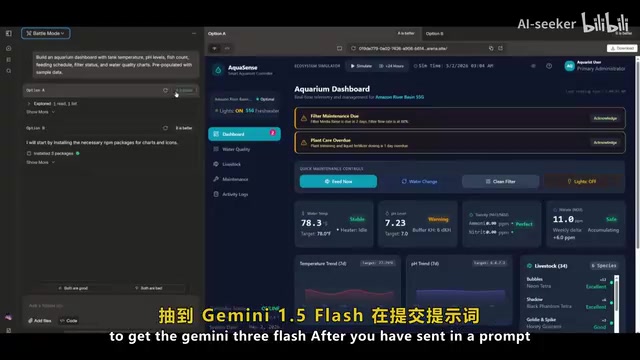
LMSys Chatbot Arena conducted blind comparison tests between old and new Gemini Flash versions, with the new version excelling in scene construction. Even more interesting: in the Arena's last seven battles, the new Gemini 1.5 Flash appeared in six of them.
Is this random assignment, or is Google deliberately boosting exposure? Big tech companies' model deployment strategies in the Arena are themselves a game of strategy. The Arena uses an ELO rating system similar to chess, ranking models through mass user blind-test voting. It has become the AI industry's equivalent of Yelp — a model's performance here directly influences developers' technology choices.
Google's decision to let the new model "compete" before official release is clearly aimed at building community buzz ahead of the I/O conference. It's both confidence in technical strength and savvy marketing strategy.
If you want to try it yourself, head to the Arena's battle mode and send prompts — there's a chance you'll get matched with the new Flash model.
Predicting Gemini's Release Cadence: A Three-Step Strategy
Based on current information, we can roughly predict Google's release cadence:
- Before Google I/O: First release Gemini 3.1 Flash to fill the performance gap between 3.0 Flash and 3.5 Pro
- May 19-20 at I/O: Officially release Gemini 3.5 Pro with comprehensive benchmark data
- Mid-June to early July: Release Gemini 3.5 Flash to capture the mass commercialization market
This "3.1 Flash → 3.5 Pro → 3.5 Flash" three-step approach is textbook product cadence management. First let existing users feel immediate improvement, then use I/O's spotlight to ignite attention, and finally use Flash's price-performance ratio to lock in the developer ecosystem.
However, there's a concern: version number inflation is numbing users. From 1.0 to 1.5 to 2.0 to 3.0 to 3.5, each time claiming a "massive leap" — user expectations have been stretched very high. If the actual demos at I/O can't live up to the promises these version numbers imply, the backlash will be worse than not releasing at all.
Note: The version numbers mentioned in the video (3.1, 3.5, etc.) may be based on community leaks and speculation. Google's actual naming at official release may differ — defer to official announcements.
Test 1: Web-Based Mac OS System Generation — Stunning Completion
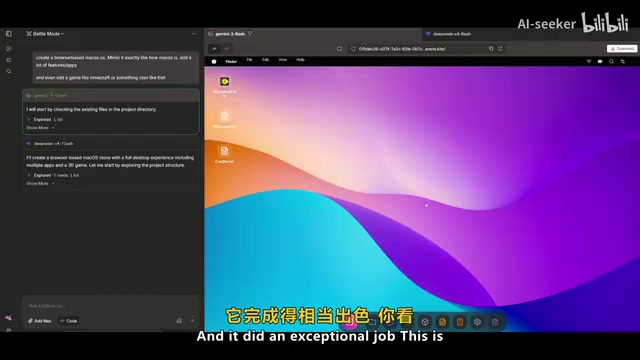
First hardcore test: have the upgraded Gemini Flash develop a web-based Mac OS system.
The results were explosive. It generated a complete frontend interface with a Spotlight search bar, various app icons, and file display areas. Even more surprising were the detail features — wallpaper switching, brightness adjustment, volume control — things most models simply can't do, all implemented.
For comparison, DeepSeekAd V4 couldn't even complete the build on the same task. The Flash model also generated a faux Safari browser (capable of displaying real website content) and a Minecraft clone, with built-in notes, calculator, settings, and other features. Output quality was already on par with Gemini 1.5 Pro.
The significance goes far beyond "showing off." It means a large volume of low-to-medium complexity frontend development work is being thoroughly commoditized by AI. Of course, there's an ocean — not just a river — between generating an interface that "looks like Mac OS" and actually building a usable operating system. But for rapid prototyping and demo scenarios, the Flash model is already disruptive enough to transform workflows.
Test 2: 360-Degree Product Previewer & Frontend Component Development
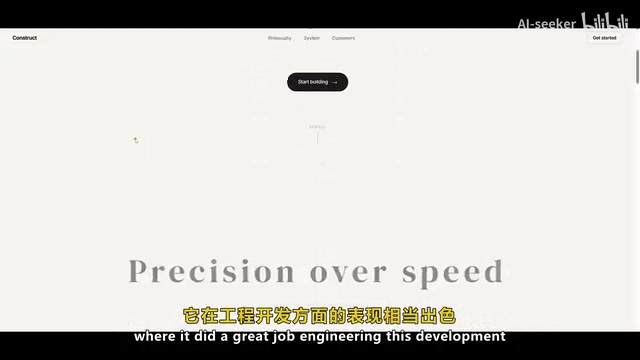
Next up: a 360-degree product previewer and a series of frontend development tasks.
The product previewer generation quality was excellent, and nearly all component requirements in the frontend tasks were handled well: dynamic effects, different template implementations, React components, GSAP animations (GreenSock Animation Platform, a high-performance JavaScript animation library), scroll interactions — all generated accurately.
Frontend code generation quality nearly replicated the same level as version 3.1. This reveals a brutal business logic: the stronger Flash gets, the more reason Pro's paying users have to downgrade. Google is essentially punching itself with its left hand. But from another angle, rather than letting OpenAI and Claude steal market share with mid-tier models, it's better to drive prices down first and use Flash's value proposition to lock in the developer ecosystem.
React components, GSAP animations, scroll interactions — these test items cover core real-world frontend development scenarios, and all performed accurately. This shows it's not benchmark-gaming optimization but genuine capability improvement. If this performance is offered at a lower price, Flash will become the primary tool for many developers.
Test 3: Three.js 3D Generation — PS5 Controller Scores 9/10
3D code generation is the "litmus test" for distinguishing AI model capability ceilings, because Three.js involves comprehensive understanding across multiple dimensions — geometric modeling, material systems, lighting calculations, user interaction — which simple pattern matching can't handle.
PS5 Controller Test: Generated a PS5 controller 3D model using Three.js — one of the best generation results seen to date, scoring 9/10. Keep in mind that 90% of models fail this test. The controller even supports multiple color theme switching — Rose Red, Galaxy Purple, etc. — with maxed-out details.
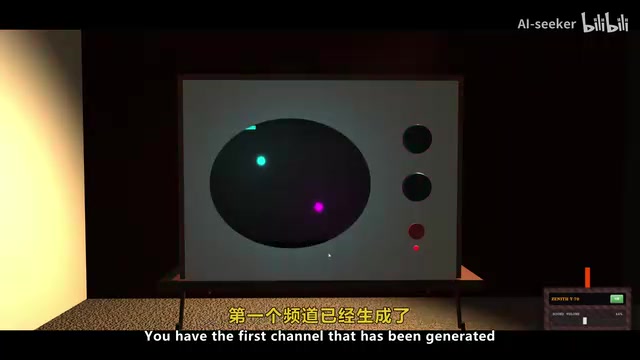
70s TV Simulator: Generated nine channels with extremely high completion. Channel content spans city life, ships at sea, music visualization, solar system simulation, sports events, flying bird animations, and more. Real-time rendering, shaders (small programs running on the GPU that control pixel colors and lighting), procedural animation, and physics simulation effects were all well-executed.
The only weak point appeared in mountain rotation and train trajectory physics — which also exposes a fundamental issue: AI still lacks true spatial reasoning capability when handling continuous physical state changes. It generates code that "looks right" rather than simulations that are "physically correct."
Test 4: Particle Graphics & Animation — The Legendary Butterfly Riding a Bicycle

The final test group covers particle systems and animation generation.
Butterfly Particle Effect: Generation quality was quite impressive, and the model automatically added flight path animation. Body feature accuracy needs improvement (points deducted), but for a Flash-tier model this is already excellent.
Butterfly Riding a Bicycle (yes, it's as absurd as it sounds): This produced one of the best results ever seen. Legs move in sync with the body, pedal rotation drives forward motion — this test seems ridiculous but is actually extremely tricky. It tests the model's understanding of physical correlations: pedal rotation → leg follow-through → wheel advancement → body balance — a multi-level causal chain.
Training data almost certainly contains no code samples for "butterfly riding a bicycle." The fact that the Flash model can generate such results demonstrates a degree of compositional generalization capability in code generation, rather than merely retrieving and stitching together existing code.
Final Thoughts: What Flash's Evolution Means
Google has long been criticized in AI for "waking up early but arriving late," but this Flash model's performance hints at a possible turning point.
If 3.5 Pro delivers on expectations at I/O, Google will simultaneously hold both the performance crown (Pro) and the value crown (Flash) — a product matrix advantage that OpenAI currently can't match.
What truly matters isn't the release timing, but Flash's API pricing: if Google dares to price it below GPT-4o-mini while maintaining this quality, that's the real nuclear weapon that changes the industry landscape.
The endgame of AI model competition isn't about who's smartest, but who can make "smart enough" cheap enough — and Google Flash's evolution is accelerating that endgame.
Related articles
 Product Reviews
The Programmer's Desk Setup Guide: Building a Workspace That Feels Like Home
Discover how programmers build productive, comfortable workspaces. From multi-monitor setups to ergonomic design, explore the desk philosophy that drives focus and flow.
 Product Reviews
Qoder vs Cursor Real-World Comparison: Which $20/Month AI IDE Is Better?
Hands-on comparison of Qoder vs Cursor AI IDEs: Agent autonomy, human interaction count, and architecture decisions. Qoder needed only 2 interactions vs Cursor's 8.
 Product Reviews
Cursor Cloud Agent Demo: Eliminating Bottlenecks Across the Entire Software Development Lifecycle
Deep analysis of Cursor's Cloud Agent demo showing how cloud VMs, automated test artifacts, and a full-chain control plane systematically eliminate human bottlenecks across the software development lifecycle.