Gemini 3.5 Flash In-Depth Review: How Powerful Is Google's Quietly Launched Budget AI Model?

Google's stealth-upgraded Gemini Flash delivers Pro-level performance at budget pricing across coding benchmarks.
Google silently upgraded Gemini 3 Flash in LM Arena, delivering near-Pro quality without changing the model slug. Real-world tests across browser-based macOS generation, Three.js 3D graphics, and SVG code creation show Flash-tier performance rivaling Gemini 3.1 Pro. This signals a strategic shift where AI competition moves from raw capability to cost-effectiveness, pressuring OpenAI, Anthropic, and others ahead of Google I/O.
Gemini 3.5 Flash In-Depth Review: How Powerful Is Google's Quietly Launched Budget AI Model?
Google recently pulled a sneaky move in LM Arena — the Gemini 3 Flash model slug stayed the same, but the output quality jumped two tiers overnight. When players in the AI arena started noticing "this Flash doesn't feel like before," a wave of speculation about Google's next move began.
Google Quietly Swapped the Cards in the Arena
Here's what happened: someone running repeated tests in LM Arena's Battle Mode noticed that Gemini 3 Flash's reasoning and response quality had improved dramatically — not a subtle fine-tuning tweak, but a leap approaching Gemini 3.1 Pro levels. The strange part? The model slug remained completely unchanged.
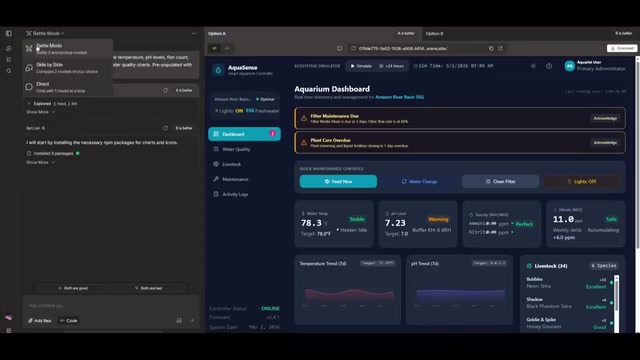
AI Battle comparison tests further confirmed the finding: in Voxel generation tests, 6 out of 7 random matchups pulled the new version, and the performance was impressive. No one can confirm whether this is Gemini 3.1 Flash, 3.2 Flash, or an early version of 3.5 Flash, but Google has already emailed Vertex AI enterprise customers revealing that Gemini 3.1 Flash Light is about to officially launch.
This stealth maneuver is expertly executed. Keeping the same slug while quietly inserting a much stronger model essentially uses LM Arena's blind testing mechanism as free large-scale A/B testing. Letting the community discover the "surprise" on their own generates more buzz than any official launch event.
But this raises a concerning issue: when model providers can silently swap models behind the same API endpoint at any time, users' trust in "model consistency" erodes. The prompt you tuned today might produce completely different outputs tomorrow due to a silent backend upgrade. For enterprise applications, this lack of transparency is a real liability.
A Three-Phase Release Strategy Before Google I/O
Based on current clues, we can piece together a reasonable speculation:
- Before I/O: Release Gemini 3.1 Flash first, bridging the performance gap between the current 3.0 Flash and the upcoming flagship model
- May 19-20 Google I/O keynote: Officially launch Gemini 3.5 Pro
- Mid-June to early July: Gemini 3.5 Flash follows up to capture the market
If this cadence holds true, it means Google has finally learned release rhythm management. Recalling Bard's awkward debut and Gemini 1.0's controversial demo, this current approach shows rare strategic patience. Using 3.1 Flash as a transition is a smart play: existing users don't feel abandoned, while flagship products retain their anticipation space.
Historically, Google's 0.5 version jumps (like from 1.0 to 1.5) have signaled major architecture-level upgrades. But whether this pattern extends to 3.5 depends on whether Google has achieved genuine breakthroughs at the foundational level, rather than just incremental optimization through more data and compute. Public testing in the Arena has already begun — an official launch shouldn't be far off.
Frontend Development Testing: Flash Doing Pro-Level Work
Now for the hardcore testing. First task: have the AI generate a browser-based macOS operating system.
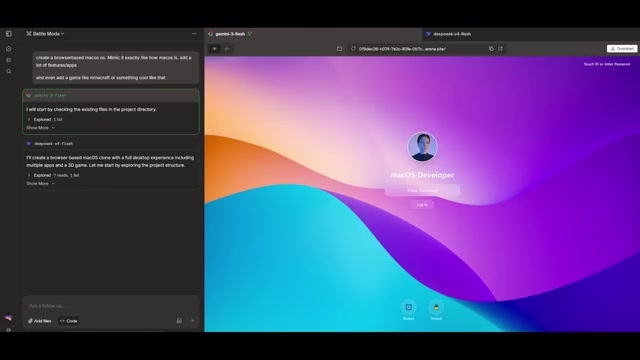
The results were spectacular. The generated system includes Spotlight search, Finder file manager, Safari browser, Terminal, Notes app, Calculator, Settings panel, and even an embedded Minecraft clone game. Changing wallpapers, adjusting brightness and volume — all these detail features actually work.
As a control, DeepSeekAd V4 completely failed on the same task, unable to complete the build. This comparison is devastating.
In more granular frontend development tasks, React components, GSAP animations, scroll interactions, and 360-degree product viewers were all generated with precision and quality. Overall frontend generation capability is essentially on par with Gemini 3.1 Pro.
Here's the key business logic: if a Flash-tier model can output equivalent-quality frontend code at a fraction of Pro's price, the entire AI coding tool pricing structure needs rewriting. Of course, we should stay level-headed — these one-shot generation demos are more impressive to watch than practical to use. Real frontend development isn't about generating one flashy page and calling it done; it's about maintaining code maintainability and extensibility through continuous iteration. Between "impressive first version" and "collapse on the tenth revision," AI-generated code often sits just a few requirement changes apart.
Three.js 3D Graphics Generation: 90% of Models Fail Here
3D graphics generation is the watershed that separates model capabilities — most models expose their weaknesses at this stage.
PS5 controller 3D generation scored 9/10 — among the best in comparable tests. Keep in mind, 90% of models outright fail this test.
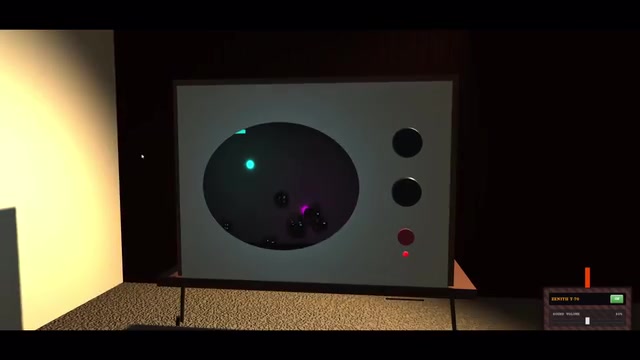
Even more impressive is the 1970s TV simulator: the model generated 9 different channel 3D scenes in one shot, covering city life, ships at sea, music visualization, solar system simulation, a Pong game, Fractal Trees, and bird flocking simulation. Each channel utilizes real-time rendering, Shaders, procedural animation, and physics simulation — essentially demanding the model simultaneously act as a 3D artist, graphics programmer, and creative director.
However, mountain terrain generation was the weakest performer in this round. The terrain's visual quality was acceptable, but navigation and physics interaction were completely off. This precisely exposes the core weakness of current AI code generation: models excel at "looks right" visual output but repeatedly stumble on tasks requiring deep spatial reasoning, like physics simulation and interaction logic. This isn't a problem more training data can simply solve — it's a fundamental limitation of language models in physical intuition.
SVG Code Generation: The Litmus Test for Lightweight Models
SVG generation is the ultimate litmus test for AI visual coding ability — every pixel is directly determined by code logic, with zero room for ambiguity or bluffing.
The butterfly SVG came out nicely, complete with a flight path animation, though body detail accuracy was lacking.
The real highlight was the pelican riding a bicycle SVG — rated as one of the best SVG generations the reviewer has ever seen. The pelican's legs synchronize with the bicycle pedal rotation, meaning the model simultaneously understood the pelican's body structure, the bicycle's mechanical kinematics, and the dynamic coupling between them — then expressed it all precisely using pure mathematical coordinates and path commands.

For a Flash-tier model, this performance is genuinely impactful. For designers and frontend developers, this might be more practically meaningful than any Pro-tier model launch — because you don't need to pay Pro-level API costs for an SVG icon.
Google's Next Move: Cost-Effectiveness Is the Endgame
Google's silent upgrade sends a clear signal: AI model competition has shifted from "who's the strongest" to "who can be strong enough at the lowest cost."
You can currently experience this upgraded model yourself through LM Arena's Battle Mode — send a prompt, vote, and you'll see whether you've been matched with the new Flash. As early as next week, we might see the official release of the new Flash version.
As Flash-tier models begin encroaching on Pro-tier territory, OpenAI's GPT-4o, Anthropic's Claude Sonnet, and DeepSeek's value-driven approach will all face enormous pressure from Google's "dimensional reduction" pricing strategy.
But whether Google I/O can truly become the stage for a "major comeback" depends on an old question: can Google close the gap where product execution has long lagged behind technical capability, even as model performance improves? After all, having the best model and having the best product have never been the same thing.
The endgame of the AI race isn't about who builds the smartest brain, but who can run the most valuable workloads on the cheapest chips — Google's quiet card swap is a bet on exactly this future.
Related articles
 Product Reviews
The Programmer's Desk Setup Guide: Building a Workspace That Feels Like Home
Discover how programmers build productive, comfortable workspaces. From multi-monitor setups to ergonomic design, explore the desk philosophy that drives focus and flow.
 Product Reviews
Qoder vs Cursor Real-World Comparison: Which $20/Month AI IDE Is Better?
Hands-on comparison of Qoder vs Cursor AI IDEs: Agent autonomy, human interaction count, and architecture decisions. Qoder needed only 2 interactions vs Cursor's 8.
 Product Reviews
Cursor Cloud Agent Demo: Eliminating Bottlenecks Across the Entire Software Development Lifecycle
Deep analysis of Cursor's Cloud Agent demo showing how cloud VMs, automated test artifacts, and a full-chain control plane systematically eliminate human bottlenecks across the software development lifecycle.