Gemini 3.7 Flash in Action: Generating a Complete 90s Retro Game with a Single Sentence

Gemini 3.7 Flash generates a full retro game from one prompt and remixes it entirely by changing a few words.
Google's Gemini 3.7 Flash demonstrates remarkable AI coding capabilities in a live demo where a developer creates a complete 90s sprite-based game using a single natural language prompt. The model autonomously plans game logic, generates art assets, and even adds unrequested details like flame reflections. Most impressively, changing the protagonist from a wizard to a pizza delivery guy instantly regenerates the entire game world with new enemies, scenes, and mechanics—compressing creative iteration to seconds.
One Prompt, One Complete Retro Game
Google's latest release, Gemini 3.7 Flash, is officially defined as the "most intelligent workhorse model," optimized specifically for coding and Agent scenarios. Google's decision to position it as a "workhorse" rather than a flagship reflects the maturing segmentation of the AI model market. In today's ecosystem, models roughly fall into three tiers: flagship models (pursuing peak capability but with high cost and latency), workhorse models (balancing performance and efficiency for high-frequency daily use), and lightweight models (designed for edge deployment). For developers, over 90% of everyday coding tasks don't require the most powerful model—they need a responsive, accurate, and low-iteration-cost "get-things-done" player. The Flash series targets precisely this high-frequency use case.
In this hands-on demo from Google for Developers, a developer built a complete 90s-style sprite-based animated game using just a single natural language instruction. Sprites are a foundational concept in 2D game development, referring to 2D images or animations that can independently move and be controlled on screen. During the golden age of 90s gaming, from Super Mario to Mega Man to Metal Slug, virtually all classic games were built on this technology. Developers needed to draw character animations frame by frame (called a sprite sheet), then use code to control the display order and position of images to create animation effects. Traditionally, producing a complete set of sprite assets required pixel artists weeks or even months of work, while Gemini 3.7 Flash can simultaneously generate art assets and game logic code in seconds—an efficiency leap of several orders of magnitude.
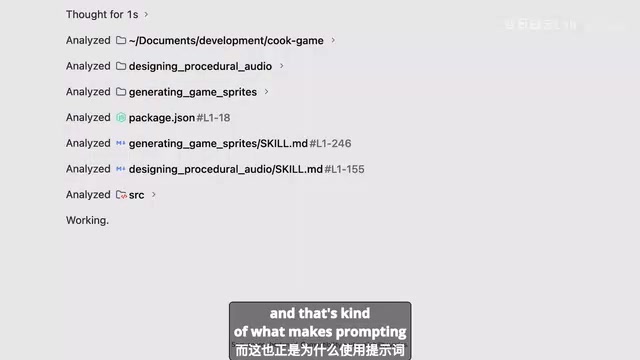
The demo's starting point was remarkably simple: "Build a single level of an animated sprite-style 90s game, generate all assets with nano banana." The "nano banana" mentioned here refers to Gemini's built-in image generation capability, used to produce the visual assets needed for the game alongside code generation. This represents a new development paradigm: in traditional game development, art and programming are two parallel but separate pipelines—the art team produces assets and hands them to the programming team for integration, with significant communication costs and version iterations in between. Gemini 3.7 Flash merges these two pipelines into a single AI workflow, where the model plans game logic while understanding what visual resources are needed and instantly generates matching assets, ensuring consistency between art style and code logic.
The model then began autonomous planning—first laying out the entire game's construction plan, then simultaneously generating art resources and building game logic. This process of "generating assets while writing code" was the most impressive part of the demo.
The final game output was surprisingly impressive: polished character designs, expansive maps, players traversing different level scenarios, and facing various enemies. Even more noteworthy were the details—for instance, when the character shoots flames, the firelight produces reflections on the walls. These weren't explicitly requested by the developer but rather the model's proactive completion of the prompt's intent, demonstrating strong "design adherence."
Design adherence is a critical quality metric in AI generation, referring to the model's ability to maintain unified coherence across visual style, interaction logic, and overall experience. Taking the flame wall reflection as an example, this falls under "implicit design intent"—the developer didn't explicitly request lighting effects, but a model with design adherence would infer: since the scene is set in a 90s sprite-style game and the character can shoot flames, environmental lighting feedback is a standard practice for enhancing immersion in this type of game. This capability requires the model to have deep understanding of game design patterns, rather than merely executing literal instructions.
Change a Few Words, Change the Entire Game World
The core capability this demo truly aimed to highlight was the model's "rapid iteration" and "remix" experience. The remix concept originates from music and digital art, referring to replacing key elements while preserving the core structure to produce entirely new works. In a software development context, this means the model isn't simply doing text replacement but understanding the entire system's semantic structure before performing systematic reconstruction.
Building on the original prompt, the developer simply swapped the protagonist from a "wizard" to a "pizza delivery guy in a suburban neighborhood"—changing just a few words caused the entire game's art style, scenes, and gameplay logic to be completely restructured. When the prompt changed from "wizard" to "pizza delivery guy," the model needed to re-derive: what's the delivery guy's weapon (pizza), what are the enemies (chasing dogs, food-stealing raccoons), what should the scene be (suburban streets rather than dungeons), what's the victory condition (delivering pizza rather than defeating a boss). This semantic-level global reconstruction capability far exceeds simple parameter substitution.
Seconds later, a new game called "Pizza Rush" was "freshly delivered." The presenter described: this was exactly the suburban neighborhood scene he had imagined—dogs chasing him, and he could even feed them pizza; he fed the pizza to the raccoons instead of the neighbor. The entire world's settings, character behaviors, and interaction rules were all automatically adapted and generated based on the new prompt.
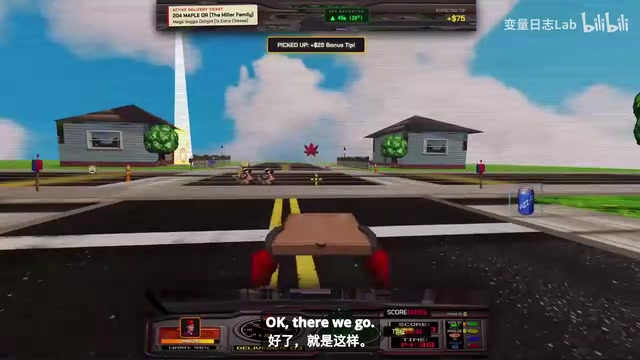
This ability to "change a phrase, change a world" is tremendously significant for game development—a field heavily reliant on creative trial and error. In traditional workflows, changing a core concept often means massive rework; with Gemini 3.7 Flash, the cost of creative iteration is compressed to the scale of "changing a few words."
Beyond Games: Comprehensive AI Development Capability Improvements
Google explicitly stated that 3.7 Flash's improvements aren't limited to AI game generation. The model shows notable improvements in debugging, web development, and overall design adherence.

The official core summary of this upgrade comes down to three points: fewer shots to reach the goal, less back and forth, and higher fidelity output.
The emphasis on "fewer shots" directly relates to interaction efficiency in actual use. Research shows that developers using AI coding tools need an average of 3-5 conversation rounds to get satisfactory output, with each additional interaction breaking flow state and increasing cognitive load. If a model can hit the intended target in 1-2 rounds, developers' subjective efficiency perception might improve 2-3x—even if the model's benchmark scores only improve by 10-15%. This is why Google emphasizes "feels better" rather than pure benchmark improvements.
Together, these three points converge on a key developer experience goal—making "building with AI" itself "feel better."
For developers who regularly use AI programming tools, the "number of back-and-forth exchanges" is often the invisible killer of efficiency. A model that can hit the target on the first or second attempt may deliver actual productivity far beyond what benchmark improvements suggest. This also explains why Google positions it as a "workhorse"—not pursuing peak performance like a flagship, but pursuing stability and efficiency in high-frequency daily use.
Availability and Developer Access
Gemini 3.7 Flash is already rolling out across multiple platforms, including:
- Google Antigravity (Google's Agent programming environment)
- AI Studio (a model experimentation and building platform for developers)
- Gemini API (for integration into your own products)
This demo was completed in the Antigravity environment. Google Antigravity is Google's Agent programming environment, representing a paradigm shift from "AI-assisted programming" to "AI-autonomous programming." Traditional AI coding tools (like early versions of GitHub Copilot) primarily did code completion, with developers still leading architecture design and file organization. In an Agent programming environment, AI takes on a role closer to a junior developer: it can understand high-level goals, autonomously decompose tasks, plan execution steps, generate multiple files, handle dependencies, and self-debug when encountering issues. The name "Antigravity" itself contains the metaphor of freeing the development process from the constraints of traditional engineering gravity.
This also reveals Google's overall strategy in the "Agent + programming" direction: models are no longer just passively generating code but actively planning, generating resources, assembling finished products, and supporting rapid remix iteration.
Brief Commentary
From this demo, Gemini 3.7 Flash's highlight isn't "whether it can generate a game"—previous models already had that capability—but rather the comprehensive experience of generation quality, intent understanding, and iteration efficiency. Details like flame wall reflections and the ability to remix an entire world by changing a few words both reflect the model's progress in "understanding creative intent."
Of course, demo videos are cherry-picked best-case scenarios, and real-world stability and performance on complex projects still need validation in actual development scenarios. But as a model positioned for "daily workhorse" high-frequency use, if it can truly deliver on its promise of "less back and forth, higher fidelity," the practical productivity gains for AI-assisted development will be quite substantial.
Related articles

DeepCell: One-Click AI Generation of Documents, Spreadsheets, and Slides
DeepCell tops Product Hunt with one-click generation of documents, spreadsheets, and slides, using the .deepcell format for linked updates, designed for System 2 tasks like modeling and sales reviews.

Doneas: 15-Minute Daily Accountability Calls That Keep Indie Developers From Procrastinating
Doneas is a daily accountability tool for indie developers: plan tasks on Monday, join a 15-minute call with five builders each day, and log deliveries on a public progress page. This article analyzes its core mechanics, effectiveness, and potential issues around retention and matching.

Fastlane 2.0: Fully Automated AI Ad Campaigns, From Creative to Optimization
Fastlane 2.0 is an AI ad automation tool: enter your website and it learns your brand, generates video and image ads, and runs and optimizes them on Meta, TikTok, Instagram, and YouTube.