Gemini 3.7 Flash Released: AI Agents Reshaping Coding and SEO Workflows

Google's Gemini 3.7 Flash brings stronger coding, design, and multi-step reasoning to AI agent workflows.
Google released Gemini 3.7 Flash, its smartest workhorse model designed for coding and AI agent scenarios. Key upgrades include better first-pass coding quality, improved UI design adherence from rough sketches, and stronger multi-step reasoning with fewer errors. Google also launched Gemini Spark, a cross-Workspace AI assistant. For SEO professionals, these advances accelerate page building and content workflows, but ranking success still depends on solid SEO strategy fundamentals.
Google released its new model Gemini 3.7 Flash on August 13, 2026, officially calling it the "smartest workhorse model" to date, purpose-built for coding and agent scenarios. This isn't just a routine model iteration — it's another acceleration by Google on its path toward "making AI actually get things done." For professionals running websites, creating content, and doing SEO, this update may be far more significant than they realize.
The Paradigm Shift from "Answering Questions" to "Completing Tasks"
Traditional AI works simply: you ask a question, and it gives an answer. Agent logic is entirely different — you give it a goal, and it plans the steps on its own, calls the right tools, checks its own work, and completes the task.
Agents are one of the most important technical paradigms in AI today, fundamentally different from the traditional "prompt-response" model. Traditional large language models function like Q&A machines, with each interaction standing alone. In agent mode, the AI is given "goal-oriented" capabilities: it can break down a complex goal into multiple subtasks, autonomously plan execution order, call external tools at each step (such as search engines, code executors, API endpoints), and dynamically adjust subsequent strategies based on intermediate results. The technical foundations for this capability include the ReAct (Reasoning + Acting) framework, tool-calling protocols, and memory management mechanisms. Google, OpenAI, Anthropic, and other companies all view agents as a core competitive direction, because agents represent the critical leap from "knowledge retrieval" to "task execution."
This is exactly where Gemini 3.7 Flash is positioned. Google says the model has invested more heavily in multi-step reasoning, enabling better planning, tool calling, and instruction-following throughout the entire execution process.
Multi-step reasoning is a key metric for measuring an AI model's real-world usability. In single-step tasks, the model only needs to process one input and generate one output, so the impact of errors is limited. But in multi-step tasks, each step's output becomes the next step's input, and errors accumulate like a snowball — this is known as the "Error Cascading" problem. If a model has 95% accuracy per step, after 10 consecutive steps the overall accuracy drops to roughly 60%. Therefore, maintaining high precision across long task chains requires stronger context retention, self-verification mechanisms, and planning capabilities. Gemini 3.7 Flash's improvements in this area suggest it may have internally introduced more robust Chain-of-Thought verification and backtracking correction mechanisms.
The measure of a great agent isn't whether it can deliver one clever answer — it's whether it can complete 10 consecutive steps without breaking down at step 6.
This is especially critical for SEO. Today's SEO is far more than writing blog posts — it involves building pages, editing code, managing content, and performing extensive multi-step research. A model that can execute multiple stages in sequence without falling apart mid-way hits this pain point squarely.

Three Core Upgrades of Gemini 3.7 Flash Explained
Stronger Coding Capabilities
Google calls Gemini 3.7 Flash the "smartest coding workhorse model," with higher first-pass code quality, stronger debugging capabilities, and less rework.
Some early users on Reddit report that it feels noticeably stronger than the previous generation Flash model, particularly within Google's coding tool called Anti-Gravity. Anti-Gravity is Google's AI-powered coding tool, similar to competitors like GitHub Copilot and Cursor, but deeply integrated with Google's own Gemini models. The core philosophy behind these AI coding tools is shifting developers from "writing code line by line" to "describing intent and letting AI generate code," with developers taking on more of a reviewer and architect role. Anti-Gravity's unique advantage lies in its tight integration with Google's cloud ecosystem (such as Firebase and Google Cloud Platform), enabling the entire workflow from code writing to deployment to be completed with AI assistance. To be fair, these are still early subjective user reactions rather than official benchmark scores, but they're worth keeping an eye on.
Better UI and Web Design Capabilities
The second upgrade that excites content creators is improved design adherence. The model has become better at "building websites and interfaces from design references" — you can give it a screenshot or a rough design sketch, and it can produce a functional, usable web page.
Here's a practical example: you could enter a prompt like "Design a landing page for a community that converts visitors into members, clearly showcasing value, outlining community benefits, keeping it clean and easy to read." A single prompt produces a genuinely usable landing page.
For SEO teams, this means a massive efficiency boost. Building pages manually — writing copy, laying out content, checking mobile display, fixing spacing issues — used to take hours. If a model can directly turn designs into usable pages, the hours saved each week can be redirected to higher-value work like strategy development, link building, or keyword research.
Stronger Multi-Step Reasoning and Instruction Following
The improvement in design adherence also opens a new door: rapid A/B testing of landing page layouts. You can have the model batch-generate different versions and test which layout holds attention longer or drives higher conversions.
On a technical level, improvements in instruction following mean the model can more precisely understand and execute complex, multi-constraint instructions. For example, "Generate a landing page with these requirements: headline no more than 8 words, primary color blue, include three value proposition cards, CTA button at the bottom, mobile-first" — such compound instructions would often cause previous models to drop certain conditions, but stronger instruction-following capability allows the model to satisfy all constraints simultaneously, dramatically reducing the need for manual corrections.
Gemini Spark: An Always-On AI Assistant Across Workspace
Beyond the model itself, Google also launched Gemini Spark — an always-on personal AI assistant powered by Gemini 3.7 Flash. In available regions, both Google AI Pro and Google AI Ultra subscribers can access it.
Spark's standout feature is its ability to work across Google Workspace, unifying Gmail, Calendar, and Docs. Google Workspace (formerly G Suite) is Google's productivity suite for businesses and individuals, with over 3 billion users worldwide. Gemini Spark's cross-Workspace capability essentially embeds an AI agent into the toolchain users interact with most frequently every day. This directly competes with Microsoft's strategy of integrating Copilot into Microsoft 365. The technical challenge of cross-application collaboration is that different applications have different data formats and permission models — the agent needs a unified data access layer and a strict permission management framework to move freely between email, calendar, and documents while maintaining security. Google's advantage here is that Workspace is already a unified architecture, so the technical barriers to data interoperability are relatively low.
So instead of asking it simple questions, you can give it a goal like "Organize the to-do tasks from my emails and calendar," and it will execute automatically.

According to hands-on testing by Tom's Guide, Spark can browse emails and files, identify deadlines, payments, and other tasks, organize them into a master list, and even draft replies and reminders within its authorized scope.
However, it's not perfect. The same testing found that Spark skips some unnamed files and can't always handle emails flawlessly. It's powerful, but it's not magic — human review is still essential. This is actually a lesson worth remembering with every AI tool: treat AI as an extremely fast assistant, not a replacement for your own judgment.
Availability and Release Cadence
Here's the current rollout status for Gemini 3.7 Flash:
- Developers: Gradual rollout via Gemini API, Google AI Studio, Google Anti-Gravity, and Android Studio
- Enterprise users: Available through the Gemini Enterprise agent platform and applications
- General users: Via Gemini Spark (requires Google AI Pro or Ultra subscription)
What's interesting is the release cadence. Just about three weeks ago, Google released Gemini 3.6 Flash — a model that already featured a million-token context window with built-in function calling, search, and computer use capabilities.
A million-token context window means the model can process the equivalent of multiple books' worth of content in a single pass. This is especially important for agent scenarios, because agents executing complex tasks need to maintain large amounts of intermediate state, historical operation records, and reference materials in memory. A million-token context enables agents to execute longer task chains without losing earlier information, and to reference more documents and data sources when making decisions. However, larger context windows come with higher computational costs, so maintaining inference speed and cost efficiency with large windows is a core technical challenge the Flash series has been continuously optimizing — which is exactly what the "Flash" name implies: prioritizing speed and efficiency while pursuing intelligence.
Function calling, meanwhile, is the key technical bridge that transforms large language models from "pure text generators" into systems that can "operate in the real world." A model with function-calling capability can recognize user intent and then generate structured function call instructions — such as calling a weather API to check real-time weather, querying a database for order information, or calling a code executor to run a program. The model itself doesn't directly execute these functions; instead, it generates call requests in a specific format, which external systems execute and return results to the model, allowing it to continue reasoning based on those results. This "model + tools" collaboration pattern is the core infrastructure for building agents.
Clearly, Google isn't slowing down at all, and every release is leaning further toward "agents that can actually take action."

Practical Implications for SEO and the Content Industry
Zooming out, the essence of this shift is: companies that learn to use agents for research, content creation, and website building will grow faster than those doing everything manually.
But there's a critical distinction that must be made clear: Building a great page and getting that page seen on Google are two completely different problems.
AI can help you build pages rapidly, streamline workflows, and draft content, but it can't do the ranking for you. If you're pouring time into AI tools and content production but traffic isn't growing, it means your SEO fundamentals — content strategy, link building, keyword research — are what truly need attention. Search engine ranking algorithms evaluate content based on Authority, Relevance, and User Experience, and a significant portion of these signals — especially high-quality backlinks and branded search volume — still cannot be automatically acquired through AI tools alone. AI can dramatically raise the speed and quality floor of content production, but the ceiling of ranking competition still depends on the depth and execution of your overall SEO strategy.
Here's an open-ended question worth pondering: If your AI agent can already read your emails, check your calendar, and draft replies, what will your work look like six months from now? This doesn't mean it will replace you — it means the nature of work is transforming rapidly. Those who adapt to this transformation early will be the biggest beneficiaries.
Key Takeaways
Related articles
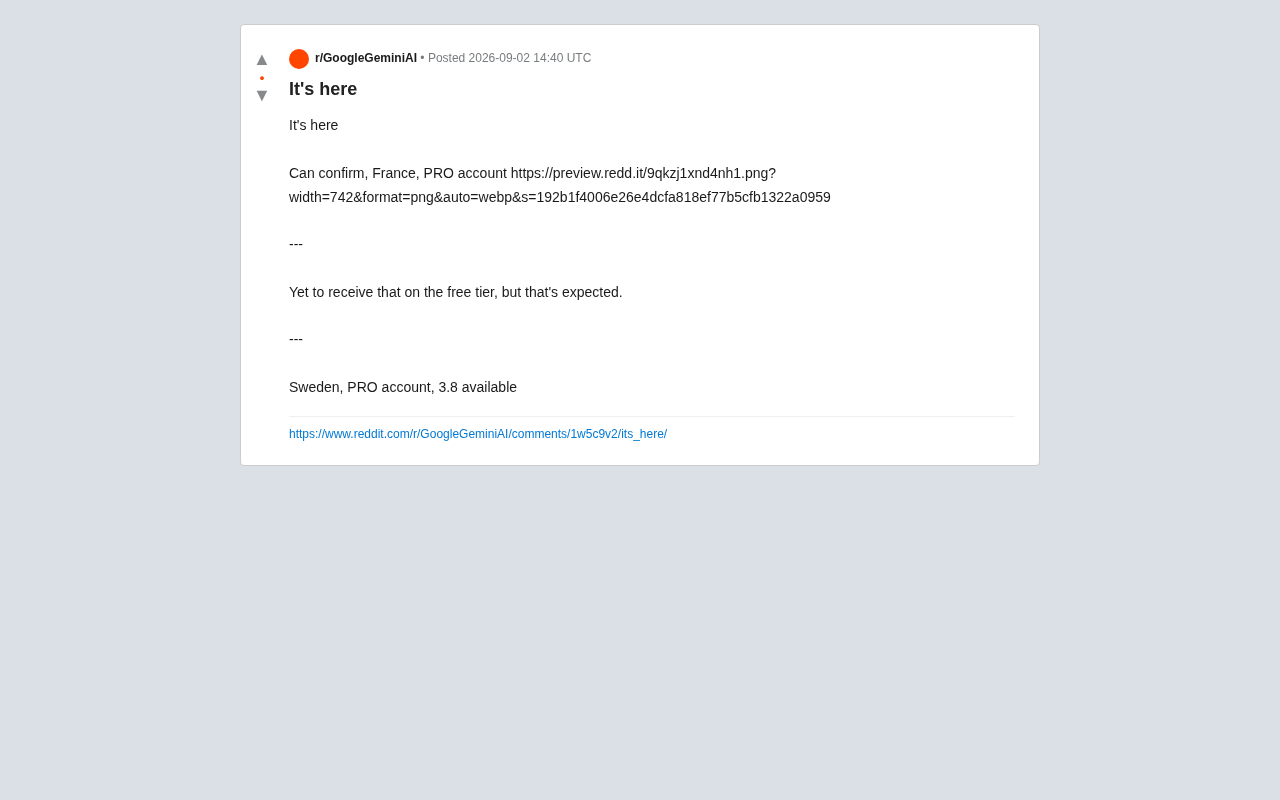
Claude 3.8 Quietly Goes Live: PRO Users Get First Access via Gradual Rollout
Claude 3.8 quietly launches via gray release, with PRO users getting first access. Community feedback, rollout strategy, and how to check if you have the update.

The Aging Brain Doesn't Forget — It Blends Memories Together
New research reveals aging-related memory issues aren't about losing information but blending memories together. Declining hippocampal pattern separation makes similar experiences hard to distinguish.

Claude 5.1 Leaked on Launch Day: 275,000-Word System Prompt Exposed, Revealing the Truth Behind AI
Anthropic launches Claude 5.1 dual-version flagship with doubled performance and 75% cost cuts, but hackers leak its full 275,000-word system prompt, revealing AI's engineered persona.