Gemini 3.8 Flash Leaked in Internal Testing: Google Iterating Flash Models Every Two Weeks

Leaked info suggests Google is already testing Gemini 3.8 Flash just two weeks after releasing 3.7 Flash.
Reddit leaks indicate Google employees are testing Gemini 3.8 Flash Preview internally, only two weeks after Gemini 3.7 Flash launched. This unprecedented iteration speed reflects Google's aggressive push to dominate the mid-tier AI model market against rivals like OpenAI, Anthropic, and Meta. While rapid updates offer developers continuous capability upgrades, they also raise concerns about output drift and stability in production environments.
Gemini 3.8 Flash Leaks from Internal Testing
According to information circulating on the Reddit community, Google employees have already been using Gemini 3.8 Flash Preview in an internal testing environment codenamed "Jetski." Based on early user feedback, the new version is "noticeably better" compared to the recently released Gemini 3.7 Flash.
You might not have noticed, but Gemini 3.7 Flash was only released about two weeks ago. This means Google is already polishing the next-generation Flash model in an incredibly short timeframe — an iteration cadence that's quite rare in the large language model industry.
It's important to note that this information currently comes from a single community source (Reddit) and has not been officially confirmed by Google. The claim of "noticeably better" is a subjective early impression from internal personnel, lacking specific benchmark data to back it up. Readers should treat this as rumor rather than confirmed fact.
Flash Series Positioning Within the Gemini Family
Within the Gemini family's product matrix, Flash is positioned as the "lightweight, fast, low-cost" model tier, targeting high-throughput, low-latency use cases. Compared to the flagship Gemini Pro models, Flash significantly reduces inference costs while maintaining usable intelligence, making it the go-to choice for large-scale deployment and API-call-intensive applications.
The key to Flash's low latency and low cost lies in Model Distillation and architectural streamlining. Model distillation involves using the outputs of a large "teacher model" (such as Gemini Pro/Ultra) to train a smaller "student model," enabling it to retain as much of the large model's reasoning capability as possible despite a dramatically reduced parameter count. Additionally, the Flash series typically employs fewer Transformer layers, smaller hidden dimensions, and may leverage a Mixture of Experts (MoE) architecture — where the model contains multiple expert sub-networks internally, activating only a small subset during each inference pass, thereby controlling actual computation while maintaining a large total parameter count. These technical approaches collectively ensure that Flash models consume far less GPU compute per API call than Pro-tier models, enabling Google to offer services at lower prices while maintaining acceptable output quality.
The Competitive Logic Behind High-Frequency Iteration
The rapid jump from Gemini 3.7 Flash to 3.8 Flash reflects Google's strategic ambition in the mid-tier model segment. The competitive focus of the AI model market is gradually shifting from "whose top model is smartest" to "whose cost-effective model is most practical." For the vast majority of developers and enterprise customers, day-to-day operations don't require top-tier models — they need the option that strikes the best balance between cost, speed, and quality.
The lineup of competitors on this battlefield is formidable. OpenAI's GPT-4o mini and GPT-4.1 mini occupy a similar position, targeting low-cost, high-performance API call scenarios; Anthropic's Claude 3.5 Haiku similarly targets high-throughput applications; Meta's Llama series enters the fray with an open-source strategy, allowing developers to deploy on their own infrastructure and further compress costs. In the Chinese market, DeepSeek and Alibaba's Qwen series are also showing strong performance in the value-for-money lane. The essence of this competition is the fight to become the "default option" in the developer ecosystem — when a model becomes the default call target for most applications, the cloud platform behind it gains enormous lock-in effects and a continuous revenue stream.
Flash is the core weapon on this battlefield. Whoever can make lightweight models continuously improve in shorter cycles will seize the initiative in the developer ecosystem. A cadence of one major version iteration every two weeks, if true, means Google is treating Flash as the frontline for rapid experimentation and rapid delivery.
Opportunities and Concerns of Rapid Iteration for Developers
Continuous Capability Upgrade Dividends
If Google can maintain this update frequency, developers will continuously benefit from ever-improving model capabilities at unchanged (or even decreasing) costs. For teams building AI applications, this means "free upgrades" to the underlying capabilities — no need to modify architecture, just switch model versions to gain performance dividends.
Potential Stability Risks
However, excessively rapid version iteration is not without costs. Frequent model turnover can introduce behavioral inconsistencies and Output Drift, creating challenges for production environments that depend on stable outputs.
Output drift is a core pain point in LLM version transitions. Even when a new version performs better overall on benchmarks, its output style, formatting, and even logical tendencies on specific tasks and input patterns may differ significantly from the previous version. For example, an application that relies on the model to generate structured JSON might encounter parsing errors because the new version subtly changes how it interprets formatting instructions. OpenAI faced a wave of developer complaints due to output drift during the GPT-4 to GPT-4 Turbo transition. To address this issue, the industry has gradually adopted the best practice of "Model Pinning" — locking a specific model version in production environments rather than automatically using the latest version, and only upgrading after thorough regression testing. Whether Google provides a sufficiently long version pinning support window for the Flash series will directly affect enterprise user trust.
Enterprise users often value predictability and long-term support over simply "newer is better."
Additionally, the version number jumping directly from 3.7 to 3.8 raises questions about Google's version naming strategy: what exactly do these decimal increments represent in terms of capability differences? The LLM industry currently lacks a unified versioning standard, and naming conventions vary significantly across vendors. OpenAI uses generational naming (GPT-3.5, GPT-4, GPT-4o), Anthropic uses a family + codename pattern (Claude 3 Opus/Sonnet/Haiku), while Google's Gemini uses decimal increments after the major version number. Following the conventions of Semantic Versioning in software engineering, decimal-point increments typically imply feature enhancements rather than architectural overhauls. But in the AI model space, whether a decimal point difference represents a 5% or 50% capability improvement depends entirely on the vendor's internal definition — outsiders cannot judge from the version number alone. This information asymmetry is a microcosm of the AI industry's lack of transparency. Without transparent evaluation data, it's difficult for outside observers to objectively measure the actual improvement of each iteration.
How to Rationally View This Internal Testing Rumor
Overall, the Gemini 3.8 Flash news is currently more of a signal for industry observation than a conclusive fact. It reflects at least two noteworthy trends:
First, Google is investing intensive R&D resources at the Flash tier, attempting to establish a speed advantage in the mid-tier AI model market; Second, the iteration cycles of major LLM vendors are being compressed to a weekly cadence, and industry competition is entering a white-hot phase.
For regular users and developers, the rational approach is: stay informed, but don't over-hype. Real capability improvements need to be validated by Google's official release and third-party benchmark testing. Until then, "Gemini 3.8 Flash is better than 3.7" remains an unverified early impression from an internal testing environment.
We will continue to track Google's official updates and bring in-depth analysis as soon as there is a formal release or reliable benchmark data.
Related articles
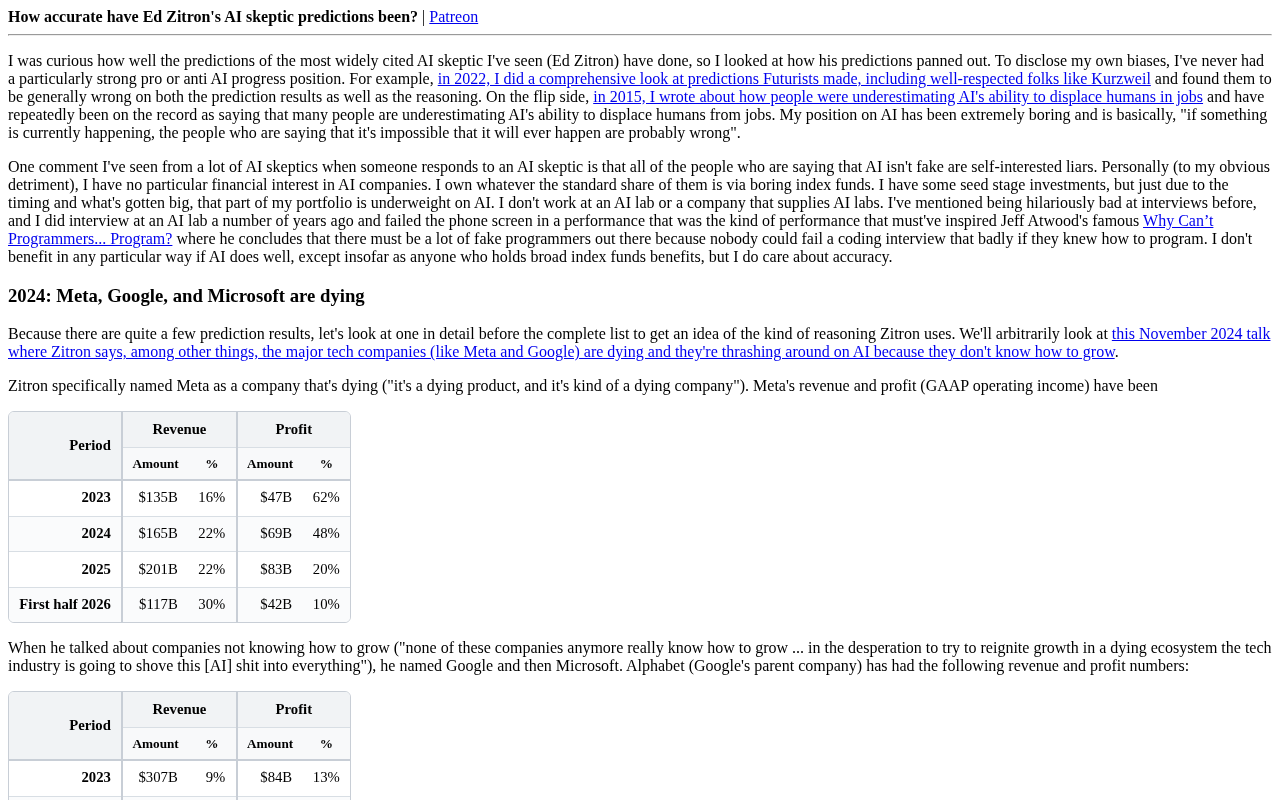
Fact-Checking AI Skeptic Ed Zitron's Prediction Track Record
Ed Zitron has long been bearish on generative AI, calling it a massive bubble. This article reviews his core predictions on business models, tech capabilities, and bubble collapse against reality.
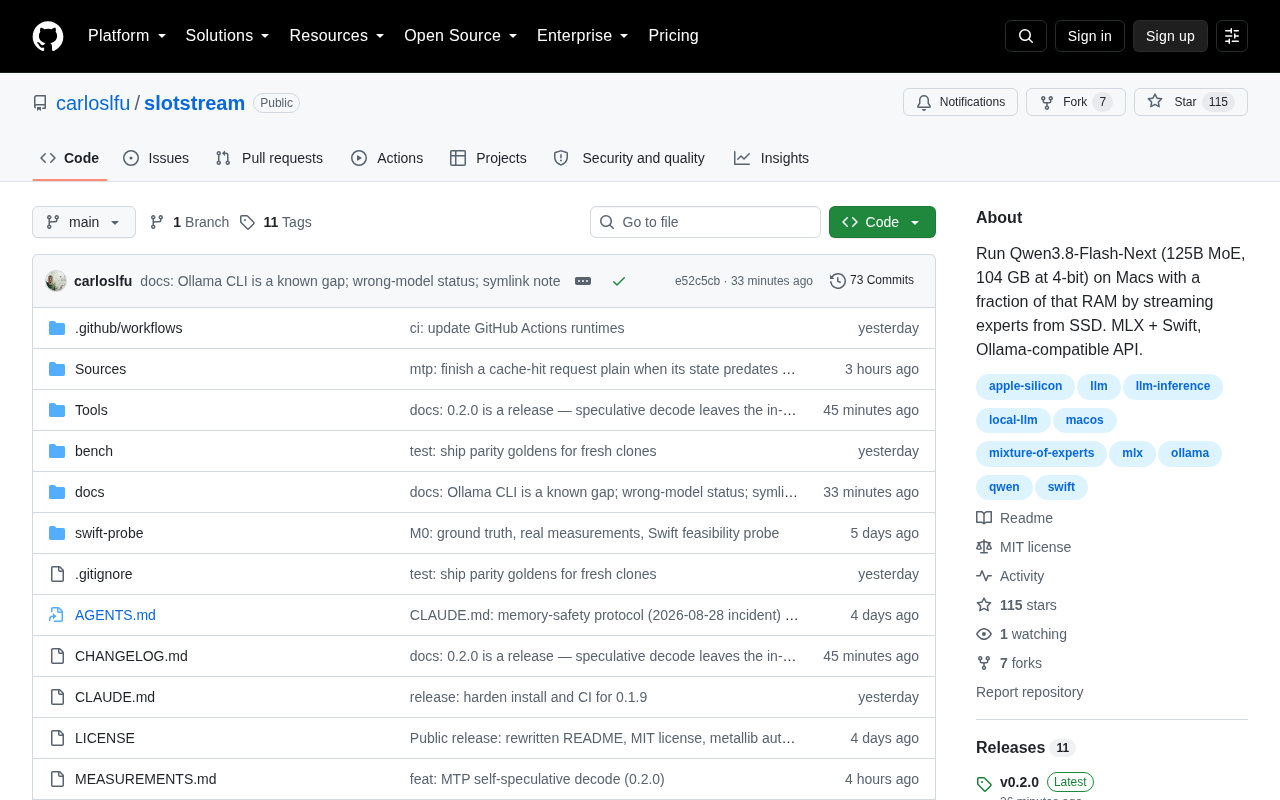
Running a 104GB Large Model on 48GB RAM: A New Breakthrough in Local Inference on Mac
Learn how to run a 104GB Qwen3 model on a 48GB Mac at 12 tok/s. Deep dive into memory mapping, MoE sparse activation, and model quantization techniques.

Android Studio's Built-In AI Skills Library: Auto-Generating Code That Follows Official Best Practices
Android Studio Quail introduces Android Skills — 20+ officially maintained AI instruction sets covering Compose migration, edge-to-edge layouts, and Navigation 3 to generate best-practice code.