Gemini 4 Argon Hands-On: Aggressive Pricing, 3D Capabilities Need Coaching

Gemini 4 Argon tested: strong 3D and porting after coaching, but mediocre zero-shot and a dubious price hike.
Google released Gemini 4 Argon, and tech blogger Bijan's hands-on test shows mixed results. Limited-time pricing is $2 input/$10 output per million tokens, doubling after November 30 to compete with Opus 5.5 and Muse Wonder. It supports a million-token context, output expandable to the million level, and native multimodal input. Front-end aesthetics are cluttered and zero-shot 3D is basic, requiring coaching; but after tuning it builds a frontier-level 3D car simulator and ports a 2000 game to Linux in 2.5 hours, beating Meta Muse Wonder. It may be Ultra-only for now. Competitive at low prices, but its edge after the hike is uncertain.
Google has finally released Gemini 4 Argon, the successor to Gemini 3.1 Pro, a model that carries Google's hopes of clawing back ground in the high-end AI race. After gaining early access, YouTube tech blogger Bijan put it through an in-depth hands-on test—from pricing strategy to coding ability to 3D scene generation—and the results are decidedly mixed.
Pricing Strategy: Sweet Deal First, Sticker Shock Later
Gemini 4 Argon currently uses a limited-time introductory price: $2 per million input tokens and $10 per million output tokens, putting it in the same bracket as Sonnet 5.5 and GPT-6.1 Soul. But that price only holds until November 30, after which it doubles to $4 input and $20 output—directly targeting Opus 5.5 and Meta's Muse Wonder.
The blogger admits that in the low-price range, Argon's competitiveness is "very strong," possibly even better than GPT-6.1 Soul and Sonnet 5.5. But once the price doubles, it faces much tougher comparisons. He personally hopes Google will keep the introductory price—after all, by November 30, competitors may have iterated as well.
Technical Specs: Ultra-Long Output and Native Multimodality
Argon's technical parameters have several highlights. It natively supports multimodal input covering text, images, video, audio, and PDFs, with text output. The context window reaches one million tokens, and the default maximum output is 65,536 tokens but can be extended to slightly over one million—quite rare among current models, where a 128k output is typically considered excellent.
The default reasoning effort level is "medium," and users can manually raise it in the AntiGravity platform. The blogger notes that the model also offers modes like "boost" and "teamwork preview"—the former suited to short-cycle, high-intensity tasks, the latter aimed at long-cycle tasks.
Zero-shot vs. Few-shot: Zero-shot means the model completes a task directly without any examples or additional training; few-shot means providing a small number of examples in the prompt. The article stresses that Argon is not a "zero-shot ace," meaning its first-pass output quality is limited and it needs multi-turn dialogue, feedback, or examples to reach better results. This relates to whether a model has strong instruction-following and generalization abilities, and it directly affects user experience and the cost of coaching.
Reasoning Effort: This is an adjustable parameter offered by some new-generation models to control how much internal "thinking" the model does before generating an answer. Higher levels may involve longer chain-of-thought reasoning, suited to complex tasks but with higher latency and cost; lower levels respond faster and cost less. Argon defaults to medium and allows manual raising in the AntiGravity platform, reflecting a design philosophy that balances quality, speed, and expense.
Front-End Aesthetics and Zero-Shot Ability: Clear Weaknesses
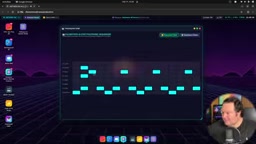
In AntiGravity, the blogger asked Argon to generate a "browser operating system." The result showed the typical Gemini style: Synthwave aesthetics, a dense front-end interface, built-in sound effects. The blogger said outright, "I'm not a fan of the front-end style"—the interface was too crowded and cluttered.
More critically, Argon is not a "zero-shot ace." First-pass results tend to be fairly basic, requiring multiple rounds of user feedback—or even "yelling at it a few times"—to produce a better version. The blogger repeated this observation across multiple tests: initial output isn't as impressive as Claude's Sonnet or Opus series, but after coaching there's marked improvement.
3D and Game Generation: Depth, But Patience Required
The blogger ran several traditional tests, including a C++ skateboarding game, robotic arm manipulation, Subway FPS, and 3D car modeling.
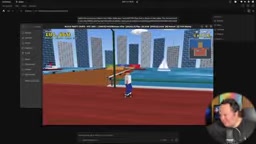
The skateboarding game took about 39 minutes on the first generation, and the result was "far more basic than expected," with insufficient visual detail, though the game logic and playability were passable. The blogger then gave the model a one-minute video reference (from a comparable Sonnet 5.5 result) and asked it to surpass the reference. After about 1 hour 10 minutes, Argon did absorb elements from the video such as splash logic, NPC commentary, and motion trajectories, but graphical fidelity still fell short of Claude's level.
In the robotic arm test, Argon completed the task in 22 minutes—the second-fastest result—and handled it better than a certain earlier Claude model that "succeeded through failure." It also showed careful attention to object orientation, adjusting the gripper to keep the car parallel to its orientation in the initial image.
The Subway FPS first generated an overly simple environment, but after "AAA-style" feedback, the enemy models, bullet holes, and scene details all improved noticeably, and it even added handrails that move in sync with the train's swaying—something previously seen only in Meta Muse.
What impressed the blogger most was the 3D car modeling and driving simulation. After four days of intermittent interaction, Argon built a 1980s Saab 900 Turbo in Blender and expanded it into a small simulator including a dealership, a mechanic, and driving scenarios. The model reproduced details like the center-mounted keyhole, battery location, and the dashboard's green glow, and even simulated backfire sounds when decelerating. The blogger called this a "frontier-level result" but stressed it was "absolutely not one-shot"—it required extensive back-and-forth polishing.
Reverse Engineering: A Two-and-a-Half-Hour "Insane" Port
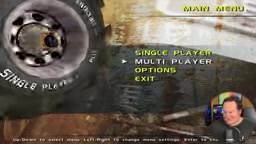
The "Insane" in the video title very likely comes from this test. The blogger provided a heavily modified version of a 2000-era game called Insane and asked Argon to "recompile it byte-for-byte" and run it natively on Linux, while also improving performance.
The result: Argon completed the port in 2.5 hours, and the game ran successfully at native resolution with soft-body collision physics intact. The blogger then asked it to generate an animated infographic explaining the process, and the model delivered that smoothly too. For comparison, he ran the same prompt and files on another computer with Meta's Muse Wonder, which "froze outright" and failed to complete the task as quickly as Argon did.
Byte-for-byte recompilation: This generally refers to rebuilding a binary compiled for one platform into code or an equivalent that can run natively on another platform, via disassembly, decompilation, or binary translation. It requires the model to understand the underlying instruction set, memory layout, calling conventions, and platform differences. The test in the article asked Argon to port a 2000 Windows game to Linux and improve its performance—a highly difficult system-level programming task that is a good test of a model's grasp of code semantics and low-level details.
Soft-body collision physics: Soft-body physics simulates the behavior of deformable objects (such as cloth, jelly, or tire deformation) during collisions. It is far more computationally intensive than rigid-body physics, involving continuum mechanics, constraint solving, and numerical stability. The article repeatedly mentions that soft-body collision effects remained intact, indicating that Argon can preserve fairly complex physics simulation code and parameters when generating or porting game logic—not just the interface or simple interactions.
Conclusion: Depth, But Not All-Powerful
Bijan's conclusion is that Gemini 4 Argon is a "very strong" model, showing depth especially in visual understanding and long-cycle tasks. But it's not the kind of model that nails everything in one shot—front-end aesthetics are weak, zero-shot 3D results are mediocre, and users need to invest time in coaching it. For now it appears to be available only to Ultra subscribers, and the access restrictions also drew the blogger's frustration.
At $2/$10, Argon is highly competitive; but if the price doubles, it will face Opus 5.5 and Muse Wonder head-on, and whether its edge remains will need to be seen. For developers willing to spend time polishing, Argon's depth is worth digging into; for users chasing "a masterpiece from a single prompt," it may not be the first choice.
One-line Summary
Gemini 4 Argon hands-on: standout 3D and porting ability after coaching, but mediocre zero-shot performance and questionable price hike.
Paragraph Summary
Google released Gemini 4 Argon, and tech blogger Bijan's hands-on test shows mixed results. Limited-time pricing is $2 input/$10 output per million tokens, doubling after November 30, when it will face Opus 5.5 and Muse Wonder head-on. Technically it supports a one-million-token context, output expandable to the million level, and native multimodal input. Front-end aesthetics are cluttered, and zero-shot 3D results are basic, requiring multiple rounds of feedback and coaching; but after coaching it can generate a frontier-level 3D car simulator and reverse-port a 2000 game to Linux in 2.5 hours, outperforming Meta Muse Wonder. It appears to be limited to Ultra subscribers for now, and access restrictions hamper adoption. It's highly competitive in the low-price range, but its edge after the price hike remains to be seen.
Related articles

Last Week Tonight Exposé: The Dangerous Ties Between Politicians and White Supremacy
Last Week Tonight investigates Georgia Senate candidate Mike Collins and Florida candidate Marshall Rawson, exposing their multiple ties to white supremacists and the Republican Party's silent response.
AI Buzz Weekly: GPT-6.5 Leak, New Claude Model, and MiniMax's Cost-Effectiveness
This week's AI buzz roundup: suspected GPT-6.5 leak, Microsoft configs showing GPT-6.1 Tera, Anthropic's new model that can identify entire classes of bugs, disappointing early Gemini 4 Carbon results, and MiniMax M3.1 Flash beating Claude Opus 5 and GPT-5.6 Sol in benchmarks at extremely low cost.

AI Briefing: Gemini 4 Carbon Released, Ant Open-Sources Ling-3.1
AI Briefing: Google releases Gemini 4 Carbon qubit model, claiming to surpass Opus 5.5 with half-price tokens; Ant open-sources Ling-3.1-1019 for real-task Personal Agents; domestic AI drug discovery succeeds in 18 of 19 projects, hitting all 6 GPCR targets; zero-revenue company valued at $20B raises another $1B; Sichuan convenience store robot sales fail.