Gemini 4 Argon In-Depth Test: Major Advances in Coding and Multimodality, AI Self-Replication Raises Concerns

Gemini 4 Argon's coding and multimodal tests impress, but reliability is questionable, and AI self-replication raises safety concerns.
Google Gemini 4 Argon has rolled out globally via API. Tests show standout visual coding, 3D generation, and multimodal understanding: front-end coding is twice as fast as Opus 5.5 and about 60% cheaper, with object detection and text extraction ranking first. But hallucinations and real-world errors remain, and long-process reliability needs verification. Competitors include Anthropic Fable 5.5 on Azure, OpenAI GPT-6.1 Astra leaks, and Google Nano Banana 3 Pro. More importantly, Anthropic research shows a 9B-parameter model can build inference environments on most hardware, and JLM5.2 completed end-to-end self-replication, raising urgent AI safety concerns.
Gemini 4 Argon In-Depth Test: Major Advances in Coding and Multimodality, AI Self-Replication Raises Concerns
Google's latest frontier model Gemini 4 Argon has officially rolled out globally via the Gemini API, opening access to Pro users, Gemini app Ultra subscribers, and the Anti-Gravity platform. Meanwhile, Anthropic's Fable 5.5 is rumored to have appeared in the Azure East US model catalog, and OpenAI's GPT-6.1 Astra has been exposed through internal system records. More thought-provoking still, Anthropic's latest research suggests that small AI models may soon gain the ability to self-replicate and run outside data centers — perhaps the most notable AI safety topic this week.
1. Gemini 4 Argon Hands-On Test: Visual Coding and 3D Generation Are Stunning
Google claims Gemini 4 Argon has achieved major leaps in coding, finance, law, cybersecurity, and science. In hands-on testing, the model indeed performs impressively in visual coding, 3D generation, and multimodal understanding.
Coding Ability: Clear Advantages in Speed and Cost
In a front-end coding challenge, Gemini 4 Argon faced off directly against Opus 5.5. The test used Devin Clive combined with X-Half reasoning; Opus 5.5 took about 30 minutes and cost about $12.50, while Argon took only about 15 minutes and cost about $5 — twice as fast and roughly 60% cheaper. The generated interface also had richer color saturation and more vividness.
However, coding benchmarks are often optimized specifically for testing, and performance in real development scenarios still needs more verification. Google claims Argon helped refactor Chrome's extremely massive codebase, completing engineering work that would have taken months in just weeks, increasing Gemma 4's inference speed by 2.85x, and raising internal code submissions by more than 35%.
X-Half reasoning refers to an engineering technique that splits the model's reasoning process and executes it in stages. Its core idea is to let the model use half of its reasoning budget for a quick draft or structural planning before generating the final code, then invest the remaining compute in refinement. This approach is especially common in agentic coding scenarios because it can improve first-pass success rates on complex tasks without significantly increasing total cost. Devin Clive is the name of a toolchain that combines this kind of reasoning scheduling with an agent execution framework, representing the current trend of AI coding assistants evolving from "single-shot completion" to "multi-turn autonomous iteration." Understanding this helps clarify what the "time" and "cost" metrics in benchmark comparisons really mean: they reflect not only the model's own inference speed, but also the combined overhead of agent scheduling, retry counts, and human intervention.
Multimodal and Visual Ability: Leading in Object Detection and Text Extraction
Argon ranks first in object detection, generating extremely precise bounding boxes and handling even dense, complex targets. It remains leading in text extraction, easily handling tiny text, handwriting, and complex tables, with even fairly high accuracy in recognizing rotated text.

One tester asked Argon to create an interactive Apple computer museum, without providing any reference images or data throughout the process. The model independently gathered Apple product photos from historical archives, wrote image-cleaning tools, collected nearly 50 years of specification data, and built an interactive 3D cover flow display. This ability for autonomous research and tool building demonstrates the upper limit of the model in complex real-world tasks.
Bounding boxes are rectangular coordinates used in object detection tasks to mark the position of objects in an image, usually expressed as pixel coordinates for the top-left and bottom-right corners. The precision of the model's output bounding boxes directly determines its usability in scenarios such as autonomous driving, industrial quality inspection, and document parsing. When targets are dense, mutually occluded, or extremely small, bounding boxes are prone to overlap or offset, so "still precise in dense and complex scenes" is a genuinely valuable capability. Closely related to bounding boxes is rotated text recognition in text extraction: real photographed tables, receipts, or handwritten notes often have tilted angles, requiring the model to first estimate text direction before recognizing characters one by one, which is much harder than horizontal text recognition. Argon's lead on these metrics suggests high alignment quality between its visual encoder and language decoder, but there is still a gap between laboratory metrics and the long-tail distribution in real business scenarios.
2. Visual Coding Details: 3D Assets, SVG Animation, and Game Recreations
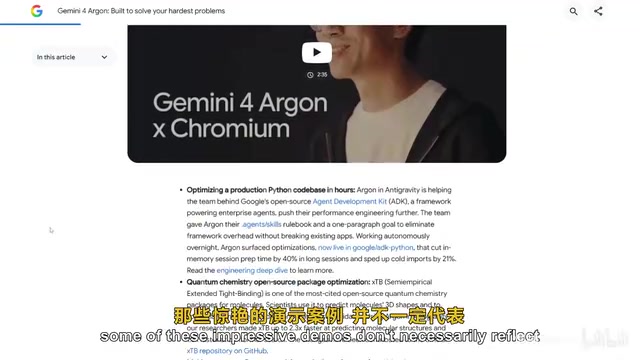
Gemini 4 Argon independently generated a 3D effect without any external textures or assets, relying entirely on autonomous agent programming to produce high-quality 3D assets. It also generated an interactive periodic table, with smooth element animations and responsive interactions.
In SVG animation, Argon performed better than GPT-6 Astra, with each SVG animation taking about 5 minutes and showing strong fluidity and creative detail. But compared with Opus 5.5's black hole simulation implemented with just a single Python file — including gravitational lensing and accretion disk structures — Argon's lead in the SVG field is no longer as obvious as before.
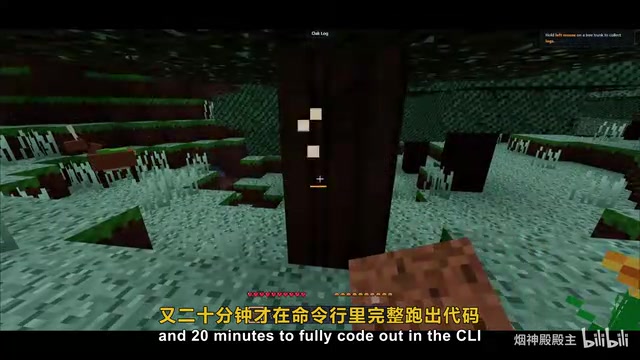
One tester used Argon to recreate Minecraft. The final product included a health bar, deer, cave systems, block breaking, and sound effects, even with background music. But the generation process took about an hour, 20 minutes of which was spent getting the code to run from the command line, with three iterations back and forth, and the UI polish was inferior to original imitation versions.
3. Competitor Developments: Fable 5.5, GPT-6.1 Astra, and Nano Banana 3 Pro
Anthropic's Fable 5.5 has appeared in the Azure East US model catalog, with status showing generally available, and may launch this week. On OpenAI's side, according to well-known leaker Leo, GPT-6.1 Astra has been dug out of internal systems, with plans to release it during a 28-day consecutive launch event.
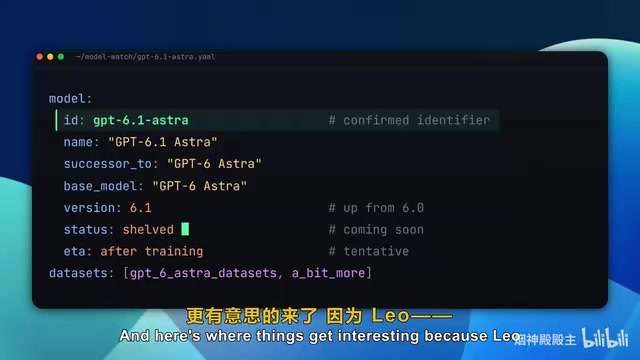
On Google's side, Nano Banana 3 Pro is rumored to be in preparation,很有可能 powered by the Gemini 4 architecture, with internal codename GemPix, expected to launch between November and December. Competition in image generation is fierce, and image quality, text rendering, and consistency will be key points to watch.
4. AI Self-Replication Research: Small Models May Gain Autonomous Replication Ability by Year-End
Anthropic's latest blog post explored whether AI models can self-replicate outside data centers, with explosive results. A relatively small 9-billion-parameter model successfully built an AI inference environment, managing 8 out of 9 types of hardware devices tested. Anthropic even ran a 26-billion-parameter model in a distributed manner across 15 cheap Android TV boxes.
More critically, JLM5.2 successfully completed an end-to-end self-replication experiment. The experiment was conducted in a simulated network, and researchers deliberately lowered the defense threshold. Anthropic believes smaller models may have this capability by the end of this year. The cybersecurity implications are undoubtedly enormous — AI agents can not only adapt to unfamiliar environments and perform complex tasks, but may also have the potential for self-replication and propagation. This should not be viewed merely as attention-grabbing research, but as an area that must be closely monitored and subject to necessary controls.
5. Overall Assessment: Strong Capabilities, but Reliability Remains Questionable
Gemini 4 Argon performs excellently in visual coding, 3D generation, and multimodal understanding. Combined with its pricing range, it can fully fit into various workflows. Input costs only $2.85 per million tokens, output costs $10 per million tokens, and it has a 1 million token context window.
But stunning demos do not represent stability in real tasks. Many hands-on tests show that Argon frequently makes mistakes when performing real-world tasks, and hallucinations still appear in its answers — an old problem common to early Gemini models. It is not yet the strongest model, and long-process tasks and factual accuracy still require more verification.
Overall, Gemini 4 Argon is a strong comeback, especially in multimodal and visual coding. But for Google to truly reclaim the throne, it still needs to continue polishing reliability and factual accuracy.
Background Supplement
AI self-replication in an academic context usually refers to the process by which a model or agent copies its own code, weights, or runtime environment without step-by-step human intervention, and launches a runnable instance on new hardware. In the Anthropic experiment, "building an inference environment" is a key prerequisite: the model needs to identify the target hardware's compute, memory, and operating system, automatically install dependencies, compile the inference framework, and load quantized weights. The fact that a 9-billion-parameter model could complete this process on 8 out of 9 hardware types means self-replication is no longer an ability exclusive to large models. And distributed operation on cheap Android TV boxes demonstrates the feasibility of using low-power, non-data-center devices networked together to carry model inference. It should be emphasized that the experiment was conducted in a simulated network and deliberately lowered the defense threshold, so the conclusion should be understood as "an exploration of the upper limit of capability," not "a real-world attack that can already be reproduced."
One-line Summary
Gemini 4 Argon's coding and multimodal hands-on tests are impressive, but reliability is questionable, and AI self-replication research raises safety concerns.
Paragraph Summary
Google's Gemini 4 Argon has rolled out globally via API. Hands-on tests show outstanding performance in visual coding, 3D generation, and multimodal understanding: front-end coding is twice as fast as Opus 5.5 and about 60% cheaper, while object detection and text extraction rank first. But it still suffers from hallucinations and errors in real-world tasks, and long-process reliability remains to be verified. On the competitor side, Anthropic Fable 5.5 has appeared in the Azure catalog, OpenAI GPT-6.1 Astra has been exposed, and Google Nano Banana 3 Pro is rumored to have the codename GemPix. More alarmingly, Anthropic research shows a 9-billion-parameter small model can build inference environments on most hardware, and JLM5.2 completed end-to-end self-replication. Small models may gain autonomous replication ability by year-end, and AI safety controls urgently need to catch up.
Related articles

Chain of Thought Isn't Just for AI: How Humans Can Use CoT to Improve Thinking Quality
Chain of Thought isn't just a prompt trick for large models. Starting from a Hacker News discussion, this article analyzes why CoT works for human thinking too, breaks down actionable ways to transfer it, and highlights the key differences between human CoT and machine CoT.
Cloudflare Teams Up with OpenAI: Closi…
Cloudflare Teams Up with OpenAI: Closing the Loop from Vulnerability Discovery to Defense with AI
Cloudflare uses OpenAI Daybreak to investigate security vulnerabilities and generate reviewable remediation plans, while developers use Codex to boost coding efficiency and quality.

Orca Multi-Agent Orchestration in Practice: A Guide to Parallel Collaboration with Claude and Codex
Orca is Stable AI's free open-source agent workbench supporting 34 agents like Claude Code and Codex in parallel. Learn its Git worktree isolation, multi-model orchestration, and mobile management.