Gemini 4 Argon Released: Million-Token Output, Benchmark Beats GPT-6 Astra

Gemini 4 Argon raises output to 1M tokens for large-scale engineering tasks, with a narrow benchmark lead over rivals.
Google's Gemini 4 Argon raises the single-response output limit from 64K to 1 million tokens (~16x), enabling large-scale code migrations and system-level optimizations in a single session. Google cites two internal cases: AI agents migrating 800K+ lines of C/C++ to Rust, and freeing over 300TB of data center memory. On benchmarks, Argon scores 77.9% on Deep Study software engineering tests, narrowly beating GPT-6 Astra and Claude Opus 5.5 (~74%), though not leading across all categories. Pricing starts at $2 input / $10 output per million tokens (introductory), and access is limited to Fairwind security teams, paid API users, and AI Ultra subscribers — Pro users are excluded.
Gemini 4 Argon Pushes Output Limit to One Million Tokens
Google has officially announced Gemini 4 Argon, with the most significant change being a jump in maximum output length from 64,000 tokens to 1 million tokens — roughly 16 times the previous limit. It's worth emphasizing that this refers to output length — how much content the model can generate in a single task — not the more commonly discussed context window (input) length.
This dramatic expansion in output capacity directly changes the types of tasks the model can handle. Previously, with output limits in the tens of thousands of tokens, models could only complete long-form generation or large-scale code rewrites in segments. A million-token output means the model can produce more complete, coherent engineering artifacts in a single task, reducing the need for manual stitching and the loss of context between sessions.
The distinction between output tokens and the context window is worth clarifying. The context window refers to the maximum input length a model can "see" at once — it determines how much conversation history, code, or documentation you can feed the model. The output token limit, on the other hand, is the ceiling on how much content the model can generate in a single response. Most mainstream large models have had output limits ranging from 4,000 to 32,000 tokens, with 64,000 tokens already considered a high-end configuration. Expanding this to 1 million tokens means the model can theoretically produce around 750,000 English words — or an equivalent volume of code — in a single response. This scale makes it possible to output the source code of a medium-sized software project in one go, without splitting the task across multiple sessions.
Two Internal Use Cases: AI Takes On Real Engineering Work
Google provided two substantial internal examples. The first involved AI agents participating in the migration of C and C++ code to Rust, with projects reaching up to 800,000 lines of code. The challenge with this type of migration is that rewriting code while preserving existing functionality and inter-module dependencies requires extremely high long-range consistency from the model.
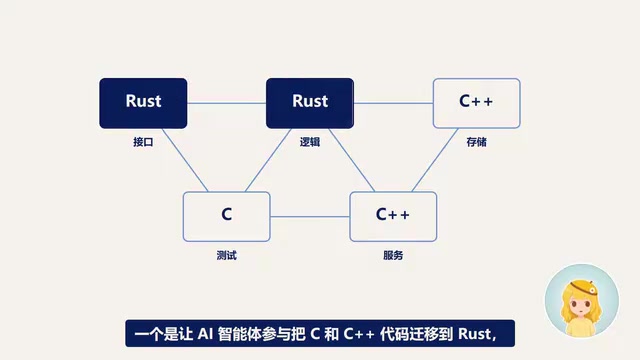
The second case took place in a data center. Google reports that a group of agents analyzed performance data and helped free up over 300TB of memory. Both cases point in the same direction — getting AI to participate in multi-step, long-running real engineering tasks, rather than simply writing a function or answering a question.
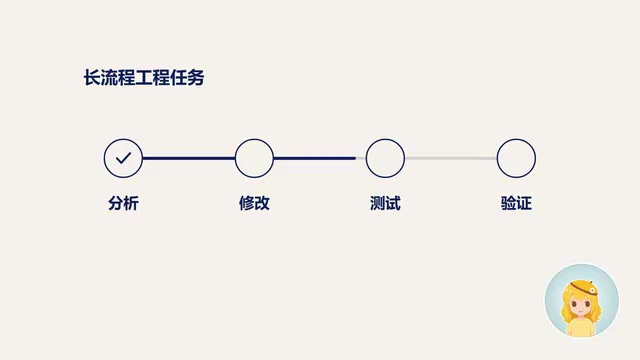
These two scenarios reveal the core capability Google wants to demonstrate: sustained, long-chain autonomous execution. The million-token output limit directly serves this goal — large-scale code migrations and system-level optimizations both require the model to maintain extensive state and produce substantial output within a single session.
Migrating C/C++ to Rust has been a hot topic in the software industry in recent years. Rust's memory safety model — its ownership system and borrow checker — eliminates a wide range of memory safety vulnerabilities without relying on garbage collection. Google, Microsoft, and the Linux kernel community are all pushing to rewrite critical infrastructure code in Rust. Manual migration, however, is extremely costly: it requires understanding pointer and memory management logic in C/C++ line by line, then mapping it to Rust's fundamentally different ownership semantics, all while maintaining ABI compatibility with surrounding modules. At 800,000 lines of code, even if an engineer could migrate 200 lines per day, it would take a team years to complete — exactly the kind of scenario where AI-assisted migration can deliver real value.
Benchmark Performance: A Lead, But Task-Dependent
On the performance side, Argon's results are worth unpacking. In the Deep Study software engineering benchmark, Argon scored 77.9%, ahead of GPT-6 Astra and Claude Opus 5.5 — both of which landed around 74%. This is a clear but modest lead.
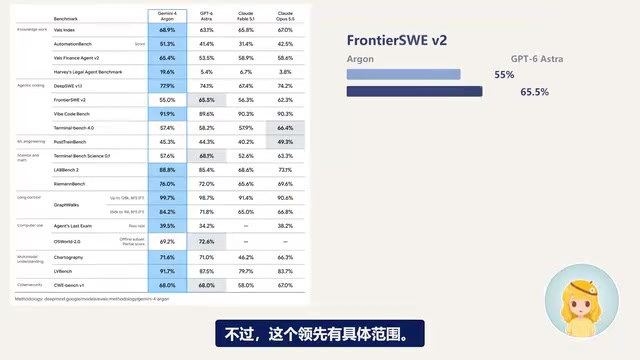
That lead has specific boundaries, however. In other benchmarks covering coding, terminal operations, and computer use, other models still score higher in some areas. In other words, Argon doesn't dominate across every dimension — its advantages are concentrated in specific software engineering scenarios. For practitioners, the key to choosing a model remains identifying exactly what task you need to accomplish, rather than blindly following a single leaderboard ranking.
This also reflects the competitive landscape among today's top models: no single model sweeps every benchmark, and each provider has strengths in different task dimensions. Practical model selection should be based on evaluation against your specific workload.
Pricing and Availability
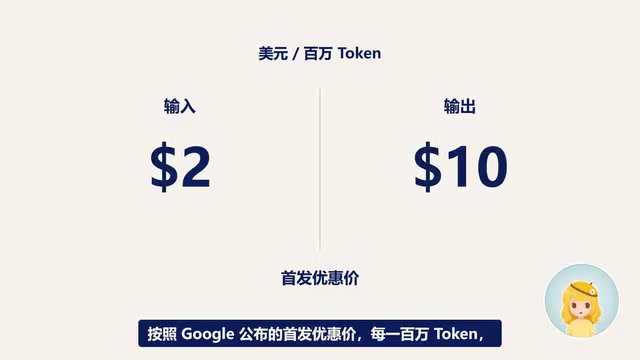
On pricing, Google's introductory rate is $2 per million input tokens and $10 per million output tokens. It's important to note that these are promotional prices — both figures will double once the promotion ends. For engineering tasks that rely heavily on large-scale output, the $10/million token output pricing will directly affect the real-world cost of long-chain tasks.
Availability is relatively restricted at launch. Argon is initially being opened to trusted cybersecurity teams in the Fairwind Program, with rollout prioritized for paid API users and Google AI Ultra subscribers. Pro users are explicitly excluded for now, meaning regular paid subscribers cannot access it directly yet.
The Fairwind Program is Google's early access initiative for trusted cybersecurity research institutions and teams. Participants typically undergo background screening and primarily use the program to test AI capabilities and boundaries in security-sensitive contexts within controlled environments. Opening a new model to this group first allows Google to collect expert feedback while managing potential risks before capabilities are fully validated publicly. From a business strategy perspective, cybersecurity is one of the highest-premium verticals for AI capabilities, and prioritizing this group also helps Google build a differentiated enterprise reputation before gradually expanding access to a broader base of paying users.
Summary
The signal from Gemini 4 Argon's release is clear: with million-token output combined with agentic capabilities, Google is pushing its models toward longer, more complex real-world engineering tasks. The benchmark lead is real, but modest and scenario-specific. What truly deserves attention going forward is whether it can deliver verifiable results in actual deployment — not just internal case studies and leaderboard numbers.
Related articles

Chain of Thought Isn't Just for AI: How Humans Can Use CoT to Improve Thinking Quality
Chain of Thought isn't just a prompt trick for large models. Starting from a Hacker News discussion, this article analyzes why CoT works for human thinking too, breaks down actionable ways to transfer it, and highlights the key differences between human CoT and machine CoT.
Cloudflare Teams Up with OpenAI: Closi…
Cloudflare Teams Up with OpenAI: Closing the Loop from Vulnerability Discovery to Defense with AI
Cloudflare uses OpenAI Daybreak to investigate security vulnerabilities and generate reviewable remediation plans, while developers use Codex to boost coding efficiency and quality.

Orca Multi-Agent Orchestration in Practice: A Guide to Parallel Collaboration with Claude and Codex
Orca is Stable AI's free open-source agent workbench supporting 34 agents like Claude Code and Codex in parallel. Learn its Git worktree isolation, multi-model orchestration, and mobile management.