Gemini 4 Argon vs GPT-6 Astra vs Claude Opus 5.5: Which One Actually Wins?

Hands-on comparison of Gemini 4 Argon, GPT-6 Astra, and Claude Opus 5.5 across coding and multimodality.
Based on hands-on testing and official data, this article compares Gemini 4 Argon, GPT-6 Astra, and Claude Opus 5.5. Argon leads in multimodality, long documents, and cost, while Astra excels at real repository repair and fast agentic tasks, and Opus 5.5 dominates terminal coding, the intelligence index, and ultra-long sessions. It also explains why Argon's million-token context can't fix its coding gap.
Triple Threat: Gemini 4 Argon, GPT-6 Astra, Claude Opus 5.5 — Who Really Wins?
Google's launch of Gemini 4 Argon felt like a final boss making its entrance: pencil sketches turning into real-time physics simulations, playable games built in an hour, and a million-token context window that set the internet ablaze. But two veteran rivals are still standing in the ring — OpenAI's GPT-6 Astra and Anthropic's Claude Opus 5.5. Based on hands-on testing and official data from the YouTube channel Greed Hunter Academy, this article breaks down the real combat strength of all three.
How the Three Contenders Differ
According to the channel's summary, each has a distinct persona: GPT-6 Astra is the "field engineer", building candidate solutions and testing them repeatedly in Codex; Claude Opus 5.5 is the "cautious craftsman", skilled at iterating improvements without breaking existing functionality; Gemini 4 Argon is the "visual scientist", connecting code, evidence, and visual presentation.
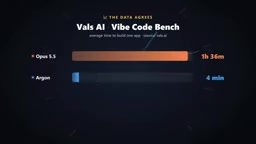
This positioning difference shows up vividly in testing. Give Argon a prompt for a game or animation, and it often delivers something playable within an hour or two; give the same prompt to Opus or Astra, and it may take five hours or even a full day. The reason isn't mysterious: the latter two test, rerun, and fix like obsessive QA engineers, and what they ultimately deliver is "what you actually need."

Multimodality and Cost: Argon's Absolute Advantage
Google's official demo is a showcase of Argon's superpowers: kite sketches becoming real-time airflow simulations, hands and flowers annotated part by part, a cat in a window and a 3D fish skeleton diagram, colored pencils and rectangles becoming a full 3D gallery, even a child on a swing tracked for velocity, angle, and force. It can ingest text, images, audio, video, and PDFs simultaneously and reason across all modalities.
On price, Argon is the cheapest of the three: $2 per million input tokens and $10 per million output tokens (launch pricing), rising to $4 and $20 in December. Opus is $4 and $20, while Astra is as high as $10 and $50. All three have context windows in the million-token range, but Argon's default maximum output is only 65,000 tokens; million-token output is only available in a special long-decode mode, and it shares a quota with input.
Official Benchmarks: Argon Dominates, But Loses on Coding
In Google's own table of 19 benchmarks, Argon takes first place in 14: a knowledge-work Wells index of 68.9, million-token graph data reasoning at 84.2, and long-video understanding at 91.7. But on coding sub-items, the situation flips: on the terminal task Terminal Bench 4.0, Opus wins with 66.4 while Argon scores only 57.4; on real repository repair Frontier SWE, Astra leads with 65.5 while Argon sits at 55.
You may not have noticed the fine print on the long-video test — Google gave competitors fewer frames, casting doubt on how fair that comparison is.
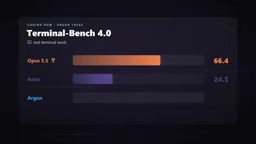
Terminal Bench and Frontier SWE are two key benchmarks for evaluating the real capabilities of coding agents. Terminal Bench focuses on multi-step tasks in command-line environments, requiring models to understand shell commands, operate the file system, and complete end-to-end workflows — testing the comprehensive ability to "get things done with tools." Frontier SWE, meanwhile, simulates bug fixing in real open-source repositories, where models must read code, locate problems, and submit patches, hewing closer to software engineering practice. Both emphasize interactive, iterative problem-solving rather than one-shot code snippet generation. Leading on such benchmarks therefore often means a model is more reliable in real development scenarios, which also explains why Opus 5.5 and Astra can overtake Argon on coding sub-items.
The Third-Party Referee: WebDev Is the Real Test
Setting aside Google's own scoreboard, the Artificial Analysis Intelligence Index shows: Opus 5.5 leads with 58 points, while Astra and Argon tie at 53. On the Arena text leaderboard Argon ranks first, but on the WebDev leaderboard, which is voted on by real websites, Argon drops to ninth — Opus is first and Astra second. In Arena's agent mode, Argon's shell command reliability ranks last among the top 5.
The conclusion is clear: Argon excels at video, images, long documents, knowledge work, and low cost; Astra excels at real repository repair, scientific agents, computer use, and fast agentic tasks; Opus 5.5 dominates terminal coding, the overall intelligence index, web development, and ultra-long sessions (its customers report that Opus 5.5 can keep going for 18+ hours on a single task).
The Artificial Analysis Intelligence Index is a comprehensive third-party benchmark that aggregates scores from multiple mainstream benchmarks (such as MMLU, HumanEval, GSM8K, etc.) and produces a normalized ranking of models, aiming to provide a unified reference for intelligence level across models and tasks. The index does not rely on vendor-reported data but runs standardized tests independently to reduce bias, so it is often used to cross-validate official claims. In this article, Opus 5.5 leads with 58 points while Astra and Argon tie at 53 — a result that contrasts with Argon's strong showing in Google's own benchmarks, suggesting that vendor-specific optimization may influence rankings.
Why a Million Tokens Can't Save Coding: Five Reasons
If Argon can output a million tokens, why does it still lag on coding? The channel offers five explanations:
1. A shared fuel tank. Input and output draw from the same million-token quota. If Argon writes a million tokens, there's no room left to read your code — and the quality of what an agent writes when it can't read code speaks for itself.
2. Coding agents mostly "read." In one benchmark, Astra in Codex read 264 million tokens while writing fewer than 2 million — over 99% was reading. The more it reads, the deeper the understanding.
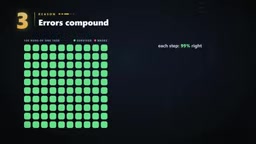
3. Errors compound. If each step is 99% correct, after 100 steps the whole chain survives only about 37% of the time; after 500 steps, less than 1%. Research also shows that once a model sees its own earlier mistakes in context, its performance deteriorates further.
4. Loops beat monologues. The closed loop of "plan — write — run tests — hit errors — fix — repeat" lifted GPT-4's score from 19% to 44% in the Alpha Codium study. The same model, wrapped in a different loop, can score worlds apart.
5. Toolchain. Real coding is inseparable from the shell, test runners, and git — precisely Argon's weak spot in Arena's agent data.
Alpha Codium is a study on code generation that proposes an iterative "plan — write — test — fix" workflow: the model first generates test cases, then repeatedly revises the code based on test results. Experiments showed that this closed-loop approach raised GPT-4's pass rate on the CodeContests benchmark from 19% to 44%, far exceeding one-shot generation. This confirms the argument that "loops beat monologues" in coding tasks — through self-verification and error feedback, a model can significantly compensate for shortcomings in single outputs, and it also explains why a model with a huge context but no efficient toolchain can still lag in real-world coding.
The Final Verdict
The bigger the window, the harder the fall. Coding isn't about who can write more — it's about who can discover their own mistakes faster and fix them. To be fair, Google denies reports that Argon is weaker at real-world coding, and it still ranks near the top on benchmarks like DeepSWE — it's a drafting machine, not a broken one.
Selection advice: for visual simulation, long-document understanding, and low cost, choose Argon; for real repository repair, scientific agents, and fast agentic tasks, choose Astra; for terminal coding, web development, and marathon-length sessions, choose Opus 5.5.
One-line Summary
A hands-on comparison of Gemini 4 Argon, GPT-6 Astra, and Claude Opus 5.5 — each wins on different fronts in coding and multimodality.
Paragraph Summary
Based on hands-on testing from a YouTube channel and official data, this article compares the real capabilities of Google Gemini 4 Argon, OpenAI GPT-6 Astra, and Anthropic Claude Opus 5.5. Argon has clear advantages in multimodality, long documents, and cost, taking first place in 14 of Google's own 19 benchmarks, but it lags on real-world coding and the WebDev leaderboard; Astra is stronger at real repository repair and fast agentic tasks; Opus 5.5 dominates terminal coding, the overall intelligence index, and ultra-long sessions. The article analyzes in depth why Argon's million-token context can't save its coding, citing five reasons — shared quota, reading-dominated workloads, compounding errors, closed-loop iteration, and toolchain — and ends with scenario-based selection advice.
Related articles

Workbuddy for Absolute Beginners: How a Desktop AI Agent Fits Into Real Workflows
A beginner's guide to the Workbuddy desktop AI agent: installation, claiming credits, file management, and building automated workflows—compared with CodeX for fit and cost, helping professionals shift from AI question-askers to AI managers.

OpenAI's New Agent Stack: Computer Use, Decisions API, and Ultra-Fast Workflows
OpenAI Dev Day unveiled a new agent stack: Computer Use outperforms humans, Decisions API delivers ultra-low-latency classification via Luna, Agents API opens the same Computer Use capabilities, and GPT-6.1 Sol costs only one-seventh of Astra. Core updates, benchmark data, and developer insights.

Liang Wenfeng Open-Sources DeepInfo Inference Framework, Takes On U.S. Ban
DeepSeek open-sources its DeepInfo inference framework after its models, featuring GPU/CPU cross-pipelining, small-model prediction with large-model verification, and full Huawei Ascend and NVIDIA chip support—facing the U.S. federal ban head-on. This article analyzes its significance for AI deployment and open-source strategy.