Gemini 4 Carbon Leak: The AI Coding Race and the Reasoning Revolution

The AI race shifts from model scale to practical intelligence, with autonomous agents and deep reasoning reshaping development.
The article breaks down current AI rumors and realities. Google's internally tested Gemini 4 Carbon is only a checkpoint, with coding ability reportedly rivaling Claude Opus 5.5 but still needing independent verification; Claude Fable 6 and GPT-7 remain unconfirmed codenames. A true generational leap requires five criteria: multi-step reasoning, tool integration, reliability, context memory, and low-cost scalability. Recursive self-improvement remains unrealized, replaced by deep reasoning modes that trade response speed for planning and verification. Meanwhile, autonomous AI agents are transforming the developer role from coder to manager coordinating specialized agents. Global competition now spans local versus cloud routes, open-source ecosystems, privacy solutions, and developer relations.
The competition in AI is advancing at an unprecedented pace. According to several recent unverified leak reports, Google may be internally testing a Gemini 4-series model codenamed "Carbon," while OpenAI and Anthropic are also racing ahead on their own tracks. What do these rumors actually mean? Which are confirmed engineering breakthroughs, and which are merely speculation? This article breaks it down one by one.
Gemini 4 Carbon Leak: Coding Ability Becomes the Core Battleground
According to leaked information, Carbon performs outstandingly on coding tasks, with internal feedback claiming its level can match Claude Opus 5.5—the latter widely regarded as one of the strongest coding systems currently available. Coding has become a key domain in the AI race because it simultaneously tests logical reasoning, syntax understanding, and complex problem-solving—making it the ultimate proving ground for measuring autonomous AI capabilities.
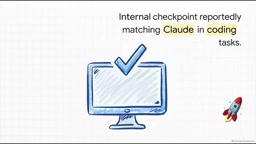
But one key point needs to be clarified: Carbon is an internal checkpoint, not a finished product meant for the public. A checkpoint is an iterative version saved during the model development stage. AI companies typically test dozens of checkpoints, evaluating their performance across dimensions like coding, speed, and reasoning, before deciding on the next direction. Although the leaked information is exciting, it should not be called the new absolute champion before independent verification appears.
The Significance of Checkpoints in Model Development
In the development pipeline of large language models, a checkpoint refers to a snapshot of model weights saved at a certain point during training. Training a frontier model often requires thousands or even tens of thousands of GPUs running continuously for weeks to months. Engineers cannot wait until training is completely finished to evaluate results, so checkpoints are periodically saved during training for rollback, comparison, and evaluation. From initial training to final release, a model may generate dozens or even hundreds of internal checkpoints, and the differences between them may lie in data mixing ratios, training stages (such as pre-training, supervised fine-tuning, RLHF), and hyperparameters. Therefore, an excellent-performing leaked checkpoint does not mean the final released version will maintain the same level, nor that it will be released to the public in the same form. Checkpoints are typically evaluated using internal benchmark sets, which may have distribution differences from public leaderboards (such as HumanEval, SWE-bench)—this is one reason why "leaked scores" should be treated with caution.
Claude, GPT, and Future Models: The Boundary Between Rumor and Reality
The internet is flooded with rumors about Claude Fable 6 and GPT-7, but these are currently just unconfirmed codenames. On the other side, Anthropic has confirmed the official release of Claude Opus 5.5, which not only performs excellently in capability but also offers advantages in operational economics.
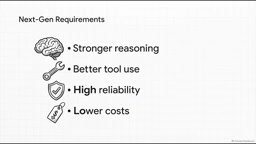
This comparison reveals an important pattern: a leaked codename does not equal a benchmark score, let alone a product you can use immediately. A true generational leap—such as a genuinely worthy GPT-7—requires consistently meeting five conditions: stronger multi-step reasoning ability to break down the core of complex problems, seamless tool and browser integration, stable reliability across repeated attempts, perfect context memory in long tasks, and sufficiently low cost for large-scale use.
According to cross-analysis by Bilibili creators and YouTube channels, these five criteria are gradually becoming the industry's consensus framework for judging whether a next-generation model is qualified.
The AI Reasoning Revolution: From Instant Replies to Deep Thinking
Recent claims that Google's new model is approaching recursive self-improvement (RSI) have sparked heated discussion. RSI is regarded as the holy grail of the AI field—AI can autonomously build smarter versions of itself, thereby accelerating progress. But the reality is that current AI is still assisting human researchers, for example by writing code snippets and analyzing papers, and has not yet been able to fully autonomously redesign its own architecture.
What is replacing true RSI is the deep reasoning mode currently becoming widespread. Google's rumored Ultra mode, as well as similar enhanced thinking modes across the industry, all require users to make a clear trade-off: giving up millisecond-level instant responses in exchange for the AI spending minutes or even hours of compute time to plan, test, and verify work in order to fix highly complex vulnerabilities.
Why Recursive Self-Improvement (RSI) Is Regarded as the Holy Grail
Recursive Self-Improvement (RSI) originates from the "intelligence explosion" hypothesis proposed by I.J. Good in 1965: if a machine can design a next-generation machine smarter than itself, then each generation will accelerate the birth of the next, forming an exponential technological leap. In contemporary AI discourse, RSI usually refers to a model's ability to autonomously modify its own training process, architecture, or data pipeline, thereby continuously improving its capabilities without human intervention. The industry currently remains cautious about this for three reasons: first, models lack visibility into their complete training pipeline; second, architectural innovation still depends on the intuition and experimentation of human researchers; third, safety and alignment issues are amplified in an autonomous improvement loop. Therefore, what is more common in reality is "AI-assisted AI research," where models help humans accelerate experimental iteration rather than completely breaking away from the human loop.
The Rise of Autonomous AI Agents: The Developer Role Transforms
In specialized coding environments such as Devin and Codex, an entirely new workflow is taking shape. True AI agents operate in autonomous loops: reading issue trackers, inspecting codebases, proposing migration plans, directly editing files, running tests, and when encountering errors, reading the error messages and correcting themselves.
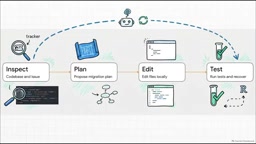
This change profoundly affects the definition of technical work. Future developers will not disappear; instead, they will act more like managers—coordinating a group of specialized agents, one writing tests, one migrating databases, another performing security review, while humans oversee architecture and approve final merge requests. This is a fundamental paradigm shift.
The Global AI Ecosystem: The Route Battle Between Local and Cloud
Running powerful local models requires serious technical alignment: enormous memory capacity, adaptation between NVIDIA RTX GPUs and the Apple macOS architecture, and compressing model size through model quantization.
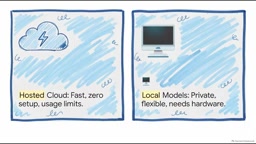
This has created an industry split. On one end are convenient managed cloud tools, such as the rumored Quen Image 2.1 Turbo, with zero configuration but accompanied by usage limits and monthly fees. On the other end are local open-source weight models, offering complete privacy and zero API costs, but requiring expensive high-performance hardware.
This global race goes far beyond a contest of raw intelligence. It also involves China's efficient open-source weight ecosystem, long-term workspace tools that can remember an entire software architecture, free cloud GPU credits offered by various players to attract developers, strict cybersecurity reviews, and even experimental AI NPCs changing the way games are interacted with.
Model Quantization: A Key Enabling Technology for Local Deployment
Model quantization refers to the process of converting model weights from high-precision floating-point formats (such as FP16 or BF16) to lower-precision formats (such as INT8, INT4, or even lower), with the goal of reducing memory usage, improving inference speed, and lowering energy consumption. For a 70-billion-parameter model, FP16 precision requires about 140GB of VRAM, while after 4-bit quantization it can be compressed to about 35GB, allowing even a single high-end consumer GPU or a unified memory architecture Apple Silicon device to run it. The cost of quantization is precision loss, which may manifest as degraded inference quality, worse long-context stability, or reduced ability to handle edge cases. Common quantization methods in the industry include formats such as GPTQ, AWQ, and GGUF, and different methods make different trade-offs between compression rate and quality retention. This also explains why the local deployment route is so sensitive to hardware selection: NVIDIA's RTX series holds an advantage thanks to the CUDA ecosystem and memory bandwidth, while Apple's Metal and unified memory architecture form differentiated competition in energy efficiency and portability.
Winning the Next AI Era
The ultimate winner will not be the side with the smartest hypothetical checkpoint, but those who immediately start testing these tools, use agents to automate repetitive workflows, reduce costs, and scale personal output. The future is not about bigger models, but about more useful intelligence. The era of the conversational chat box is over; the era of autonomous executors has begun.
As these systems move from chat windows into real development environments and perform real operations, who will build the ecosystem most trusted by developers and enterprises? Google's Gemini 4, Anthropic's Claude, or OpenAI? The race continues.
One-line Summary
The focus of the AI race is shifting from model scale to practical intelligence, with autonomous agents and deep reasoning reshaping the development paradigm.
Paragraph Summary
The article breaks down multiple current rumors and realities in the AI field. Google's internally tested Gemini 4 Carbon is merely a checkpoint, with coding ability reportedly matching Claude Opus 5.5, but it requires independent verification; Claude Fable 6 and GPT-7 remain unconfirmed codenames. A true generational leap must meet five criteria: multi-step reasoning, tool integration, reliability, context memory, and low-cost scalability. Recursive self-improvement has not yet been achieved; instead, deep reasoning modes trade response speed for planning and verification. Meanwhile, autonomous AI agents are changing the developer role, shifting it from coder to manager coordinating multiple specialized agents. Global competition has also expanded into a full-spectrum contest over local versus cloud routes, open-source ecosystems, privacy solutions, and developer relations.
Related articles

How Big Can Stars Really Get? The Physical Limits of the Largest Stars
Red supergiants are the largest stars by volume, with radii up to 2,000 times the Sun, engulfing the inner solar system. But there is no precise upper limit on stellar size—models predict up to 15,000 solar radii. The most massive blue stars are far smaller than red supergiants—biggest and heaviest are two different things.

Apple HomeView Smart Display Full Feature Breakdown: Wall-Mount or Desktop, $299
Apple launches HomeView, a $299 smart display with wall-mount and desktop options, 12MP camera for facial recognition, smart home control, music playback, and recipe step-by-step cooking. Full breakdown of watch faces, apps, privacy, and cooking integration.

Where Did the Promised New Studio Go? Craft Computing Answers After Five Years
Craft Computing's host responds to viewer questions: the new studio promised five years ago was shelved as construction costs soared from $30,000 to $75,000, and was replaced by a 168-square-foot garage conversion.