Gemini 4 Hydrogen In-Depth Review: Real Value Beyond Cost-Effectiveness
Gemini 4 Hydrogen scores high but isn't the best value—best as a constrained sub-agent, not a main assistant replacement.
Artificial Analysis's chart shows Gemini 4 Hydrogen High has a high index score but has moved beyond the optimal value zone, while the Extra High tier trades higher cost for a higher score, indicating top score and best value are different choices. At the same score, Hydrogen High leads Terra Max on Automation Bench but falls behind on the AA 2.0 code repository modification task, so choosing the right task matters more than declaring a universal winner. Hydrogen suits clearly bounded sub-agent tasks, while architecture decisions should remain with the main agent. At API rates Hydrogen isn't the default cheapest, and the value of the Google subscription bundle depends on whether you use the bundled benefits. SynthID text watermark detection isn't guaranteed to succeed, and short texts or rewrites weaken identification. The conclusion: Hydrogen is an excellent constrained sub-agent, but the main assistant position still belongs to ChatGPT.
The Fork Between Affordability and Capability
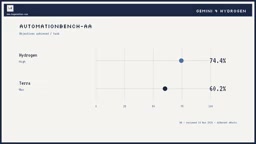
On Artificial Analysis's model selection chart, Gemini 4 Hydrogen High sits at the right edge of the "best value quadrant": its index score is higher, but it has already moved beyond the optimal value zone. On the same chart, the Extra High tier earns a higher index score at the cost of a noticeably higher spend per benchmark task. This data points to an easily overlooked conclusion—the highest score and the best cost-effectiveness are two different choices to begin with.
This leaderboard synthesizes nine evaluations into a single index, not a simple percentage accuracy rate; the dollar cost is the weighted benchmark task cost, not the token unit price or subscription fee. The horizontal axis on the chart is cost on a logarithmic scale, with higher positions indicating a higher index. This snapshot filters 31 models for display out of 740, showing only the Medium and High tiers, with Low and Extra High falling outside the lines. Among comparable products, Terra and Soul also meet the inclusion criteria.
The Artificial Analysis Index is a comprehensive scoring system formed by third-party evaluation agency Artificial Analysis through weighted aggregation of results from multiple large model benchmarks. It typically standardizes several evaluations (such as reasoning, coding, and knowledge Q&A) and synthesizes them into a single index score for horizontal comparison across models. This index is not a simple average of accuracy rates but accounts for task difficulty and coverage. The dollar cost refers to the weighted average expense incurred by running a model on a fixed benchmark task set, including input and output token costs, rather than the token unit price or subscription price. The logarithmic scale is used to display cost differences spanning multiple orders of magnitude, making the chart easier to read.
Same Score, Different Strengths
The aggregate index obscures one reversal: Terra Max also scores 51, on par with Hydrogen High, but the two belong to different effort tiers and are not a same-tier comparison. Looking at specific benchmarks, their strengths begin to diverge.
On Automation Bench, which simulates real-world business application workflows, Hydrogen High holds a clear lead over Terra Max. The task measures the proportion of goals achieved per individual task; guardrail violations or errors zero out that task directly rather than failing the entire job. Switching to the frontier coding scenario AA 2.0's repository modification task, the ranking flips, with Terra Max leading Hydrogen High. Both evaluations use a "higher is better" scoring rule, but different effort tiers and benchmark-specific frameworks mean the results no longer align.
This means that choosing the right task matters more than declaring a universal winner.
Automation Bench is a benchmark that evaluates a model's ability to execute automated tasks within simulated real-world business application workflows. It calculates the proportion of goals achieved per individual task; if a guardrail violation or error occurs in a task, that task is scored zero directly rather than failing the entire workflow, thus reflecting the model's reliability in actual business scenarios at a finer granularity. AA 2.0, meanwhile, is a repository-level modification task benchmark for frontier coding scenarios, requiring the model to complete patches or refactoring in real codebases. Its scoring rule is "higher is better," but because it uses a different framework and effort tier from Automation Bench, the same model may perform differently across benchmarks.
Value as a Constrained Sub-Agent
Suppose you have the model handle tasks like "find all callers affected by an interface change" or "patch within a single module"—what really determines success is whether the input is clear and the acceptance criteria are explicit; clearly bounded outputs are easier to check. Architecture decisions, cross-module judgments, verification, and final presentation should remain with the main agent and reviewers.
Narrowing the task scope does not eliminate errors, but it gives review a manageable target. Passing a local check does not mean the change fits the rest of the project.

A sub-agent refers to a model instance that executes specific constrained tasks under the coordination of a main agent or assistant, typically with clear boundaries and explicit acceptance criteria for easy review and rollback. In contrast, the main agent is responsible for architecture decisions, cross-module judgments, verification, and final presentation. Restricting tasks to scopes like "find all callers affected by an interface change" or "patch within a single module" reduces the risk of error propagation, but passing a local check does not guarantee the change fits the rest of the project, so overall review by the main agent is still required.
Two Sets of Books: Pricing and Subscription Bundles
At standard API rates, Hydrogen's input and output prices include thinking (think-tank) costs; Sonnet 5.5 at its default fallback tier is slightly lower per million tokens, Hydrogen's corresponding rate sits one tier lower, and Terra's base rate is cheaper. Thinking and retries both change the bill, but these figures are not measured project savings. On unit price alone, Hydrogen is not the default cheapest option.
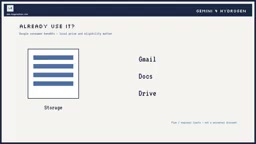
Google's consumer subscription bundle answers a different question: what are you already paying for? If you genuinely use the bundled storage, Gmail, Docs, or Drive benefits and local pricing is favorable, the bundle can look quite attractive. However, it is aimed at eligible personal accounts and subject to plan and regional restrictions; enterprise Workspace licensing is a separate system and does not offer unlimited API quota. In other words, the subscription bundle may be great value, but that doesn't mean it wins on every benchmark.
What Vertical Integration Brings
Google's uniqueness lies in simultaneously holding TPU design, model training, and the anti-gravity framework. Hardware, model behavior, and task routing can be co-designed—a lever that pure model vendors find hard to replicate. Anthropic purchases TPU capacity on one hand while diversifying across Trainium and NVIDIA on the other; the additional capacity is expected to come online only after 2027 and is not yet in place. Google likewise depends on external suppliers. For Google's competitors, both in-house frameworks and in-house chips are viable paths.
Synergy is an advantage, but not an inevitable victory.
Is the Output Labeling Rule a Dealbreaker?
Google provides SynthID labeling for text and supported media in the Gemini app. Text watermarking works by adjusting token probabilities to leave statistical traces; detection is not guaranteed to succeed, and the shorter the text or the more it is rewritten, the harder it is to identify. There are also product-specific content credentials that record provenance and edit history—this is content provenance, not personal identity tracking, and it is not equivalent to a training privacy commitment.
A watermarking scheme for the general Hydrogen API or code outputs has not yet been established; its API outputs only text. If the identification policy stated in the documentation crosses your red line, the most direct approach is to avoid the affected products.
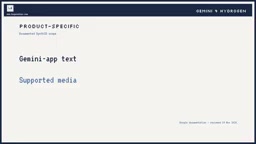
SynthID is a digital watermarking technology developed by Google DeepMind for embedding invisible statistical markers in AI-generated text, images, audio, and other media. Text watermarking leaves traces by adjusting the token probability distribution, and detection analyzes these traces to determine whether content was AI-generated. However, detection is not guaranteed to succeed; the shorter the text and the more it is rewritten, the harder identification becomes. Content Credentials, by contrast, is a standards-based metadata scheme that records the provenance and edit history of content; it is content provenance rather than personal identity tracking, and it is not equivalent to a training privacy commitment.
Conclusion: A Killer Sub-Agent, Not a Main Assistant Replacement
The maker's judgment is quite measured: in their own work scenarios, Hydrogen still lags behind ChatGPT in quality and polish—a personal experience, not a controlled comparison; but as a clearly bounded sub-agent, it performs excellently; and if local pricing is favorable and you can use the Google subscription bundle, it is also worth recommending. The main assistant position still belongs to ChatGPT.
It does not constitute a fatal blow to ChatGPT or Anthropic. What is truly worth asking yourself is: which part of your work are you willing to hand over to a constrained, reviewable sub-agent?
One-line Summary
Gemini 4 Hydrogen has a high index but is not the best value; it suits constrained sub-agent use rather than replacing your main assistant.
Paragraph Summary
Artificial Analysis's selection chart shows Gemini 4 Hydrogen High has a higher index score but has moved beyond the optimal value zone, while the Extra High tier trades higher cost for a higher score—indicating the highest score and the best cost-effectiveness are different choices. At the same score, Hydrogen High leads Terra Max on Automation Bench but is overtaken on the AA 2.0 code repository modification task, so choosing the right task matters more than declaring a universal winner. Hydrogen suits clearly bounded sub-agent tasks, while architecture decisions should remain with the main agent. At API rates, Hydrogen is not the default cheapest, and the value of the Google subscription bundle depends on whether you use the bundled benefits. SynthID text watermark detection is not guaranteed to succeed, and short texts or rewrites weaken identification. The conclusion: Hydrogen is an excellent constrained sub-agent, but the main assistant position still belongs to ChatGPT.
Related articles
AI Code Generation Is Getting Cheaper—Validation Is the Real Challenge
Code generation is getting cheaper, and the bottleneck is shifting to validation. Drawing on Satya Nadella's interview, this piece analyzes coding agents' specifications, multi-model review, separation of permissions, organizational changes, and how engineers can turn a single fix into reusable team capability.

Saparo: The Shopping AI Agent That Stacks Discounts Automatically, Topping Product Hunt
Saparo is an AI shopping agent that automatically stacks discounts, topping Product Hunt. It finds the same item, matches sizes, combines promo codes and cashback, ranks by total cost including shipping and taxes, and leaves final payment to the user.

Tripmojo: The AI Travel Agent That Checks You In
Tripmojo is the #2 AI travel agent on Product Hunt: it syncs booking emails into a shared itinerary and lets Mojo attempt check-in, save boarding passes, and flag delays.