Gemini 4 Hydrogen Review: Better Value Than Argon, But No Match for Sonnet 5.5
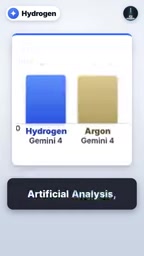
Gemini 4 Hydrogen narrowly beats its own flagship, but faces tough competition on value.
Google launched the mid-tier Gemini 4 Hydrogen, which edged past its own flagship Argon (50 points) with a score of 51 on independent benchmarks, at about 25% lower cost. However, against competitors it sits in an awkward middle: Claude Sonnet 5.5 is more powerful (55 points) but costs four times as much, while GPT 6.1 Terra matches its performance at 40% less. Compared with the previous Flash, Hydrogen offers a big performance jump but double the price, and in practice drains subscription quotas faster. Additionally, Argon's discount is ending soon, which will change the price comparison. The article reminds developers not to trust vendor-reported data and to base decisions on independent evaluations and real usage costs.
Google quietly launched Gemini 4 Hydrogen, a mid-tier AI model. Not only did it edge past its own flagship Argon on independent benchmarks, it also costs less. But against Claude Sonnet 5.5 and GPT 6.1 Terra, its position is a bit awkward. Based on a YouTube video, this article breaks down Hydrogen's real-world performance, how it stacks up against competitors, and the easily overlooked "cost."
What Makes Hydrogen Strong?
Independent Benchmarks: A One-Point Win Over Argon
On the independent evaluation platform Artificial Analysis, Gemini 4 Hydrogen scored 51, while Google's own frontier model Argon scored 50. A one-point difference is slim, but given Hydrogen's lower positioning, it's enough to give Google's marketing materials an extra selling point.
The video's author notes that Argon was once called by Google "the ideal choice for most software engineering." Now Hydrogen has surpassed it in score while costing less: Hydrogen is $1.50 per million input tokens and $7.50 per million output tokens, versus Argon's $2 / $10. This means Hydrogen offers a new option for budget-conscious developers who don't want to sacrifice too much performance.
Artificial Analysis is an independent AI model evaluation organization that scores mainstream models through standardized benchmarks (such as MMLU, HumanEval, etc.) and publishes rankings regularly. Its scores typically combine accuracy, reasoning ability, code generation, and other dimensions, presented on a 100-point scale. Unlike vendor-reported data, third-party evaluations have transparent test sets and processes, so developers often use them as a reference for model selection. However, such leaderboards have limitations: test questions may not fully reflect real-world scenarios, and rankings change quickly as models are updated frequently.
Price Advantage: 25% Cheaper per Million Tokens
Based on the prices above, Hydrogen's input cost is about 25% lower than Argon's, and output cost is also 25% lower. While the absolute difference isn't huge, it gets amplified at scale. The video's author admits this was one of the reasons he was initially interested in Hydrogen.
In AI model API billing, tokens are the basic unit, roughly equivalent to text fragments (one token is about 0.75 English words or half a Chinese character). Input tokens refer to the prompts users send, and output tokens refer to the model's generated responses. Since large model inference consumes significant compute, output token prices are usually higher than input token prices. Pricing per million tokens is an industry convention that helps enterprises estimate large-scale usage costs. For example, processing 1 million requests averaging 500 tokens each would cost the unit price multiplied by 500.
Head-to-Head Against Claude Sonnet 5.5 and GPT 6.1 Terra
Google's Own Table: Hydrogen Wins Most Matchups
In the comparison table published by Google, Hydrogen beats Claude Sonnet 5.5 in 7 out of 10 categories and beats GPT 6.1 Terra in 8 out of 9. Looking at this table alone, Hydrogen is almost a product that "punches above its weight."
But the video's author quickly reminds viewers: these are Google's own scores, so their reference value is limited.
Independent Leaderboard: Sonnet 5.5 Leads, Terra Ties
Switching to the independent evaluation platform, the picture changes. Claude Sonnet 5.5 scores 55 at maximum effort settings, ahead of Hydrogen's 51; GPT 6.1 Terra ties with Hydrogen at 51.
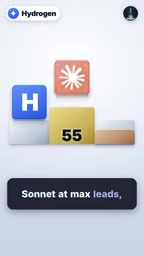
However, the cost differences are significant: running the same tests, Sonnet 5.5 costs more than four times as much as Hydrogen, while Terra is about 40% cheaper than Hydrogen. In other words, Hydrogen isn't the smartest, nor the cheapest—it's stuck in the middle. The video's author puts it this way: "It's not the smartest, and it's not the cheapest. It's the one in the middle."
The Delicate Balance of Cost-Effectiveness
If performance is all that matters, Sonnet 5.5 is the better choice, but at over four times the cost. If price is all that matters, Terra is 40% cheaper than Hydrogen with equal performance. Hydrogen's selling point is "performance close to the top, price far below the top"—but Terra's existence makes that selling point less solid.
In model selection, cost-effectiveness isn't simply performance divided by price; factors like task type, latency, and stability also matter. For high-concurrency, low-complexity tasks (such as classification and summarization), price sensitivity is higher; for tasks requiring complex reasoning (such as code generation and multi-step planning), performance gaps may directly determine usability. Additionally, context window size, function calling support, and output format control also affect actual costs. Therefore, developers should combine their own business scenarios and run A/B tests with real data rather than relying solely on leaderboard scores.
The Hidden Cost: Upgrading from Flash to Hydrogen
Double the Performance, Double the Price
Compared with Gemini 3.8 Flash, Hydrogen's score jumps from 31 to 51—a massive improvement. But the video's author points out that input and output prices have also doubled. This isn't "more for the same price"—it's "more for more."
Real-World Use: Quotas Drain Faster
The author shares his own experience: Hydrogen consumes Gemini usage quotas faster than Flash. This means that for users relying on subscription quotas rather than pay-per-token, the actual cost may be higher than the listed price. This point is usually not mentioned in official marketing.
Subscription-based AI services typically limit usage through "quotas" or "credits," such as a fixed number of conversations or total tokens per month. Different models may consume quotas at different rates: more powerful models often consume more quota per request because their reasoning process is more complex and generated output is longer. For subscription users, the actual number of usable requests may be far lower than expected. Therefore, when evaluating costs, don't just look at API list prices—also pay attention to the conversion rules between models and quotas in subscription plans.
Argon's Countdown: Discount Ending Soon
The video ends with a key piece of information: Argon's discounted price will end on November 30. After that, its price will double. This means the current price gap between Argon and Hydrogen will widen further after the discount ends—but in Hydrogen's favor.
The author closes with a sarcastic remark: "The ideal choice on Tuesday is outdated by Thursday." This is both a jab at the pace of AI model iteration and a hint at the rapid repositioning of Google's product line.
Conclusion: Who Is Hydrogen For?
Gemini 4 Hydrogen is a "positioning" product: cheaper than its own flagship but not inferior in performance; cheaper than competitors but not the most powerful. It suits developers who need more performance than Flash but don't want to pay the high prices of Argon or Sonnet 5.5. But if you're extremely cost-sensitive, GPT 6.1 Terra may be the better deal; if you're chasing peak performance, Sonnet 5.5 still leads.
The video author's core reminder: don't just look at Google's comparison table—independent evaluations and real-world usage costs are what matter for decisions. An AI model's cost-effectiveness is a moving target; today's "ideal choice" may be rewritten tomorrow by a new model or new pricing.
One-line Summary
Gemini 4 Hydrogen narrowly beats its own flagship, but faces tough competition on value.
Paragraph Summary
Google launched the mid-tier Gemini 4 Hydrogen, which edged past its own flagship Argon (50 points) with a score of 51 on independent benchmarks, at about 25% lower cost. However, against competitors it sits in an awkward middle: Claude Sonnet 5.5 is more powerful (55 points) but costs four times as much, while GPT 6.1 Terra matches its performance at 40% less. Compared with the previous Flash, Hydrogen offers a big performance jump but double the price, and in practice drains subscription quotas faster. Additionally, Argon's discount is ending soon, which will change the price comparison. The article reminds developers not to trust vendor-reported data and to base decisions on independent evaluations and real usage costs.
Related articles
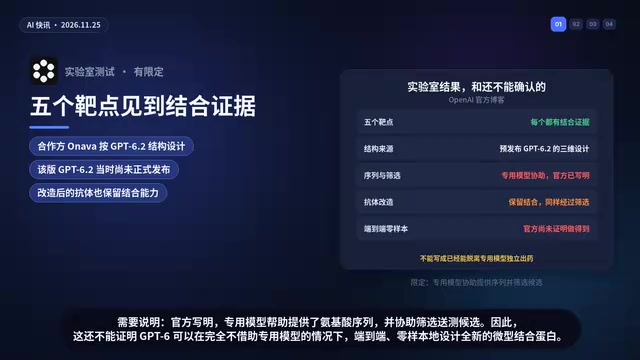
GPT-6 Designs Proteins, Claude Creations Become Apps with One Click, DeepMind Releases New Benchmark
OpenAI says GPT-6 can design protein 3D structures, Anthropic lets Claude creations install as desktop apps, DeepMind's HIP benchmark tests stability on simple questions, Google Workspace opens agent MCP interfaces.
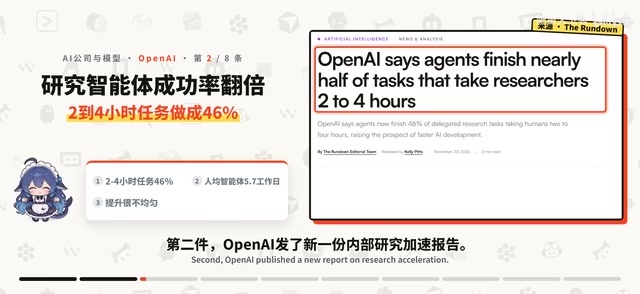
OpenAI Weekly Roundup: GPT-6.2 Rolls Out to ChatGPT, GPT-6 Designs Proteins
OpenAI's week: GPT-6.2 rolls out to ChatGPT, GPT-6 claims independent protein design, agent research share surges, perplexity proposed as a shared metric, and internal safety concerns surface.

Is the Crypto Industry About to "Turn Blue"? The Truth Behind Tech and Politics' Shifting Allegiances
Vergecast discusses whether the crypto industry will shift from the right to the Democrats, revealing the pragmatic nature of tech's politics and the costs of a crypto pivot.