Gemini 4 Interprets 500-Page Chemistry Patents: Boosting Drug Discovery Efficiency

Isomorphic Labs researchers found Gemini 4 can boost drug discovery literature summarization and patent analysis efficiency by dozens of times.
This article shares a drug discovery researcher's firsthand experience using Gemini 4. Gemini 4 generates high-quality academic paper summaries in 10-15 minutes (vs. 1-2 days manually) and accurately extracts structured information from 500-page chemistry patents. What would have taken nearly a month for 10 patent reports was completed in one afternoon. The researcher believes general-purpose large models serve as an orchestration layer in drug discovery, compensating for specialized model limitations and accelerating drug development.
Drug discovery research has long been plagued by vast amounts of literature and complex patents. A researcher at Isomorphic Labs shared their firsthand experience using Gemini 4 to process academic papers and chemistry patents, demonstrating the practical value of general-purpose large models in highly specialized domains.
From Academic Papers to Patent Reports: Gemini 4's Real-World Performance
According to a YouTube video, this researcher working on drug discovery at Isomorphic Labs obtained early access to Gemini 4. Isomorphic Labs itself focuses on developing AI models for specific tasks, while general-purpose models like Gemini 4 excel at summarizing and coordinating drug discovery-related work.
The researcher directed Gemini 4 toward academic papers describing protein targets, asking it to summarize the paper content and the underlying research rationale. Gemini 4 generated a high-quality report in about 10 to 15 minutes. The researcher admitted that completing the same work themselves would take at least one to two days.
More impressively, Gemini 4 not only summarized the paper content but also connected knowledge across different domains, providing insights beyond the paper itself.
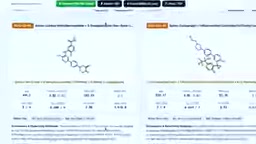
Protein targets are a core concept in drug discovery. Most small-molecule drugs work by binding to specific proteins in the body, and the protein that a drug acts upon is called a "target." Academic papers describing protein targets typically cover the target's three-dimensional structure, biological function, association with disease, known binding pocket characteristics, and more. The purpose of researchers reading such papers is to determine whether the target is "druggable" and how to design molecules that can bind to it. These papers often span structural biology, biochemistry, and pharmacology — multiple disciplines with extremely high information density. Manually reading one paper carefully typically takes hours to days. This is precisely why Gemini 4 producing a high-quality report in 10-15 minutes is so astonishing.
The Challenge and Breakthrough of 500-Page Patents
Chemistry patents are an extremely valuable source of information in drug discovery, but they are exceptionally difficult to process. According to the sharing, patent documents can be up to 500 pages long, and chemical structures may be 50 pages away from experimental data, making manual review highly error-prone.
The researcher selected a set of patents they were very familiar with and handed them to Gemini 4. The model not only extracted key information into a spreadsheet but also generated a complete report.

After comparing the results with existing knowledge, the researcher found that Gemini 4's output was highly accurate and at a level ready for direct use.
Chemistry patents differ fundamentally from academic papers in structure and purpose. A medicinal chemistry patent typically includes claims, compound formulas, specific examples, synthetic routes, biological activity data, and other sections. Its length can reach hundreds of pages because applicants often list hundreds or thousands of specific compounds in a single patent to broaden the scope of protection. Chemical structure diagrams (which cannot be rendered in Markdown text) are often dozens of pages away from their corresponding experimental data, requiring readers to repeatedly flip back and forth. Additionally, patent language is deliberately vague to expand protection boundaries, further increasing comprehension difficulty. Therefore, accurately extracting key chemical information from patents has always been a challenge in cheminformatics and an important litmus test for the value of general-purpose large models in specialized domains.
Efficiency Comparison: A Month's Work Compressed into an Afternoon
According to the researcher's estimate, generating reports for 10 different patents would require nearly a month of continuous work using traditional methods. Gemini 4 completed the same task in a single afternoon.

The significance of this efficiency gain goes beyond saving time. The researcher noted that Gemini 4 allowed them to transcend the limitations of their own area of expertise and uncover insights that would most likely have been overlooked if relying solely on individual reading.
The Role of General-Purpose Models in Specialized Domains
The models developed by Isomorphic Labs are highly focused on specific tasks, while the value of general-purpose models like Gemini 4 lies in orchestrating and coordinating the vast amount of work surrounding drug discovery.
The researcher believes that models like Gemini 4 can help save time and resources, guide researchers toward the right path, and ultimately accelerate better drugs reaching patients. For a field as information-intensive and interdisciplinary as drug discovery, general-purpose large models are becoming indispensable research aids.
Specialized vs. general-purpose models — the division of labor in drug discovery deserves elaboration. Models developed by Isomorphic Labs (such as follow-up work to the AlphaFold series) target specific tasks, for example, predicting protein three-dimensional structures from amino acid sequences, with advantages in accuracy and reproducibility. However, the complete drug discovery pipeline goes far beyond structure prediction, involving extensive "peripheral" information work such as literature review, patent analysis, target evaluation, and competitive landscape assessment. These tasks are highly diverse and interdisciplinary, making them difficult to cover with a single specialized model. The value of general-purpose large models like Gemini 4 lies precisely in their broad commonsense reasoning and cross-domain connection capabilities, serving as an "orchestration layer" that integrates outputs from specialized models with unstructured information such as literature and patents to form complete research judgments.
One-line Summary
Isomorphic Labs researchers found that Gemini 4 can boost literature summarization and patent analysis efficiency in drug discovery by dozens of times.
Paragraph Summary
This article shares the firsthand experience of a drug discovery researcher at Isomorphic Labs using Gemini 4. For academic paper processing, Gemini 4 can generate high-quality summary reports in 10-15 minutes, while manual work takes 1-2 days — and the model can also connect knowledge across domains, providing insights beyond the paper itself. For chemistry patent processing, faced with patent documents up to 500 pages long where chemical structures and data are far apart, Gemini 4 can accurately extract structured information and generate complete reports at a directly usable quality level. What would have taken nearly a month for 10 patent reports was completed by the model in just one afternoon. The researcher believes that general-purpose large models play an orchestrating and coordinating role in drug discovery, compensating for the limitations of specialized models and accelerating the drug development process.
Related articles

FlexBudget: Fair Comparison of KV Cache Eviction Strategies Under a Unified Compute Budget
AMD engineer proposes FlexBudget at PyTorch Conference: a training-free fair comparison method for KV cache eviction rules using fixed kernels and memory budgets, all in core PyTorch.

Anthropic's $2 Trillion Valuation Deconstructed: Why the AI IPO Wave Keeps Faltering

Anthropic IPO Countdown: The Compute Cost Ledger Behind a $2 Trillion Valuation
Anthropic's IPO targets up to $2 trillion — double its Series H valuation. We break down the timeline, compute cost logic, and the key question investor day must answer.