Gemini 4 Krypton Leaked: Performance Approaches Fable 5.2 at Lower Cost

Gemini 4 Krypton approaches top models at lower cost as model selection shifts to task matching.
This round of AI news centers on the rapidly narrowing performance gap among top models and a shift in selection logic. Google's Gemini 4 Krypton, tested anonymously in Arena and the API, beats Opus 5.5 on some tasks and approaches Fable 5.2 at significantly lower cost, though it remains closer to Sonnet 5.5 for web development. Anthropic's official data counterintuitively shows Opus 5.5 solving 84.6% of 52 coding tasks versus Fable 5.2's 82.7%, while the latter costs 2.8 times more per task, suggesting raising reasoning effort before upgrading models. Additionally, Claude Code launched multi-threaded project collaboration with /btw and /fork commands, GPT-6.2 Astra and GLM-5.5 news leaked, ChatGPT and Gemini rolled out agentic payments, and Google used Gemini 4 series models to help machine-verify formalizations of several mathematical conjectures.
The AI world stayed busy over the weekend. Google's new Gemini 4 Krypton checkpoint was spotted being tested in Arena and the API, with early results claiming it can already challenge Opus 5.5, matching or even surpassing Fable 5.2 on some tasks—at significantly lower cost. Meanwhile, Claude Code rolled out a major project collaboration update, early GPT-6.2 Astra outputs leaked, a GLM-5.5 benchmark chart surfaced, and Anthropic published a model selection guide.
Gemini 4 Krypton: Google's Iteration Speed Is a Bit Frightening
According to multiple developers with early access and Arena test records, Gemini 4 Krypton is being tested in the API and Arena under the name "Gemini 4 Hydrogen." The latest checkpoint has been identified as a new model slug, showing clear improvement over the Krypton A checkpoint revealed just days ago—and Krypton A had already surpassed Gemini 4 Carbon on nearly all domain tasks.
What's truly surprising is the comparison data: this new checkpoint already beats Opus 5.5 on some tasks and comes very close to Fable 5.2. The animated dynamic graphics generation comparison shown in the video reveals a substantial leap in Krypton's output quality over Argon, with noticeably better detail handling and code completeness.

Real test cases illustrate the point better. One user had Krypton generate a CSGO clone featuring different equipment loadouts, textures, on-map enemy displays, and health bars—basic visuals, but fully functional, and the UI components and code details are exactly where previous Gemini models were often criticized. Another case is even more striking: a 3D rocket engine simulation in a single HTML file, pure JavaScript, with no external resources, and surprisingly refined 3D visualization of heat flow and engine heat and flow.
But there are cooler heads too. The video's author admits that on web development tasks, Krypton is closer to Sonnet 5.5 than Opus; in other domains, though, it may indeed surpass Opus 5.5. This pattern of "each winning in different domains" precisely shows that the gap between top models is narrowing.
Arena (LMArena) is a public blind-test battle platform where users vote on outputs from two anonymous models, and rankings are calculated on an Elo-style basis. Before official release, models often enter Arena under anonymous codenames (like Hydrogen in this article) to collect human preference data, which lets developers "discover" unreleased models early by identifying model slugs, output styles, or response characteristics. This anonymous testing is called stealth testing or A/B testing and is currently an important way for major model vendors to evaluate real user preferences—but it also means early leaderboard results often mix test versions with official versions, so interpretation requires caution.
Claude Code: From Single-Threaded to Project Collaboration
Claude Code's project feature update deserves its own mention. The project coordinator can now coordinate tasks across multiple parallel threads, answer questions directly in group project chats, and continuously update the work status of each thread.
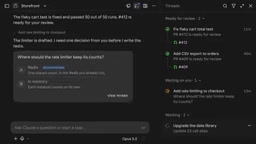
Two new commands are especially useful: /btw lets you ask an unrelated question without interrupting your current workflow, with the system automatically creating a separate thread; /fork lets you branch off from an existing thread to try a completely different approach without affecting the original progress. There are also thread reminders, read-only thread sharing (viewable without login, though threads that access your local computer cannot be shared), and a redesigned thread panel that highlights recently opened, updated, and pinned conversations and shows thumbnails and generated artifacts.
Custom themes are another small but delightful update: in the Claude desktop app, you can use mods to create a fully customized interface—no manual coding required, just tell Claude what you want and attach reference images. Currently only local sessions are supported; cloud session support is coming later. Projects is currently in public beta for Claude Pro and Max users.
Anthropic's Model Selection Guide: The Most Expensive Isn't Always the Best
Anthropic offered counterintuitive advice on its official blog: Opus 5.5 at medium reasoning effort should be your daily workhorse, especially for coding and routine development tasks. If Opus struggles, first increase reasoning effort before considering a more expensive model.
The data backs this up directly: in a comparison of 52 coding tasks in Claude Code, Opus 5.5 solved 84.6%, Fable 5.2 solved 82.7%, and Fable's cost per solved task is 2.8 times that of Opus. In other words, paying more for everyday coding doesn't necessarily buy better results. Truly difficult tasks—large codebase migrations, complex architecture, deep research, long-running autonomous workflows—are where Fable 5.2 shines. Sonnet 5.5 suits small, well-defined tasks, while Haiku 5.5 is for lightweight operations like classification, file search, and subagents. All four models support a 1M-token context window, so choosing a cheaper one doesn't cost you context length.
Reasoning effort is an adjustable parameter introduced by reasoning models: the model generates an internal chain of thought before giving a final answer, and the higher the reasoning effort, the more thinking tokens are allowed, improving complex logic, multi-step planning, and debugging—but latency and cost rise accordingly. It's a different optimization path from "switching to a bigger model"—the former adjusts compute allocation within the same model, while the latter changes parameter scale and pricing tier. Anthropic recommends raising reasoning effort before upgrading models precisely because, for most tasks, the marginal benefit of increasing a model's thinking budget exceeds switching directly to a more expensive model. This also explains why Opus at medium effort can cover most everyday coding tasks.
GPT-6.2 Astra, GLM-5.5, and the Model Melee
OpenAI's GPT-6.2 Astra has early preview outputs leaking, reportedly stunning in one-shot completion—environment generation quality that previously required multiple iterations can now be approached in a single generation.
GLM-5.5 comes from leaked internal conversations and benchmark charts from the ZAI team, claiming it will surpass Claude Opus 5.5. The video's author remains cautious: this is news from China, and the community has plenty of "fake" skepticism. But if true, it means a cheaper Opus-class model will hit the market.

Other developments worth watching: traces of Muse Spark 1.4 appeared in Meta's internal PR, possibly related to the earlier stealth model Crouton Alpha; the Qwen 4.0 Max preview appears to be a stealth upgrade with noticeably improved generation quality; Antigravity introduced dynamic workflows, where the /run-d command auto-generates Python scripts to coordinate multiple subagents with parallel task support, and scripts can be reviewed before running and saved for reuse.
Wallets and Agents: AI Starts Spending for You
ChatGPT rolled out a Wallet feature to US Pro subscribers in partnership with American Express, MasterCard, and Visa, letting AI agents complete purchases without touching actual card numbers. Each transaction requires secure verification, and eligible purchases still retain card rewards and dispute protection. Google followed closely: US Gemini users can link Google Wallet directly to Gemini for similar agentic payment capabilities.
DeepSeekAd is expanding its footprint too: the API adds built-in web search, file processing, link processing, security features, and voice capabilities, plus standalone APIs for OCR, speech recognition, and TTS—developers can replicate the desktop app experience with a few parameters. A quota limit notice appearing in the official website's code has fueled speculation about a paid subscription.
Agentic payment refers to AI agents completing transactions on behalf of users rather than users clicking to pay themselves. The key technical point is not exposing real card numbers to the model: payment networks typically generate one-time or purpose-limited virtual credentials (tokens) bound to merchant, amount cap, and validity period, and transactions still require biometric or two-factor confirmation from the user. Card networks provide dispute protection and reward accrual so that agentic payments are equivalent to ordinary card use in experience. This model advances from "the model can call tools" to "the model can command funds," and the resulting authorization boundaries, liability for mistaken purchases, and prompt injection attack risks are the main points of contention in current deployment.
Math Breakthroughs and IPOs: Another Side of AI
Google used Gemini 4 series models (Argon, Carbon, Hydrogen) to help solve a series of mathematical conjectures: the first machine-verified formalization of the nearly century-old Berkoff conjecture, identification and repair of proof gaps in the 50-year-old 3D Bochner-Rees conjecture, the 20-year-old C1 regularity problem, and verification of the 40-year-old Jameson-Caterpillar conjecture. The Teamwork Leap system also autonomously formalized the Weil conjecture, generating 1.8 million lines of machine-verified Lean code through 29,000 subagent calls.
In an interview, Dario Amodei confirmed that Anthropic's core reason for seeking an IPO is compute investment—opportunities in biology, robotics, cybersecurity, and knowledge work are enormous, and the more cash reserves, the thicker the buffer between a low-compute world and a high-compute world.
SpaceX, meanwhile, caught the Starship itself with the launch tower's mechanical arm for the first time, having previously caught the Super Heavy booster. Elon confirmed that Grok participated in the agency's development and computational work.
Lean is an interactive theorem prover and programming language used mainly for formalizing mathematics: writing conjectures and proofs as machine-checkable code, with the kernel verifying each step of reasoning line by line to eliminate human oversight. "Machine-verified formalization" means the proof doesn't rely on the trust of peer review but yields a definitive conclusion from the compiler. Subagent calls refer to the main agent breaking a large task into many small goals, dispatching them to parallel subagents to complete separately, and then aggregating the results—the 29,000 calls generating 1.8 million lines of Lean code in this article is a typical scale of such "large-scale parallel formalization." Combined, the two enable AI to participate in long-unsolved mathematical problems in an auditable way.
Editorial View
The most thought-provoking thing in this round of news isn't any single model but two trend lines: first, the performance gap among top models is rapidly narrowing—Gemini 4 Krypton approaches Fable 5.2 at lower cost, and if GLM-5.5 is real, it will further compress the premium pricing space; second, Anthropic's own data says "the most expensive doesn't mean the best," and model selection is shifting from "mindlessly pick the strongest" to "match the task." For developers, this means more room for cost optimization than ever; for model vendors, the story of simply piling on parameters to command a premium is getting harder to tell.
Related articles

RePlan-VLA: Progress-Aware Replanning Breakthrough for Long-Horizon Robotic Manipulation
The RePlan-VLA framework converts VLA models' short-horizon capabilities into reliable long-horizon execution through progress-aware adaptive replanning, improving success rates by 21.9% and 10.4% on RoboCasa365 and CALVIN, and validating real-world deployment on a Franka Research 3 robot.

Geometric Bridge Flow Matching: A New Breakthrough in Blind Rigid Motion Correction
Geometric bridge flow matching enables blind rigid motion correction in head CBCT, achieving 37.1 dB PSNR and 0.27 mm RPE on simulated data in ~9.1 minutes, outperforming existing methods.

Google Releases Gemini 4 Hydrogen: 2.5x Faster Without Sacrificing Intelligence
Google releases the lightweight Gemini 4 Hydrogen: 2.5x faster task completion, AA Intelligence Index of 54 beating its flagship sibling, 7.3s single-step on Agent Arena faster than Claude and GPT rivals, four thinking levels with pay-as-you-need pricing, now available across AI Studio and more.