Gemini's Agentic Video Understanding: How AI Actively Comprehends Video Content
Gemini's agentic video understanding enables AI to actively reason about and navigate video content.
Google's Gemini introduces agentic video understanding, enabling AI to autonomously navigate, reason about, and analyze video content through reasoning loops, active retrieval, and multi-step causal inference. This marks a shift from passive perception to active cognition in multimodal AI, with transformative applications across content creation, education, security, and accessibility.
Gemini Ushers in a New Era of Agentic Video Understanding
Google recently introduced Agentic Video Understanding capabilities powered by Gemini, marking a pivotal step forward for multimodal AI in video content processing. Unlike traditional video analysis tools, this capability goes beyond simple tagging or frame-level recognition — it enables AI to "proactively" understand, reason about, and interact with video content, much like a human would.
The term "Agentic" is key here: at its core, it means the AI possesses the ability to autonomously plan and execute. When faced with a lengthy video, the model can independently decide "where to look," "how long to watch," and "which segments to skip," while performing multi-step reasoning informed by context. This leap in capability elevates video understanding from passive perception to active cognition and decision-making.
Notably, Agentic AI is one of the most central technology paradigms in the AI field for 2024–2025. Its theoretical foundation traces back to the Agent concept in reinforcement learning — an autonomous entity capable of perceiving its environment, formulating strategies, and taking actions to maximize an objective function. In the era of large language models, Agentic AI specifically refers to models that can not only passively answer questions but also proactively invoke tools, decompose tasks, formulate execution plans, and dynamically adjust strategies based on intermediate results. A representative Agentic architecture is the ReAct (Reasoning + Acting) framework, where the model alternates between reasoning and action in a closed-loop feedback cycle. Google's introduction of this paradigm into video understanding means Gemini now possesses a similar perceive-reason-act loop when processing video.
Why Video Understanding Is Multimodal AI's Greatest Challenge
Video understanding has long been recognized as one of the toughest problems in multimodal AI. Compared to images, video introduces a temporal dimension — a few minutes of video can contain hundreds or thousands of frames, overlaid with audio, subtitles, scene transitions, and other information streams.
From a computational perspective, the temporal dimension brings exponential complexity growth. A 10-minute video at 1080p and 30fps contains approximately 18,000 frames. If each frame is treated as a processing unit, even an efficient vision encoder (such as ViT-L) generates hundreds of visual tokens per frame. This means processing a short video can produce millions of tokens, far exceeding the context window limits of most models. Previous industry approaches included temporal sampling, video token compression, and multi-rate processing based on the SlowFast architecture. Gemini's long-context capability (supporting context windows of up to 1 million or even 10 million tokens) provides the infrastructure-level foundation for directly processing long videos.
Limitations of Traditional Video Analysis Methods
Past video understanding solutions predominantly followed a "frame extraction + image model" approach: uniformly sampling several key frames from a video, feeding them to an image understanding model for per-frame analysis, and then stitching together conclusions. This approach was extremely common in early Video-LLMs (Video Large Language Models), with representative works including Video-LLaMA and VideoChat. These models typically used visual encoders like CLIP to extract features from sampled key frames, then fed the feature sequences into an LLM for comprehension. More advanced approaches like Video-ChatGPT introduced spatiotemporal pooling, while PLLaVA adopted adaptive pooling strategies to balance frame count and token quantity.
However, these methods all share fundamental shortcomings:
- Severe information loss: Frame sampling may miss critical actions or turning points
- Lack of temporal reasoning: Difficulty understanding cause-and-effect relationships and dynamic changes
- High computational cost: Enormous token consumption when processing long videos
More critically, these methods all rely on static, predefined sampling strategies that cannot dynamically adjust focus areas based on the user's specific question. The agentic approach, by contrast, more closely mirrors how humans watch videos — rather than staring at every frame, it intelligently locates, retrieves, and focuses on key content based on the task objective.
Core Technical Breakthroughs in Agentic Video Understanding
The biggest highlight of Gemini's agentic video understanding is the introduction of a reasoning loop into the video processing pipeline. Instead of "watching the entire video once and producing an answer," the model can act like a human researcher — rewatching, pinpointing details, and verifying hypotheses iteratively.
The reasoning loop is the core operating mechanism of agentic AI. In traditional single-pass inference, the model receives input and generates output in one shot, with no opportunity for reflection or correction. A reasoning loop allows the model to perform self-evaluation after generating intermediate conclusions, assessing whether current information is sufficient to answer the question — and if not, triggering a new round of information retrieval and reasoning. This resonates with the "dual process theory" in cognitive science (System 1 vs. System 2 thinking) — combining fast intuitive judgment with deep analytical reasoning. In video understanding scenarios, the reasoning loop manifests as the model first doing a quick scan of the entire video to get an overview, then diving deep into specific segments, and even backtracking to earlier segments for cross-verification when new clues are discovered.
Active Retrieval and Intelligent Localization
When users pose complex questions about a video, Gemini can autonomously determine which time segments to focus on and "jump" to relevant clips for in-depth analysis. This capability is particularly important for long videos (such as lectures, meeting recordings, sports events, and surveillance footage), where the answer often lies hidden within a specific few seconds.
From a technical perspective, Gemini's active retrieval capability can be analogized to RAG (Retrieval-Augmented Generation) for the video domain. In text-based RAG, the model retrieves relevant document fragments from an external knowledge base to assist answer generation; in video RAG, the model needs to locate relevant temporal segments from a continuous video stream. This involves key technologies such as Video Moment Retrieval and Video Temporal Grounding. Traditional methods like Moment-DETR use Transformer decoders to predict temporal boundaries, while the agentic approach innovates by delegating retrieval decisions to the model itself — the model not only knows "where the answer is" but can also proactively formulate search strategies, representing a higher-order metacognitive capability.
Multi-Step Reasoning and Causal Analysis
Agentic understanding allows the model to perform multiple rounds of reasoning before reaching conclusions. For example, when answering questions like "Why did this person make that decision in the video?" — which require causal inference — the model can first locate the event, then trace back to preconditions, and finally synthesize a judgment, forming a complete reasoning chain.
This multi-step reasoning capability shares the same principles as Chain-of-Thought reasoning in large language models, but in video scenarios the information dimensions are far more complex — the model must simultaneously reason across temporal, spatial, and semantic dimensions while establishing causal relationships between different time segments.
Application Scenarios for Agentic Video Understanding
The practical deployment of this capability will bring transformative impact across multiple industries:
- Content Creation and Editing: Automatic video summary generation, highlight extraction, and intelligent editing assistance
- Education and Training: Quickly locating key concepts in long video courses and generating structured notes
- Security Surveillance: Intelligent analysis of surveillance footage, proactively identifying anomalous events and tracing context
- Media Analysis: In-depth content understanding and retrieval for sports events and news videos
- Accessibility Services: Providing more accurate, context-rich video descriptions for visually impaired users
Profound Implications for Multimodal AI Development
Gemini's agentic video understanding reflects a major trend in current AI development: the shift from perceptual intelligence to cognitive intelligence, and from single-response systems to autonomous agents. This aligns closely with the broader industry-wide movement toward Agent-based AI.
AI development is typically divided into three stages: computational intelligence, perceptual intelligence, and cognitive intelligence. The computational intelligence stage (represented by traditional algorithms) addressed computation and storage problems; the perceptual intelligence stage (represented by deep learning) gave machines the ability to see, hear, and speak, including image recognition and speech recognition; the cognitive intelligence stage requires machines to possess advanced cognitive functions such as understanding, reasoning, planning, and decision-making. The emergence of large language models — particularly the emergence of chain-of-thought reasoning capabilities — is viewed as a critical turning point from perceptual to cognitive intelligence. The active planning and multi-step reasoning capabilities Gemini demonstrates in video understanding are a concrete manifestation of this transition in the multimodal domain. At the same time, alongside Anthropic's Computer Use Agent and OpenAI's Operator, these products collectively represent the sweeping wave of Agent-oriented AI across the industry in 2025.
When models are no longer content with merely "understanding" content but can "actively think about how to understand it," AI's ability to process complex real-world information will see a qualitative improvement. As one of the highest information-density media formats that most closely mirrors real human experience, breakthroughs in video understanding also lay a crucial foundation for future artificial general intelligence.
Of course, this technology is still in its early stages, with room for improvement in processing ultra-long videos, complex multi-subject scenarios, and fine-grained action recognition. But it's foreseeable that as agentic understanding capabilities continue to mature, AI's ability to "watch videos" will increasingly approach human-level performance — and may even surpass human efficiency and accuracy in certain specialized scenarios.
Key Takeaways
Related articles

A World First in Australia: Delivery Riders to Receive Minimum Wage Guarantee
Australia introduces the world's first minimum wage guarantee for delivery riders, balancing gig flexibility with income protection. Explore the agreement's details, platform impacts, and global regulatory trends.
DeepSeek Open-Sources Its First Vision Model, Dramatically Lowering the Bar for Multimodal Agents
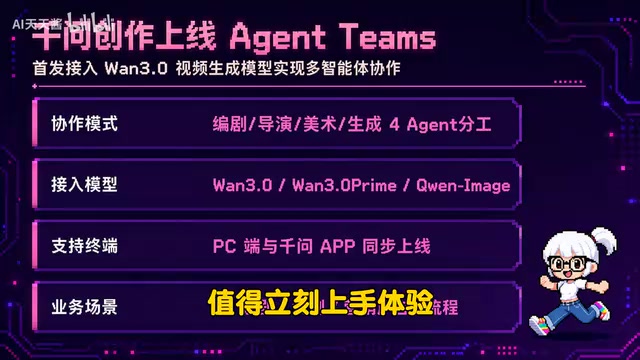
DeepSeek open-sources V-Flash-Vision-XP, its first vision model rivaling top closed-source models; Alibaba launches multi-agent video creation; sub-$400 bipedal robot goes open-source.
ReactOS 0.4.16 Released: Graphical Installer, 3D Hardware Acceleration, and Broader Hardware Support
ReactOS 0.4.16 ships with a new graphical installer, real hardware GPU 3D acceleration, and broader hardware compatibility for this Windows NT-compatible open-source OS.