Gemini Spark Takes Over Google Photos: A Deep Dive into AI Photo Management
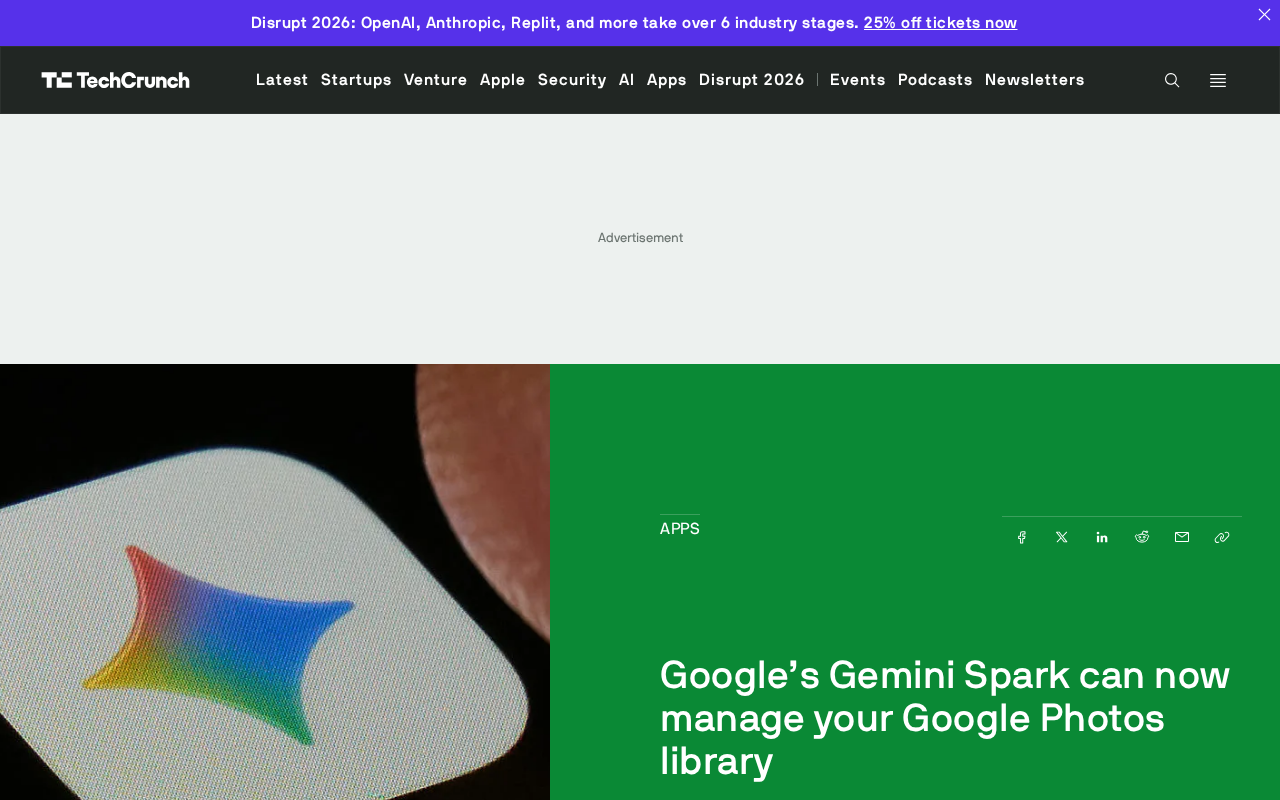
Google's Gemini Spark brings AI-powered photo management to Google Photos for paid subscribers.
Google has launched Gemini Spark, integrating Gemini AI into Google Photos to automate album editing, create shared collections, and convert photos into calendar events. Available to AI Pro and Ultra subscribers, the feature marks a shift from passive AI tools to proactive AI agents in photo management, reflecting Google's broader strategy of embedding AI across its ecosystem while exploring subscription-based monetization.
Google Photos Gets an AI Butler
Google has officially extended its Gemini AI capabilities into the realm of photo management. The newly launched Gemini Spark feature helps users edit and organize albums, create shared collections, turn photos into calendar events, and handle other everyday tasks related to Google Photos. This feature is currently available to AI Pro and Ultra subscription users.
Gemini is a family of multimodal large language models launched by Google DeepMind in late 2023. Its core strength lies in native support for understanding and generating across multiple modalities, including text, images, audio, video, and code. Unlike Google's earlier AI models (such as PaLM 2 and LaMDA), Gemini adopted a multimodal fusion architecture from the training stage, enabling more natural performance on cross-modal tasks. In the context of photo management, Gemini's visual understanding capability is particularly crucial — it can identify objects, people, scenes, text, and emotional atmosphere in photos, providing a solid technical foundation for intelligent album organization.
For users who have accumulated thousands upon thousands of photos, photo management has long been a headache. Traditional album organization requires manual screening, categorization, and naming — a time-consuming and labor-intensive process. In fact, since its launch in 2015, Google Photos has been known for AI-driven photo search and automatic classification. Its underlying computer vision technology handles tasks like facial recognition and clustering, scene recognition, and object detection, allowing users to quickly locate photos through natural language search (e.g., "dog on the beach"). Additionally, Google Photos offers auto-generated "Memories" and AI editing tools like Magic Eraser. The addition of Gemini Spark represents a fundamental shift from passive AI assistance to proactive AI agency — previous AI features required users to actively trigger them, whereas now AI can understand natural language instructions and autonomously complete complex multi-step tasks. These repetitive chores can truly be delegated to AI.
Core Features of Gemini Spark
Smart Editing and Album Organization
Gemini Spark's most immediate value lies in automated album management. It can edit photos and curate photo albums based on user needs. This goes beyond simple photo grouping — the AI understands the content and context of photos, making organization decisions that better align with user intent.
The "AI butler" role embodied by Gemini Spark is essentially a concrete implementation of the AI Agent concept. Unlike traditional AI chatbots, AI agents possess the ability to understand goals, plan tasks, invoke tools, and execute autonomously. In the photo management scenario, when a user says "Help me organize last month's travel photos and create an album to share with family," the AI agent needs to decompose the task: first filter photos by time and location, then perform quality assessment and deduplication, then create the album and set sharing permissions. This kind of multi-step autonomous execution capability is a core development direction for the AI industry in 2024-2025, with Google, OpenAI, Anthropic, and other companies actively investing in this area.
Creating Shared Collections
After family gatherings, trips, or events, people often need to compile relevant photos and share them with friends or family. Gemini Spark can automatically create shared collections, significantly simplifying the photo-sharing workflow and making multi-person collaboration much smoother.
Turning Photos into Calendar Events
One particularly noteworthy feature is the ability to turn photos into calendar events. The AI can recognize time, location, or event information from photos and automatically generate corresponding Google Calendar entries. For example, a photo of a concert ticket or event poster could be parsed by AI and converted into a reminder.
This feature involves the coordinated work of multiple AI technologies. First is Optical Character Recognition (OCR), used to extract text information from photos such as dates, times, locations, and event names. Next is Natural Language Understanding (NLU), used to parse the semantic meaning of extracted text and distinguish between event titles, time information, and location details. Then comes entity recognition and structuring, converting unstructured information into the standardized fields required for calendar events. Finally, cross-application data writing is achieved through the Google Calendar API. This feature pipeline demonstrates the end-to-end capability of multimodal AI in real-world scenarios and reflects Google's technical advantage in enabling seamless data flow within its own ecosystem — a platform-level capability that standalone AI tools find difficult to replicate. This kind of intelligent cross-application integration exemplifies Google's ecosystem integration strength.
Subscription Threshold and Business Logic
Interestingly, Gemini Spark's album management capabilities are not freely available to all users but are restricted to AI Pro and Ultra subscribers. This continues Google's recent strategy of incorporating advanced AI features into its paid subscription system.
Currently, the Google One AI Premium plan (the AI Pro/Ultra tiers mentioned above) is priced starting at approximately $19.99 per month, including full access to Gemini Advanced, 2TB of cloud storage, and AI features across Gmail, Docs, and other apps. The Ultra tier offers access to more powerful models and higher usage quotas. This tiered strategy draws from the mature tiered pricing model of the SaaS industry, using feature differentiation to achieve user value segmentation. Notably, Google faces competitive pressure on its AI pricing strategy from Apple Intelligence (integrated free on Apple devices) and Samsung Galaxy AI. Striking the right balance between paywalls and user growth remains an ongoing challenge.
From a business perspective, this approach has its merits. Deep AI photo management requires substantial computing resources and model inference costs. Using a subscription model to cover costs and attract high-value users is the mainstream monetization path for AI services today. At the same time, this implicitly enhances the appeal of subscription services like Google One — photo management is a high-frequency use case for everyday users, and the addition of AI capabilities could become a significant driver for subscription upgrades.
The Deeper Significance of Google Ecosystem Integration
Gemini Spark's takeover of Google Photos reflects Google's push to make Gemini the AI hub running through its entire product lineup. From Gmail and Google Docs to now Google Photos, Gemini is gradually permeating every Google application that users interact with daily.
The key to this integration is that AI is no longer an isolated conversational tool but an intelligent assistant embedded within specific workflows. When users are working with photos, they can directly tap into powerful AI capabilities without switching to a separate AI application. This "AI everywhere" product philosophy is reshaping how users interact with software.
For everyday users, the barrier to photo management will be further lowered. For the industry as a whole, Google's move reaffirms that major tech companies are pushing generative AI from the proof-of-concept stage into genuine practical, scenario-driven deployment.
Privacy and Data Security Considerations
AI's deep involvement in photo management inevitably raises privacy discussions. Photos are among the most private forms of personal data, containing sensitive information such as faces, geographic locations, and life patterns. Google has previously faced regulatory scrutiny in multiple regions over Google Photos' facial recognition feature. Under the EU's General Data Protection Regulation (GDPR) and various U.S. state privacy laws, Google needs to clearly explain how its AI models process user photo data — whether it's used for model training, whether data is processed on-device or uploaded to the cloud, and whether users have full data deletion rights. Google has stated that Gemini adheres to its AI principles when processing user data, but as AI features deepen, transparency and user control will become important dimensions of product competitiveness.
Summary and Outlook
The launch of Gemini Spark's Google Photos management capabilities is another pragmatic move in Google's AI strategy. It transforms abstract AI capabilities into practical tools that solve specific pain points, while exploring a sustainable business model through subscriptions. As more features like this roll out, user dependency on the Google ecosystem may deepen further. Going forward, it will be worth watching whether these AI photo management features can gradually move from paid exclusives to mainstream availability, and how Google will strike a balance between feature experience and privacy protection.
Related articles
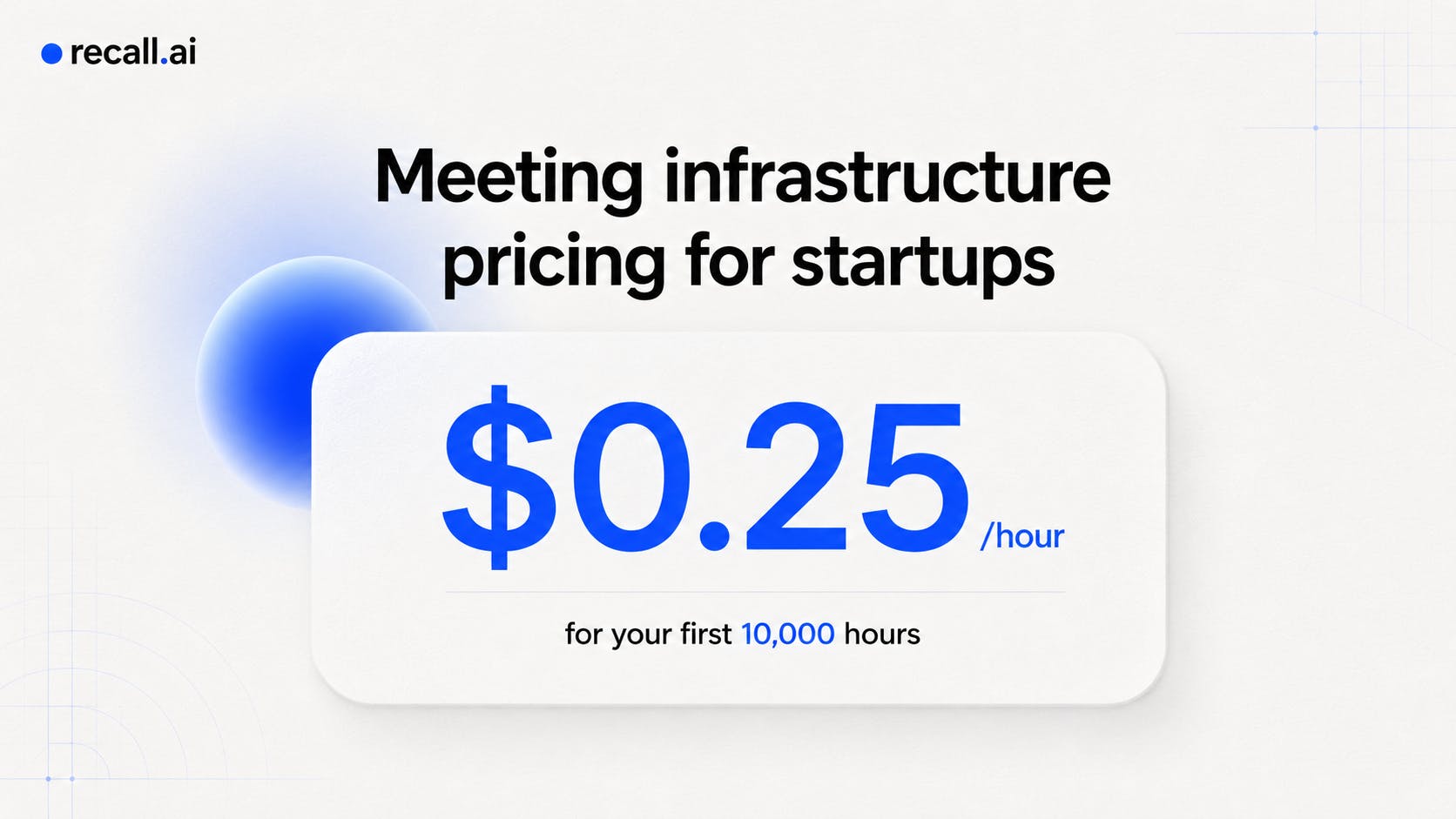
Recall.ai Startup Program Explained: A Meeting Recording API at $0.25 Per Hour
Recall.ai's Startup Program offers early-stage teams cross-platform meeting recording infrastructure at $0.25/hour, covering Zoom, Google Meet, Teams, with MCP access and engineering support.

Bulbthings: An AI-Powered Unified Management Platform for Enterprise Physical Assets
Bulbthings is an AI-powered physical asset management platform that integrates inventory, booking, maintenance, and collaboration to help SMBs digitize equipment and asset management.
Astute: The First B2B Creator Marketing Platform with Data-Driven Brand New Media Strategy
Astute is the first B2B creator marketing platform, helping brands monitor new media presence, match trusted creators with data, and automate partnerships to reach professional buyers.