Genie Agents Upgrade: Unstructured Data Analysis and MCP Connectors Now Generally Available

Genie Agents upgrade: unstructured document analysis enters public preview, MCP connectors now generally available, closing the analysis-execution loop.
The latest Genie Agents update targets a gap in enterprise data analysis: numbers live in tables, but explanations live in documents. Unstructured data analysis has entered public preview, enabling agents to analyze thousands of documents alongside governed data in a single conversation, with page-level citations making conclusions traceable and auditable. Meanwhile, native MCP connectors are now generally available, allowing agents to create tickets, update records, and post messages in enterprise tools, pushing insights to the action level. Together they form an integrated analysis-execution workflow, while also raising the bar for data governance, permission controls, and operation auditing.
The pain point in data analysis is often not a lack of data, but that data is scattered across different formats. A spreadsheet can tell you that profit margins are declining, but the answer to "why" may be buried in dozens of analyst reports, meeting notes, or contract attachments. The latest Genie Agents update is aimed squarely at this gap.
From Structured to Unstructured: Putting Reports and Tables in the Same Conversation
Genie Agents can now analyze thousands of documents alongside governed data simultaneously. According to official release information, the unstructured data analysis feature has entered public preview, enabling agents to correlate tabular metrics with explanatory content from documents in a single conversation, complete with page-level citations.
This capability combination is worth unpacking. Traditional BI tools excel at aggregating numbers but are essentially powerless when it comes to "explanatory text"; document retrieval tools can find relevant passages but struggle to align them with business metrics. Genie Agents puts both into the same reasoning context, meaning users can directly ask "what are the main reasons for the margin decline" and the system will point to specific pages of specific documents when delivering its conclusion, rather than a vague "based on the materials."
Page-level citations are an easily underestimated detail in this update. For enterprise scenarios, traceability determines whether analysis results can be trusted and whether they can enter the decision-making process. Without citations, AI conclusions are just guesses; with citations, they have a foundation for auditing and review.
MCP Connectors Now Generally Available: From "Seeing the Problem" to "Handling the Problem"
If unstructured analysis addresses "understanding," then the general availability of native MCP connectors addresses "execution."
According to the release, agents can now create tickets, update records, and post messages in enterprise tools through MCP connectors. Once this path is connected, the analysis loop is truly complete: the agent discovers a margin anomaly, locates the cause in a report, then directly creates a ticket in the collaboration tool and updates relevant records in the system, pushing insights through to the action level.
MCP (Model Context Protocol), as a standard protocol connecting agents with external tools, derives its value from reducing integration costs. Native connectors mean enterprises don't need to develop a separate adapter layer for each tool, and the agent's action capabilities can expand with the connector ecosystem. For enterprises already using the MCP framework, this GA means the relevant capabilities can move from experimental stages into production environments.
The Difference Between Public Preview and General Availability
In the release cadence of cloud products and developer tools, public preview typically means a feature is open to the public and can be used for evaluation and non-critical scenarios, but service level agreements (SLAs), API stability, pricing, and support policies may differ from the GA version, and breaking changes are possible. General availability means the feature is considered to have reached production-grade standards, typically accompanied by clear support commitments and stability guarantees. For enterprises, the leap between the two often determines whether a feature can be incorporated into core business processes: the preview stage is suitable for proof of concept and risk-controlled pilots, while the GA stage is suitable for carrying mission-critical tasks. Therefore, the article's juxtaposition of "unstructured analysis in public preview" and "MCP connectors now generally available" signals that the maturity and adoption pace of the two capability types differ, and enterprises need to treat them differently when planning.
Impact on the Enterprise Data Stack
The real significance of this update lies in its attempt to answer a long-standing awkwardness in enterprise AI adoption: analysis tools deliver conclusions, but people still have to manually execute in other systems.
Looking at unstructured data analysis and action connectors together, Genie Agents is positioned more as an agent for "integrated analysis and execution" rather than a pure query assistant. This places higher demands on data governance—agents can read governed data and perform write operations, so permission boundaries, operation auditing, and citation credibility all require supporting mechanisms. The public release information emphasizes governed data and page-level citations, indicating that governance is a prerequisite for this capability expansion, not an afterthought.
From a competitive landscape perspective, unstructured data analysis and tool invocation are becoming standard directions for enterprise-grade AI assistants. Genie Agents' differentiation lies in binding both to an existing data platform rather than creating a separate data silo. The advantage of this approach is reusing existing governance frameworks; the cost is that capability expansion is constrained by the platform ecosystem.
What Governed Data Means
Governed data refers to data assets managed through a unified data catalog, permission model, lineage tracking, and quality rules. Unlike directly reading raw tables or files, governed data is typically exposed through a semantic layer or data platform, ensuring that visitors can only see what they are authorized to access, and that metric definitions, standards, and sources are traceable. This concept is particularly critical in enterprise AI scenarios: when agents need to both read sensitive business data and perform write operations, the governance framework provides permission boundaries and an audit foundation. The article's emphasis that Genie Agents analyzes "governed data" and returns page-level citations is essentially explaining that its capabilities are built on existing data governance frameworks rather than bypassing controls to directly access underlying data—which is also the prerequisite for its conclusions to be trusted and to enter decision-making processes.
Summary
The core of this Genie Agents upgrade is connecting "reading documents" and "taking action" into a single agent workflow. Unstructured analysis is still in public preview, while MCP connectors are now generally available; the analysis-execution loop they combine into is a key step for enterprise AI moving from demos to daily operations. What's worth watching next is citation quality, the granularity of permission controls, and the actual coverage of the connector ecosystem.
Related articles
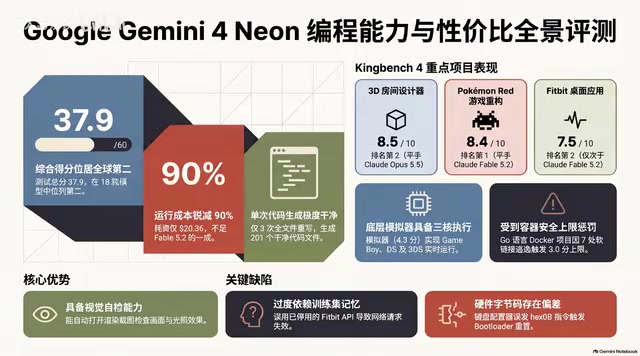
Gemini 4 Neon Hands-On: Value King or Confident Catastrophe?
Gemini 4 Neon review: 1M-token context, four thinking levels, 201 files in one KingBench4 pass at one-tenth Fable 5.2's cost—but it hallucinates fake data, leaves 7 symlink escapes, and bricks keyboards.

Google Gemini 4 Neon Hands-On: 6 3D Works That Impress and Fail
Hands-on with Google Gemini 4 Neon on a 3060 laptop: 6 3D works tested. Sunshower Fishing Harbor and mechanical keyboard impress; soft-body physics and faces fall short.
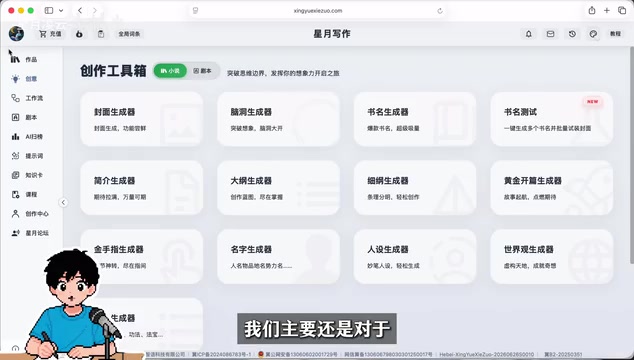
Gemini 4 Neo Web Novel Writing Test: Faint AI Flavor, Textured Dialogue
Bilibili creator's first-look review of Gemini 4 Neo for Chinese web novel writing: testing a Three Kingdoms transmigration opening with faint AI flavor, emotionally textured dialogue, and strong crisis building, plus comparison of 4A/4H/4C models and full workflow demos.