GetThis Review: An AI Productivity Tool That Turns Voice, Text & Screenshots Into Task Lists

GetThis is an AI task generation and auto-categorization tool supporting voice, text, and screenshot multimodal input.
GetThis is an AI-powered task management tool supporting three multimodal input methods—voice, text, and screenshots—enabling users to capture ideas with zero friction. Its core strength lies in AI automatically categorizing and organizing messy inputs into structured task lists, aligning with the GTD methodology's principle of "capture first, organize later." The product differentiates from traditional tools like Todoist by focusing on input experience, though it still faces challenges in AI accuracy and workflow integration.
What Is GetThis: An AI-Powered Task Generation Tool
GetThis is an AI-based task generation tool that supports creating and organizing tasks through three methods: voice, text input, or screenshots. Its core philosophy is simple: stop typing—just speak or take a screenshot to manage your tasks.
This product is positioned as an AI Dictation App. AI dictation apps represent a niche that has emerged in recent years as speech recognition accuracy has dramatically improved—early tools like Dragon NaturallySpeaking primarily addressed voice-to-text accuracy, while the new generation of AI dictation tools adds a semantic understanding layer on top of transcription. They can not only "hear" what you say but also understand intent and perform structured operations. Representative products in this space include Otter.ai and Fireflies.ai for meeting notes, as well as Whisper Flow for personal productivity. GetThis extends this capability to task management scenarios, making it a textbook case of vertical application deepening within this space. The product currently has 377 followers on Product Hunt and has completed 2 product launches.
GetThis Core Features: Multimodal Input & Smart Categorization
Three Input Methods: Voice, Text, and Screenshots
GetThis's biggest highlight is its multimodal input capability. Multimodal Input refers to a system's ability to simultaneously process and understand multiple types of information carriers—including text, voice, and images. The maturation of this technology is thanks to the deep integration of Large Language Models (LLMs) with Computer Vision (CV) and Automatic Speech Recognition (ASR). Multimodal large models like GPT-4o and Gemini can now process cross-modal information within a single model without needing separate processing pipelines for each input type. Users can convert their thoughts into structured tasks through three methods:
- Voice input: Simply speak your thoughts into your phone, and AI will automatically identify and extract task items
- Text input: Supports free-format text "brain dumps" without needing to carefully organize your language
- Screenshot recognition: Take screenshots of chat logs, emails, etc., and AI automatically extracts to-do items from them
The screenshot recognition feature involves the combination of two key technologies: OCR (Optical Character Recognition) and Information Extraction from NLP. OCR converts text in images into processable text, while modern large models further take on the role of semantic understanding—identifying key elements like "who needs to do what and when is the deadline" from unstructured chat logs or email screenshots. Unlike traditional rule-based information extraction, LLM-based approaches can handle colloquial, informal expressions, greatly improving usability in real-world scenarios.
This multimodal design lowers the barrier to task recording and is especially suitable for users who tend to forget things during busy periods.
AI Auto-Categorization & Task Organization
Another core capability of the product is automatic categorization. According to official descriptions, GetThis can:
- Organize "brain dump" content: Automatically categorize chaotic thoughts into actionable tasks
- Organize shopping lists: Identify purchase-related content and automatically generate shopping lists
- Instantly categorize tasks: Automatically sort tasks into different categories based on their nature
This means users only need to "dump" their thoughts, and AI handles the rest of the organization work.
Ideal Use Cases for GetThis
Task Management in Daily Life
For everyday users, GetThis addresses several common pain points:
- Things mentioned during chats with friends are easily forgotten—just screenshot the conversation to generate tasks
- Suddenly thinking of something while driving or cooking—quickly record it by voice
- Organizing a shopping list before the weekend—just say what you need to buy and AI auto-categorizes
Boosting Efficiency at Work
In work environments, this type of tool is equally useful:
- Quickly voice-record action items after meetings
- Screenshot emails or messages to extract to-do items
- Organize scattered work ideas into structured task lists
GetThis vs. Todoist, Things 3, and Other Tools
GetThis operates in a highly competitive space. The task management tool market has gone through three distinct evolutionary phases: the project collaboration tool era represented by Basecamp (2000s), the personal GTD tool explosion led by Todoist and Things 3 (2010s), and the current new wave of competition centered on AI-native capabilities (2023 to present). Todoist has over 30 million users, Things 3 enjoys an excellent reputation in the Apple ecosystem, and emerging AI task tools like Notion AI, Motion, and Reclaim.ai approach from different angles—some focus on automatic schedule planning, others emphasize intelligent task priority sorting. GetThis chose to enter from the "input experience"—the very front end of the workflow—representing a differentiated but relatively vertical competitive strategy.
GetThis's differentiation lies in its "zero-friction" input experience, and this philosophy aligns closely with the famous GTD (Getting Things Done) methodology in the productivity space. Proposed by David Allen in 2001, one of GTD's core principles is "Capture"—clearing all thoughts, tasks, and commitments from your brain and recording them in a trusted system to reduce cognitive load. GTD emphasizes that the capture phase should be as frictionless as possible to avoid losing items due to high recording barriers. Traditional task management tools require users to simultaneously categorize and set priorities while recording, which actually violates this principle. GetThis uses AI to handle the organizing work, achieving automated implementation of GTD philosophy at the tool level—this "dump first, organize later" model better aligns with how the human brain naturally works.
However, the challenges facing such products are also obvious: AI categorization accuracy, integration with existing workflows, and long-term retention rates are all key metrics that need validation.
Summary: Is GetThis Worth Trying?
GetThis represents an evolutionary direction for task management tools: shifting from "users adapting to tools" to "tools adapting to users." Through multimodal input and AI auto-categorization, it makes task recording as natural as speaking.
If you find traditional task management tools like Todoist or TickTick too cumbersome, or if you frequently forget to record to-do items during busy periods, GetThis—a lightweight AI task tool—is worth trying. It may not replace your existing project management system, but as an entry point for quickly capturing ideas and generating task lists, it genuinely offers a lower-barrier alternative.
Key Takeaways
- GetThis supports voice, text, and screenshot input to generate tasks, lowering the barrier to task recording
- AI automatically categorizes and organizes input content, transforming chaotic thoughts into structured task lists
- Positioned as a zero-friction task management tool with a "dump first, organize later" design philosophy that aligns closely with GTD methodology
- Screenshot recognition combines OCR with LLM semantic understanding to handle colloquial, informal expressions
- Applicable to various scenarios in daily life and work, such as shopping list organization and meeting action item recording
- Faces challenges in AI categorization accuracy and integration with existing workflows, competing in the crowded task management space with input experience as its core differentiator
Related articles
 Product Reviews
The Programmer's Desk Setup Guide: Building a Workspace That Feels Like Home
Discover how programmers build productive, comfortable workspaces. From multi-monitor setups to ergonomic design, explore the desk philosophy that drives focus and flow.
 Product Reviews
Qoder vs Cursor Real-World Comparison: Which $20/Month AI IDE Is Better?
Hands-on comparison of Qoder vs Cursor AI IDEs: Agent autonomy, human interaction count, and architecture decisions. Qoder needed only 2 interactions vs Cursor's 8.
 Product Reviews
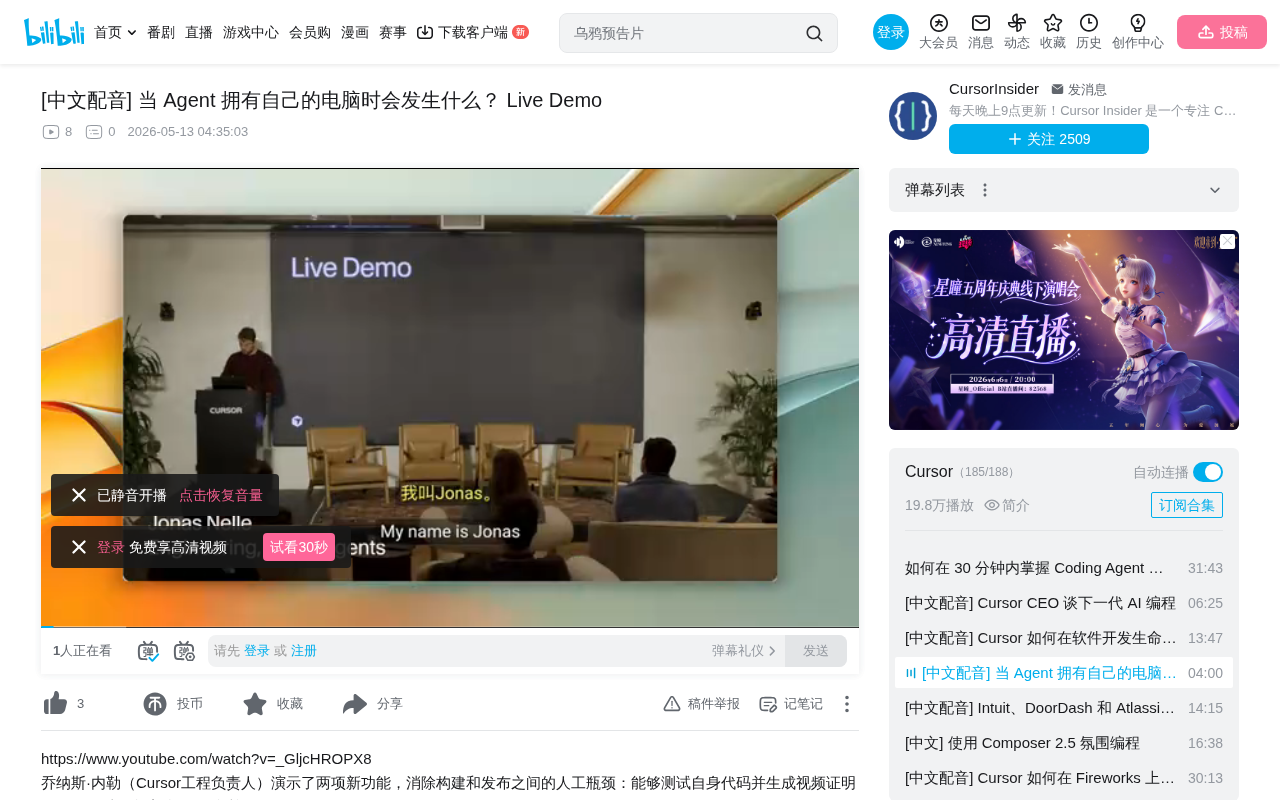
Cursor Cloud Agent Demo: Eliminating Bottlenecks Across the Entire Software Development Lifecycle
Deep analysis of Cursor's Cloud Agent demo showing how cloud VMs, automated test artifacts, and a full-chain control plane systematically eliminate human bottlenecks across the software development lifecycle.