Getting Started with Vibe Coding: Build Your First Project with AI from Scratch

A beginner's guide to Vibe Coding: use AI tools to build your first project without coding experience.
Vibe Coding lets anyone build software by describing intent in natural language instead of writing code. This guide covers the concept coined by Andrej Karpathy, recommends top AI programming tools like Cursor, Claude Code, and Codex, and outlines a clear learning path from your first project to advanced Agent development with LangChain.
What Is Vibe Coding?
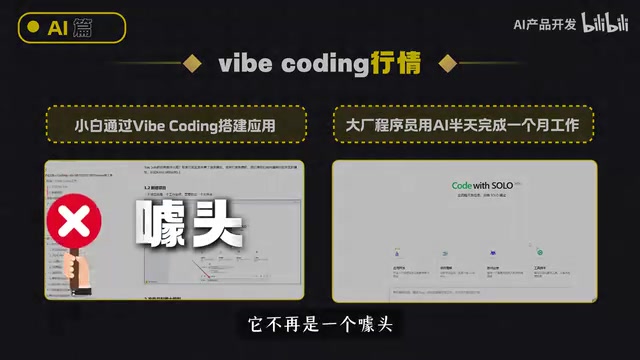
AI is no longer just a chatbot toy. Scroll through any video platform and you'll regularly see scenes like this: a complete coding beginner uses Vibe Coding to build a working app in half a day, or a senior engineer at a major tech company leverages AI programming tools to finish in half a day what used to take an entire month. These aren't exaggerated marketing gimmicks — they represent a real productivity revolution brought about by Vibe Coding.
So what exactly is Vibe Coding? The concept was first introduced in February 2025 by Andrej Karpathy, co-founder of OpenAI and former AI Director at Tesla. He described a completely new state of programming: fully immersing yourself in the vibe, embracing the exponential growth of tokens, and forgetting that code even exists. "Vibe" refers to an atmosphere or feeling — you can think of it as an entirely new way to program: you simply tell the AI what you want, it writes and runs code on its own, and all you need to do is nod yes or shake your head no. The entire process feels more like having a conversation with a tech-savvy partner than painstakingly typing out obscure syntax line by line. Karpathy pointed out that this approach is fundamentally different from traditional "serious programming" — developers no longer need to review code logic line by line but instead guide the project's direction through natural language conversation with AI. Within just a few months, this concept evolved from an experimental idea into a programming paradigm shift sweeping the globe.
The Core Isn't Writing Code — It's Expressing Intent
The core philosophy of Vibe Coding isn't actually about "writing code" — it's about "expressing intent." This sounds simple, but it's the key to understanding this revolution.
Traditional software development has a high barrier to entry because it requires developers to master knowledge across multiple dimensions simultaneously. First, there's programming language syntax — Python, JavaScript, Java, and others, each with its own unique set of rules. Then comes the use of frameworks and libraries, such as React for frontend UI development and Django for backend services. Beyond that, there's development environment configuration, version control (like Git), database operations, API design, and a whole range of engineering skills. Taking a complete application from zero to launch typically involves coordinating multiple technology stacks — frontend, backend, database, deployment — with a steep learning curve that usually requires months or even years of systematic training to master independently.
Under the Vibe Coding paradigm, all these complex technical details are encapsulated beneath the AI's capability layer. You only need to clearly describe the functionality and outcomes you want to achieve, and the AI converts your natural language intent into a runnable program. This instantly lowers the barrier to creating software down to the floor. What previously could only be done by professional programmers can now be accomplished by any ordinary person with ideas and the ability to express them.
Why You Absolutely Need to Learn Vibe Coding
The answer is straightforward: AI large language models have brought genuine productivity gains, and Vibe Coding is a powerful tool built on top of this new productivity.
The reason Vibe Coding became a reality in 2025 is the breakthrough progress in Large Language Models (LLMs). Next-generation models like GPT-4, Claude 3.5, and Gemini have achieved a qualitative leap in code comprehension and generation capabilities. During training, these models absorbed billions of lines of open-source code from GitHub, technical documentation, and developer community discussions, enabling them not only to generate syntactically correct code but also to understand software architecture design, debugging logic, and best practices. Meanwhile, the expansion of context windows — from an initial 4K tokens to today's 100K or even 200K tokens — allows AI to understand an entire project's code structure rather than processing isolated snippets, laying the technical foundation for multi-file collaborative programming.
Vibe Coding Is Becoming the Mainstream Way of Working
It's foreseeable that Vibe Coding will become the dominant paradigm in programming. Just as the rise of creator platforms made "everyone can be a content creator" a reality, the proliferation of Vibe Coding means "everyone can develop software." When the technical barriers to creating software are drastically lowered, the truly scarce abilities become clear product thinking, precise intent expression, and proficient use of AI tool chains.
Seize the Early-Mover Advantage of the AI Era
Every revolution in productivity tools creates a wave of early adopters who benefit first. For those with zero coding background but a burning desire to "build something with AI," now is the perfect time to jump in. Mastering Vibe Coding is like holding the key to the dividends of the AI era. You no longer need to agonize over "Can I really catch this AI wave?" — as long as you're willing to start learning, the answer is yes.
Learning Path: Building Your First Project from Scratch
For learners who want to systematically get started with Vibe Coding, having a clear learning path is essential. A complete Vibe Coding skill set typically covers the following core tools and concepts:
Recommended AI Programming Tools
-
Cursor: An AI-native code editor developed by Anysphere, built on Microsoft's open-source VS Code core, with AI capabilities deeply embedded into the editor interface developers know and love. Users can press Cmd+K to issue natural language commands directly within the editor, and the AI generates or modifies code in place. Cursor also supports Composer mode, which allows users to build complete feature modules through ongoing conversation, with the AI automatically coordinating changes across files. Additionally, its built-in codebase indexing feature understands the contextual relationships across an entire project, significantly reducing AI "hallucination" issues during code generation. As of 2025, Cursor has raised over $600 million in funding with a valuation exceeding $9 billion, making it the benchmark product in the AI programming tools space. It's extremely beginner-friendly and the top recommended tool for getting started with Vibe Coding.
-
Claude Code: A command-line AI programming assistant from Anthropic. Unlike Cursor's graphical interface, it runs in a terminal environment and emphasizes automation and engineering capabilities. Claude Code's core advantage lies in its understanding of complex project contexts — it can autonomously browse project directory structures, read configuration files, understand inter-module dependencies, and then execute precise multi-file modifications based on a holistic understanding. Developers can describe a feature requirement spanning multiple files in natural language, and Claude Code will independently plan a modification strategy and execute it step by step. For scenarios involving large codebases or batch refactoring tasks, its efficiency far exceeds that of GUI-based tools. It's ideal for deeper use once you've built a foundation.
-
Codex: A model capability focused on code generation that helps rapidly convert natural language into executable programs.
These three form the most commonly used tool combination in Vibe Coding practice today. For beginners, the recommended approach is to start with the GUI-friendly Cursor to get comfortable with the basic cycle of "describe requirements → AI generates code → verify and run," then gradually experiment with command-line and automation-focused tools like Claude Code.
Advanced Direction: Agent Development and the LangChain Framework
Once you can proficiently use AI programming tools to build simple projects, the next step is understanding deeper AI application development capabilities:
-
LangChain: Created by Harrison Chase in 2022, it's one of the most popular open-source frameworks for building LLM-powered applications. Its core design philosophy is "chain-based invocation" (Chain) — linking together prompt templates, model calls, output parsing, external tool invocations, and other steps like links in a chain to form a complete application logic flow. For example, a typical RAG (Retrieval-Augmented Generation) application needs to first retrieve relevant documents from a knowledge base, then feed those documents as context to the LLM to generate an answer. LangChain provides standardized interfaces to orchestrate this workflow. LangChain also offers companion tools like LangSmith (a debugging and monitoring platform) and LangGraph (a graph engine for building complex Agent workflows), forming a complete AI application development ecosystem. Understanding LangChain means you can level up from "having AI write individual scripts for you" to "building a complete AI-driven product."
-
Agent Development: AI Agents represent the advanced form of LLM applications. Unlike traditional "input-output" style AI interactions, Agents possess autonomous planning and tool-calling capabilities. A typical Agent workflow looks like: receive the user's goal → decompose the goal into subtasks → sequentially invoke external tools such as search engines, code executors, and databases → synthesize intermediate results → output the final answer. This capability elevates AI from a "passive question-answering assistant" to a "proactive problem-solving intelligent agent." Current mainstream Agent frameworks include LangGraph, AutoGPT, CrewAI, and others. 2025 is widely regarded in the industry as the "Year of the Agent," with major tech companies investing heavily in this direction. Agent development requires not only understanding how to converse with AI but also grasping system design aspects like task orchestration, error handling, and tool integration.
This stage marks your progression from "using AI to write code" to "building intelligent applications with AI" — a true deepening of your Vibe Coding capabilities.
Final Thoughts
The true significance of Vibe Coding lies in redefining "who can create software." When expressing intent replaces typing syntax, the power to create shifts from the hands of a few specialists to every person with an idea.
Whether you're a complete beginner or a developer looking to boost efficiency, now is the perfect time to embrace this trend. Start by getting familiar with one AI programming tool, build your first project, and then progressively advance toward Agent development and the LangChain application framework — this path is clear and achievable. The dividends of the AI era are opening up to those willing to take action first.
Related articles

A World First in Australia: Delivery Riders to Receive Minimum Wage Guarantee
Australia introduces the world's first minimum wage guarantee for delivery riders, balancing gig flexibility with income protection. Explore the agreement's details, platform impacts, and global regulatory trends.
DeepSeek Open-Sources Its First Vision Model, Dramatically Lowering the Bar for Multimodal Agents
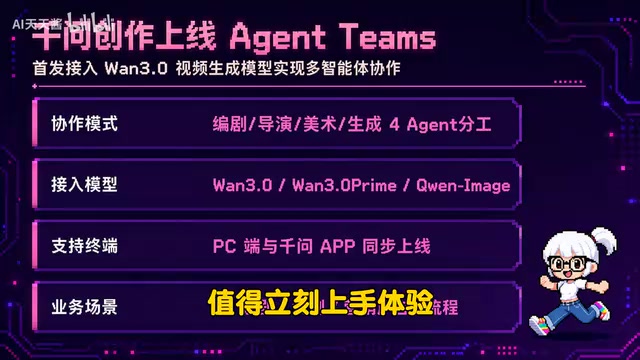
DeepSeek open-sources V-Flash-Vision-XP, its first vision model rivaling top closed-source models; Alibaba launches multi-agent video creation; sub-$400 bipedal robot goes open-source.
ReactOS 0.4.16 Released: Graphical Installer, 3D Hardware Acceleration, and Broader Hardware Support
ReactOS 0.4.16 ships with a new graphical installer, real hardware GPU 3D acceleration, and broader hardware compatibility for this Windows NT-compatible open-source OS.