GitHub Actions, PR, and Issues Outage Event

GitHub Actions, PR, and Issues fail simultaneously, exposing platform concentration risks.
Recently, GitHub's Actions, Pull Requests, and Issues modules experienced simultaneous anomalies, raising concerns about platform reliability. Due to tight coupling, Actions failures disable automated PR checks, and Issues anomalies strip teams of defect tracking and task management, creating chain reactions across workflows. The article highlights concentration risks of platform-based tools and recommends fallback plans like self-hosted Runners, alternative review processes, and decentralized task records. Specific technical causes and recovery details still lack official post-mortem analysis.
As the world's largest code hosting platform, GitHub's stability directly affects the daily workflows of millions of developers. A recent outage event involving three core modules—Actions, Pull Requests, and Issues—has once again pushed the discussion of platform reliability to the forefront.
Event Overview
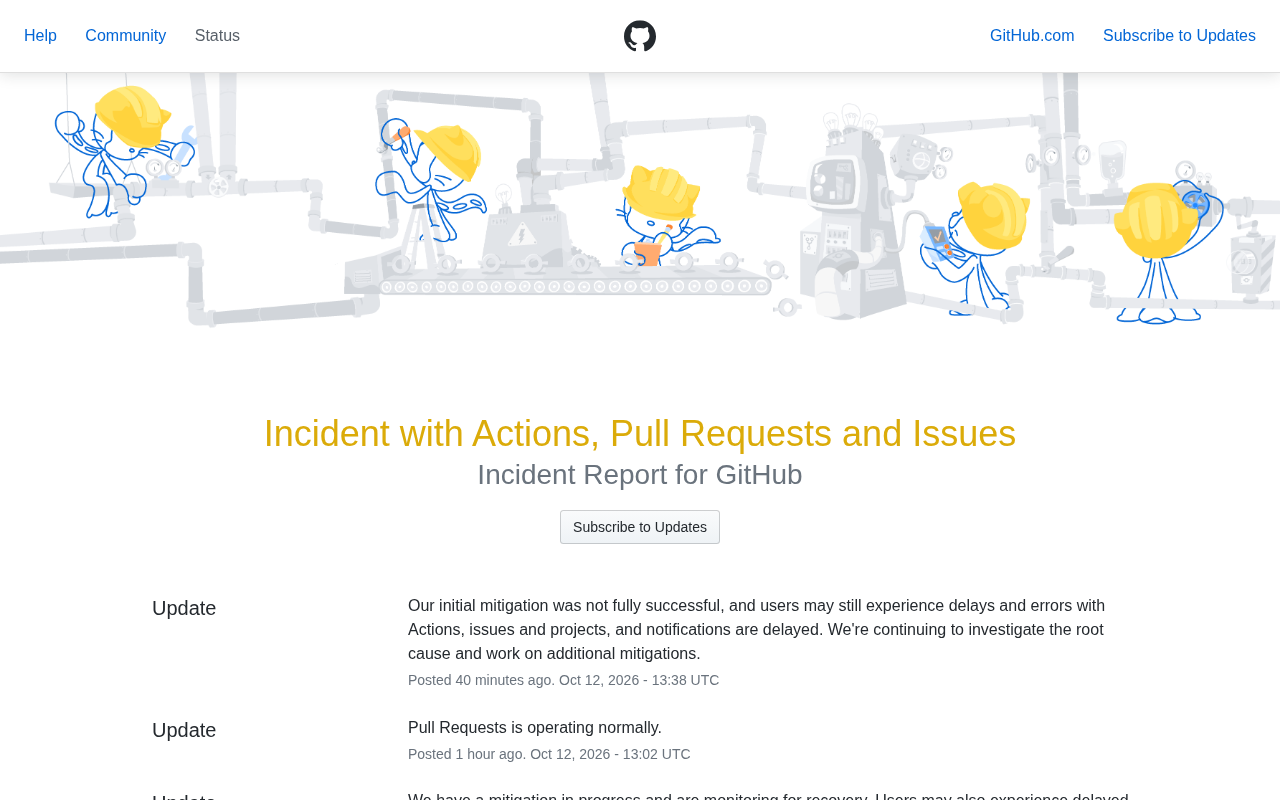
According to discussion threads on Hacker News, this outage simultaneously affected three key GitHub services: Actions, Pull Requests, and Issues. Although publicly available source information remains limited, the scope of affected functionality suggests this was not a minor, localized glitch, but rather an event involving simultaneous anomalies across multiple core infrastructure components of the platform.
Actions is the backbone of GitHub's CI/CD, carrying the build, test, and deployment pipelines of countless projects. Pull Requests serve as the core entry point for code collaboration, while Issues handles defect tracking and requirements management. When all three are affected simultaneously, it means development teams encounter blockers across code review, automated pipelines, and task management.
GitHub Actions is the continuous integration and continuous delivery (CI/CD) service officially launched by GitHub in 2018, allowing developers to define automated workflows in repositories through YAML configuration files, covering code building, testing, packaging, and release. It relies on a large-scale container scheduling system at its foundation, dynamically creating isolated execution environments (Runners) for each workflow run—these can be GitHub-hosted cloud instances or user-built self-hosted Runners. Because of this, Actions has strong dependencies on multiple infrastructure layers including scheduling, networking, and storage. Once a bottleneck occurs in any of these layers, it can lead to workflow queuing, timeouts, or outright failures.
Pull Requests (PR) is the code collaboration mechanism GitHub built around the Git branching model. Developers initiate merge requests through PRs, and team members can comment line-by-line on the diff view, approve, and ultimately merge. The PR page also aggregates CI status, review comments, and commit history, making it the core vehicle for modern code review processes.
Issues is the lightweight issue tracking system provided by GitHub, used for recording defects, requirements, and tasks, organizable through labels, milestones, and Projects boards. It serves as the entry point for agile management in many teams.
Chain Reactions Across Developer Workflows
A notable characteristic of the GitHub ecosystem is the tight coupling between modules. After a developer submits a Pull Request, it typically automatically triggers an Actions pipeline to run tests; the test results are then written back to the PR page for reviewers to determine whether to merge. When Actions experiences anomalies, the automated check step of the PR becomes ineffective, and reviewers can only rely on manual judgment, dramatically reducing efficiency.
That said, a failure in the Issues module deprives teams of defect tracking and task assignment capabilities. For agile teams that rely on GitHub Projects or are Issue-driven, this means that the day's standup and sprint planning may lack crucial information support. This kind of chain reaction is precisely the typical risk faced by platform-based development tools: a single point of failure quickly propagates along the workflow chain.
Deeper Reflections on Platform Reliability
GitHub has experienced multiple service disruptions of varying scales in recent years, each sparking discussions in the developer community about whether there is over-reliance on a single platform. From an engineering perspective, GitHub's architecture is extremely complex. Actions involves large-scale container scheduling and execution environment management, while Pull Requests and Issues must handle massive volumes of concurrent read and write requests. A bottleneck at any layer can trigger cascading failures across modules.
For development teams, the practical takeaway from this event is that critical workflows need fallback plans. For example, at the CI/CD level, maintain backup paths with local or self-hosted Runners; at the code review level, establish alternative processes for when platform automated checks are unavailable; at the task management level, avoid storing all critical information on a single platform.
Cascading Failure is a typical failure mode in distributed systems: when a component becomes slow to respond due to excessive load or anomalies, upstream services continuously retry or accumulate requests, transmitting pressure to other dependent components and ultimately causing widespread unavailability. Modules in hyper-scale platforms like GitHub are tightly coupled through internal APIs and event buses. Actions needs to read repository content and write back check results; the PR page needs to aggregate Actions status and Issue references. Therefore, latency at any point can be amplified.
Related to this is the concept of SLO (Service Level Objectives) and error budgets. Mature platforms typically set quantitative targets for availability and use these to drive capacity planning and failure drills. For users, understanding these mechanisms helps determine whether the platform's claimed availability covers the path they depend on most, and whether they need to prepare redundant solutions for critical steps, such as self-hosted Runners, image repositories, or local build scripts.
Event Information Still Needs Supplementation
Additionally, publicly available information about the specific technical causes, duration, and recovery process of this outage remains limited. Although discussions on Hacker News provide clues about the event, there is a lack of official post-mortem analysis reports to reconstruct the complete failure chain. For readers concerned about platform reliability, it is advisable to continue following GitHub's official status page and subsequent engineering blog updates to obtain more accurate technical details.
Platform failures themselves are not rare; what matters is extracting valuable lessons for one's own engineering practices. The convenience and concentration risk of the GitHub ecosystem always coexist. How to find a balance between the two is a question every team relying on cloud-based development tools needs to continuously contemplate.
One-line Summary
GitHub Actions, PR, and Issues fail simultaneously, exposing platform concentration risks.
Paragraph Summary
Recently, GitHub's three core modules—Actions, Pull Requests, and Issues—experienced simultaneous anomalies, drawing renewed attention from the developer community to platform reliability. Due to their tight coupling, Actions failures directly disable automated PR checks, while Issues anomalies deprive teams of defect tracking and task management capabilities, creating chain reactions that spread along workflows. The article points out that such events reveal the concentration risks of platform-based development tools and recommends that teams prepare fallback plans for critical processes, such as self-hosted Runners, alternative review processes, and decentralized task recording methods. Currently, specific technical causes and recovery details of the outage still lack official post-mortem analysis, and continued attention to the official status page and engineering blog is needed.
Related articles

From the Afghan Battlefield to Microsoft Research: Chris White's Path to Tech for Good
Microsoft Research Catalyst Lab lead Chris White shares his journey from Harvard postdoc to the Afghan battlefield, DARPA's Memex dark web search project, and driving tech for good at Microsoft—exploring problem selection, humble service, and holding onto hope in the dark.

Opus 5.5 Refuses to Ghostwrite Paper Section: Why Users Applaud This AI Guardrail
A Reddit user shares how Opus 5.5 refused to ghostwrite a dissertation paragraph: the model identified school AI restrictions, explained academic integrity risks, and returned decision-making power to the user. Why is this "explained refusal" called an ideal guardrail? This article analyzes the three-layer logic of AI guardrail design and product implications.

Google Open-Sources TorchTPU: How a PyTorch Native Backend Reshapes the TPU Ecosystem
Google and Meta open-source TorchTPU, a PyTorch native backend for Cloud TPU with eager execution by default and torch.compile/XLA support, set to replace PyTorch/XLA for new workloads. This article analyzes its architecture, execution trade-offs, and impact on developers and the TPU ecosystem.