GitHub Daily · August 21: The Dual Awakening of Local-First and AI Security

Local-first tools and AI security infrastructure dominate GitHub Trending, converging on the theme of control.
Today's GitHub Trending reveals two converging themes: the revival of local-first tools (OpenLogi's Rust-based Logitech driver alternative exploded with 1,225 daily stars) and the maturation of AI infrastructure and security (Tencent's AI-Infra-Guard and agent-substrate). Both trends reflect developers' growing demand for data sovereignty and controllable AI systems as the industry shifts from capability races to production-grade reliability.
GitHub Daily · August 21: The Dual Awakening of Local-First and AI Security
Today's Trending list reveals a fascinating split personality: on one side, extreme "local-first" utility tools dominate the explosive growth at the top; on the other, serious engineering around AI infrastructure and security governance is quietly surfacing. While the industry at large chases bigger models and flashier Agents, the developer community is voting with real Stars, expressing a powerful desire for "privacy, control, and de-cloudification."
Looking at the numbers, today's standouts aren't the usual celebrity projects—they're a few smaller "dark horses" with jaw-dropping single-day growth rates. OpenLogi racked up 1,225 stars in a single day, and google-timeline-visualizer gained 575. This kind of explosive growth typically signals that they've precisely hit a long-neglected pain point. Let's dive deep into each one.
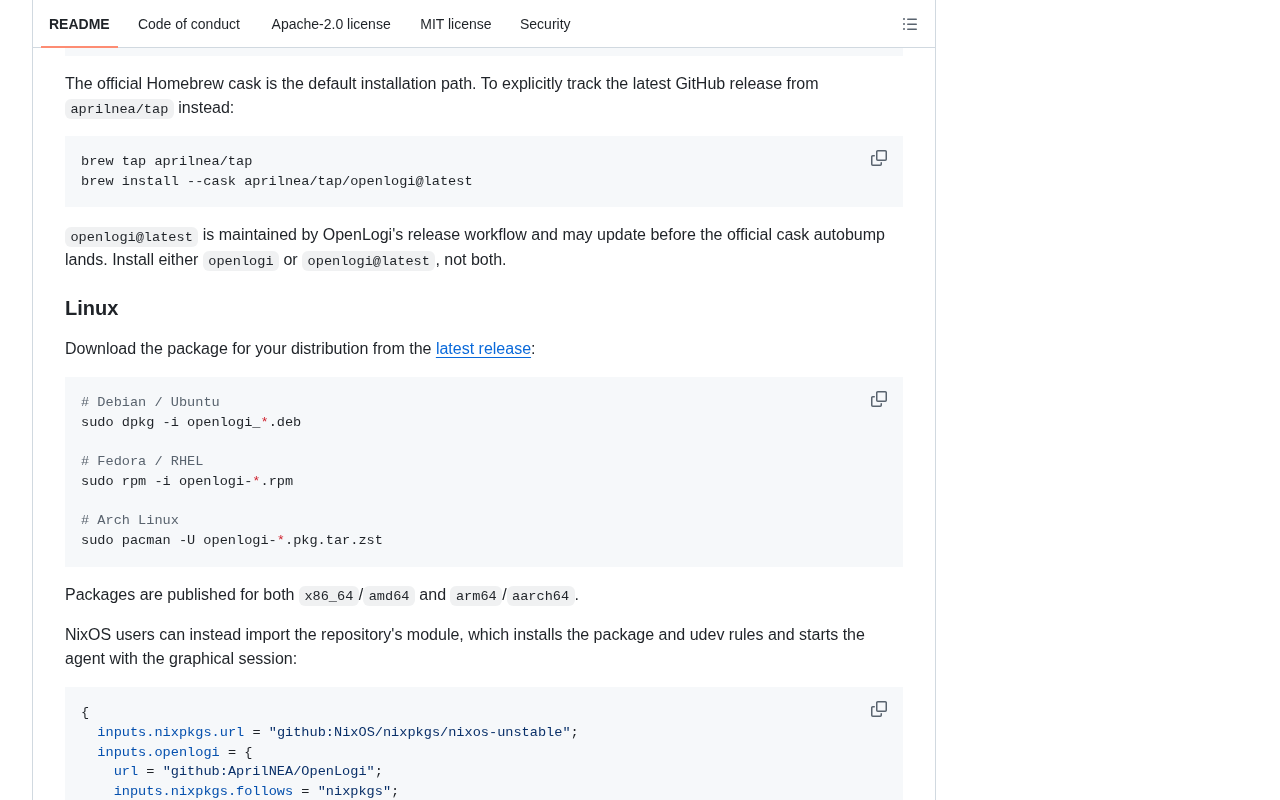
OpenLogi: Rewriting Logitech Drivers in Rust, Declaring War on Bloated Official Software
Project positioning: A native, local-first alternative to Logitech Options+, written in Rust, implementing key remapping, DPI adjustment, and SmartShift control via the HID++ protocol.
Problem solved: Anyone who's used a Logitech MX series mouse or keyboard knows the pain—the official Options+ software easily consumes hundreds of MB of memory, forces account login, runs persistently in the background, and devours your telemetry data, all just to remap a button. OpenLogi's motto is refreshingly blunt: "No account, no telemetry." It fills the gap left by peripheral manufacturers whose configuration software is universally bloated and privacy-invasive.
Core features: Communicates directly with devices via the HID++ protocol, bypassing the official software's cloud logic; native Rust implementation means extremely low resource usage and blazing-fast startup; runs entirely locally with data never leaving your machine.
Use cases: Any user with Logitech peripherals who's fed up with the bloat and privacy policies of the official software—especially developers who value system cleanliness, Linux users, and privacy-conscious individuals.
Tech stack: Pure Rust. This is highly instructive for developers—it's an excellent example of how to directly operate low-level HID hardware protocols with Rust, showcasing Rust's natural advantages in system-level, hardware-interaction scenarios (memory safety + high performance + no runtime dependencies).
Stars/Forks analysis: 11,026 stars with 1,225 new in a single day—extremely aggressive growth. This explosive trajectory indicates it's hit a massive, long-suppressed demand pool. The Fork count of 305 is relatively low, reflecting that it's currently more "used" than "forked for development"—users want a drop-in replacement, not source code to tinker with.
agent-substrate/substrate: The OS Foundation for the Agent Era
Project positioning: An Agent core system written in Go, self-described as "Agent Substrate."
Problem solved: As model capabilities from GPT-5, Claude Fable 5, and others skyrocket, AI Agents are moving from toys to production. But the current Agent ecosystem is severely fragmented, lacking a unified, low-level runtime and orchestration foundation. substrate aims to become that "substrate"—providing a unified runtime, communication, and orchestration base for various upper-layer Agents, much like an operating system is to applications.
Core features: As a "core system," it emphasizes its infrastructure nature—rather than being yet another Agent application framework. The choice of Go itself is a statement: targeting high-concurrency, long-running server-side scenarios.
Use cases: Teams needing to deploy and orchestrate multiple Agents at scale in production environments, especially infrastructure engineers building Agent platforms.
Tech stack: Go. Go's dominance in cloud-native and infrastructure (Kubernetes and Docker both emerged from it) makes it the natural choice for building an Agent foundation.
Stars/Forks analysis: 1,279 stars but a remarkably high 246 Forks—a very unusual ratio with Forks approaching 20%. This indicates that while still niche, it's attracting almost exclusively deep participants, contributors, and engineers who want to build on top of it. This is a classic "high-quality seed stage" project signal.
google-timeline-visualizer: Turn Your Year of Travel into a Map
Project positioning: Visualizes your entire year's travel trajectory using Google Location History (Timeline) data.
Problem solved: Google silently records everyone's movement history but provides virtually no meaningful way to review it. This project transforms cold location data into an emotionally rich "annual travel map," filling the gap of personal data you "own but can't appreciate."
Core features: Directly reads user-exported Google Location History data and generates visualizations locally—again following the "local-first" philosophy, with data never uploaded to any third-party server.
Use cases: Year-end reviews, travel retrospectives, personal life-logging enthusiasts. Imagine seeing all the cities you've visited over the year connected by lines at year's end—the emotional value is enormous.
Tech stack: Kotlin. Using Kotlin for data visualization desktop/multiplatform applications is an interesting choice, showcasing the potential of the Kotlin Multiplatform ecosystem in personal tooling.
Stars/Forks analysis: 906 stars with 575 in a single day—more than half the stars came today, a textbook case of viral spread. These "emotion-driven + privacy-friendly" personal data tools are naturally shared on social media, making them inherently viral projects.
makeplane/plane: The Long Game of Open-Source Project Management
Project positioning: An open-source alternative to Jira, Linear, Monday, and ClickUp—a modern project management platform.
Problem solved: Mainstream project management SaaS tools are expensive and lock data in the cloud. Plane lets teams self-host a fully-featured, modern-looking project management system for managing tasks, Sprints, documents, and issue triage.
Core features: Its biggest selling point is a modern UI/UX benchmarked against Linear—many open-source alternatives fail due to rough user experience, but Plane has invested heavily here. Supports Sprint agile development, built-in documentation, and triage workflows.
Use cases: Small and medium teams prioritizing data sovereignty, open-source organizations, and startups unwilling to be held hostage by Jira's monthly subscription fees.
Tech stack: TypeScript. A model of modern full-stack TS web applications.
Stars/Forks analysis: 56,195 stars with 5,377 Forks—the absolute giant on today's list—but only 54 new stars today. It's long past its explosive phase and has entered a stable "evergreen" stage. The high Fork count confirms the reality of it being actively deployed and customized by numerous teams as a self-hosted project.
Tencent/AI-Infra-Guard: Installing a Firewall for the AI Ecosystem
Project positioning: Tencent's open-source full-stack AI red team testing platform that protects the AI ecosystem through Agent scanning, Skills scanning, MCP scanning, AI infrastructure scanning, and LLM jailbreak evaluation.
Problem solved: As Agents and MCP (Model Context Protocol) deploy at scale, the attack surface of AI systems is expanding dramatically—prompt injection, jailbreaking, malicious Skills, and insecure MCP connections are proliferating. Traditional security tools simply cannot cover these new risks. AI-Infra-Guard fills the entirely new domain of "AI-native security."
Core features: Extremely broad coverage—from Agents and Skills to the MCP protocol to underlying infrastructure, with dedicated LLM jailbreak evaluation capabilities. This is a truly "full-stack AI red team" platform, not a point tool.
Use cases: Any enterprise security team deploying LLM applications, Agent systems, or MCP services in production, especially in compliance and security audit scenarios.
Tech stack: Python. The lingua franca of AI security, facilitating integration with various model evaluation and attack frameworks.
Stars/Forks analysis: 4,750 stars, 471 Forks. As a serious security tool backed by a major tech company, its growth is steady with a healthy Fork ratio, indicating numerous security practitioners actively integrating and testing it.
Today's Trend Observations: Two Main Threads Are Converging
Surveying today's full list, two clear threads emerge:
The first is the revival of "local-first." OpenLogi, google-timeline-visualizer, and Plane all emphasize data staying local, no mandatory accounts, and no telemetry. After years of cloud services and subscription economy dominance, the developer community is actively reclaiming control over their data and devices. This isn't nostalgia—it's a rational pushback against the backlash of the "everything in the cloud" model.
The second is AI engineering shifting from a "capability race" to "infrastructure and security." substrate is building the underlying runtime for Agents; AI-Infra-Guard is building the safety guardrails for Agents. When model capabilities (GPT-5, Claude Fable 5) are already powerful enough, the industry's center of gravity is shifting from "making AI smarter" to "making AI more reliable, more secure, and more orchestratable." This marks AI applications entering a truly industrialized, production-grade phase.
Interestingly, these two threads converge on the keyword "control"—whether it's control over personal data or control over AI system behavior, both are fundamentally humans reasserting dominance amid the technological flood.
Today's Must-See TOP 3
🥇 First Place: OpenLogi — The single-day explosion of 1,225 stars is no accident. It elegantly solves a real pain point for tens of millions of Logitech users with Rust, exemplifying the "small and beautiful + privacy-friendly" tool paradigm, and serves as an excellent Rust systems programming case study.
🥈 Second Place: Tencent/AI-Infra-Guard — If 2026 is the year Agents deploy at massive scale, then AI security is the next trillion-dollar battlefield. This full-stack red team platform represents the emerging "AI-native security" paradigm and deserves early attention from every AI engineer.
🥉 Third Place: agent-substrate/substrate — The unusually high 20% Fork ratio reveals its potential. It's attempting to become the "OS foundation" of the Agent era. Paying attention to it now is like watching Kubernetes in its early days—you might be standing at the beginning of a new infrastructure wave.
Looking ahead, the explosion of local-first tools will continue attracting privacy-sensitive user groups, while the Agent infrastructure and security track is just getting started. When model capabilities approach saturation, real value will return to "how to use AI safely, controllably, and elegantly"—and today's list has already pointed clearly in that direction.
Related articles
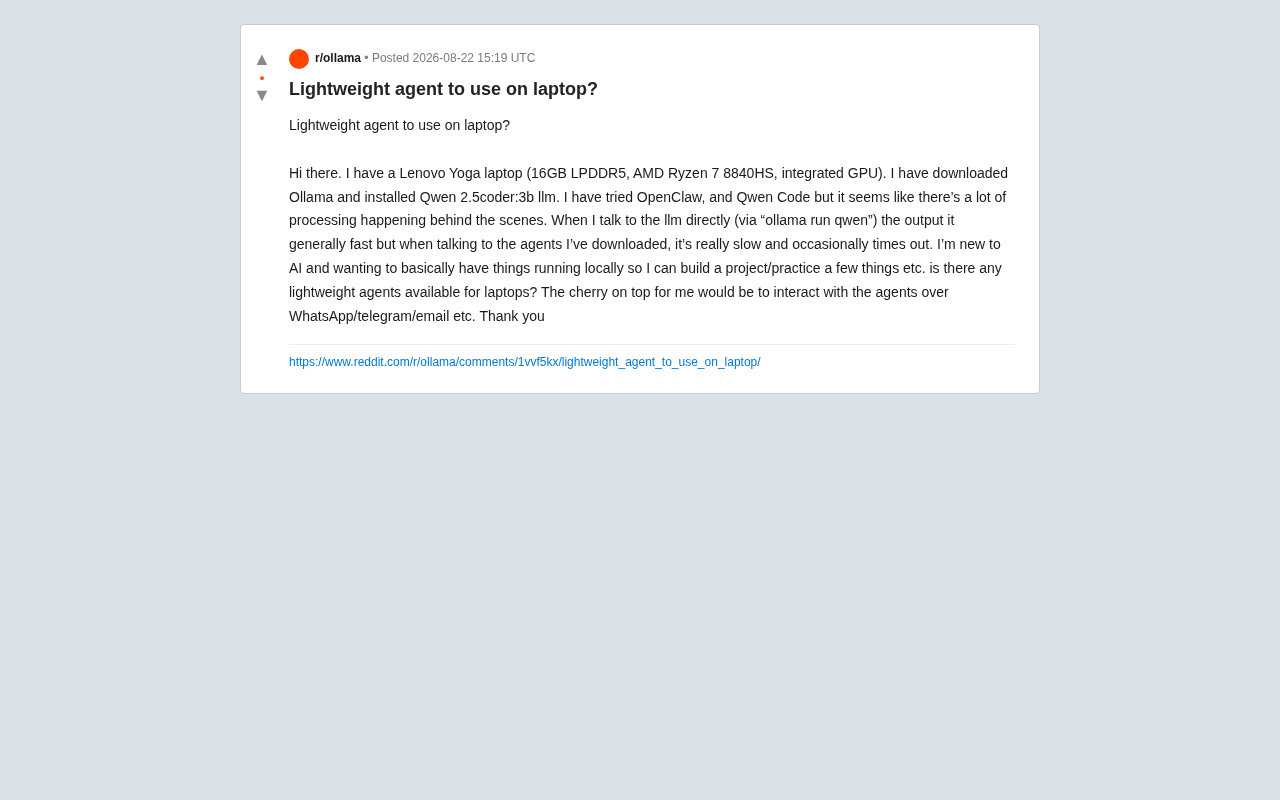
Local AI Agent Deployment Too Slow? A Lightweight Optimization Practical Guide
Local AI Agent deployment slow and timing out? This guide covers Agent framework overhead, hardware bottlenecks, and practical optimizations including context trimming, quantization, and Telegram Bot integration.

Choosing a Laptop for AI Studies: MacBook vs NVIDIA Laptop — An In-Depth Comparison Guide
In-depth analysis for AI students choosing laptops: MacBook Air M5 with remote GPU vs NVIDIA laptop, comparing CUDA support, portability, battery life, and value.

Self-Hosted LLM Tech Stack: A Complete Guide to Managing Your Local AI Cluster from the Terminal
A deep dive into self-hosting LLM tech stacks: inference engines, model management, vector databases, and how to manage your local AI cluster from the terminal.