GitHub Daily · November 04: Agent Ecosystem Explodes, Skill Packs and Memory Layers Become the New Battleground

Agent infrastructure dominates GitHub Trending as competition shifts to engineering reliability.
Today's GitHub Trending is dominated by AI agent infrastructure, with the agent engineering stack stratifying into capability, collaboration, and memory/configuration layers. vercel-labs/agent-desktop tops the list with over 2,000 stars in a day by using the OS accessibility tree instead of pixel guessing.
GitHub Daily · November 04: Agent Ecosystem Explodes, Skill Packs and Memory Layers Become the New Battleground
Opening today's Trending list, two words hit you right away: agent. More than half the projects on the list are built around AI agents — some give agents skills, some give agents memory, and others let agents actually operate a computer desktop. That density alone tells you the developer community's attention has completely shifted from "building better models" to "how to make agents genuinely usable." Model capabilities are rapidly converging, and the real differentiation battle has moved to the engineering layer. Whoever can make agents stable, reproducible, and context-aware wins the next round. A few familiar faces also surged suddenly today, like that 90-day learning roadmap and the video generation tool, showing that learning content and content production tools remain evergreen traffic magnets. Let's go through them one by one.
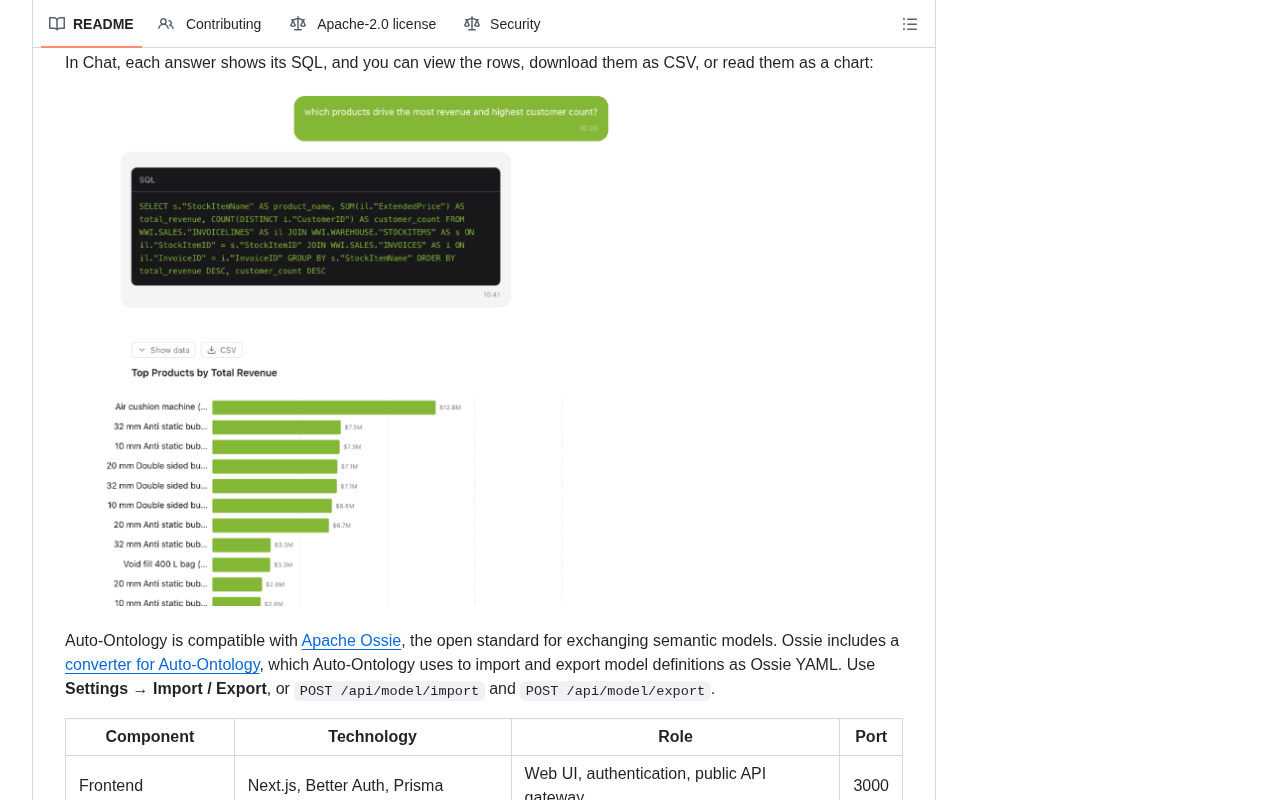
NVIDIA/auto-ontology: Building a Semantic Bridge Between LLMs and Data
Project positioning A Python framework that builds a graph-based semantic reasoning layer on top of data.
Problem it solves Everyone is throwing data at LLMs and letting them figure it out. But the most critical problem with LLMs is nondeterminism — ask the same query twice and you may get two different answers. auto-ontology aims to solve exactly this by organizing data into a graph structure so query generation becomes deterministic and reproducible. Put simply, it puts rails on the LLM's reasoning process so it doesn't wander off.
Core features The most important are deterministic query generation and better context retrieval. It explicitly models semantic-layer concepts, so the context an agent receives during a task is structured and interpretable rather than a pile of cobbled-together text fragments.
Use cases Well suited for enterprise knowledge bases, complex data retrieval, and agent workflows that require audit trails — for example finance or healthcare, where interpretability requirements are high.
Tech stack Python, a typical combination of graph computing and semantic modeling, with high reference value for anyone building RAG systems.
Stars analysis Over 3,600 stars, up more than 2,000 in a single day. That growth rate is quite fierce for a project that just hit the list, showing that the semantic layer direction hits right at everyone's anxiety about agent reliability.
max-sixty/worktrunk: Git Workflow Infrastructure for Parallel Agents
Project positioning A command-line tool for managing Git worktrees, purpose-built for parallel AI agent workflows.
Problem it solves When you have multiple agents modifying code at the same time, they step on each other's toes. The traditional approach is for each to clone the repo, which is heavy and messy. worktrunk uses worktree, Git's native mechanism, to give each agent an independent directory and branch without interference.
Core features Lightweight, and written in Rust for fast execution. It wraps the chores of creating, switching, and cleaning up worktrees into handy commands, especially suited for batch agent operations.
Use cases Any team developing in parallel with multiple agents — for example, one agent writing tests while another changes the implementation, or running large-scale code generation experiments.
Tech stack Rust, a great engineering reference for anyone building CLI tools, especially its design approach to concurrency and file system operations.
Stars analysis Nearly 10,000 stars, up over 100 today. The growth isn't explosive, but it's steady, showing this is a must-have but unglamorous tool that users are genuinely using.
mattpocock/skills: Copy an Engineer's Claude Configuration Directly
Project positioning A Shell project containing a skill pack an experienced engineer organized from his own .claude directory.
Problem it solves Many people install Claude Code but don't know how to tune it — how to write and organize skill files is all guesswork. This project open-sources its real-world configuration outright, essentially handing you a reference answer.
Core features Real and unflashy. It's just the skill definitions the author uses day to day, ready to adapt.
Use cases Developers just getting started with Claude Code who want to boost efficiency fast, or teams wanting to learn how to organize skill files.
Tech stack Shell, extremely low barrier — anyone can read it and adapt it to their own needs.
Stars analysis 160,000 stars — the number itself speaks volumes. Up over 1,700 today. People are voting with their feet, telling the community "this is exactly the kind of ready-to-use thing we want."
floci-io/floci: Run AWS Locally, Lightweight and Free
Project positioning An alternative to local AWS emulators, focused on being lightweight and free forever.
Problem it solves When development depends on AWS services, testing is costly and the network isn't always available. Traditional local emulation options are either heavy or paid. floci aims to be both light and free.
Core features Light, flexible, free. Those three words are its product philosophy — it doesn't chase full service coverage but does common scenarios well.
Use cases Local development and CI pipelines, especially scenarios needing to mock services like S3 and SQS.
Tech stack Java, easier to integrate and extend in enterprise backend teams.
Stars analysis 28,000 stars, up over 200 today. Local development tools have always had steady demand, and this project is carving into LocalStack's market with a free strategy.
thedotmack/claude-mem: Adding Cross-Session Memory to Every Agent
Project positioning A JavaScript project that provides persistent cross-session context for various agents.
Problem it solves What's the biggest awkwardness with agents? Start a new session and it forgets everything from yesterday. claude-mem captures what the agent does in each session, compresses it with AI, and injects relevant context into future sessions.
Core features Cross-tool support is the biggest highlight — Claude Code, Codex, Gemini, and Copilot all work. There's also AI compression, which doesn't just pile up history but distills the useful parts.
Use cases Developers on long-term projects, or teams that need agents to remember project conventions and preferences.
Tech stack JavaScript. For anyone building agent applications, this memory architecture is highly instructive.
Stars analysis 92,000 stars, up over 140 today. The base is already large, showing that the memory pain point is universal.
vercel-labs/agent-desktop: Letting Agents Actually Use a Computer
Project positioning A desktop agent operation layer built in Rust that lets any agent reliably use a computer.
Problem it solves Many computer use solutions today rely on screenshot pixel recognition and then guess where buttons are — slow and unstable. agent-desktop takes a different approach: it reads the operating system's accessibility tree directly to get an app's real UI structure.
Core features Stable references and safely retryable actions. Instead of guessing pixels, it knows exactly what controls are on screen, turning agent operations from "taking chances" into "being sure."
Use cases Automation scenarios requiring agents to operate desktop software — testing, data entry, cross-application workflows.
Tech stack Rust — good performance, and well suited for interacting with system internals. For developers doing GUI automation, the accessibility tree approach is worth studying.
Stars analysis 7,700 stars, a furious jump of over 2,200 today, shooting straight to the top. The growth rate shows that Vercel hit the most painful nerve in computer use right out of the gate.
github/spec-kit: A Starter Toolkit for Spec-Driven Development
Project positioning GitHub's official toolkit to help you get started with spec-driven development.
Problem it solves When you let agents write code, the biggest fear is them improvising and going off track. Spec-driven development's approach is to first write requirements as explicit specs, then have the agent implement to them. spec-kit turns this process into tooling.
Core features Officially produced, standardized process, integrated with the GitHub ecosystem.
Use cases Teams developing with agents, especially scenarios needing predictable, reviewable output.
Tech stack Python, plus deep integration with the GitHub platform.
Stars analysis 127,000 stars, up over 1,100 today. Official endorsement plus methodology output is a combination with huge influence in the community.
The-PR-Agent/pr-agent: The Original Open-Source PR Reviewer
Project positioning An open-source automated PR review tool.
Problem it solves Code review is a bottleneck — manual review is slow and inconsistent. pr-agent uses AI to automatically provide review comments. Note it specifically states it is not a free version of Qodo, emphasizing its independence and original identity.
Core features Automatically reviews PRs, integrated into the GitHub workflow.
Use cases Any team wanting to automate PR review.
Tech stack Python, integrating with the GitHub API.
Stars analysis 14,000 stars, up over 270 today. Competition in this space is fierce, but its positioning as the open-source original helps it retain a loyal user base.
harry0703/MoneyPrinterTurbo: Generate HD Short Videos from a Keyword
Project positioning Uses LLMs and automated workflows to generate short videos from a topic in one click.
Problem it solves Short video production has a barrier to entry — you need to write scripts, find footage, edit, and voice it. This project strings these into a pipeline.
Core features One-click generation, fully automatic from keyword to finished video.
Use cases Content creators, self-media, or teams producing batch marketing videos.
Tech stack Python, a typical AI workflow orchestration.
Stars analysis Over 100,000 stars, up nearly 500 today. These projects remain traffic giants because they directly address the simple need to "make money."
garrytan/gstack: Copy an Investor's Claude Code Configuration
Project positioning A TypeScript project replicating Garry Tan's own Claude Code configuration.
Problem it solves Similar to skills above — people don't know how to get the most out of Claude Code, and this project hands you a full set of 23 tools playing the roles of CEO, designer, engineering manager, release manager, documentation engineer, and QA.
Core features Clear role division, treating agents as a team. The idea is interesting: rather than one agent doing everything, each role gets its own dedicated tools.
Use cases Teams and founders who want to simulate a complete development team with agents.
Tech stack TypeScript, easy to integrate in the Node ecosystem.
Stars analysis 139,000 stars, up over 280 today. The celebrity effect is obvious, but it also genuinely provides reusable methodology.
JiaFeiMiao-K-Cat/DiscImageStudio: A Niche but Explosive New Face
Project positioning A C# project that, judging by the name, looks like a tool related to disc images.
Problem it solves Lacking a description, we can only infer from the name that it may be doing disc image editing or management.
Core features Unknown for now; the project has no description yet.
Use cases Presumably users who need to handle disc images.
Tech stack C#, common in the Windows tool ecosystem.
Stars analysis Nearly 6,000 stars, up over 1,700 today. That growth is highly unusual — a project with no description suddenly surging suggests a community is recommending it en masse, or some niche need has been ignited. Worth watching.
MichaelCade/90DaysOfDevOps: A Three-Year DevOps Learning Map
Project positioning A structured DevOps learning roadmap.
Problem it solves DevOps knowledge is too broad, and beginners don't know where to start.
Core features Three years of accumulation, covering principles, processes, tools, and use cases.
Use cases People wanting to get started with or systematically organize DevOps.
Tech stack Shell, content-focused.
Stars analysis 30,000 stars, up over 150 today. A veteran learning repo with steady traffic, showing the demand for systematic learning never goes away.
D4Vinci/Scrapling: From a Single Request to Large-Scale Scraping
Project positioning A Python web scraping framework.
Problem it solves Scraping spans a huge range of needs, from one request to large-scale crawling, and Scrapling aims to cover it with one framework.
Core features Billed as the most versatile Web Scraping framework, handling everything from simple requests to full-scale crawling.
Use cases Data collection, competitor monitoring, research purposes.
Tech stack Python, the home turf of the scraping ecosystem.
Stars analysis 92,000 stars, up nearly 900 today. Fast growth, showing that data collection demand has actually grown stronger in the agent era — after all, agents need data to work.
scenario-labs/skills: Letting Agents Produce Professional Images, Video, Audio, and 3D
Project positioning A set of skill packs that let any AI agent call production-grade media generation capabilities.
Problem it solves An agent wants to generate content but doesn't know which model to use or how much it will cost. This skill pack automatically picks the right model, quotes before spending, and maintains character and brand consistency.
Core features Connected via Scenario MCP, and can also drive professional tools like Blender, Maya, ZBrush, Unreal, and Unity.
Use cases Creative production teams, especially scenarios needing batch generation of consistent-style assets.
Tech stack Python, plus MCP integration.
Stars analysis 2,000 stars, up over 200 today — a high growth rate for a small project, showing the imagination of MCP plus professional tools is being recognized.
Today's Trend Summary: Agent Infrastructure Is Stratifying
Putting today's list together, a clear thread emerges. The first layer is the capability layer: auto-ontology provides deterministic semantic reasoning, agent-desktop provides reliable desktop operation, and scenario-labs provides professional media generation. The second layer is the collaboration layer: worktrunk manages parallelism, pr-agent manages review, and spec-kit manages specs. The third layer is the memory and configuration layer: claude-mem manages cross-session memory, and skills and gstack manage skill configuration. Stack these three layers and you have a complete agent engineering stack.
What does this stratification mean? It means agent competition has shifted from "how smart the model is" to "how solid the engineering is." Look at the projects with the biggest star gains today — not one of them is a model itself; all are peripheral infrastructure making agents more usable. It's like the mobile internet era: the real opportunity wasn't in making phones, but in building apps and infrastructure. Another common thread is multi-tool support — claude-mem explicitly lists a long string of compatible targets, and skill-type projects all emphasize universality, showing everyone already assumes a future world of coexisting multiple agents, where only non-exclusive solutions survive.
Today's Must-See TOP3
First, vercel-labs/agent-desktop. Up over 2,000 stars in a day to the top spot, its approach of replacing pixel guessing with the accessibility tree could well become the standard for computer use. A must-see for anyone doing desktop automation.
Second, thedotmack/claude-mem. Cross-session memory is a must-have for all agents, and it already supports a long list of tools with an architecture worth studying. Teams wanting agents to remember projects shouldn't miss it.
Third, github/spec-kit. An officially produced spec-driven development tool providing methodological constraints for agent development. This is a key link in turning agents from toys into engineering.
Outlook
In the coming weeks, I expect more projects to appear in memory management and multi-agent collaboration. Today's list has already given the signal — the engineering-layer competition has only just begun. Also worth keeping an eye on is that description-less DiscImageStudio suddenly surging; there may be a small community quietly making moves behind it. See you tomorrow.
One-line Summary
Today's list is dominated by AI agent infrastructure, with competition shifting from model capability to engineering reliability; the agent engineering stack shows three-layer stratification: capability layer, collaboration layer, and memory/configuration layer; vercel-labs/agent-desktop replaces pixel guessing with the OS accessibility tree, surging over 2,000 stars in a day to the top spot.
Related articles

AI Coding Enters the Team Collaboration Era: Interpreting Three Major Moves from Meta, GitHub, and Mistral
Meta acquires Conductor, GitHub Copilot Fusion becomes available, Mistral opens Large 4 weights—three moves show AI coding shifting from code generation to organizing development workflows. This article explains task orchestration, model collaboration, and cost control for developers.

Building a RAG Assistant with Dify: A Practical Guide to Knowledge Bases, Workflows, and Agent Nodes
How should knowledge bases, workflows, and Agent nodes connect in a Dify RAG assistant? We break down the division of labor and wiring logic for a shippable app.
 Tech Frontiers
The AI Industry Doesn't Lack Marketing—It Lacks Good Products
AI faces market selloffs and public skepticism—is marketing really the problem? This analysis of market signals and product experience argues the core困境 is incomplete products and a gap between promises and experience; the only way to change perceptions is to ship better products.