GitHub Daily · November 05: Skills Ecosystem Explodes, Agents Begin to Take Over the Desktop
Skills ecosystem explodes as five 'skills' repos trend; agents get real computer control via structure-reading.
Today's GitHub Trending is dominated by Skills and agent infrastructure. Five repos named 'skills' appear simultaneously, signaling skill packages are becoming the agent era's distribution unit. vercel-labs' agent-desktop and agent-browser build the agent's limbs, shifting from pixel-reading to OS accessibility tree structure. Rust becomes the mainstream choice for agent infrastructure.
Today's Overview
Today's GitHub Trending sends a very clear signal: the leaderboard is almost entirely dominated by two themes — Skills and agent infrastructure. From individual developers' .claude directories to official repositories from big tech, and down to low-level desktop control frameworks, everyone is racing for the same position: building tools and limbs for AI agents.
Another notable point is that today's projects span a wide range of languages. Rust shows up in desktop control and browser automation, Python still rules scraping and the AI middle layer, and even C and C# made the list. This shows the agent wave is seeping into low-level and engineering-oriented work — no longer just buzz at the model layer.
Let's break them down one by one.
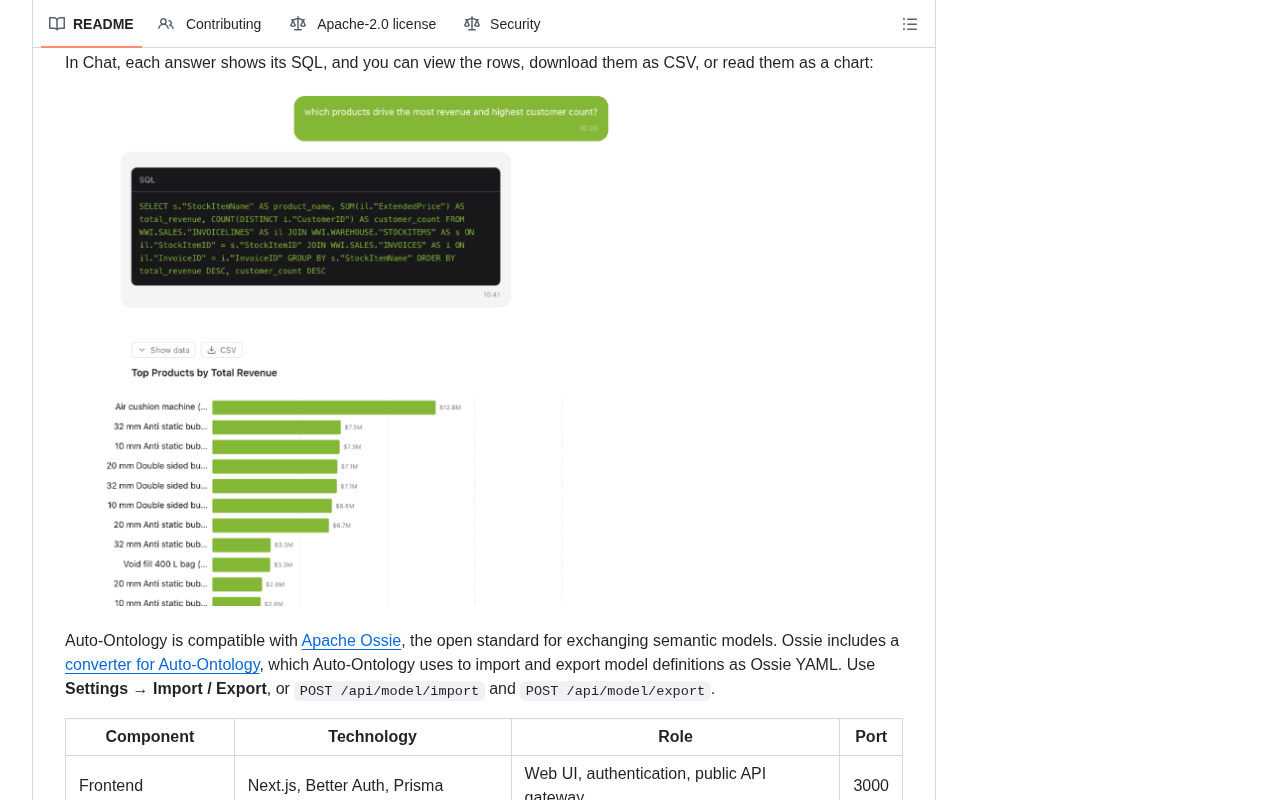
NVIDIA/auto-ontology: Adding an Interpretable Semantic Reasoning Layer on Top of Data
Project positioning: A Python framework that builds a graph-based semantic reasoning layer on top of data.
Problem it solves: The biggest pain point when letting an LLM query databases or call tools directly is that it often fabricates query statements. A user asks a question, the model generates a SQL statement or a tool call, and whether the result is correct is pure luck. What auto-ontology aims to do is first build the semantic structure of the data into a graph, making query generation deterministic rather than relying on the model to guess.
Core features: It emphasizes deterministic query generation. That is, the same question follows the same path and yields consistent results every time. Also, because there's a graph structure in the middle, retrieved context is more accurate, and when problems arise you can trace back along the path — interpretability is far stronger than pure vector retrieval.
Use cases: Typical users are enterprise teams with complex business data. For example, a customer service system needs to answer "the three categories with the highest return rate last quarter," or an internal BI tool needs to let non-technical colleagues query reports in natural language. These scenarios most fear the model making things up and need reproducible answers.
Tech stack: Pure Python, with no obstacles connecting to mainstream LLM frameworks. Its reference value for developers lies in demonstrating an approach: don't let the model touch raw data directly — give it a semantic map first. This pattern will become increasingly common in agent tool calling.
Stars analysis: Over 3,600 stars, up more than 2,000 today. That growth rate is quite fierce for a newly emerged framework, likely driven by NVIDIA's brand backing plus the hard demand for agent context. Worth watching the issue activity going forward.
mattpocock/skills: What a 160k-star .claude Directory Looks Like
Project positioning: A collection of Claude skill configurations from a well-known developer, laid out openly for all to see.
Problem it solves: Many people use tools like Claude Code but don't know how to tune them for smooth use. How well skill files are written directly determines the quality of the agent's work. This repo publicly shares a battle-tested set of configurations — essentially lending you someone else's muscle memory.
Core features: Its greatest value isn't any specific skill but the way configurations are organized and the conventions for writing them. Which tasks should be split into skills, how to write skill descriptions so they're correctly triggered — these details can't be learned from official docs.
Use cases: Developers currently using Claude Code or similar CLI coding tools. Especially those who feel the agent constantly misinterprets intent — compare your own configuration against this and you'll often spot the gap.
Tech stack: Shell. Very low barrier to entry, but high-value content. Such repos demonstrate a trend: prompts and skill configurations themselves are becoming reusable engineering assets.
Stars analysis: 160k stars — this volume already exceeds the scope of ordinary tool repos. It still gained over 1,700 today, showing that the Skill concept itself is exploding.
garrytan/gstack: Packing an Entire Management Team into Claude Code
Project positioning: An opinionated Claude Code configuration where 23 tools each play the role of CEO, designer, engineering manager, release manager, documentation engineer, and QA.
Problem it solves: When one person uses an agent to do a project, what's often missing is process, not capability. Code can be written, but who reviews requirements, who manages releases, who watches quality? gstack codifies these roles in the form of tools.
Core features: Its keyword is opinionated. Each tool carries clear judgment criteria — not a wishy-washy assistant. The release manager role, for example, checks whether something can ship against a fixed checklist.
Use cases: Indie developers and small teams. For that one-person-acting-as-an-entire-company state, this fills gaps in your process.
Tech stack: TypeScript. For developers wanting to build their own agent workflows, it's an excellent template for role decomposition.
Stars analysis: 130k stars, over 20k forks. That fork count is especially telling — people aren't just spectating, they're taking it and modifying it into their own versions. Up over 280 today, a stable long-tail growth pattern.
Usagi-org/ai-goofish-monitor: Let an Agent Hunt for Deals on Xianyu for You
Project positioning: A multi-task monitoring system for Xianyu (Idle Fish) built on Playwright and AI, with a complete admin backend interface.
Problem it solves: Good deals on Xianyu are often snatched up within minutes — manual refreshing simply can't keep up. And refreshing alone isn't enough; you also need to judge whether the item is worth it and whether the description has pitfalls. This project does monitoring and analysis together.
Core features: Multi-tasking is key. You can watch multiple keywords simultaneously, either in real time or on a schedule. The AI analysis part picks out what truly matches your preferences from massive listings — not simple keyword matching.
Use cases: Second-hand shoppers, collectors, and people running small businesses who need to watch supply sources. Any transaction scenario requiring a timing edge applies.
Tech stack: Python plus Playwright. For scraping developers, it demonstrates a complete productization approach — a scraper isn't just a script; it also needs a backend and task scheduling.
Stars analysis: 16k stars, up over 200 today. This project making the list shows one thing: pragmatic small tools still have strong vitality in the Chinese community.
D4Vinci/Scrapling: The All-Rounder of Web Scraping Frameworks
Project positioning: Billed as the best web scraping framework, covering everything from single requests to large-scale crawling.
Problem it solves: The scraping field has long been fragmented — requests for simple cases, Scrapy for complex ones, with anti-bot countermeasures, rendering, and concurrency potholes in between. Scrapling aims to stitch all this together in one framework.
Core features: It has dedicated optimizations for anti-bot scenarios and can automatically adapt to page structure changes. This point is crucial because traditional scrapers most fear site redesigns — once selectors break, the entire script is scrapped.
Use cases: Data collection teams, companies doing competitive analysis, and researchers needing large-scale crawling.
Tech stack: Python. For scraping developers, it encapsulates a lot of scattered experience into framework capabilities, saving enormous time reinventing wheels.
Stars analysis: 92k stars, up over 890 today — one of the highest gainers today. This growth rate shows the old scraping track has been reactivated by AI, with demand clearly recovering.
vercel-labs/agent-desktop: Making Agents Actually Able to Use a Computer
Project positioning: A framework that lets any agent reliably operate a computer on the desktop, built in Rust.
Problem it solves: Many agents operating computers today rely on reading screenshots to guess coordinates — the button is here today, and when the UI changes tomorrow the click goes astray. This approach is slow and fragile. agent-desktop takes a different approach: it reads the OS accessibility tree directly to get the app's real UI structure.
Core features: Stable reference retention — this is its killer feature. Because it uses structural information rather than pixel coordinates, element references don't break when the UI is slightly adjusted. Actions can also be safely retried — clicking again after a failure won't cause chaos.
Use cases: Scenarios needing an agent to work across applications. For example, auto-filling forms, running repetitive office processes, or automatically testing desktop software.
Tech stack: Rust. Choosing Rust makes sense — desktop control has high performance and stability requirements and can't crash at the drop of a hat. The takeaway for developers is that the computer-use path is shifting from reading pixels to reading structure.
Stars analysis: 7,700 stars, surging over 2,200 today — today's fastest-growing project. A vercel-labs release plus this growth rate shows that agent desktop operation is one of the hottest tracks right now.
max-sixty/worktrunk: The Git Butler for Parallel Agents
Project positioning: A command-line tool for managing Git worktrees, designed specifically for parallel AI agent workflows.
Problem it solves: When you run several agents modifying the same repository simultaneously, branch and directory management quickly spirals out of control. This project automates worktree creation, switching, and cleanup.
Core features: Built for parallelism. Multiple agents each occupy a worktree without interfering with each other, and merging is handled uniformly afterward.
Use cases: Developers running multiple agents simultaneously, especially teams doing code generation comparison experiments.
Tech stack: Rust. This choice shows infrastructure CLIs are collectively shifting to Rust in pursuit of fast startup and zero dependencies.
Stars analysis: 9,800 stars, up over 100 today. Not big in volume but very precise — a tool for professional users.
google/skills: Big Tech Enters the Agent Skill Library Game
Project positioning: An official Google agent skill collection covering Google's products and technologies.
Problem it solves: To get an agent to use the Google suite well — cloud services, docs, search — there's a lack of standardized skill descriptions.
Core features: Official releases mean accurate interface descriptions — no third-party guesswork.
Use cases: Teams doing agent development on the Google tech stack.
Tech stack: Python. Its reference value lies in defining what an official skill library should look like.
Stars analysis: 16k stars, up over 300 today. Big tech entering is a clear signal that the Skills ecosystem is heading toward standardization.
vercel-labs/agent-browser: The Browser Gamepad for Agents
Project positioning: A browser automation CLI tool for AI agents.
Problem it solves: For an agent to go online, it needs a stable and controllable browser operation interface, rather than having the model generate a pile of error-prone click scripts.
Core features: Its CLI form makes it easy for agents to invoke as a tool, with a clear interface.
Use cases: Scenarios needing agents to automatically browse, scrape, and fill forms.
Tech stack: Rust, same origin as agent-desktop — showing vercel-labs is systematically building the limbs of agents.
Stars analysis: 45k stars, up over 130 today. Already a large installed base — a mature-stage project.
scenario-labs/skills: Letting Agents Generate Production-Grade Multimedia
Project positioning: A skill set that lets any agent produce usable images, video, audio, and 3D content.
Problem it solves: The biggest pitfall in agent-generated multimedia is choosing the wrong model — money spent, results poor. This project quotes prices before spending and picks the right model first.
Core features: Maintaining character and brand consistency — a hard requirement for commercial scenarios. It can also drive professional software like Blender, Maya, and ZBrush.
Use cases: Content teams, ad agencies, and e-commerce needing batch asset production.
Tech stack: Python. It demonstrates how skills combine with MCP to form a complete chain.
Stars analysis: Over 2,000 stars, up over 200 today — a very high percentage gain. Small volume, high growth — clear early-stage project characteristics.
ConardLi/garden-skills: The Chinese Community's Own Skill Garden
Project positioning: An open-source Skills collection from a Chinese tech blogger, covering web design, knowledge retrieval, image generation, and more.
Problem it solves: Chinese developers often find English skill libraries poorly suited to their needs; this project provides ready-made skills close to local requirements.
Core features: Leans practical — skills like web design and knowledge retrieval can be used directly in daily development.
Use cases: Chinese developers, especially those working on frontend and content tools.
Tech stack: Primarily CSS, showing design-related content makes up a significant share.
Stars analysis: 11k stars, up over 400 today. Healthy growth — showing individually maintained skill libraries can also gain community recognition.
microsoft/VibeVoice: Microsoft's Open-Source Voice Showcase
Project positioning: Open-source frontier voice AI.
Problem it solves: Voice interaction is an important part of agents, but high-quality voice models have long been closed-source. VibeVoice opens this up.
Core features: Positioned at the frontier — meaning it benchmarks against commercial solutions in naturalness and real-time performance, not lab toys.
Use cases: Teams building voice assistants, podcast generation, and real-time customer service.
Tech stack: Python. For developers building multimodal agents, this is an indispensable piece of the puzzle.
Stars analysis: 51k stars, up over 300 today. Microsoft's continued investment in open-source models has raised the baseline for voice.
floci-io/floci: Local AWS Simulation, Free
Project positioning: A lightweight, free alternative to AWS local emulators.
Problem it solves: Local development needing cloud services is slow and costly. Traditional emulators are heavy and troublesome to configure. floci focuses on being light and free.
Core features: Lightweight and flexible are its selling points — fast startup, low resource usage.
Use cases: Developers needing to run AWS dependencies locally, especially small teams not wanting to pay for test environments.
Tech stack: Java — easily overlooked, but friendly to JVM ecosystem teams.
Stars analysis: 28k stars, up over 200 today. The greater the cloud cost pressure, the more popular such local alternatives become.
JiaFeiMiao-K-Cat/DiscImageStudio: A Tool That Suddenly Emerged
Project positioning: Judging from the missing description, this is a relatively new project; the name suggests it's related to disc image processing.
Problem it solves: Not given in the materials, but judging from today's surge of nearly 1,800 stars, it hit some specific pain point. Possibly the need to digitize old game discs or software installation discs.
Core features: You'd have to check the repo to know — no wild guessing here.
Use cases: Enthusiasts and researchers involved in image processing.
Tech stack: C#. For desktop tool developers, C# remains the comfort zone on this track.
Stars analysis: 5,900 stars, up over 1,700 today — among today's top gainers. Such spikes usually come from spontaneous community spread; worth observing the source separately.
lz4/lz4: An Old Veteran Returns
Project positioning: An extreme-speed compression algorithm.
Problem it solves: The classic trade-off between compression speed and ratio — lz4 prioritizes speed.
Core features: Absurdly fast — the reason it's long dominated in databases, games, and logging systems.
Use cases: Any latency-sensitive compression scenario.
Tech stack: C. For low-level developers, it's a classic textbook on performance optimization.
Stars analysis: 12k stars, up only 16 today. Normal fluctuation — old projects appearing on the list are more often driven by algorithm or ecosystem changes.
Today's Trend: Skills Are Becoming the New Software Package
Looking at today's projects together, one main thread is very clear. mattpocock, garrytan, google, scenario-labs, and ConardLi — five repos all named skills. This is no coincidence.
My judgment is that Skill is becoming the distribution unit of the agent era. We used to distribute code libraries, then npm packages, then models. Now people realize what really determines whether an agent works well is that set of task descriptions and tool orchestration. This thing is being productized, versioned, and turned into repos.
Another thread is the agent's limbs. agent-desktop and agent-browser both made the list the same day, plus scheduling tools like worktrunk — showing industry consensus has formed: agents can't just live in a chat box; they must actually be able to operate a computer.
One more detail worth noting: today's tool-layer projects heavily use Rust. Desktop control, browsers, CLI management — all choose Rust. It's a collective vote for stability, startup speed, and distribution convenience.
Today's Must-See TOP 3
Number one, NVIDIA/auto-ontology. It tackles the hardest bone in agent deployment: making model queries reproducible and interpretable. This approach will permeate many enterprise-level projects going forward.
Number two, vercel-labs/agent-desktop. Replacing pixel-reading with structure-reading is the right solution for computer use. Today's 2,000+ gain confirms the market's judgment.
Number three, D4Vinci/Scrapling. A new twist on an old track — the anti-bot adaptive approach is a real efficiency boost for data collection teams.
Looking ahead to the coming days, I expect Skills-related repos will continue to dominate the list, and tools specifically for skill management and distribution will start to appear. This wave of agent infrastructure has only just begun.
One-line Summary
Skills ecosystem explodes — five repos named skills make the list the same day, skill packages are becoming the distribution unit of the agent era; vercel-labs builds agent limbs with agent-desktop and agent-browser, shifting from reading pixels to reading OS accessibility tree structure; Rust becomes the mainstream choice for agent infrastructure projects, covering desktop control, browser automation, and Git workflow management
Related articles

Glasshand: Giving AI Agents a Real iPhone and Mac
Glasshand lets AI agents rent real iPhones and Macs, supporting Claude Code, Codex, and more to post, book services, and test iOS apps on real devices. This article explains how it works, its use cases, and potential boundaries.

ChatGPT Images 2.6 Released: GIF Generation, Reference Image Reuse, and 50% Speed Boost
ChatGPT Images 2.6 released: prompt-to-GIF animation with frame-by-frame editing, reusable reference images for yourself, pets, or characters, 50% faster generation, plus Flare and Sunburst API model variants and SVG export for developers.

Rerun: Turn Your AI Subscription into an AI Coworker Team
Rerun, #3 on Product Hunt, turns your ChatGPT or Claude subscription into a team of AI coworkers that run on schedules or triggers, each with tools, a computer, and a shared workspace. It asks before risky actions, is open source (AGPL v3), and supports self-hosting.