GitHub Daily · October 30: Skills Ecosystem Explodes, Agents Start Provisioning Their Own Computers

Skills ecosystem forms three layers, agents get their own computers, and cross-session memory becomes a must-have — all in one day on GitHub.
Today's GitHub leaderboard shows the skills ecosystem forming a three-layer structure (official standards, personal battle-tested collections, vertical scenario skills) simultaneously. Agents are gaining independent runtime environments via OpenBot and OpenMausBot, while cross-session memory, led by claude-mem's 90K+ stars, has become a must-have.
A quick glance at today's leaderboard makes it clear. Of the fifteen projects, seven are directly related to agent skills or agent runtimes. This isn't a scattered trend — it's an entire industry chain emerging all at once.
Look: skill frameworks like anthropics/skills and obra/superpowers are sitting on the board, mattpocock/skills gained over 1,700 stars in a day, and expo/skills squeezed in too. Further down, claude-mem tackles memory, OpenMausBot and OpenBot give agents computers, and Lightpanda builds browsers for agents. A complete infrastructure stack, all pushed to the forefront in a single day.
Let's go through them one by one.
anthropics/skills: The Official Standard-Setter Steps In
This is Anthropic's official public repository for Agent Skills. Put simply, it's a hub for skills used by Claude-family agents — you can drop your capability modules in, and others can pick them up and use them directly.
The problem it solves is critical. Before this, agent capability extensions were a free-for-all, with wildly inconsistent prompt patterns and virtually zero reusability. The official entry effectively establishes a format the entire ecosystem can exchange. With this step, skills can be installed and distributed like npm packages.
The core feature is standardization. With a unified way to describe skills and unified invocation conventions, cross-project reuse becomes viable. The tech stack is Python, so the barrier to entry is low — but its value isn't in code complexity, it's in setting the rules.
Over 167,000 stars, more than 20,000 forks, and still gaining 400+ today. What does that volume tell us? People aren't just watching — they're moving things in.
obra/superpowers: The Methodology Is Worth More Than the Tool Itself
If anthropics/skills is a repository, superpowers is more like a playbook. It's an agentic skills framework that also bills itself as a software development methodology.
It fills the gap in process. Many people have agents but don't know how to organize their workflows, so the model just runs wild. Superpowers provides the skeleton: what to do first, what comes next, and which skill handles which step.
It gained over 890 stars today, bringing the total to more than 244,000. That number is a bit staggering — it shows developers don't just want something that runs, they want a replicable method.
The tech stack is primarily Shell, which suggests it leans toward glue and orchestration rather than a heavyweight framework.
mattpocock/skills: A Personal Directory That Moved 160K+ Stars
This project is interesting. The description is one sentence: these skills come directly from the author's .claude directory. No packaging, no grand narrative.
Yet it gained 1,728 stars in a day, reaching over 164,000 total. That's the fastest growth rate among all projects today.
Why? I think it's because it's real. Big companies give you standards; individuals give you battle-tested practice. What developers want to see is exactly what someone is actually using — not carefully designed documentation. This fundamentalist style of sharing is, paradoxically, the most convincing.
The tech stack is also Shell. Its reference value lies in showing you just how plain a skill can be.
expo/skills: The First Signal of Verticalization
expo/skills is an agent skills collection for Expo projects and Expo Application Services. Over 3,000 stars, 200+ forks, up 212 today.
Its significance isn't in size but in direction. Once general skill frameworks are in place, the next step is inevitably verticalization. The framework layer has been handled officially, so for specific tech stacks, domain experts need to write specialized skills. Expo took the first step.
Teams building cross-platform apps with Expo won't have to figure out agent configuration from scratch anymore.
thedotmack/claude-mem: Memory Is the Real Bottleneck for Agents
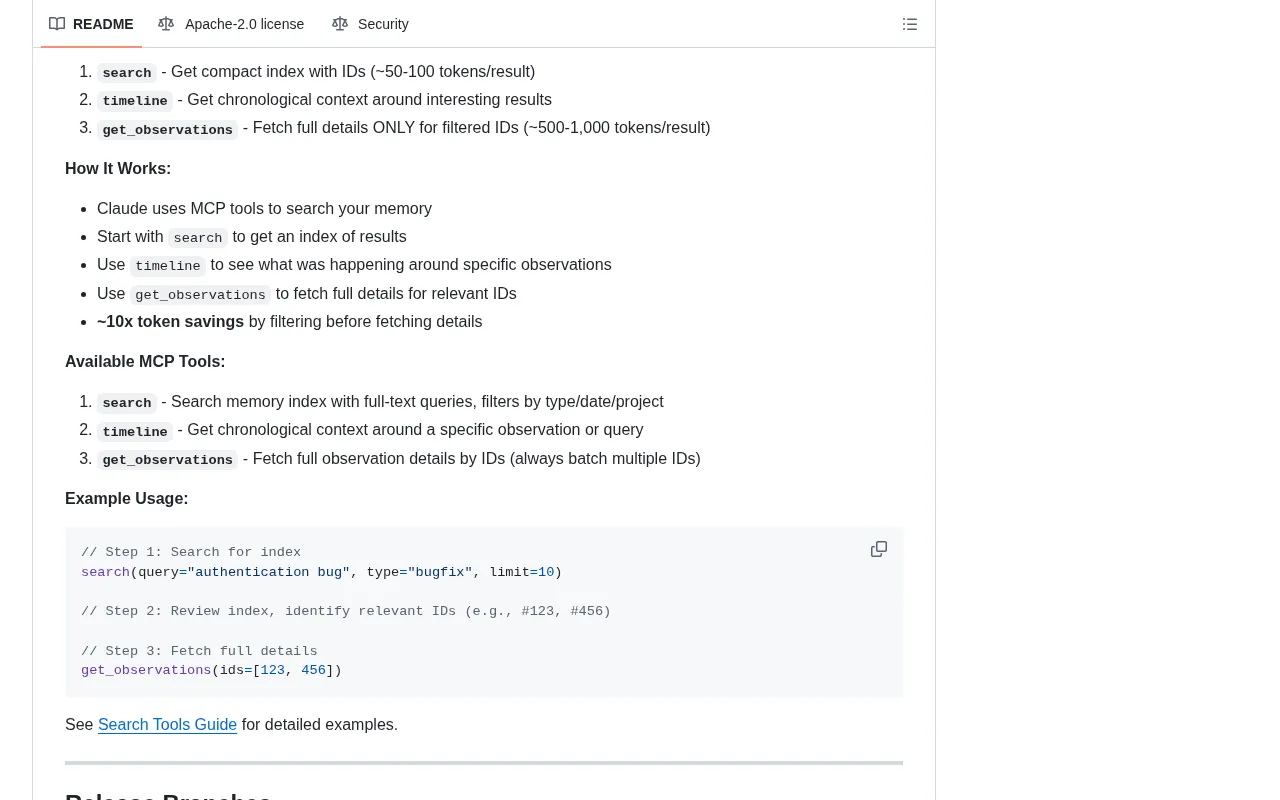
This project can be summed up in one sentence: persistent cross-session memory for agents. It captures everything the agent does during a session, compresses it with AI, and then injects the relevant content back in future sessions.
The problem it solves is painfully real. Previous agents had goldfish memory — close the window and everything's gone. The code you asked it to refactor yesterday? Today it has no idea. claude-mem fills exactly this hole.
The core feature is the two-step process of compression and injection. It's not simply logging — it distills the useful parts and feeds them back. That's far smarter than crudely piling on context.
Compatibility is also broad: it works with Claude Code, Codex, Gemini, and Copilot. The tech stack is JavaScript. Over 92,000 stars, 8,000+ forks. This volume shows that cross-session memory is now a must-have, not a nice-to-have.
CopilotKit/OpenBot: Give Every Agent Its Own Computer
OpenBot positions itself as an open-source AI colleague, each with its own computer containing a browser, files, and tools. Crucially, it emphasizes that every action is decided before execution and logged after completion.
What it solves is isolation and auditability. When multiple agents work simultaneously, sharing an environment easily leads to stepping on each other's toes. One machine per agent makes boundaries clear. And with logged actions, problems can be traced.
The tech stack is TypeScript, and it supports connecting to any AG-UI agent. Over 7,700 stars, up 240 today. I think this approach will become standard.
milind-soni/OpenMausBot: A Hit That Gained 1,190 Stars in a Day
This is an open-source Grok bot alternative, equipped with a virtual machine the bot can use.
It's the same direction as OpenBot, expressed differently. One emphasizes colleague collaboration, the other emphasizes the bot-plus-VM combination. It gained 1,190 stars today, reaching over 7,000 total. The growth rate is very aggressive, showing this track is drawing a lot of attention.
The tech stack is TypeScript. Its reference value for developers lies in how to safely connect a VM with a bot — the engineering details here are worth copying.
lightpanda-io/browser: An Agent-Focused Browser Written in Zig
Lightpanda is a headless browser, but its target users aren't test engineers — they're AI and automation.
Why build a dedicated one? Because the Chrome stack is too heavy for agents: slow to start, memory-hungry. Lightpanda was designed from the ground up around agent needs, with lightweight as the top priority.
The tech stack is Zig — a choice that itself shows the author isn't willing to compromise on performance. Over 37,000 stars, up 559 today. That growth rate is quite impressive for an infrastructure project.
pbakaus/impeccable: Teaching AI About Design
This is a design language aimed at making your AI harness perform better at design.
It fills a clear gap. Agents can write code fine now, but the moment they touch UI, it shows — typography and color schemes are all engineer aesthetics. impeccable wants to give the model a crash course.
Over 51,000 stars, up 413 today. It shows the frontend community has opinions about the visual quality of AI output — and is willing to use tools to fix it.
JetBrains/thinkrail: A Big Player Testing the Vibe Coding Waters
A lightweight IDE from JetBrains, focused on vibe coding with pi, where the IDE adapts itself to how you work.
It solves the problem that traditional IDEs are too feature-heavy and heavyweight, while pure chat windows are too scattered. thinkrail aims for the middle ground. Over 1,000 stars, up 52 today. Still small in scale, but JetBrains entering the fray is itself noteworthy.
HKUDS/DeepTutor: Long-Termism in Education
A project from the University of Hong Kong focused on lifelong personalized tutoring. Over 26,000 stars, up 172 today.
It's different from today's mainstream agent infrastructure — it operates at the application layer. But personalized tutoring happens to require long-term memory and skill orchestration, so it's actually applying the capabilities above to a concrete scenario.
macro-inc/macro: A Unified Workspace Written in Rust
It links emails, chats, documents, tasks, agents, calls, and CRM all via @-mentions, sharing a single AI memory.
This is a B2B direction, and writing it in Rust signals requirements for performance and stability. Over 1,000 stars, up 248 today. Small in scale but solid growth — team collaboration tools have always been a space people want to reinvent.
pingdotgg/t3code and ziwei-doushu: Two Extremes
t3code has an empty description, yet over 24,000 stars, up 252 today. Such projects usually enjoy extremely high community trust and need no explanation.
The Zi Wei Dou Shu project is even more interesting. Based on Ni Haixia's Tianji system, it implements complete chart calculation algorithms, the Four Transformations system, a pattern knowledge base, and classical text data. Over 6,500 stars, up 547 today. Traditional culture plus open source — the explosive potential of this combination is often underestimated.
Today's Three Main Threads
First, the skills ecosystem is expanding from standards to verticals across the board. Official formats, individual battle-tested practices, and vertical frameworks filling in scenarios — all three layers complete within a single day.
Second, agents are starting to demand their own computers. OpenBot and OpenMausBot are saying the same thing: isolated environments and auditable actions will become standard.
Third, the underlying infrastructure is being rewritten. Lightpanda builds a browser in Zig, macro builds a workspace in Rust — everyone is laying new foundations for the agent era.
Today's Must-See TOP 3
Number one: mattpocock/skills. Fastest growth, most authentic content — look here if you want to learn how to write skills.
Number two: thedotmack/claude-mem. Cross-session memory is the biggest missing piece for agents right now, and with broad compatibility, you can use it immediately.
Number three: lightpanda-io/browser. An agent browser written in Zig — bold technical choices with long-term value.
Tomorrow, keep watching the skills thread — vertical skill collections will very likely keep emerging.
One-line Summary
The skills ecosystem has formed a three-layer structure — official standards, personal battle-tested skill collections, and vertical scenario skills — all hitting the leaderboard simultaneously within a day; agents are beginning to have independent runtime environments, with OpenBot and OpenMausBot both provisioning computers and VMs for agents; cross-session memory has become a must-have, and claude-mem's 90K+ stars show the goldfish-memory problem is widely recognized.
Related articles

Private Key Set to 4? CA's Elementary Mistake Leaves TLS Exposed
CA eMudra set private keys to tiny values like 4, making TLS certificates brute-forceable. A Computerphile video demonstrates the full process from extracting public keys to forging certificates, and explores the fragility of the PKI trust chain.

How Gen Turns Data into Decisions with ChatGPT Work
In an OpenAI user case, business leader Gen shares how ChatGPT Work turns data into decisions: within hours of launch, teams can judge whether integrations and onboarding flows work, shifting decision iteration from hundreds of trial-and-error attempts to a fast feedback loop.

ChatGPT vs. Claude In-Depth Comparison: Strong at Coding but Weak at Research — How to Bridge the Gap?
A user considers switching from ChatGPT to Claude, finding Claude stronger at coding but shallower at research. We analyze the differences and share tips to make Claude's research deeper.