GitHub Project Spotlight: How Much Is a GPT-5.4 vs. Claude Opus 4.6 Comparison Deck Actually Worth?
How to critically assess a GitHub LLM comparison deck for GPT-5.4 vs. Claude Opus 4.6.
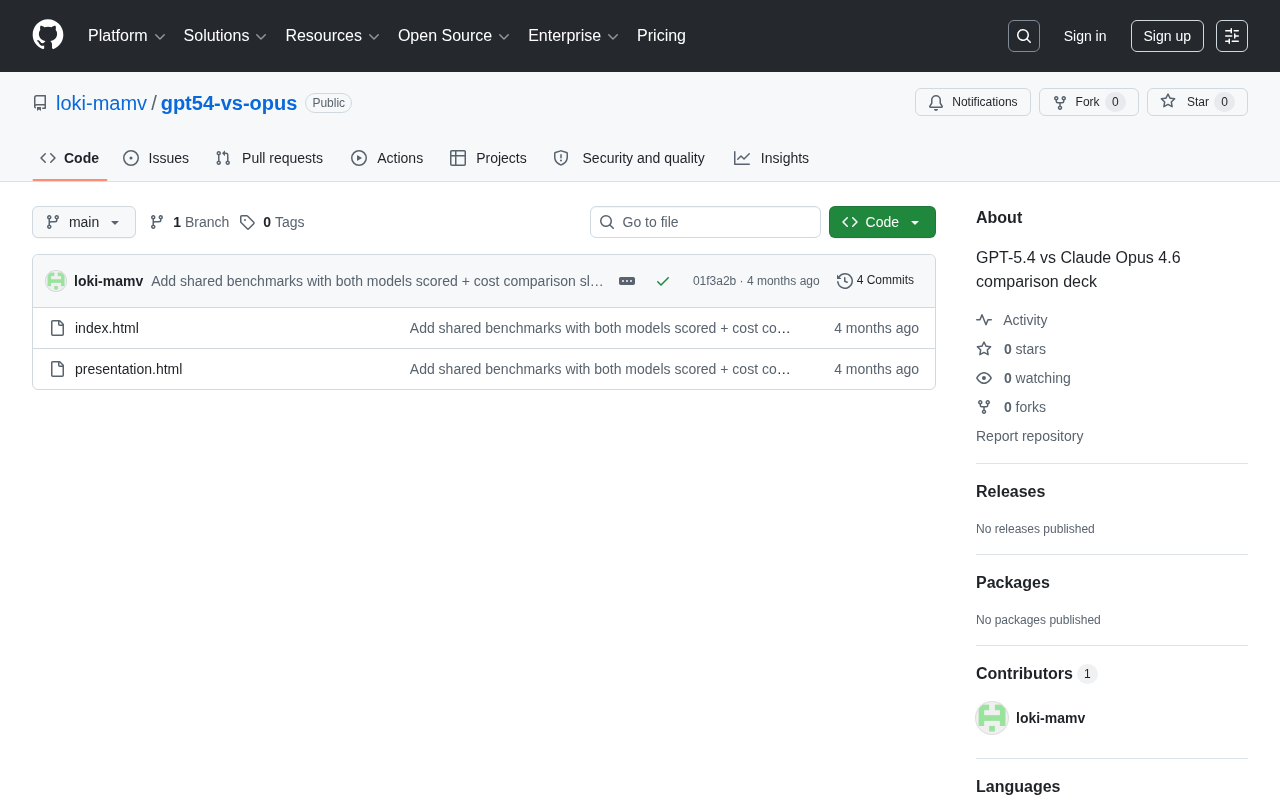
The GitHub repository `loki-mamv/gpt54-vs-opus` presents an HTML-based comparison of two large language models, but currently has zero stars and forks with virtually no community validation. Using this as a starting point, the article outlines key criteria for evaluating third-party model comparisons: reproducibility of testing methods, clarity of capability dimensions, timeliness, and neutrality. It also advises developers to cross-reference authoritative benchmarks, official technical reports, and real-world testing rather than relying on any single comparison resource for model selection.
Recently, a GitHub repository called loki-mamv/gpt54-vs-opus caught our attention. It describes itself as a "GPT-5.4 vs Claude Opus 4.6 comparison deck." Based on its metadata, the repo currently has 0 Stars and 0 Forks, with HTML listed as its primary language.
To be upfront: as of this writing, publicly available information about this repository is extremely limited — not nearly enough to make any reliable judgment about the quality of its content or conclusions. What follows is more of an analytical framework for evaluating this type of "model comparison resource" in general, rather than an endorsement of this particular project.
What the Project Itself Tells Us
Judging by its name and description, this appears to be a presentation-style resource (a "deck") for comparing two large language models, built with HTML — most likely a web-based slide deck or comparison page. This format is fairly common in the developer community: a visual comparison page is often a more efficient way to convey "who's better at what" than a lengthy written document.
That said, zero Stars and zero Forks means the project has yet to receive any community validation. Readers should approach any resource claiming to compare frontier models with healthy skepticism. The real markers of credibility are whether the comparison is based on reproducible tests, whether the evaluation datasets are publicly available, and whether the scoring criteria are transparent — not the format of the project itself.
It's also worth noting that readers should independently verify whether version numbers like "GPT-5.4" and "Claude Opus 4.6" correspond to officially released model names from their respective vendors, rather than accepting unofficial or speculative designations as established fact.
How to Evaluate Third-Party Model Comparison Resources
Model comparison content is everywhere in the community, but quality varies wildly. A trustworthy comparison resource typically has several key characteristics.
Reproducible Testing Methodology
A genuinely useful comparison will disclose the prompts, datasets, and scoring methods used. If a resource only states "A is better than B" without explaining how that conclusion was reached, its value as a reference is limited. Personally built comparison decks are often constrained by small sample sizes and are prone to subjective bias.
Currently, the most widely respected public evaluation frameworks in the community include LMSYS Chatbot Arena (an ELO-based ranking system driven by human preference votes), EleutherAI's LM Evaluation Harness (standardized benchmark testing), and the HuggingFace Open LLM Leaderboard. What these platforms share is that their test sets are public, their processes are transparent, and they can be independently reproduced by third parties. By contrast, a personally produced comparison deck typically covers only dozens of examples — or fewer — making statistical significance questionable. Even when a tester is subjectively neutral, selection bias can unintentionally amplify one model's apparent strengths. For instance, if the tester is more familiar with optimal prompt-writing techniques for a particular type of task, that will systematically skew the results.
Meaningful Dimension Breakdown
LLM capabilities are multi-dimensional — code generation, long-context reasoning, instruction following, multilingual support, cost, and latency, among others. A win on a single dimension doesn't represent overall performance. A good comparison clearly distinguishes between use cases rather than offering a blanket ranking.
Timeliness and Conflict of Interest
Models iterate extremely fast, so every comparison has a limited shelf life. It's also worth checking whether the authors have any directional bias. Open and traceable evaluation processes are far more trustworthy than opaque conclusions.
The update cycles for mainstream large models have compressed to months or even weeks, and silent backend updates make the concept of a "version" increasingly ambiguous — the actual model weights behind the same model name can change between calls without any announcement. Neither OpenAI nor Anthropic publicly announces every model update. As a result, a comparison resource's credibility depends heavily on whether it precisely records the test timestamp, the specific model version called (e.g., the model field returned by the API), and inference parameters like temperature. Without this information, even an accurate comparison will quickly become obsolete as models continue to evolve.
Practical Advice for Developers
For developers trying to understand the differences between large language models, rather than relying on a single comparison deck, it's far better to cross-reference multiple sources: consult authoritative public benchmarks, read official technical reports, and run small-scale tests on your own real-world use cases.
Model selection should ultimately come back to your specific requirements — budget constraints, response latency requirements, task types, data compliance considerations, and more all significantly influence the answer to "which one is more suitable." Any claim about "which is better" that ignores context is unlikely to be universally applicable.
As for the specific project loki-mamv/gpt54-vs-opus: readers who are curious are encouraged to visit the repository directly and evaluate its contents against the criteria described above. Until the project receives more community feedback and its content details are more fully disclosed, it would be premature to use its conclusions as a basis for model selection decisions.
Related articles
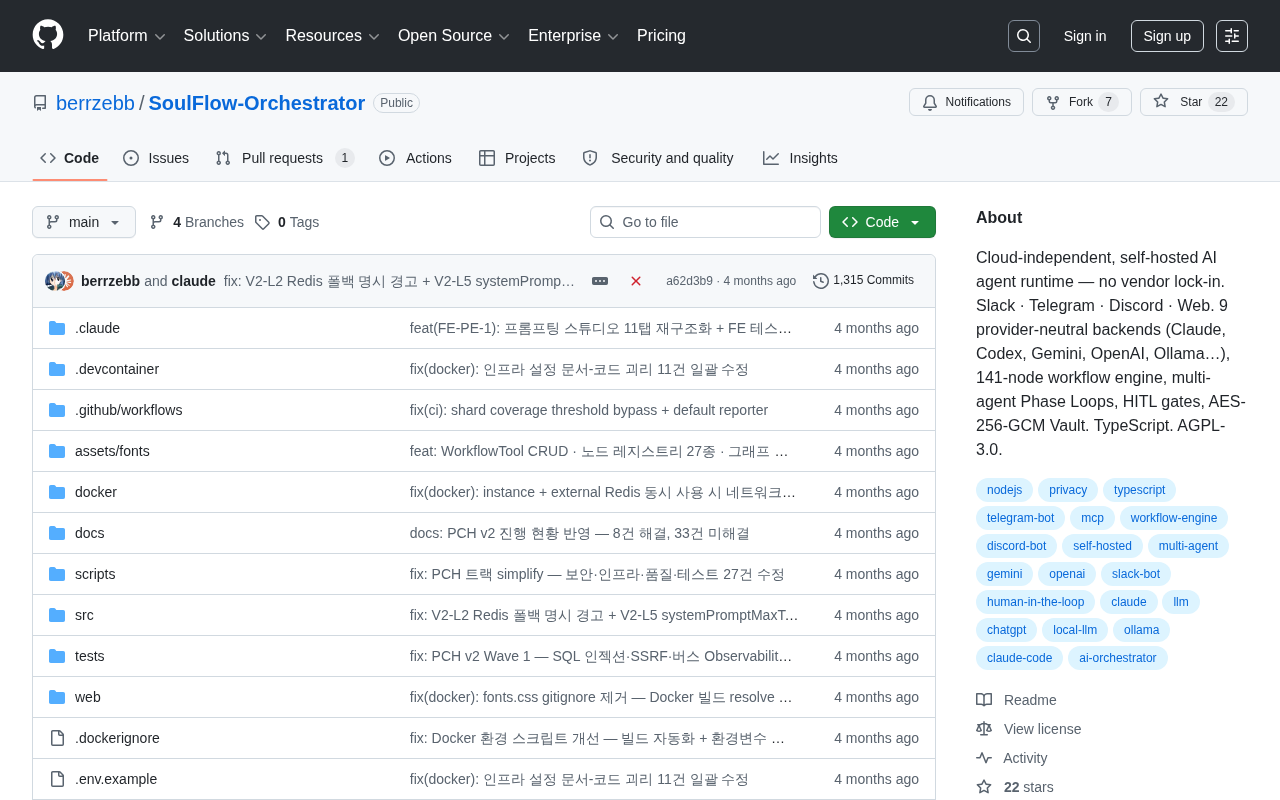
SoulFlow-Orchestrator: A Self-Hosted, Vendor-Lock-In-Free AI Agent Runtime
SoulFlow-Orchestrator is an open-source, self-hosted AI agent runtime with no vendor lock-in. Supports 9 neutral backends (Claude, OpenAI, Ollama), 141-node workflow engine, multi-agent loops, and HITL gates.
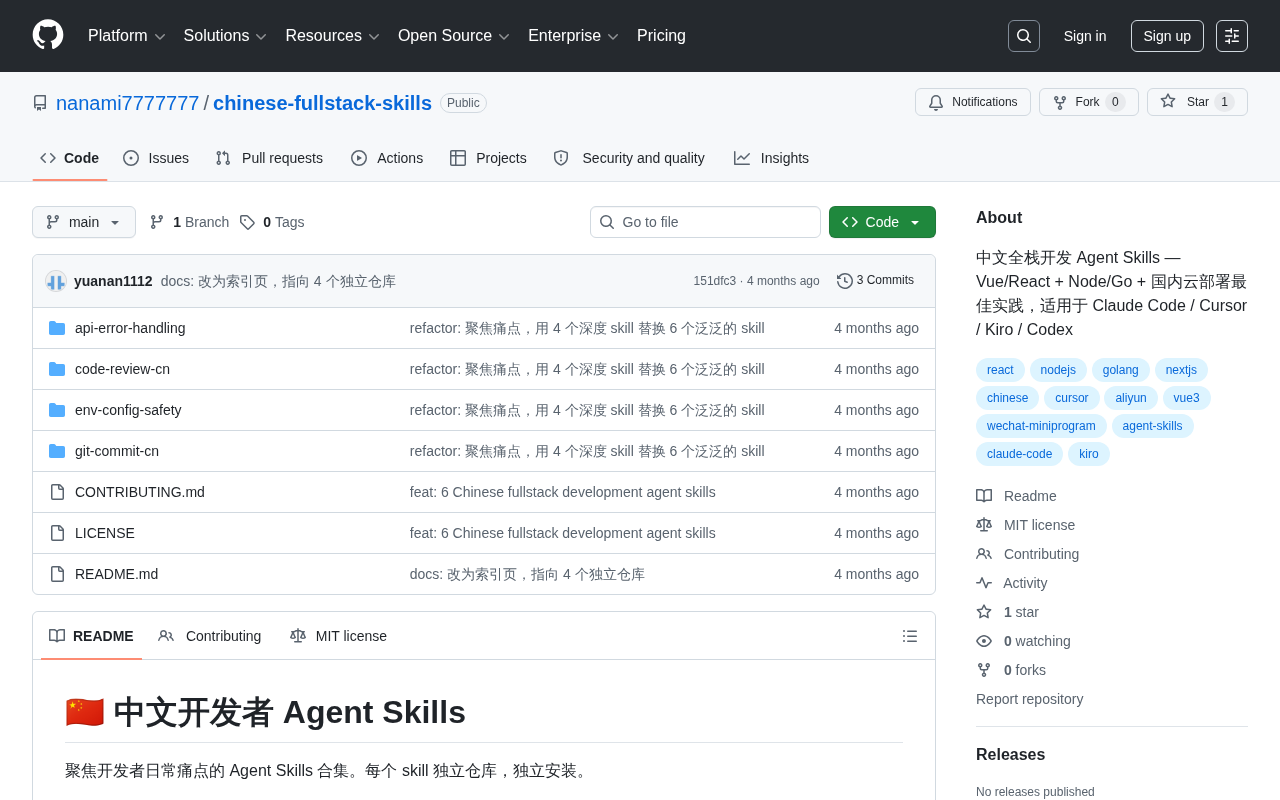
Chinese Full-Stack Agent Skills: A Skill Library Tailored for Domestic AI-Assisted Development
chinese-fullstack-skills is an Agent Skills library for Chinese full-stack development, covering Vue/React, Node/Go, and domestic cloud deployment best practices. Compatible with Claude Code, Cursor, Kiro, and Codex.
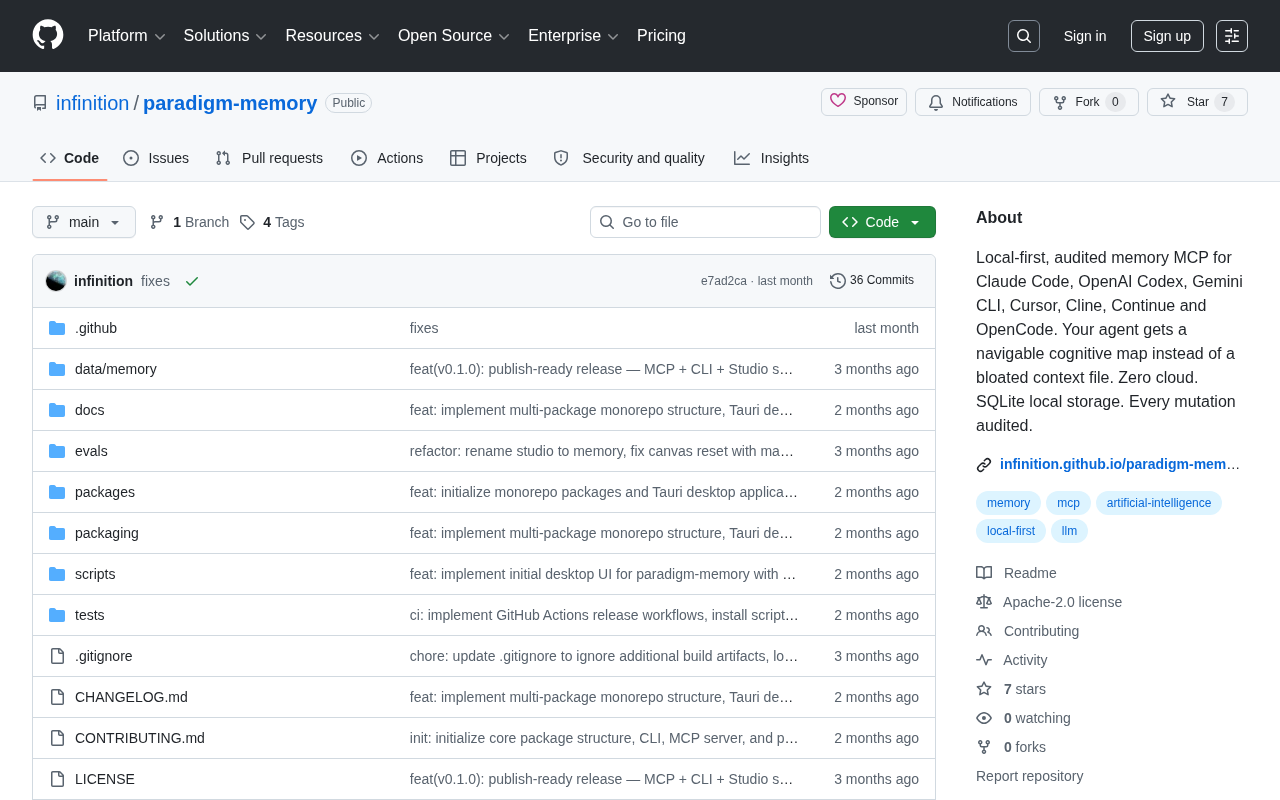
Paradigm Memory: A Local-First Memory System for AI Coding Assistants
paradigm-memory is a local MCP memory tool for Claude Code, Cursor, and Cline. It uses SQLite local storage, zero cloud, full audit trails, and a navigable cognitive map instead of bloated context files.