GLM-5.2 vs GPT-5.5: Solving the Mind Map Vertical Centering Problem — A Real-World Comparison

GPT-5.5 failed to fix a CSS vertical centering bug that GLM-5.2 solved easily — a case for multi-model dev workflows.
A real-world case where GPT-5.5 repeatedly failed to resolve a mind map component's vertical centering issue, while GLM-5.2 quickly delivered a working solution. The article explores why capability gaps exist between models — covering training data, RLHF preferences, prompt sensitivity, and architectural differences — and makes a practical argument for multi-model collaboration as a standard strategy for professional developers.
A Real-World Scenario That Sparked a Model Comparison
As AI-assisted programming tools become increasingly mainstream, developers are relying more heavily on large language models to generate code components. But a practical reality is emerging: no single model can solve every problem. Recently, a Bilibili content creator shared a telling case from real development work — a vertical centering issue in a mind map component that GPT-5.5 repeatedly failed to fix, but GLM-5.2 resolved with relative ease.
Though a small example, it reflects an important trend in how large models are being used today: multi-model collaboration is becoming a standard strategy for professional developers.
The Full Story
Building from Scratch with GPT-5.5
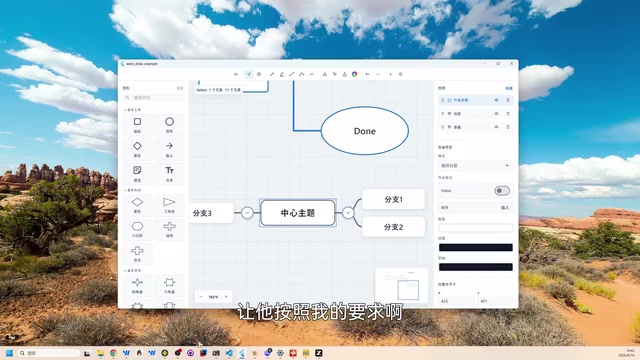
According to the creator's demo, they initially used GPT-5.5 to build a mind map component from scratch. GPT-5.5 performed quite well on the overall framework, completing the core component functionality as required. In terms of creative, zero-to-one construction, GPT-5.5 showed solid code generation capability.
Stuck on the Final Detail: Vertical Centering
The problem emerged during final polish. The creator wanted the mind map component to maintain vertical centering across different window states — whether minimized or maximized.
Technical Background: The Long-Standing CSS Vertical Centering Problem CSS vertical centering has historically been one of frontend development's classic challenges. The root cause lies in the design philosophy of the CSS box model — CSS was originally designed for document flow layout rather than application UI, making vertical dimension calculations far more complex than horizontal ones. Before Flexbox and Grid matured, developers typically resorted to non-semantic hacks like negative margins, absolute positioning with
top: 50%, ordisplay: table-cellto achieve vertical centering — all of which depend on a parent container with a fixed, explicit height and break down with dynamic sizing. Modern CSS approaches include Flexbox (display: flex; align-items: center; justify-content: center), CSS Grid (display: grid; place-items: center), and thetransform: translate(-50%, -50%)technique for absolutely positioned elements. In responsive scenarios, however, window resizing triggers browser layout reflow, and if the parent container's height isn't correctly declared via a completeheight: 100vhorheight: 100%inheritance chain, centering easily shifts during scaling. A more subtle trap: some JavaScript rendering frameworks (like React and Vue) dynamically insert DOM nodes after component mounting, and if the CSS centering approach conflicts with the timing of the component lifecycle, you get rendering that looks correct initially but misaligns after window resizing. This is precisely the core technical pain point that kept surfacing in this case — seemingly simple on the surface, but involving the compounded details of browser rendering mechanics, viewport unit semantics, and framework rendering timing.
According to the creator, the version generated by GPT-5.5 caused the component to shift position when the window was enlarged or reduced, failing to maintain stable centering. No matter how the prompt was rephrased or the requirements re-explained, GPT-5.5 couldn't truly solve the problem.
GLM-5.2 Breaks Through
An Effective Solution from a Precise Description
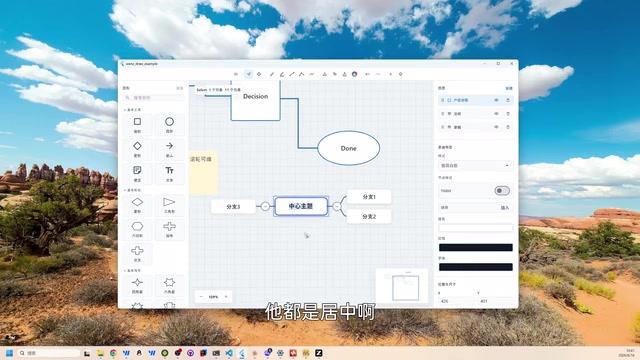
The turning point came when the creator switched to GLM-5.2. Presenting the same requirement — explicitly asking for the component to be "vertically centered" and to "adapt to vertical centering" — GLM-5.2 quickly produced an effective solution.

The improvement was clearly visible. During the demo, the creator double-clicked to toggle between window states, and the component remained stably centered whether minimized or maximized. While a very slight misalignment could still be detected on close inspection, it was described as "much better" compared to GPT-5.5's previous version.
Remaining Minor Issues
It's worth being objective: GLM-5.2's solution wasn't perfect. The creator noted the component currently "can't be selected," which appears to be a separate functional issue still requiring further optimization. This is a reminder that even a model that solves the core pain point may still leave room for improvement in other details.

Why Does This Capability Gap Exist?
Different Models Excel at Different Things: Training Data and Optimization Objectives
The most valuable insight from this case is that different large models have different capability profiles for specific tasks — and these differences don't always manifest as one model being universally "better," but rather as one being "better suited to the current scenario."
Differences in code generation capability across large models fundamentally stem from training data distribution, the annotation preferences embedded in Reinforcement Learning from Human Feedback (RLHF), and how well the model architecture adapts to specific domains. Modern large language models typically go through three training stages: pre-training, instruction fine-tuning, and RLHF. Pre-training determines what the model has "seen"; instruction fine-tuning shapes how it responds; and RLHF annotation preferences directly mold the model's "decision tendencies" when faced with ambiguous requirements. The GPT series is trained primarily on English internet data by OpenAI, with annotation teams dominated by native English-speaking developers, accumulating extensive optimization in logical reasoning and overall architectural design. The GLM series, developed by Zhipu AI at Tsinghua University, has been specifically reinforced on Chinese developer community corpora and domestic programming ecosystems — its RLHF annotation data includes a large volume of samples from real-world prompts by Chinese developers, potentially giving it finer-grained understanding of how domestic developers express their needs. Furthermore, standard code capability benchmarks (such as HumanEval, MBPP, and SWE-bench) tend to focus on algorithmic problem-solving and function-level completion rather than experience-driven frontend details like CSS layout — which means benchmark scores can't fully predict real-world performance. This is a concrete example of the "benchmark gaming" problem in practical applications.
GPT-5.5 excels at overall component construction and logical architecture, capable of completing complex components from zero to one; GLM-5.2 provided a more precise solution for this specific CSS layout and centering challenge. A model's capability boundaries are multi-dimensional — leading in one dimension doesn't mean it dominates across all specific scenarios.
Prompt-Model Match: The Deep Mechanics of Prompt Sensitivity
Another angle worth exploring is the match between prompt wording and model understanding. The creator candidly acknowledged that GPT-5.5's failure might partly be "because of how I described the problem."
This phenomenon is academically known as "Prompt Sensitivity." Research shows that prompts that are semantically similar but worded differently can produce dramatically different output quality from the same model. This is because large models are essentially performing probabilistic sampling in high-dimensional semantic space — specific phrases activate different "knowledge pathways" formed during training. From a technical standpoint, the Attention Mechanism in Transformer architectures assigns weights to each token in the input sequence; certain "trigger words" can significantly increase the activation probability of relevant knowledge neurons, a phenomenon researchers call "Context Window Bias." The Chinese phrase for "vertical centering adaptation" may precisely correspond to the token sequence of a high-quality CSS solution in GLM-5.2's training corpus, triggering more accurate code generation — while the equivalent English phrasing might produce similar results in GPT-5.5, but Chinese expression clearly has a "resonance advantage" in GLM. This also explains why Prompt Engineering is so critical in multi-model workflows: expressing the same requirement in different languages and at different levels of granularity often requires cross-validation across multiple models to find the optimal solution. The rise of techniques like Meta-Prompting and Chain-of-Thought Prompting in recent years represents developers' and researchers' systematic attempts to manage prompt sensitivity.
Multi-Model Collaboration: A Practical Strategy for Professional Developers
Just Try a Different Model — It Often Saves Significant Time
The creator's closing advice was refreshingly pragmatic: when one model can't solve a problem, just switch to another and try. This "multi-model combination" mindset is becoming a standard part of many professional developers' daily workflows.
Multi-Model Orchestration has become an important research direction in AI engineering, with a solid foundation in engineering practice. Major AI application frameworks like LangChain and LlamaIndex have built-in Model Routing mechanisms that automatically direct tasks to the most suitable model based on task type, complexity, and cost constraints. The Mixture of Experts (MoE) architectural concept is also beginning to extend from within individual models to the system level — different models play different "expert roles," with a scheduling layer dynamically selecting based on task characteristics. Internal evaluations at Anthropic, OpenAI, and other organizations have also shown that for complex engineering tasks, a "model combination" strategy outperforms any single best model on average — a finding that closely mirrors the classic conclusions of Ensemble Learning in traditional machine learning. From a cost perspective, multi-model collaboration also enables efficiency optimization: using lightweight models (such as GPT-4o-mini or GLM-4-Flash) for simple tasks and reserving high-compute flagship models for bottleneck situations strikes a balance between quality and cost — particularly valuable in production environments with high-frequency API calls.
Rather than spending large amounts of time iterating on prompts with one model, quickly switching to another to validate an approach is often far more efficient. Different models' training data and optimization priorities differ, and one model can often break through where another hits a wall.
Observations on GLM's Code Capabilities
The GLM (General Language Model) series is jointly developed by Tsinghua University's Knowledge Engineering Lab (KEG) and Zhipu AI, representing a notable fusion of Chinese academia and industry. Its technical approach differs from the purely Autoregressive architecture of the GPT series — early GLM used an innovative Autoregressive Blank Infilling pre-training objective, randomly masking text spans and requiring the model to fill them in autoregressively, deliberately balancing the bidirectional understanding of BERT-style models with the generative capabilities of GPT-style models. This architectural choice gives GLM a structural advantage in tasks requiring "understanding context before generating" (such as code completion and instruction following). With the GLM-4 series, Zhipu AI has made targeted improvements in code generation, Function Calling, long-context processing (supporting a 128K token context window), and multimodal capabilities — and has accumulated extensive alignment data from real programming scenarios through its large domestic developer user base, giving it a significant localization advantage when handling frontend, full-stack, and data engineering problems as described by Chinese developers.
This case indirectly supports that observation: on a specific problem that GPT-5.5 couldn't crack, GLM-5.2 provided a workable solution — at minimum demonstrating that domestic models have developed the ability to compete head-to-head with top-tier models on certain specific tasks.
Of course, maintaining perspective is equally important — this is a single developer's experience in a specific scenario, and it would be a stretch to conclude that GLM-5.2 comprehensively surpasses GPT-5.5. But it does provide a vivid empirical case for multi-model collaboration.
Conclusion
This seemingly minor vertical centering challenge actually distills the core wisdom of modern AI-assisted programming: there is no universal model, only the right combination. In real development work, rather than searching for the "strongest model," it's more effective to build a flexible multi-model collaborative workflow. When GPT hits a wall, let GLM take a shot — and vice versa. Leveraging each model's strengths in complementary ways is the real path to improved development efficiency.
Key Takeaways
- No model is universal: Differences in training data, optimization objectives, and architectural design determine each model's capability boundaries — no single model can cover all scenarios
- Prompt sensitivity is real: Different ways of expressing the same requirement will trigger dramatically different output quality across models; the match between language habits and training corpora matters significantly
- Multi-model collaboration is an engineering trend: Mainstream frameworks like LangChain have built model routing in as a core feature, and "model combination" strategies outperform any single best model on complex tasks
- Domestic large models have become competitive in specific scenarios: The GLM series, leveraging localized training data and its bidirectional architecture, demonstrates real-world capability that cannot be ignored in the frontend and full-stack scenarios commonly encountered by Chinese developers
- Benchmark scores ≠ real-world performance: Standard evaluations like HumanEval focus on algorithmic problems and cannot predict performance on experience-driven frontend tasks like CSS layout — cross-model validation in actual development is irreplaceable
Related articles

The Truth Behind Codex 'Build a Website in 5 Minutes': AI Isn't Creating Sites—It's Helping You Copy Them
Exposing the truth behind viral Codex 5-minute website videos: creators aren't building original sites with AI—they're copying shared prompts or scraping others' work. Learn AI coding tools' real limits.

Getting Started with AI Agent Development: A Complete Guide from Concept to Practice
A comprehensive guide to AI Agent architecture and development, covering automated marketing, intelligent customer service, and investment analysis scenarios with single and multi-agent collaboration.

The Truth Behind Codex 'Build a Website in 5 Minutes': AI Isn't Creating Sites — It's Helping You Copy Them
Exposing the truth behind viral Codex 5-minute website videos: creators aren't building original sites with AI — they're copying shared prompts or scraping others' work.