GM Shifts Toward Hybrids: From an All-Electric Bet to a Pragmatic Parallel Strategy
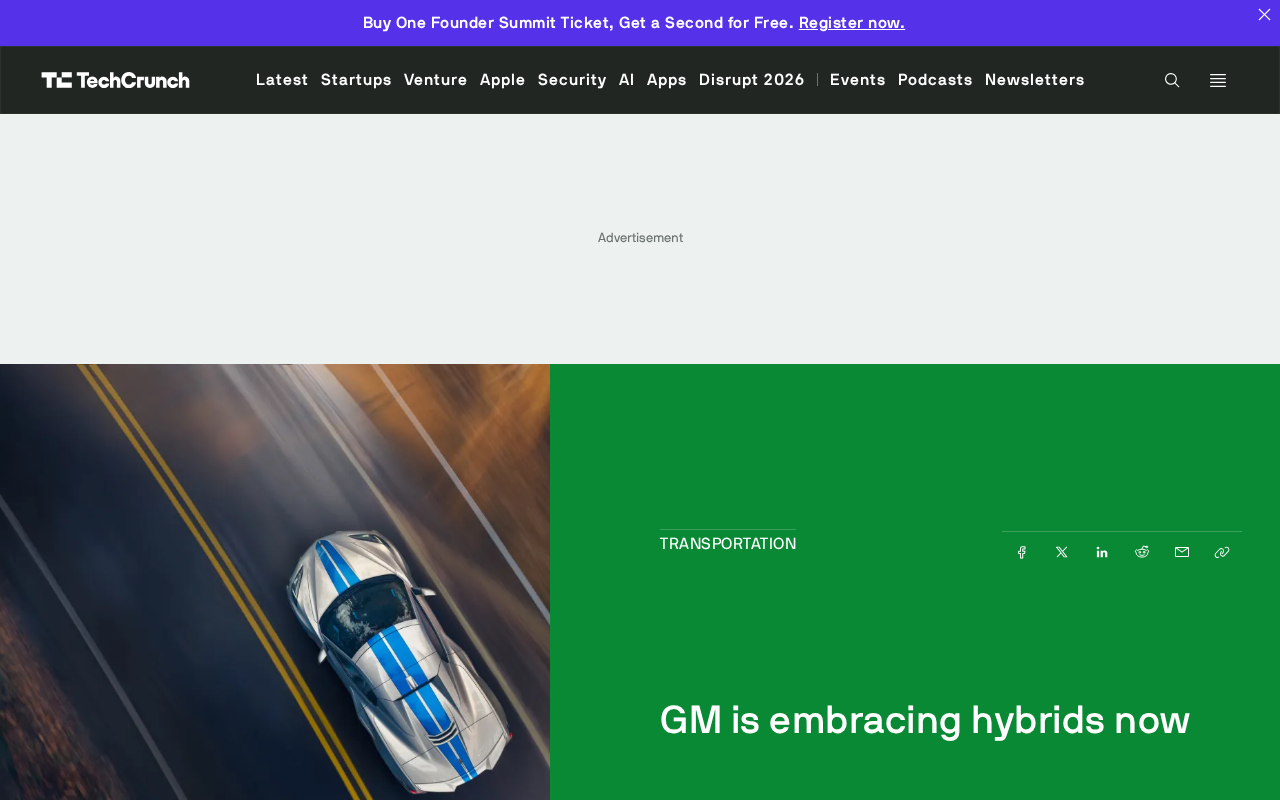
GM adds hybrid versions to its SUVs, shifting from a single all-electric path to parallel powertrains.
General Motors, which once downplayed hybrids and bet on pure EVs, is now preparing hybrid versions of its SUV lineup, a clear softening of its powertrain strategy. The shift stems from slower-than-expected EV demand growth and the maturity of hybrid cost and user experience. Choosing SUVs first leverages the most profitable segment and covers users worried about range and refueling, forming a parallel gasoline-hybrid-EV matrix. Hybrid pricing and rollout cadence bear watching.
General Motors (GM) once publicly downplayed the hybrid path, concentrating its resources on an all-electric bet. Latest reports indicate that the American automaker is preparing to offer hybrid versions of its SUV lineup, signaling a clear softening of its powertrain strategy.
From "Skipping Hybrids" to "Advancing in Parallel"
For some time, GM's public stance was to bypass the hybrid phase and head straight for pure electric. That judgment rested on optimistic expectations for falling battery costs and expanding charging infrastructure. Adding hybrid options to SUVs now amounts to an admission that the real-world pace has diverged from the original plan.
This is not an isolated case. The entire industry is reassessing the speed of the EV transition, and the value of hybrids as a transitional solution is being repriced. The core logic behind GM's move is to use hybrids to defend its sales base and profit sources during a window when EV demand growth has slowed.
Hybrid vehicles typically refer to models equipped with both an internal combustion engine and an electric drive system, with common forms including non-plug-in strong hybrids (HEV), plug-in hybrids (PHEV), and extended-range electric vehicles (EREV). Compared with pure EVs, hybrids retain a fuel tank and use smaller batteries, so they depend less on charging infrastructure and are easier to scale on existing production lines and supply chains. GM's earlier judgment to "skip hybrids" was based on the expectation that pure EVs would proliferate rapidly; when that pace slows, the economics of hybrids as a low-barrier transitional solution come to the fore again.
Why SUVs
GM's choice to roll out hybrids in SUVs first aligns with its product structure. SUVs are the most profitable segment in the U.S. market and the backbone of GM's sales and brand recognition. Offering hybrid versions in this category can both cover users concerned about range and refueling and avoid the price and charging-condition barriers of pure EVs.
From a product strategy perspective, hybrid versions can serve as a supplement to, rather than a replacement for, pure EVs, forming a product matrix of gasoline, hybrid, and pure electric in parallel so that users in different usage scenarios have corresponding choices.
Industry Signals Behind the Strategic Pivot
GM's adjustment reflects two industry-level changes. First, the EV penetration ramp is flatter than expected, and automakers need to maintain flexibility in capacity and channels; second, hybrid technology has matured enough in cost and user experience to support scaled rollout.
For GM, this means the investment and production-line plans previously built around pure EVs need to be rebalanced. The addition of hybrid models increases the complexity of the powertrain portfolio, but it also reduces the risk of dependence on a single technology path.
EV penetration typically refers to the share of new energy passenger vehicle sales in total passenger vehicle sales. Its ramp curve is not linear and often enters a "chasm" of slower growth after early adopters are saturated. Charging network density, battery costs, electricity prices, and subsidy phase-outs all affect this curve. Automakers adjust their product cadence accordingly: during a phase of flat penetration growth, hybrids can maintain factory utilization and dealer foot traffic while avoiding idle EV capacity. This is also the common backdrop against which several traditional automakers have brought hybrids back into their product plans.
Practical Impact on Consumers
For ordinary car buyers, the emergence of hybrid versions of GM SUVs expands their options. Users who are uneasy about charging infrastructure but want to reduce fuel consumption no longer have to choose between gasoline cars and pure EVs.
What bears watching is GM's pricing strategy and rollout cadence for hybrid models. If hybrid versions are priced close to gasoline cars, they will be highly competitive; if priced too high, they may repeat the pattern of some EV models that are well received but sell poorly.
For car buyers, the core difference between hybrids and pure EVs lies in usage scenarios: hybrids do not depend on home chargers, have no range anxiety on long trips, and consume less fuel than gasoline cars in the same class; pure EVs have lower energy costs and fewer maintenance items in daily commuting but require stable charging conditions. If hybrid versions are priced close to gasoline cars, their value for money mainly shows in fuel savings and stable resale value; if noticeably higher than gasoline versions, they will need to justify the premium through features and experience.
Conclusion
GM's shift from a single all-electric path to parallel hybrids is essentially a recalibration of market pace. This does not mean abandoning electrification goals, but rather keeping an extra lane on the road to electrification. For a traditional automaker of massive scale, pragmatism often outlasts radicalism through cycles.
One-line Summary
GM adds hybrid versions to its SUVs, shifting from a single all-electric path to parallel multiple powertrains.
Paragraph Summary
General Motors, which once publicly downplayed hybrids and concentrated resources on pure EVs, is now preparing to offer hybrid versions of its SUV lineup, a clear softening of its powertrain strategy. The article analyzes that this adjustment stems from slower-than-expected EV demand growth, while hybrids have matured enough in cost and user experience. SUVs were chosen for the first rollout because the segment is the most profitable and the backbone of sales and brand, and hybrids can cover users concerned about range and refueling. GM thus forms a product matrix of gasoline, hybrid, and pure electric in parallel, reducing dependence on a single technology path. The article also flags the need to watch hybrid pricing and rollout cadence: pricing close to gasoline cars is more competitive, while too high a price could repeat the pattern of some EV models that are well received but sell poorly.
Related articles

One Year of Dioxus Fullstack in Production: Gains and Pain Points
A developer shares a year of real-world experience running the Dioxus fullstack framework in production, covering type-safety gains in fullstack Rust, plus pain points like compile times and ecosystem maturity, as a reference for technology selection.

The Hidden Faith of AGI Leaders: Humans Are Nothing Special?
Vergecast podcast reveals the hidden belief within AGI leadership circles: humans are nothing special, consciousness is just computation. Exploring how computational functionalism shapes the worldview of tech elites and the future of AI.

Self-Hosting LangGraph: Multi-Worker Coordination and Crash Recovery Challenges
How to design leases, heartbeats, fencing tokens, and crash recovery for self-hosted LangGraph multi-worker setups to prevent stale checkpoint writes.