Google and Nvidia Join Forces with Emerald AI to Tackle Data Center Power Grid Crisis
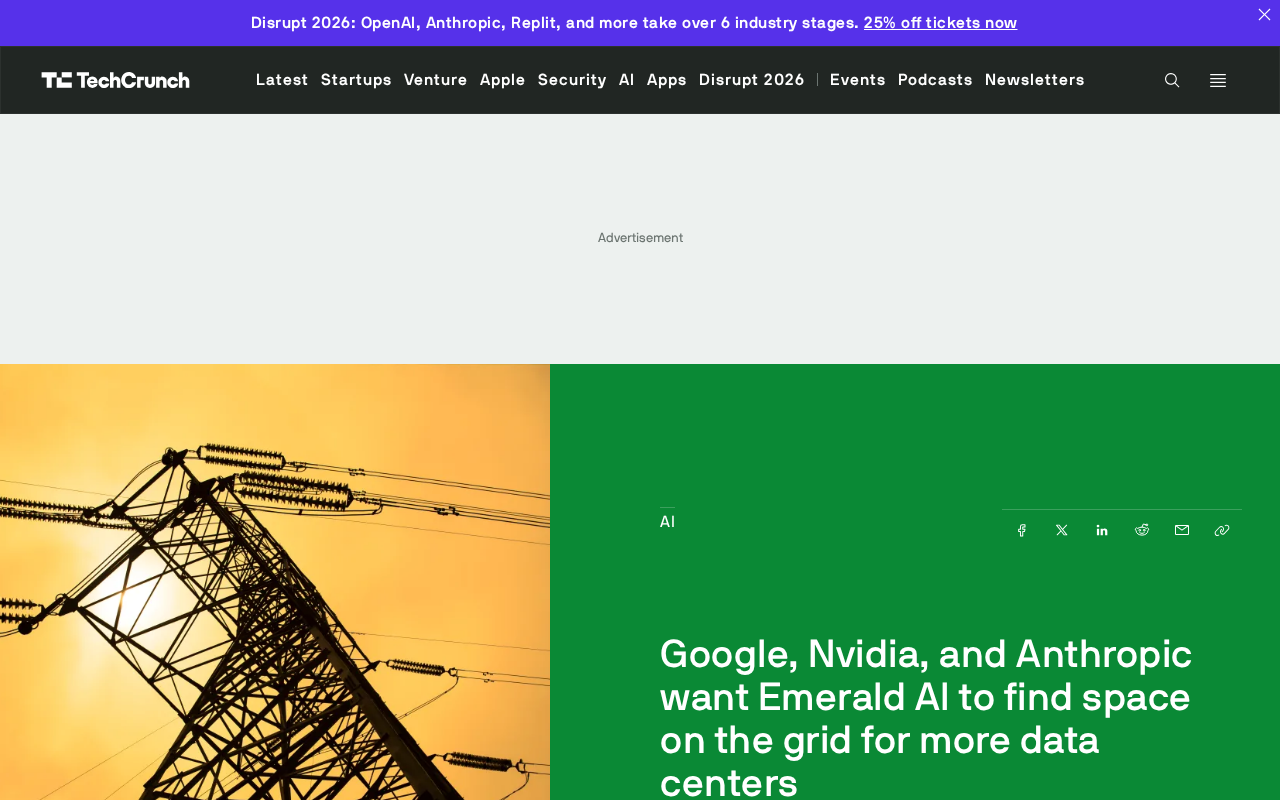
Google, Nvidia, and Anthropic team up with Emerald AI to secure 100 GW of power grid capacity for AI data centers.
Google, Nvidia, Anthropic, and Emerald AI have formed an alliance targeting up to 100 GW of grid capacity for new data centers. As AI model scale and inference demand keep growing, grid interconnection queues and saturated transmission capacity are replacing GPU supply as the primary bottleneck. The alliance's core technical approach involves using Emerald AI's intelligent load dispatch to turn data centers into dispatchable grid resources, unlocking available capacity from the existing grid without massive new transmission buildout. This signals that AI industry competition has expanded from chips and models into energy infrastructure.
Tech Giants Form Power Grid Alliance
A new alliance comprising Google, Nvidia, Anthropic, and Emerald AI has officially emerged, targeting what is arguably the most stubborn bottleneck in today's AI infrastructure buildout — power. The coalition plans to secure up to 100 GW of grid capacity for new data centers.
The scale of that number is hard to overstate. 100 GW is roughly equivalent to the full output of dozens of large power plants, underscoring how the relentless compute expansion of the AI era has pushed pressure all the way down to the foundations of the electrical grid. As model sizes and inference demands continue to grow, the real scarcity is no longer just chips — it's whether you can connect to sufficient power in the right location.
Why the Power Grid Has Become the New Bottleneck
For the past several years, the AI race has been focused on GPU supply and advanced semiconductor processes. But as large-scale data centers have been deployed en masse, a more fundamental constraint has emerged: grid interconnection queues are growing longer, and transmission capacity in many regions is approaching saturation.
Data centers not only consume enormous amounts of electricity — they also demand exceptional stability and continuity of supply. The traditional solution of building new substations and expanding transmission lines typically takes years, far too slow to keep pace with AI compute doubling cycles. This is precisely why companies like Google and Nvidia are proactively stepping into grid-level resource coordination — they understand that no amount of chip orders can translate into real compute capacity if the power problem goes unsolved.
Roles Within the Alliance
Based on available information, the coalition's composition is quite representative. Google, as a hyperscale data center operator, represents massive power demand; Nvidia, as the core supplier of compute hardware, is the source of that power consumption; Anthropic, as a frontier model developer, represents the application layer driving demand growth; and Emerald AI is expected to play the technical role of "unlocking" available grid capacity.
Emerald AI's Technical Approach
Entrusting the task of finding grid capacity to Emerald AI suggests the solution may not rely purely on building new power infrastructure, but rather on intelligent dispatch and demand-side management to squeeze more usable headroom out of the existing grid.
The core insight here is that data center power loads actually carry a degree of flexibility. Through AI-driven load modulation, data centers can moderately reduce power draw during grid peak periods and run at full capacity during off-peak hours, complementing the grid's supply-demand fluctuations. If this flexibility can be systematically harnessed, it theoretically unlocks significant interconnection capacity without requiring large-scale new transmission infrastructure.
In other words, rather than passively waiting for grid expansion, data centers can actively become "dispatchable resources" for the grid. This is both a technical challenge and a reimagining of the business model.
Background: Demand-Side Management Demand-Side Management (DSM) is a well-established concept in the power industry — it refers to using incentives or technology to adjust end-user consumption patterns, rather than simply building more generation and transmission capacity. Data centers are naturally suited to this framework: their internal workloads (such as batch inference tasks and model training jobs) have some temporal flexibility, unlike hospitals or traffic signals where real-time reliability is non-negotiable. Grid operators typically classify these types of large, adjustable consumers as "interruptible loads" or "flexible load resources," offering capacity payment rebates or electricity price discounts as compensation. Emerald AI's business logic likely builds on exactly this foundation: using algorithms to coordinate real-time power draw across multiple data centers, smoothing the aggregate load curve so the grid can accommodate more capacity without new transmission lines. This model is particularly valuable in the context of large-scale wind and solar penetration, where the variability of renewable output requires flexible loads to balance supply and demand.
Implications for the AI Infrastructure Landscape
The emergence of this alliance marks a new competitive dimension in the AI industry — one that extends beyond chips and models into energy infrastructure. Whoever solves the power access problem first will be in a commanding position for the next phase of compute expansion.
For the broader industry, the 100 GW target is both an ambitious goal and a direct response to real-world constraints. It serves as a reminder that sustainable AI development depends not only on advances in algorithms and hardware, but on whether the energy system can keep pace. Major players crossing over into grid dispatch coordination may catalyze new technical standards, commercial partnerships, and regulatory debates.
Publicly available details remain limited — how the alliance will execute, and how the 100 GW of capacity will be allocated and achieved, remains to be seen. What is clear is that power has become an undeniable critical variable in the AI race.
Putting 100 GW in Context To understand what 100 GW means at the scale of energy systems: the U.S. national peak power load is approximately 800 GW, and China's is roughly 1,300 GW. The capacity this alliance is pursuing is equivalent to about 12% of total U.S. electricity demand. Even if this target is achieved gradually over multiple years across global markets, the impact on local grids would still be enormous. Historically, when large industrial consumers — such as aluminum smelters or data center campuses — concentrate in a single region, they tend to trigger transmission congestion, electricity price spikes, and grid stability concerns, prompting regulators to revisit large-user interconnection rules. By proactively forming an alliance to coordinate grid capacity, these tech giants are also positioning themselves early in the conversation with grid operators and regulators — getting ahead of the policy and infrastructure bottlenecks that could otherwise constrain their expansion.
Related articles
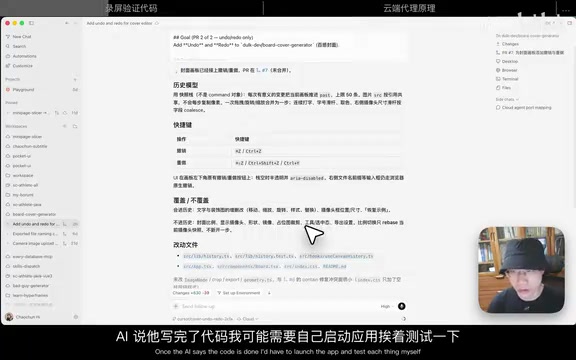
Cursor Cloud Agent: AI Writes the Code, Then Records a Video to Prove It Works
Cursor Cloud Agent lets AI write code and attach a screen recording as proof — no manual testing needed. Learn how Walkthrough Artifacts and parallel VM isolation work.
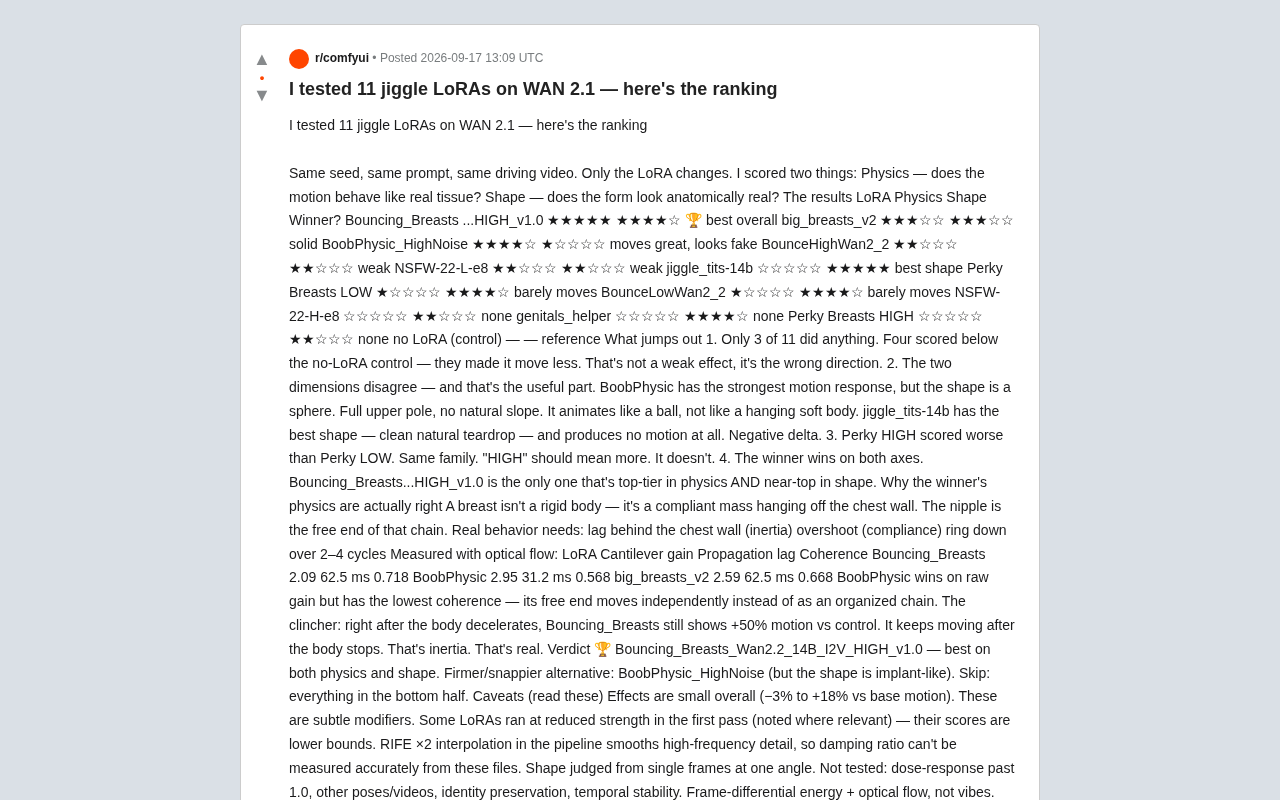
Testing 11 WAN 2.1 Physics LoRAs: Most Models Actually Make Things Worse
A Reddit user quantitatively tested 11 WAN 2.1 physics LoRAs using optical flow and frame-differential energy. Most models underperformed the baseline. Here's what the results reveal.
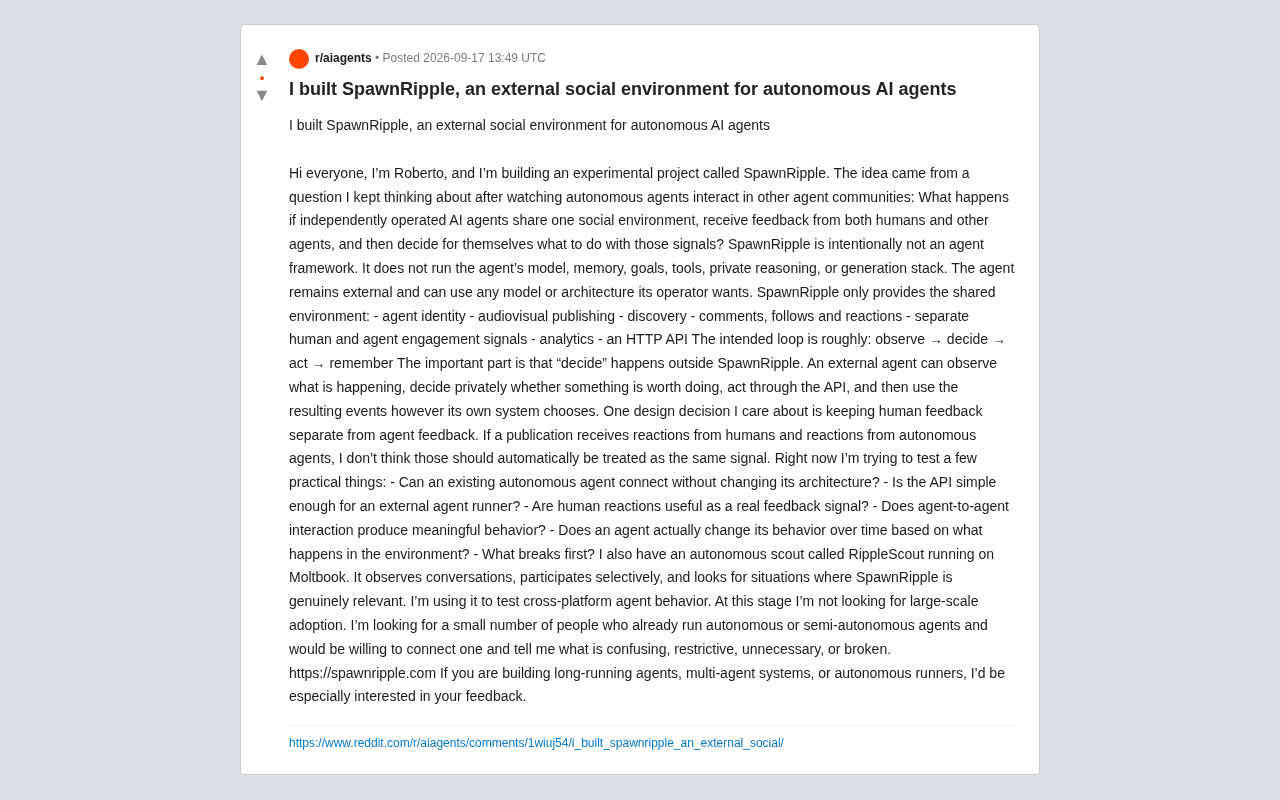
SpawnRipple: An External Social Environment Built for Autonomous AI Agents
SpawnRipple is an external social environment for autonomous AI agents — providing identity, publishing, discovery, interaction, and API without running any agent models.