Google DeepMind RSI Leak: Has the Era of AI Training AI Arrived?

DeepMind RSI leak, Kimi K2.8 efficiency gains, and the Astra "downgrade" explained.
This article covers several major recent AI developments. The biggest story is a leak suggesting Google DeepMind may have internally achieved Recursive Self-Improvement (RSI) — AI systems automatically evaluating and training the next generation of models — though it remains unconfirmed from a single source. Moonshot AI quietly released Kimi K2.8 Code preview, offering K3-level performance with more efficient reasoning, 1M token context, and multimodal input. OpenAI clarified that GPT-6 Astra's apparent regression stemmed from legacy skill file over-triggering, a context management experiment, and an inference engine misconfiguration affecting ~5,000 users, fixed within 36 hours with credit compensation for all paid users.
A major rumor has been making the rounds in the AI community: Google DeepMind may have internally achieved RSI (Recursive Self-Improvement) — enabling AI systems to autonomously evaluate, train, and iterate on the next generation of models. Meanwhile, Moonshot AI quietly released a preview of Kimi K2.8 Code, and OpenAI responded to accusations that GPT-6 Astra had been quietly downgraded. This article breaks down each story and clarifies what's confirmed versus what remains speculation.
Google DeepMind's RSI Rumor: Training the Trainer
The most attention-grabbing leak points to Google potentially having achieved some form of recursive self-improvement. The core of the story comes from a source named Lyra, who reportedly discovered a checkpoint configuration labeled "RSI Model" in internal records on Google's Vertex platform.
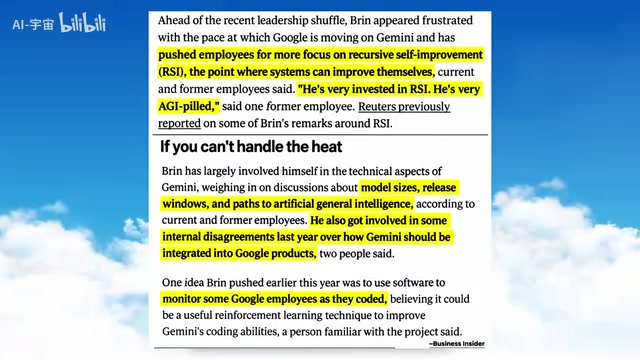
The concept of RSI isn't complicated, but its implications are vast: AI agents continuously improve their own capabilities through cyclic automated evaluation and retraining — essentially "using AI to build smarter AI." One piece of evidence the leaker cited is the pace of releases — Gemini 3.7 and 3.8 reportedly shipped within about a month of each other, with Flash-class models iterating at an unusually rapid clip, consistent with the hypothesis of an internal automated training loop.
On the organizational side, there are also reports that Sergey Brin is heavily directing resources toward RSI research, while Demis Hassabis is focused entirely on AGI. Google has reportedly been treating RSI as part of its broader investment thesis. If accurate, Google may not just be training the next frontier model — it may be training systems that can train models themselves.
It bears emphasizing: none of this has been officially confirmed. It remains in the realm of leaks and speculation. But if an internal feedback loop is genuinely running, the anticipated Gemini 4 could bring capability leaps beyond what anyone currently expects. This may also be the card Google plays to turn the tide in the current competitive race.
The theoretical roots of RSI (Recursive Self-Improvement) trace back to AI safety pioneer Eliezer Yudkowsky's writings in the early 2000s. The core logic: once an AI system can understand and improve its own training process, the pace of improvement could accelerate exponentially — a so-called "intelligence explosion." Unlike traditional human-supervised training, an RSI system could theoretically generate training data, evaluate model output quality, tune hyperparameters, and kick off the next training run entirely automatically, with no human engineers in the loop. Current discussions in the AI community lean toward "weak RSI" — using AI to help generate synthetic training data or automatically optimize prompts — rather than fully autonomous capability leaps. If the leaked "RSI Model" checkpoint is real, it likely falls into this more moderate technical path. But the potential impact is still profound: automated training loops could dramatically reduce R&D costs while enabling model iteration rates far beyond what human effort alone can sustain.
Kimi K2.8 Code: A Smaller Version Number, Far More Efficient Reasoning
Moonshot AI's Kimi K2.8 preview quietly surfaced in Kimi Code with almost no advance notice. According to the documentation, K2.8 performs at the same level as K3 but reportedly features significantly more efficient reasoning, along with support for a 1-million-token context window, image and video input, and low, high, and max reasoning modes.
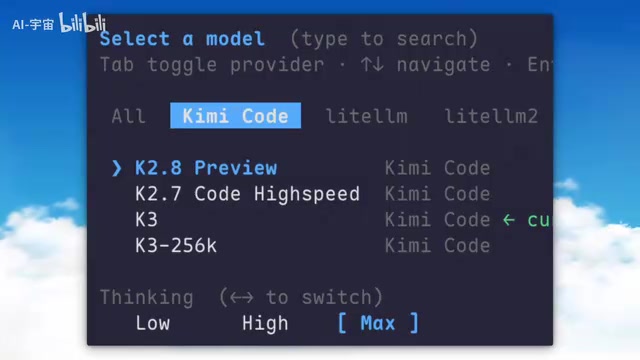
Kimi K3 is widely recognized as one of the best open-source models available, but it has a notable weakness: it takes far too long to think per request, frequently "over-thinking" even simple tasks — a real hit to practical usability. If K2.8 can deliver K3-level output quality while dramatically improving inference speed, its practical value will be meaningfully higher.
One intriguing detail is the naming logic — a "step back" from K3 to K2.8. Releasing a newer, more efficient model under a smaller version number is unusual in the industry; it may be Moonshot AI's way of signaling that this is an efficiency-focused branch rather than a straightforward capability upgrade. Users subscribed to the Kimi coding plan can already access the model within that plan.
GPT-6 Astra "Downgraded"? The Truth and the Misconceptions
On the OpenAI side, a controversy erupted around GPT-6 Astra. Community members used identical prompts and reasoning settings to compare Astra's outputs from launch versus more recent generations, finding that the newer version rendered complex 3D scenes in a noticeably flatter, more "synthetic" style with reduced realism and sharpness. This immediately sparked accusations that the frontier lab had quietly nerfed the model after the initial hype died down.
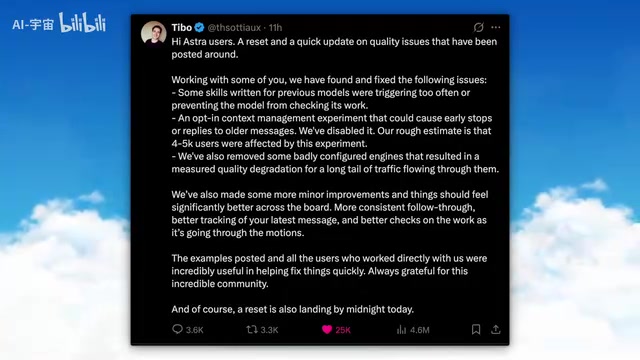
After investigating feedback on X, OpenAI's explanation was that the model itself was not downgraded — the regression stemmed from several technical issues. First, legacy skill files built for older models were triggering too frequently, sometimes preventing Astra from checking its own work. Second, an opt-in context management experiment was causing responses to terminate prematurely or reply to stale messages. Most critically, a misconfiguration in the inference engine caused a measurable quality drop for a portion of Astra traffic.
Reports indicate only about five thousand users were actually affected, not everyone. OpenAI pushed a fix within roughly 24 to 36 hours, disabling the problematic configuration and fine-tuning Astra to be more stable and better at self-checking. As compensation, the company also reset credits for all paid plan users, giving them a full week of continued Astra access. This kind of responsive, "we heard you" turnaround is genuinely worth acknowledging from a user experience standpoint.
This incident reflects the broader "model degradation" controversy that commonly follows AI product launches. Because the inference pipelines of large language models and generative AI systems are enormously complex, any backend configuration change — including load balancing strategy, caching mechanisms, A/B test experiments, or infrastructure migrations — can produce perceptible quality fluctuations on the user side, which users naturally interpret as the model being "quietly nerfed." This kind of misreading isn't without precedent: OpenAI previously faced intense scrutiny after GPT-4 appeared to users to have declined in capability following updates, and acknowledged in late 2023 that certain optimizations had been made to reduce inference costs. Distinguishing between "the model weights themselves were changed" and "sporadic degradation caused by infrastructure misconfiguration" is critical when assessing a lab's integrity. OpenAI's handling of the Astra incident — publicly acknowledging the configuration error, clarifying the scope of impact, quickly rolling back, and compensating users — was relatively transparent by industry standards.
Other News: Dario's Call and GPT Live 1
Anthropic CEO Dario published a post calling on the AI industry to slow down frontier development, proposing a three-part plan in which Anthropic commits to allowing third-party evaluators to continuously monitor safety and alignment. Interestingly, Dario himself is simultaneously extremely bullish on AI — he believes AI can cure most major diseases, drive economic growth, and create a world of abundance within five to ten years. The combination of being deeply optimistic while simultaneously calling for the brakes to be applied strikes many as contradictory, and has prompted discussion about his underlying motivations.
Separately, OpenAI launched GPT Live 1 via API, giving developers access to natural voice conversation capabilities similar to ChatGPT. The headline feature is that voice agents can now "listen while speaking" — like Gemini Live — so neither party has to wait for the other to finish, making conversations feel far more natural. Developers can also combine GPT Live 1 with models and agent frameworks of their choice, which is a significant upgrade for teams building voice assistants and voice applications.
Takeaway: Leaks Are Leaks — Verification Still Takes Time
Among this wave of news, the GPT-6 Astra fix and the Kimi K2.8 release are well-documented developments. Google DeepMind's RSI, however, remains at the level of a single-source leak and warrants healthy skepticism. The signal truly worth watching is this: if AI genuinely begins to effectively "train AI," both the pace of model iteration and the capability curve could be fundamentally rewritten. Until Gemini 4 officially debuts, the truth behind these rumors will have to wait.
Related articles
Automattic Executives Signed Reciprocal Severance Agreements During Mullenweg's Brief Ouster
Automattic's CFO and General Counsel signed reciprocal severance agreements during Matt Mullenweg's brief ouster, covering one year's salary and accelerated equity vesting, raising corporate governance concerns.
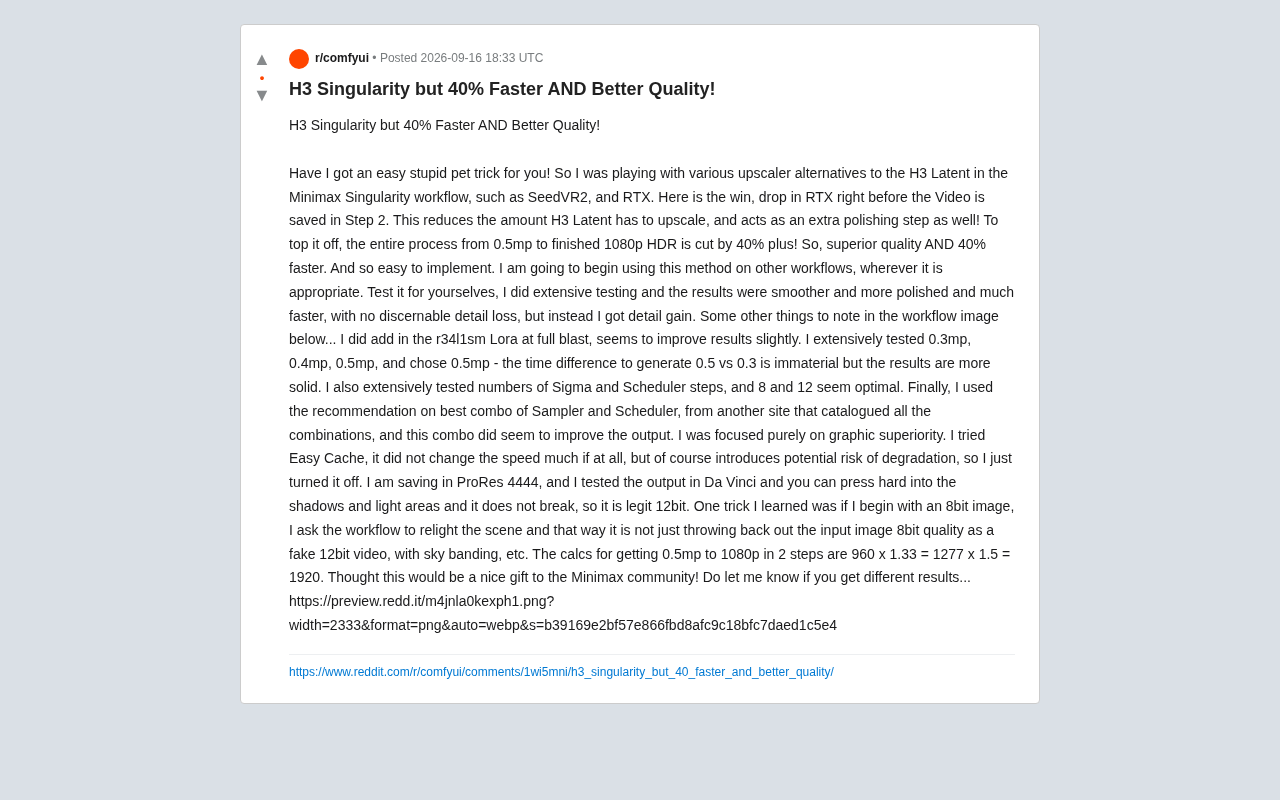
H3 Singularity Optimization: 40% Speed Boost With Better Image Quality
A Reddit user's Minimax Singularity workflow tip: insert an RTX upsampler before H3 Latent for 40%+ speed gains and better quality. Covers parameters, 12-bit output, and more.
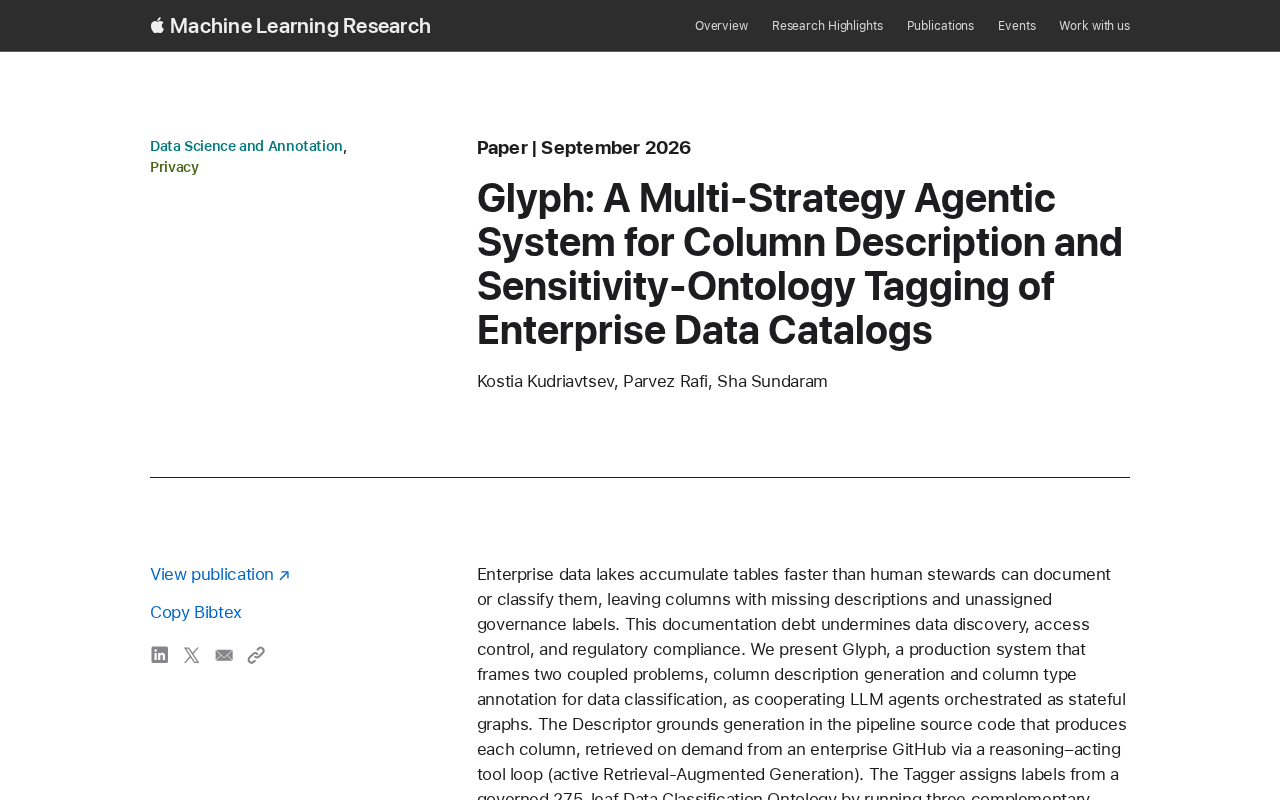
Glyph: A Multi-Strategy Agent System for Automated Enterprise Data Catalog Annotation
Glyph is a multi-strategy LLM agent system for enterprise data catalogs that automates column description generation and sensitivity ontology tagging, grounding outputs in pipeline source code to improve accuracy.