Google Expands AI Chip Lineup: Two New Purpose-Built TPUs Target Confidential Training and Larger Memory

Google launches two new TPUs targeting confidential training and larger memory capacity
Google has launched two new TPUs—one focused on confidential model training, the other on larger memory capacity—extending its self-designed AI chips into more segmented scenarios. Confidential training emphasizes hardware-level isolation so sensitive data isn't exposed in plaintext on the cloud; larger memory addresses bandwidth and capacity bottlenecks from growing model parameters. This continues Google's integrated chip-cloud-model strategy and shows AI hardware competition shifting from raw compute to scenario fit. Specs, timing, and pricing remain undisclosed.
Google's TPU Family Welcomes New Members
Google is adding to its lineup of self-designed AI chips. According to RSS sources, Google has launched two new Tensor Processing Units (TPUs), extending its chip portfolio to cover more use cases—one focused on confidential model training, the other emphasizing larger memory capacity.
This move continues Google's approach of entering the AI compute market with purpose-built hardware. Unlike general-purpose GPUs, TPUs are chips custom-designed by Google for machine learning workloads, and their positioning is now expanding from a single training accelerator into more finely segmented scenarios.
TPU (Tensor Processing Unit) is a custom application-specific integrated circuit (ASIC) first unveiled by Google in 2015, designed specifically for the matrix multiplication and tensor operations that appear in large numbers in neural networks. Compared with general-purpose GPUs, TPUs sacrifice some versatility in exchange for higher energy efficiency and lower cost per unit of compute on specific machine learning workloads. TPUs have evolved through multiple generations—early versions were mainly used for internal Google inference tasks such as search and translation, later gradually supporting training, and are now offered externally as a cloud service through Google Cloud. Understanding the purpose-built nature of TPUs helps clarify the logic behind this scenario-based splitting of the product line.
What Each of the Two Chips Solves
Confidential Training: Pushing Privacy Protection Down to the Hardware Layer
One of the new TPUs targets confidential model training. The core requirement in such scenarios is that even when running on shared cloud infrastructure, training data and model parameters should be protected by hardware-level isolation. For enterprise customers, this means sensitive data need not be exposed in plaintext to the cloud provider's systems during training, significantly reducing compliance pressure.
Confidential Computing is a security technology paradigm based on hardware trusted execution environments (TEEs). Its core idea is to carve out an encrypted isolated region within a CPU or accelerator so that data remains encrypted even "in use," rather than only during storage and transmission. Common implementations include Intel SGX/TDX, AMD SEV, and Arm's Confidential Compute Architecture. Extending this mechanism to AI accelerators requires solving issues such as memory encryption, remote attestation, and performance overhead. Confidential training applies this approach to the entire model training process, ensuring that even the cloud provider itself cannot peer into tenant data—particularly critical for strongly regulated industries such as finance and healthcare.
Larger Memory: Easing the Bottleneck of Model Size Growth
The other chip focuses on larger memory capacity. As model parameter scales continue to climb, memory bandwidth and capacity often become bottlenecks earlier than compute. Expanding per-chip memory allows larger models to reside on-chip or closer to compute units, reducing data movement overhead and directly helping both inference and training efficiency.
In AI chips, memory capacity and memory bandwidth are often the key factors determining actual performance, not just peak compute. Model parameters, activations, and optimizer states all consume memory space; the larger the parameter scale, the more limited the model size a single chip can accommodate—otherwise the model must be split across chips with frequent communication. High Bandwidth Memory (HBM) stacks DRAM and packages it close to compute units, significantly boosting bandwidth and reducing the energy cost of data movement, making it the mainstream choice for current AI accelerators. Expanding per-chip memory capacity reduces off-chip memory access and cross-device communication, thereby improving inference throughput and training efficiency.
Google's Hardware Strategy
Google is one of the few vendors that simultaneously designs its own chips, operates its own cloud platform, and develops its own models. TPUs originally served internal workloads and were later offered externally through Google Cloud. This scenario-based splitting of the product line signals that competition in AI hardware has shifted from "whose compute is stronger" to "who better fits specific scenarios."
From an industry perspective, cloud providers' motivation for designing their own chips is clear—reducing dependence on third-party GPU supply while gaining initiative in cost and energy efficiency. The two directions of confidential training and larger memory happen to correspond to two major pain points for enterprise customers: security compliance and large-model deployment.
Cloud providers designing their own AI chips has become an industry trend: AWS launched Trainium and Inferentia, Microsoft released the Maia series, and Meta is advancing MTIA. Their common motivation is to reduce single reliance on NVIDIA GPUs, control procurement costs, and optimize hardware-software co-design for their own cloud workloads. But the success of self-designed chips depends not only on the hardware itself but also on the maturity of supporting compilers, frameworks, and developer ecosystems. The reason TPUs have achieved some external influence is closely tied to their early start and open availability on the cloud—a key dimension for judging whether these new products can gain traction.
Points Worth Watching
The original report did not disclose the specific specs, availability timeline, or pricing of the new chips, and their actual performance remains to be verified through subsequent testing. For developers, what's more worth noting is when these purpose-built capabilities will be opened through Google Cloud, and whether a supporting software stack will accompany them.
Competition in AI chips is entering a segmentation phase. Whether specialization can deliver real cost-performance advantages will be the most important variable to watch next.
One-line Summary
Google launches two new TPUs, targeting confidential training and larger memory capacity respectively
Paragraph Summary
Google has launched two new Tensor Processing Units (TPUs)—one focused on confidential model training and the other emphasizing larger memory capacity—extending its self-designed AI chips into more finely segmented scenarios. The confidential training direction emphasizes hardware-level isolation so that sensitive data and model parameters are not exposed in plaintext during cloud training; the larger memory direction addresses the memory bandwidth and capacity bottlenecks caused by growing model parameters, reducing data movement overhead. The article notes that this continues Google's integrated strategy of designing its own chips, operating its own cloud platform, and developing its own models, and reflects that AI hardware competition is shifting from pure compute comparisons to fitting specific scenarios. However, the specs, launch timing, and pricing of the new chips have not yet been disclosed, and their actual performance and cloud availability cadence remain to be seen.
Related articles

The 1.5 Million AI GPU Smuggling Mystery: The Chip Undercurrent Behind Jensen Huang's Departure
A Hacker News post speculates that the smuggling of 1.5 million AI GPUs caused Jensen Huang's departure, but lacks any sources or evidence. This article analyzes the magnitude doubts, the logical flaws in attributing executive changes, and the proliferation of rumors in the geopolitical context of AI chips, reminding readers to rely on verifiable signals.
Anthropic Model Benchmarking: Fable 5 vs 5.1 vs 5.2 Comparison
Based on Reddit community comparison material, this analyzes benchmark differences among Anthropic models Fable 5, 5.1, and 5.2, and discusses the practical implications of version iterations for developers and model selection advice.
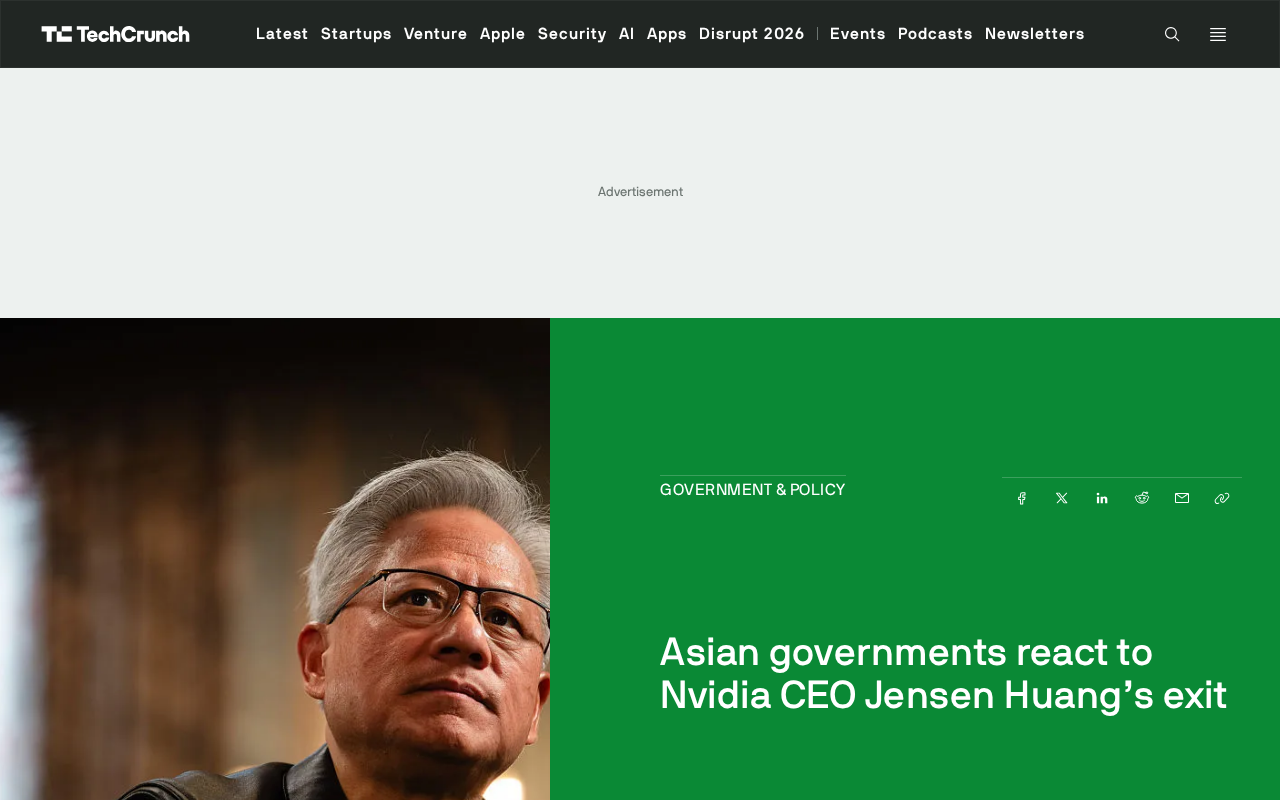
Jensen Huang Steps Down as Nvidia CEO, Asian Governments Scramble to Respond to Chip Supply Shifts
Jensen Huang's departure as Nvidia CEO triggers chain reactions across Asian governments: some confirm chip supply commitments, others monitor local AI project impacts and handle related investigations. This article analyzes supply chain stability, project risks, and compliance uncertainty.