Google Genie 4 Released: A Real-Time Generative Interactive World Model

Google releases the Genie 4 world model, generating real-time controllable audiovisual scenes in seconds.
Google officially releases the world model Genie 4, calling it the most realistic and interactive world model to date. Its key leap compresses "generating a world" and "manipulating it in real time" into one interaction loop: users give a prompt, enter the scene within seconds with full character control, and can move the camera and adjust details with the world changing in real time. Genie 4 turns static images into dynamic explorable environments with ambient sound, unifying visuals, sound, and interaction as "audible, visible, and shapeable." Beyond entertainment, Google highlights its use for robots practicing tasks in virtual environments to prepare for physical deployment, though the sim-to-real gap still needs empirical validation. Overall, the world model race is accelerating, and changes in interaction paradigms and content creation barriers are worth watching.
Google has officially released the world model Genie 4, which the company calls "the most realistic and interactive world model to date." Compared with the previous generation, Genie 4's key leap lies in compressing "generating a world" and "manipulating that world in real time" into a single interaction loop—you describe a scene, and seconds later you're inside it, able to play and modify as you go.
From Description to World: Entering a Controllable Scene in Seconds
Genie 4's core capability is "building environments and simulating worlds on command." Users provide a prompt, the model works out what happens next on its own, and then lets users explore and reshape the scene in real time.
According to the official demo, a simple description of an interactive experience becomes an enterable scene within seconds, with users having full control over the character. This means world models are moving from "generating a video" toward "generating a playable space."
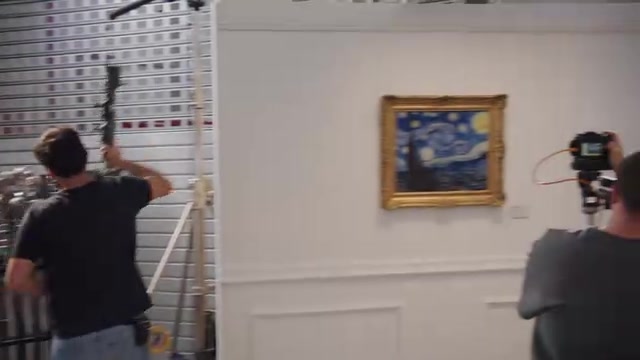
A more specific detail is the multimodal fusion: Genie 4 can turn a static image into a dynamic environment with built-in ambient sound. Visuals, sound, and interaction are placed into the same generation process, rather than producing visuals first, then dubbing, and finally adding interaction logic.
World Model is the background concept that most needs explaining here. It refers to a class of generative models capable of learning and simulating the dynamic laws of an environment: given the current state and an action, the model predicts the state of the world at the next moment (visuals, sound, physical consequences, etc.). Unlike ordinary video generation models that only pursue "looking real," world models emphasize interactivity and causal consistency—after the user takes an action, the world must respond according to reasonable laws rather than playing a pre-rendered clip. The Genie series has advanced along this path: early versions focused on generating explorable 2D platform environments from a single image or prompt, and subsequent versions gradually added real-time generation, sound effects, and longer interaction durations. Only by understanding this can one grasp the fundamental difference in technical goals between "generating a world" and "generating a video": the former requires the model to possess implicit physical and behavioral priors, while the latter only needs to fit the pixel distribution.
Sound and Camera: Making the World "Audible, Visible, and Shapeable"
Google positions Genie 4 as something that "turns your ideas into worlds you can hear, see, and shape."
These three points correspond to three capability dimensions:
- Audible: generates ambient sound rather than silent visuals
- Visible: renders scenes in real time for viewing
- Shapeable: move the camera and adjust details item by item, with the world changing in real time accordingly

From the product demo, users can create scenes, move the camera, direct every detail, and see the world change in real time. This "direct while generating" workflow is fundamentally different from the traditional video generation model that requires repeated re-rendering—it is closer to a real-time simulator than a renderer.
The workflow difference between real-time rendering and traditional video generation deserves elaboration. Traditional text-to-video uses a "one-shot render" model: the user writes a prompt, waits for rendering, checks the result, and if unsatisfied, modifies the prompt and regenerates—each iteration is a serial loop measured in minutes. Interactive world models like Genie 4, by contrast, use autoregressive frame-by-frame/block-by-block generation: the model continuously predicts the next batch of visuals and audio based on the user's current camera position and operations, compressing the "control—feedback" latency to near real-time. This architectural difference brings two consequences: first, generation quality and consistency face the challenge of long-horizon drift (the longer the scene, the more likely it is to degrade); second, it is naturally suited to "director-style" creation—users don't need to describe a complete script but adjust as they watch, turning the prompt into a continuous input signal rather than a one-time command.
Robot Training: The Real-World Value of Virtual Worlds
Genie 4's application scenarios are not limited to entertainment. Google explicitly mentions that the model can simulate various scenarios, for example helping robots practice tasks in virtual environments to prepare for future work in the physical world.
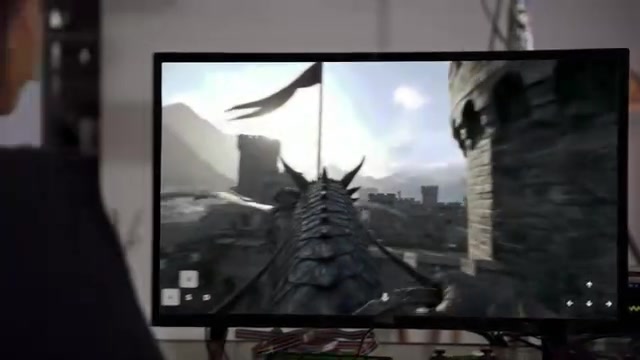
The value of this path lies in data cost: collecting robot training data in the real world is expensive and slow, whereas world models can generate interactive scenes with physical plausibility in batches at low cost. Of course, the "sim-to-real" gap between virtual training and physical deployment remains an industry-recognized challenge, and whether Genie 4 can narrow this gap still requires more empirical data.
sim-to-real (the simulation-to-reality transfer gap) is the key term for understanding this section. It refers to the phenomenon where policies trained by robots in virtual simulation degrade in performance when deployed to the real physical world, caused by factors such as physical approximation errors in simulators, insufficient modeling of sensor noise, and differences in materials and lighting. World models are seen as a new path to alleviate this problem: compared with traditionally hand-built simulators, they can learn dynamics and visual distributions closer to reality from massive amounts of real video, thereby generating training scenes with greater "physical plausibility." However, it should be noted that scenes generated by world models are not guaranteed to strictly obey physical laws, and their error patterns differ from those of traditional simulators. Therefore, narrowing the sim-to-real gap depends not only on visual realism but also on the model's ability to model invisible physical quantities such as contact forces, friction, and deformation.
The World Model Race Is Accelerating
Genie 4's release shows that Google is accelerating its iteration pace in the world model direction. From "generating explorable environments" to "real-time generation of visuals, audio, and dialogue," the boundary between world models and multimodal large models is blurring.
For developers, what's worth watching is the new interaction paradigm these models may bring: not clicking menus, but directly transforming the environment with natural language and camera language. For content creators, it means the barrier to "making a piece of playable content" is lowering.
The line Google threw out at the end of the demo may best capture the ambition of this technical path—"What happens next? You decide."
Related articles

Jensen Huang Returns to Nvidia: The Power Game Behind an "Aggro Reset"
Nvidia's board reappointed Jensen Huang as CEO less than two weeks after his scandal-driven resignation. This analysis explores the board's decision-making, Trump's political intervention, media power failure, and market reaction behind the dramatic return.

Why Voice AI Can't Understand Kenyans' Everyday Conversations
Swahili speech recognition hits 3.24% error on read text, but everyday Kenyan speech mixes English, Sheng slang, and accents—leaving mainstream voice AI struggling.

Data Centers Build Their Own Natural Gas Plants: AI Compute's Breakout Around a Decade-Long Grid Wait
Grid interconnection approvals can take a decade, so xAI and others are building off-grid natural gas plants to power AI clusters. This article analyzes the drivers, costs, and impact of behind-the-meter generation on AI infrastructure.