Google Jules AI Coding Assistant: A Quick Look at an Open-Source Practice Repo
A small GitHub repo around Google Jules offers an early glimpse into the autonomous AI coding agent ecosystem.
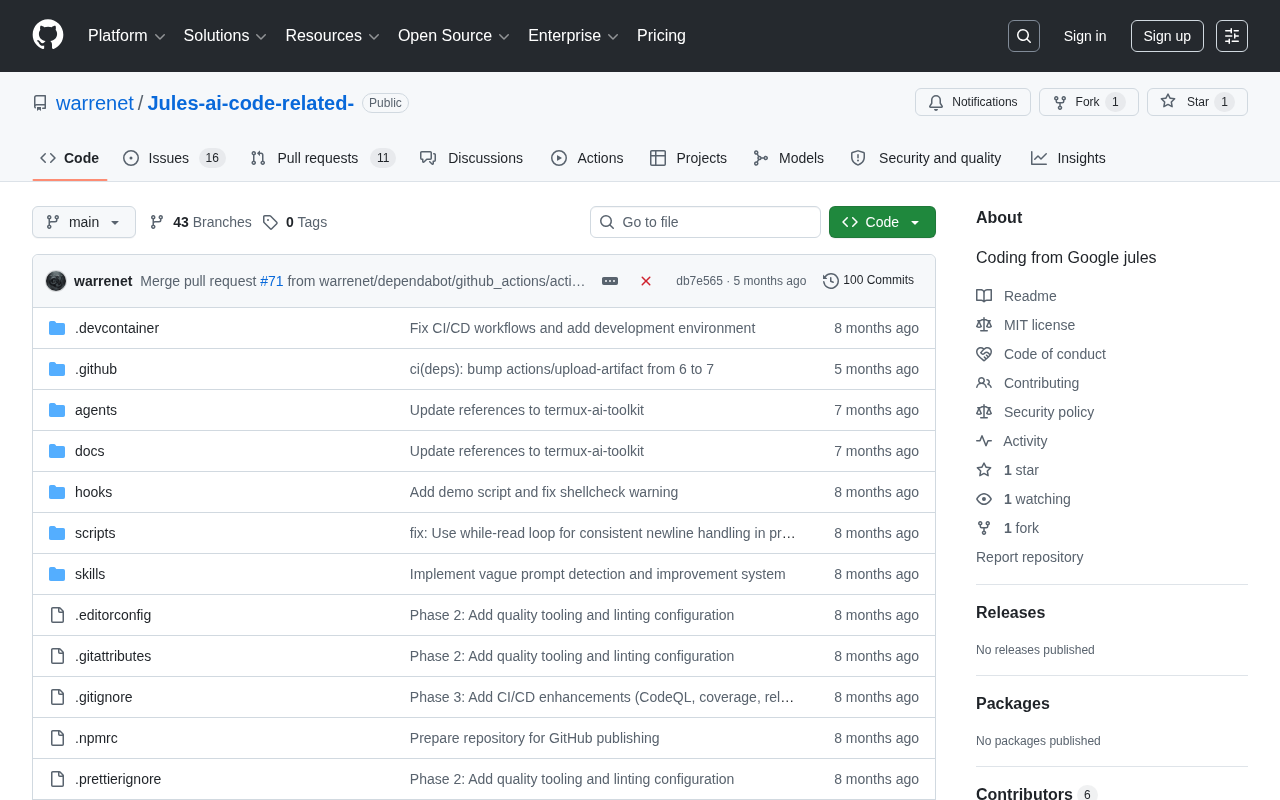
A small GitHub repository called `warrenet/Jules-ai-code-related-` has surfaced, consisting mainly of Shell scripts that document helper assets accumulated from real-world use of Google Jules. Jules is Google's autonomous coding agent that understands natural language tasks and executes multi-step code changes across a repository — competing in the same space as Devin and Copilot Workspace. Though minimal in size (1 Star, 1 Fork), the repo offers genuine usage samples and reusable scripts. The article uses it as a lens to discuss how developers should rationally assess the experimental open-source projects that spontaneously emerge around new AI tools.
Google Jules AI Coding Assistant: A Quick Look at an Open-Source Practice Repo
A GitHub repository called warrenet/Jules-ai-code-related- has recently appeared, self-described as "Coding from Google Jules." The project is primarily Shell-script-based and revolves around Google's AI coding tool, Jules. Although the project is still small in scale (1 Star, 1 Fork), it reflects a noteworthy trend: autonomous coding agents like Google Jules are gradually making their way into developers' everyday experimentation.
What Is Google Jules
Jules is an AI coding assistant (coding agent) from Google, positioned similarly to other autonomous coding agents that have gained significant attention recently. It's not just a code completion tool — it's an intelligent agent capable of understanding tasks, planning steps, and automatically executing code changes. Developers can hand it a specific programming task, and Jules will locate the relevant files in the codebase, generate the changes, and deliver the results.
Given that this repository is primarily composed of Shell scripts, the author was likely organizing automation scripts, configurations, or invocation workflows related to Jules. This type of "companion materials" repository is a common byproduct when developers actively use a tool — it accumulates helper assets to simplify environment setup or reproduce workflows.
Google Jules entered public beta in late 2024, placing it in the same "autonomous coding agent" category as GitHub Copilot Workspace and Devin. The key distinction between these agents and traditional code completion tools (like early Copilot) is that traditional tools only provide single- or multi-line suggestions at the cursor, while autonomous agents accept naturally described tasks, break them down into multi-step operations — such as reading multiple files, analyzing dependencies, making cross-file edits, and generating a Pull Request. Jules runs in a sandboxed cloud VM, clones the user's GitHub repository, executes changes within it, and presents the results as a PR for the developer to review. This "asynchronous, reviewable" workflow makes it better suited for handling well-scoped, independent tasks (like fixing a specific issue or refactoring a module) rather than real-time pair programming.
The Practical Value of This Repository
To be objective, warrenet/Jules-ai-code-related- is currently a very early-stage, small-scale personal project. It has only 1 Star and 1 Fork, has yet to build any community presence, and its repository description is extremely brief with no detailed README.
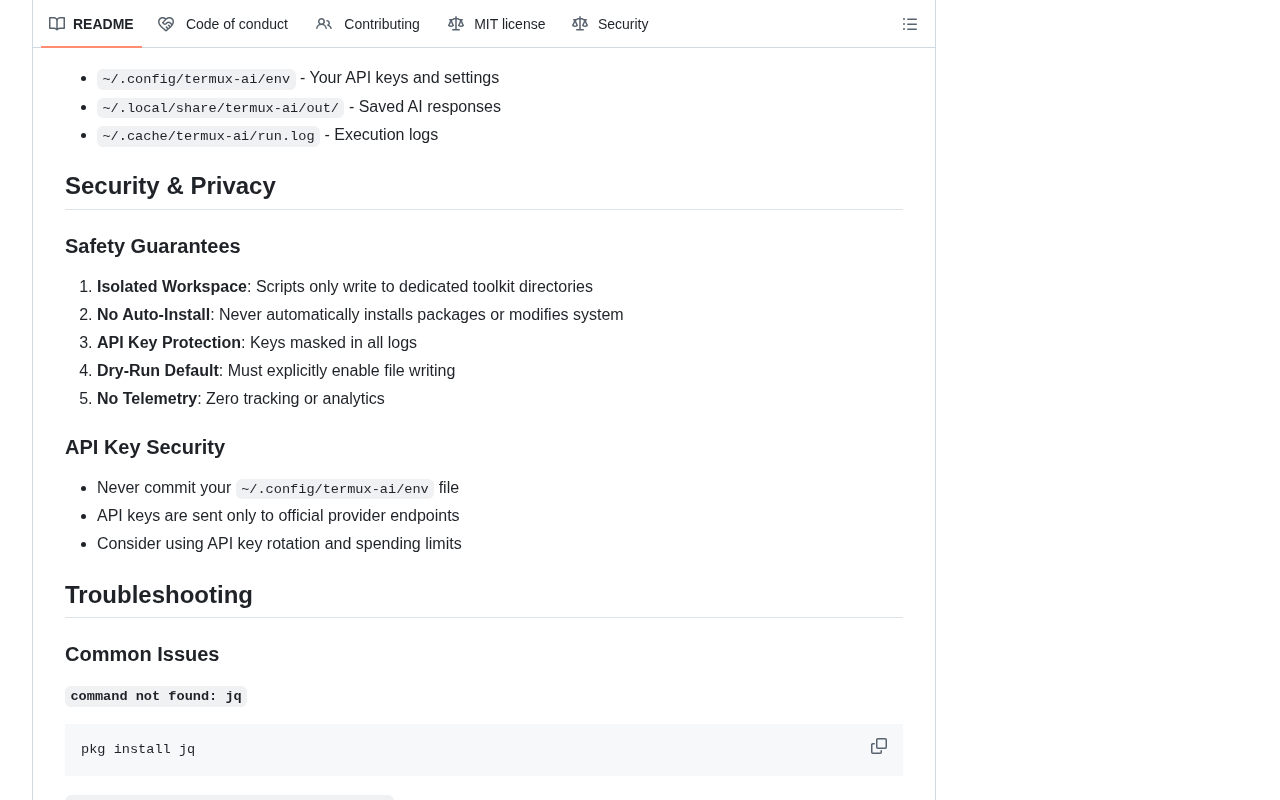
For developers looking to learn about Jules, the reference value of repositories like this lies in:
- Real-world usage samples: Personal repositories often show how a tool is actually invoked in practice — including the pitfalls encountered — in ways that official documentation rarely captures.
- Reusability of Shell scripts: Workflows captured as scripts are easy for others to adapt and apply to their own environments.
- Observing the early shape of an ecosystem: Small repositories like this offer a window into how a developer community spontaneously forms around a new tool.
How to Evaluate Projects Like This Rationally
As new AI coding tools emerge, GitHub sees a constant stream of experimental and supplementary small repositories. In the early days of an AI tool ecosystem, these personal experiment repos often act as "canaries" — their very existence signals the tool's adoption rate, but quality varies widely. Useful dimensions for evaluating such repositories typically include: whether there are runnable scripts or examples, whether the README documents specific prerequisites (such as how to obtain an API key or what account permissions are required), and whether the commit history shows ongoing updates. For tools like Jules that are still in a waitlist phase, the relative scarcity of related repositories objectively reflects the limited size of the user base that currently has access. As tools gradually open up, the number and quality of open-source companion projects will reach an inflection point — at which stage, systematically drawing on community contributions will be far more efficient.
Related articles
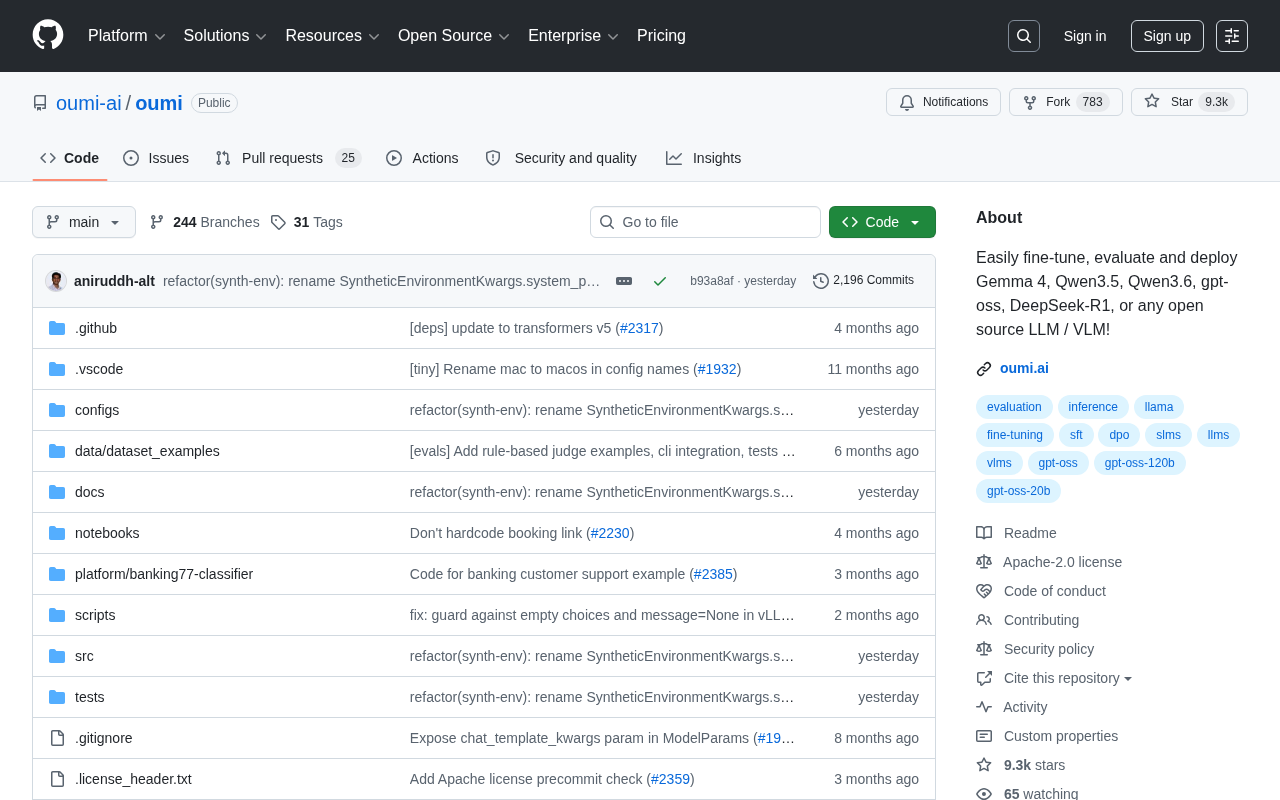
Oumi: An All-in-One Open-Source Framework for LLM Fine-Tuning, Evaluation, and Deployment
Oumi is an open-source Python framework for the full LLM/VLM lifecycle — fine-tuning, evaluation, and deployment — with support for Gemma, Qwen, DeepSeek-R1, and more.
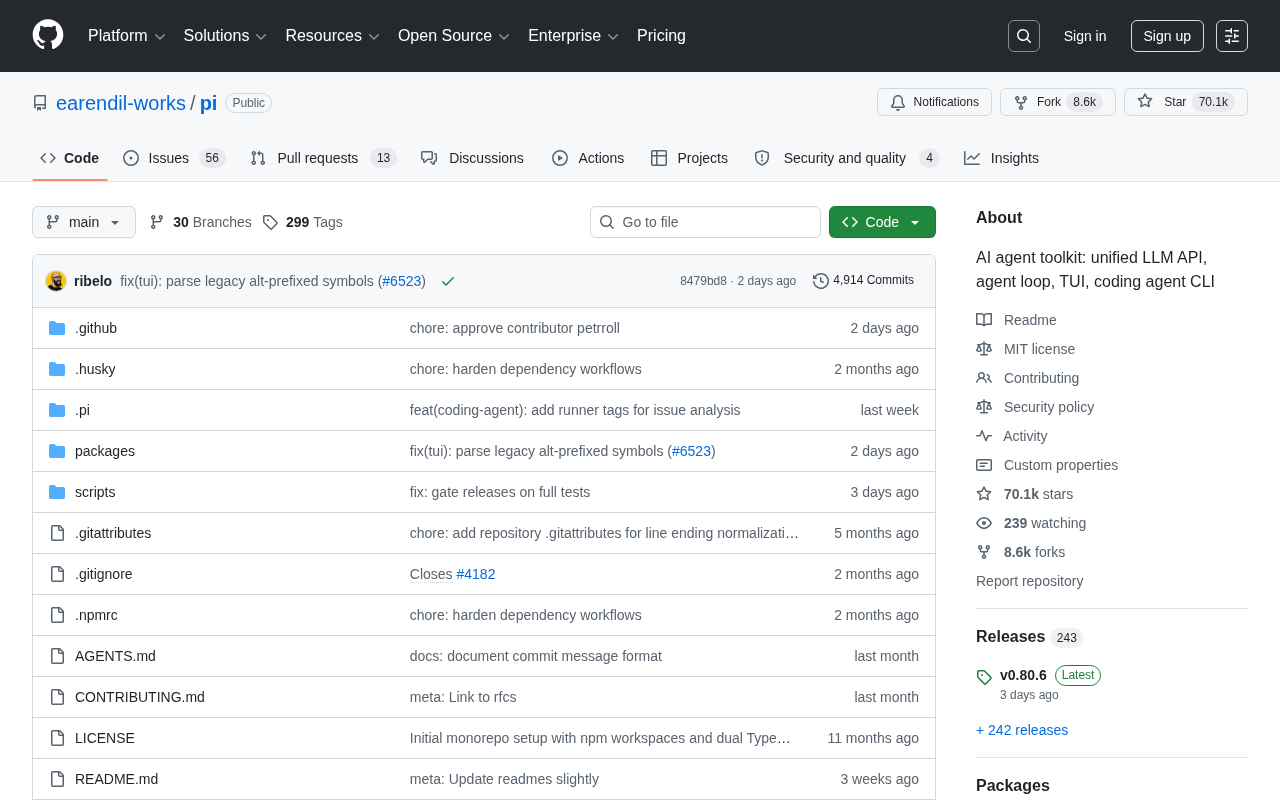
pi: A One-Stop AI Agent Toolkit — Architecture Breakdown Behind 46k GitHub Stars
pi (earendil-works/pi) is an open-source one-stop AI Agent toolkit integrating a coding agent CLI, unified LLM API, TUI & web UI libraries, Slack bot, and vLLM inference pods — with 46k+ GitHub Stars.
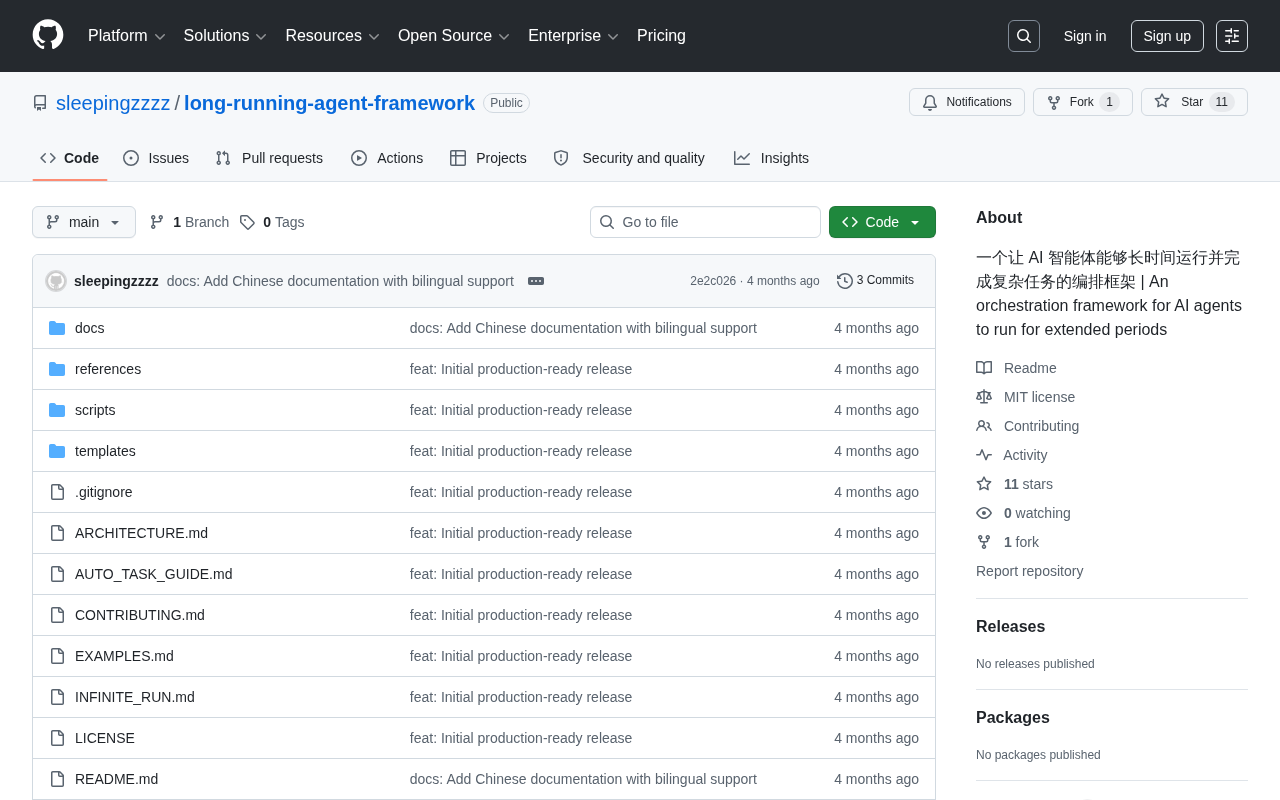
Long-Running Agent Framework: Enabling AI Agents to Handle Complex, Extended Tasks
long-running-agent-framework is an open-source JavaScript orchestration framework for AI agents to handle complex, long-horizon tasks with state persistence and reliable scheduling.