Google Kaggle AI Agent Bootcamp: 350,000 People Learning Agent Development for Free
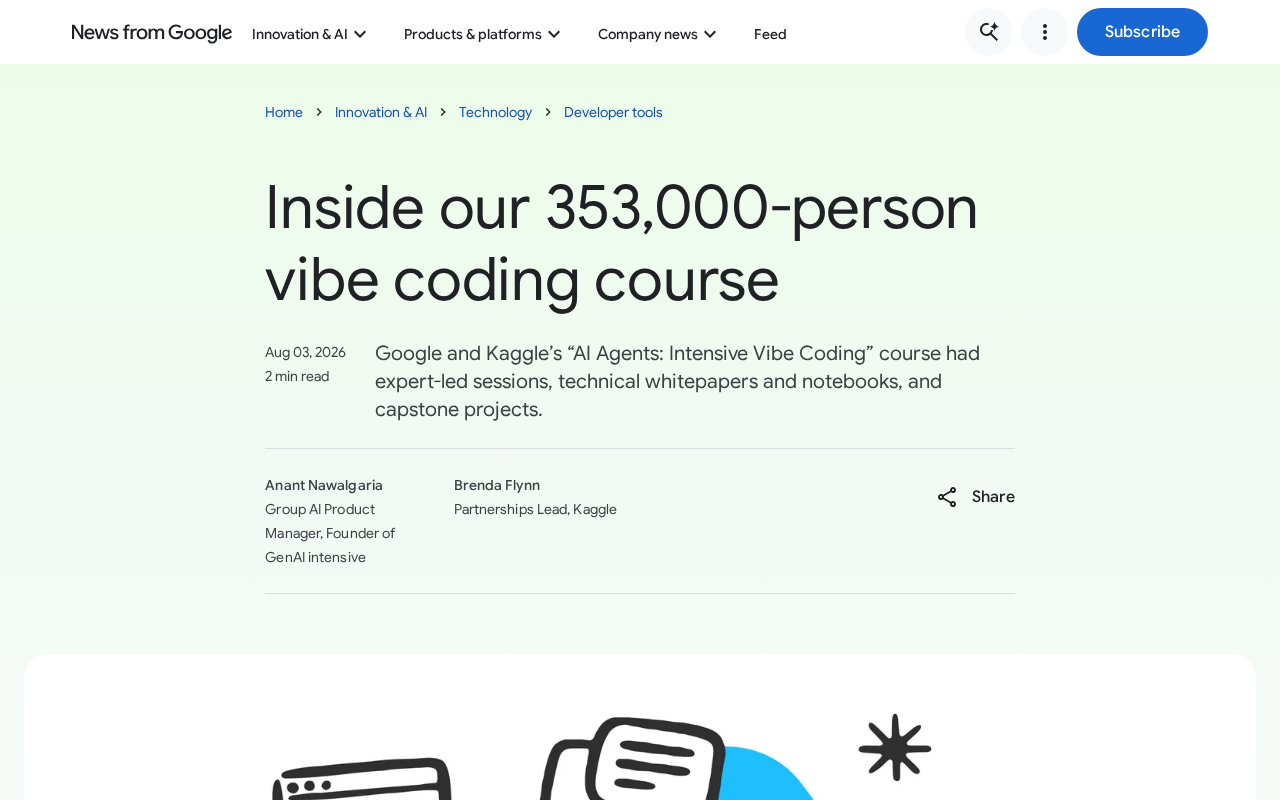
Google and Kaggle's free AI Agent bootcamp drew 350,000+ learners to build and deploy AI agents.
Google and Kaggle launched a free AI Agents Intensive bootcamp that attracted over 353,000 participants. Centered on vibe coding, the course taught learners to build and deploy AI agents covering core capabilities like task decomposition, tool calling, and memory management. The massive turnout signals rapidly falling barriers to agent development and intensifying platform competition among Google, OpenAI, and Anthropic for the next-generation AI ecosystem.
A Learning Experiment in AI Agents with 350,000 Participants
The free AI Agents Intensive bootcamp jointly launched by Google and Kaggle recently concluded, attracting over 353,000 learners. This number alone speaks volumes about the enormous enthusiasm within the developer community for AI Agent technology. This massive online course centered on the concept of "vibe coding," enabling learners to build and deploy next-generation AI applications through hands-on practice.
The term "vibe coding" is a concept that has rapidly gained popularity in AI development circles over the past year — developers no longer need to write code line by line, but instead rapidly transform ideas into working applications through natural language interaction with AI tools. The concept was first coined by Andrej Karpathy, former Tesla AI Director and renowned AI researcher, in February 2025. He described an entirely new way of programming: developers fully immerse themselves in the "vibe," describing their intent to AI through natural language, with AI coding assistants like Cursor and GitHub Copilot generating the code, while developers simply review and adjust the results. This stands in stark contrast to traditional software engineering's emphasis on rigorous code review and test-driven development. The underlying foundation of vibe coding is the leap in large language model code generation capabilities — from GPT-4 to Claude to Gemini, these models now approach or even surpass junior programmer-level performance in code comprehension and generation. This paradigm shift moves the core skill in software development from "writing code" to "defining problems and evaluating results," enabling domain experts to build complex applications without deep programming expertise. It is precisely this dramatically lowered barrier to entry that allowed the course to attract such a massive audience.
Why AI Agents Have Become a Developer Focus
From Conversational Tools to Autonomous Executors
Over the past two years, the dominant application form of generative AI has been "conversation" — users ask questions, models answer. AI agents represent a further paradigm shift: enabling AI not only to understand and respond, but to autonomously plan, call tools, and execute multi-step tasks. This is the deeper meaning behind Google naming this course "AI Agents Intensive."
The core capabilities of agents include task decomposition, tool calling, memory management, and interaction with external environments. From a technical architecture perspective, AI agents are far more complex than simple conversational systems. Their core is typically based on the ReAct (Reasoning and Acting) framework, where the model first reasons at each step, then decides what action to take, and continues reasoning based on the action's results. This "think-act-observe" loop enables agents to handle open-ended tasks. Tool calling is one of the agent's key capabilities: the model not only outputs text but can invoke external APIs, database queries, code executors, and other tools in structured formats. Memory management is divided into short-term memory (conversation context window) and long-term memory (storing historical information through mechanisms like vector databases). Current mainstream agent frameworks include LangChain, LangGraph, AutoGen, and CrewAI, while Google itself has released the Agent Development Kit (ADK). A more cutting-edge direction is multi-agent collaboration, where multiple specialized agents cooperate to accomplish complex tasks.
Compared to simple Q&A models, agents can truly "get things done" — automatically querying data, calling APIs, generating reports, and even completing end-to-end workflows. This is why the industry widely considers agents to be "the next frontier of AI."
Google's Strategic Agent Ecosystem Play
Google's choice of Kaggle as the course platform was no coincidence. Founded in 2010 and acquired by Google in 2017, Kaggle now has over 15 million registered users and is the world's most influential data science competition and learning platform. Kaggle's unique value lies in its combination of computing resources (free GPU/TPU), dataset marketplace, competition mechanics, and community discussion features — a natural developer ecosystem. For Google, Kaggle is not just a channel for technology promotion but also an important source of developer behavior data — by observing how hundreds of thousands of developers use their tools, Google can rapidly iterate on product strategy. The course provided free computing resources on Kaggle, allowing learners to practice without configuring their own cloud environments, dramatically lowering the barrier to participation.
Through this free, open course, Google not only popularized its complete AI toolchain but also established a dominant position in developers' minds as the gateway to agent development. Google has built a multi-layered tool ecosystem around agent development: at the base are the Gemini series of large language models, including speed-optimized variants like Gemini 2.0 Flash and high-performance versions like Gemini 2.5 Pro. At the API level, Google AI Studio provides a rapid prototyping environment, while Vertex AI targets enterprise deployment scenarios with full lifecycle management capabilities including model fine-tuning, evaluation, and monitoring. At the agent framework level, Google released the Agent Development Kit (ADK), supporting multi-agent orchestration and tool integration. Additionally, the Grounding with Google Search feature allows agents to retrieve real-time web information, reducing hallucination issues. This vertically integrated strategy from model to platform to framework constitutes Google's complete ecosystem blueprint for the agent era.
Course Structure Analysis: A Complete Loop from Building to Deployment
The bootcamp's standout feature was its emphasis on "hands-on practice." Rather than stopping at theoretical explanations, the course required learners to actually build and deploy their own AI agents. This complete loop from "idea to launch" gave learners an intuitive understanding of the entire agent development process.
The Agent Development Path from Zero to Deployment
A typical agent development workflow includes several key stages:
- Requirements Definition: Clearly identifying the problem and goals the agent should address
- Architecture Design: Determining the model, toolset, and interaction logic to use
- Prototype Building: Leveraging vibe coding to quickly build a working version
- Testing and Iteration: Verifying whether the agent's behavior meets expectations
- Deployment and Launch: Publishing the agent to a production-ready environment
The free and open format made technology that previously required expensive resources and specialized backgrounds accessible to hundreds of thousands of ordinary developers. This "democratization of technology" is profoundly reshaping the landscape of AI talent development.
The Industry Signal Behind 350,000 Participants
The Barrier to Agent Development Is Falling Rapidly
The participation scale of 350,000 people reflects that AI agent development has moved from a niche domain for specialists to the mainstream. As underlying model capabilities improve and development tools mature, the barrier to building a functional agent is dropping rapidly. The rise of vibe coding is turning "everyone is a developer" from a slogan into reality.
The New Battleground in AI Platform Competition
Major AI companies including Google, OpenAI, and Anthropic are all actively building out their agent ecosystems. The AI agent ecosystem competition in 2025 has entered a white-hot phase. OpenAI pioneered the consumer and developer agent market through the GPTs Store and Assistants API, with its Operator product exploring browser automation. Anthropic has adopted the Model Context Protocol (MCP) open protocol as its core strategy, attempting to establish an industry standard for connecting agents with external tools — a protocol that has gained widespread adoption. Microsoft targets the enterprise market through Copilot Studio and Azure AI Agent Service. Amazon AWS launched its Bedrock Agents service.
The essence of this competition is the battle for the position of "agent operating system" — just as iOS and Android competed in the mobile internet era, whichever platform becomes the default choice for agent development will control the gateway for next-generation AI application distribution. Through education and community cultivation, each company is competing for developer attention and usage habits. Whoever can get more developers to build agents on their platform will dominate the future AI application ecosystem. The scale and activity level of developer communities will be the decisive factor, and this course with 350,000 participants is an important move by Google in this competition.
Conclusion: The AI Agent Era Is Accelerating
The collaboration between Google and Kaggle is not just a successful technology promotion campaign, but an important milestone marking AI agents' move into the mainstream. The participation of 353,000 learners demonstrates the developer community's intense interest in this cutting-edge direction.
For individual developers, free high-quality courses like this are an excellent entry point into agent development; for the industry as a whole, it signals that agent technology is about to experience an explosion of applications. As more people master the ability to build agents, we have every reason to expect a surge of innovative AI applications in the near future. It's fair to say that AI's "agent era" is being quietly ushered in by this learning wave of 350,000 people.
Related articles
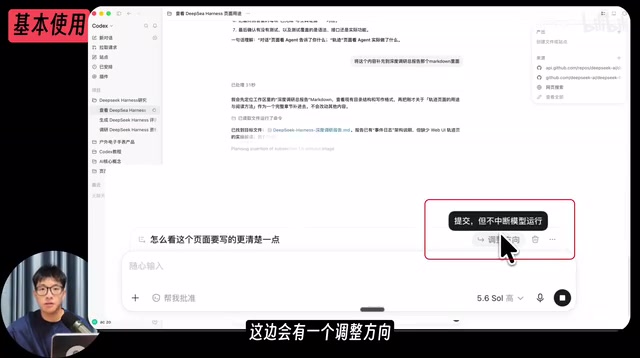
The Complete Codex Guide: A Hands-On Manual from Basics to Advanced
A complete guide to the new Codex: project folders, office file processing, multi-agent collaboration, image annotation, agents.md, Skills, automation workflows, and advanced AI programming features.
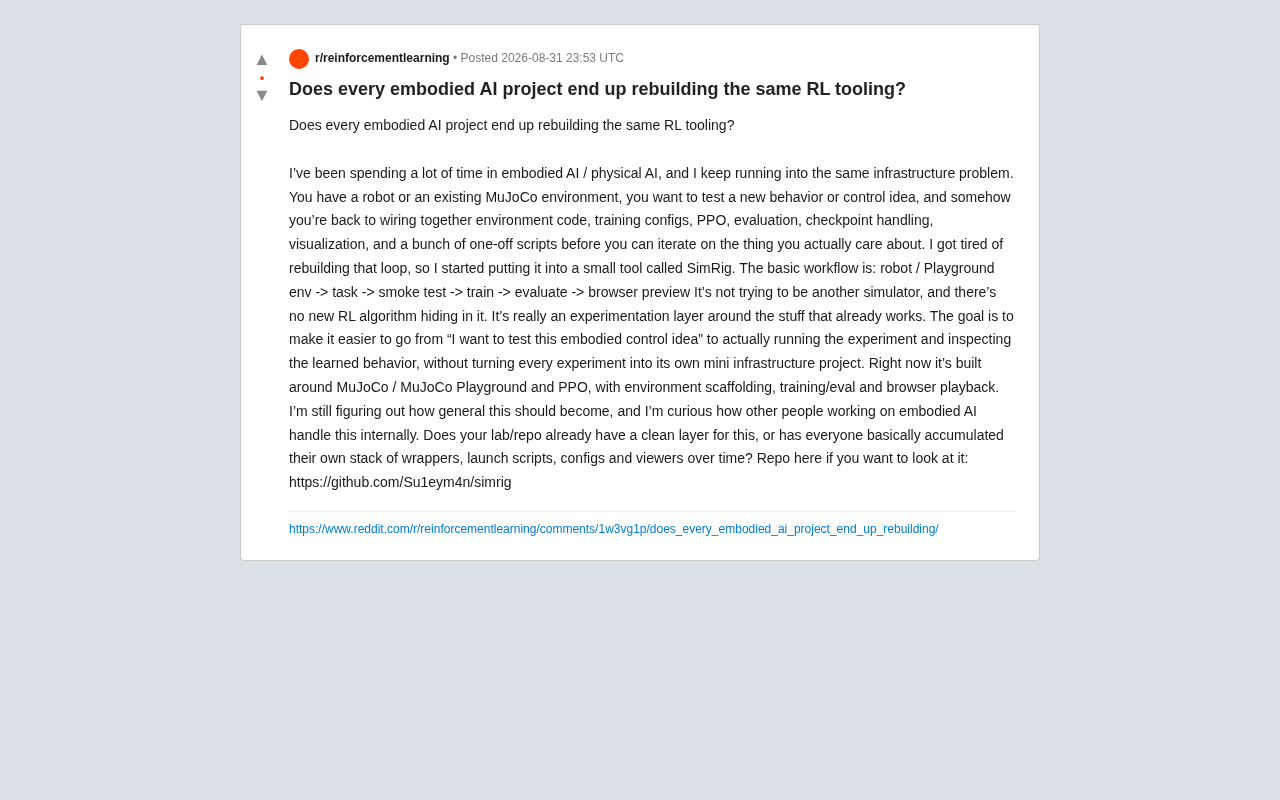
SimRig: Building a Unified Experimentation Layer for Embodied AI — Stop Reinventing the Wheel
SimRig builds a lightweight experimentation layer on MuJoCo and PPO, offering standardized workflows from environment setup to browser preview, cutting engineering friction for Embodied AI research.

AI Security 101: A Complete Guide from Prompt Injection to Agent-Based Attack and Defense
A systematic guide to AI security fundamentals covering LLM principles, prompt injection attacks, AI code auditing, CTF applications, and Agent attack-defense evolution.