Google Open-Sources Artemis: An AI Agent That Controls Any Android Phone Like a Human

Google open-sources Artemis, a vision-driven Android AI agent with natural language control and native MCP protocol support.
Google has open-sourced Artemis, an Android AI agent that abandons the brittle selector- and coordinate-based approach of traditional automation tools in favor of visually "reading the screen" like a human — making it far more resilient to app updates. Users simply describe their goal in natural language and Artemis executes it step by step on a real Android device. It achieves 99% success across 20+ apps and 100+ multi-step tasks on Google's Android World benchmark. Most compelling for developers is its built-in native MCP server, which integrates directly with tools like Cursor and Claude Code, bringing real-device control into everyday coding workflows. The project is Apache licensed for commercial use, with minimal setup required.
Google has open-sourced an AI agent called Artemis that runs for free on any Android device. Unlike legacy automation tools that rely on hardcoded coordinates and brittle selectors, Artemis takes a fundamentally different approach: it "looks at the screen" the way a human would, decides where to tap or swipe, and keeps going until the task is done. This means you no longer need to write code like "click the button at coordinate X,Y" — you just give it a natural language instruction.
How It Actually Works
Artemis sits between the model and the real device, acting as a middleware layer that handles "understand the screen → decide what to do." It reads what's on screen in a way that's closer to human visual comprehension than parsing an app's internal structure. For example, you can simply type "Open Google Maps, set up a driving route, and calculate the total travel time" — and Artemis will carry out each step on the physical phone sitting on your desk.

This shift in interaction model is significant. Traditional mobile automation scripts essentially simulate mechanical actions and break the moment a UI layout changes. Artemis decouples "understanding intent" from "executing actions" — the user just describes the goal, and the agent figures out the rest on the fly.
Why It's More Reliable Than Previous Automation Tools
The biggest difference between Artemis and virtually every prior automation solution is that it doesn't depend on fragile selectors. Conventional UI automation tools bind to specific control IDs or coordinates, so the moment an app updates its design, scripts immediately break — with sky-high maintenance costs to match.
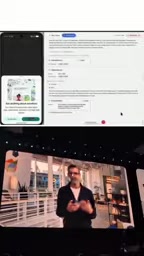
Artemis instead directly "sees" the screen, making decisions the way a human would. What's particularly impressive is its robustness — when an unexpected permission dialog tries to interrupt the flow, Artemis can recognize it and continue pushing the task forward rather than getting stuck.

In Google's own Android World benchmark — which covers 20+ apps and 100+ multi-step tasks — Artemis reportedly achieves a 99% success rate. For an agent that needs to operate continuously across apps in multiple steps, that's a remarkably high number. That said, whether benchmark scores fully translate to real-world complexity still warrants independent verification.
Traditional UI automation frameworks like Appium and UIAutomator work by grabbing an app's widget tree via Accessibility services or system APIs, then locating target elements by resource-id, class name, or XPath and triggering actions. The fatal flaw of this approach is tight coupling: control IDs are defined by developers in code, so any app update, widget rename, or layout restructure immediately invalidates every script that relies on those identifiers. Artemis bypasses the widget tree entirely, relying on a visual model to analyze screenshots directly and determine where to act — essentially replacing "parse structure" with "understand the image." This makes the agent completely agnostic to an app's internal implementation. As long as recognizable visual elements are still present on screen after an update, the agent keeps working normally, dramatically reducing maintenance overhead.
The Part Developers Should Pay Most Attention To: Native MCP Support
What will really excite developers is that Artemis ships with a built-in native MCP (Model Context Protocol) server. This means you can connect it directly to tools like Claude Code, Cursor, Windsurf, or Anti-gravity and issue commands to your phone right from within your IDE.

This integration opens up a lot of possibilities: while writing code, developers can have AI directly verify workflows, run tests, or handle repetitive operations on a real device — without constantly switching between their IDE and the phone. The deployment barrier is also kept extremely low — according to the original documentation, one clone and one script is all it takes to complete the full installation.
MCP (Model Context Protocol) is an open protocol introduced by Anthropic in 2024, designed to give AI models a standardized way to call external tools and data sources. Think of it as the "USB port" of the AI world — any tool that implements the protocol can be communicated with by an AI in a uniform way, without needing a custom adapter for each one. Artemis having a built-in MCP server means it packages "controlling a real Android device" as a standard tool node. Any AI coding assistant that supports an MCP client — like Claude Code or Cursor — can call it directly, as naturally as calling a file read/write or code execution tool. For developers, the practical implication is that real-device mobile operations are no longer a separate system to maintain independently; they can become just another ordinary step in an AI-assisted coding workflow.
Open-Source License and Commercial Value
Artemis is open-sourced under the Apache License, meaning it can legally be used in commercial contexts — not just in experiments or personal projects. For both enterprises and independent developers, this lowers the cost of adoption and reduces legal risk.
Combining "free to run on any Android device," "natural language-driven," "native MCP integration," and "permissive open-source license," Artemis looks likely to become an important piece of infrastructure for mobile automation, QA testing, and agent-controlled real-device use cases. The trend it represents is clear: AI agents are moving from "operating virtual interfaces" toward "operating real devices like a human would."
A Note of Caution
It's worth noting that this article is based primarily on a single source, and the 99% success rate and other key metrics come from Google's own benchmark — large-scale, independent third-party replication is still lacking. Latency, compute consumption, and performance against highly dynamic or anti-automation interfaces remain variables that need to be observed in real-world deployments. That said, an open-source, free, license-friendly agent for controlling real devices already gives the developer community a compelling new option worth trying out.
Related articles

Gmod TTT: Boba's Winning Streak and Game Design Insights
An in-depth analysis of Gmod TTT's role system, creative items, and social gameplay mechanics, exploring the relationship between randomness design and game balance through Boba's winning streak phenomenon.

FlexBudget: Fair Comparison of KV Cache Eviction Strategies Under a Unified Compute Budget
AMD engineer proposes FlexBudget at PyTorch Conference: a training-free fair comparison method for KV cache eviction rules using fixed kernels and memory budgets, all in core PyTorch.
