Google Pixel 11 Deep Dive: How the Tensor G6 Chip and Gemini AI Are Redefining the Smartphone Experience
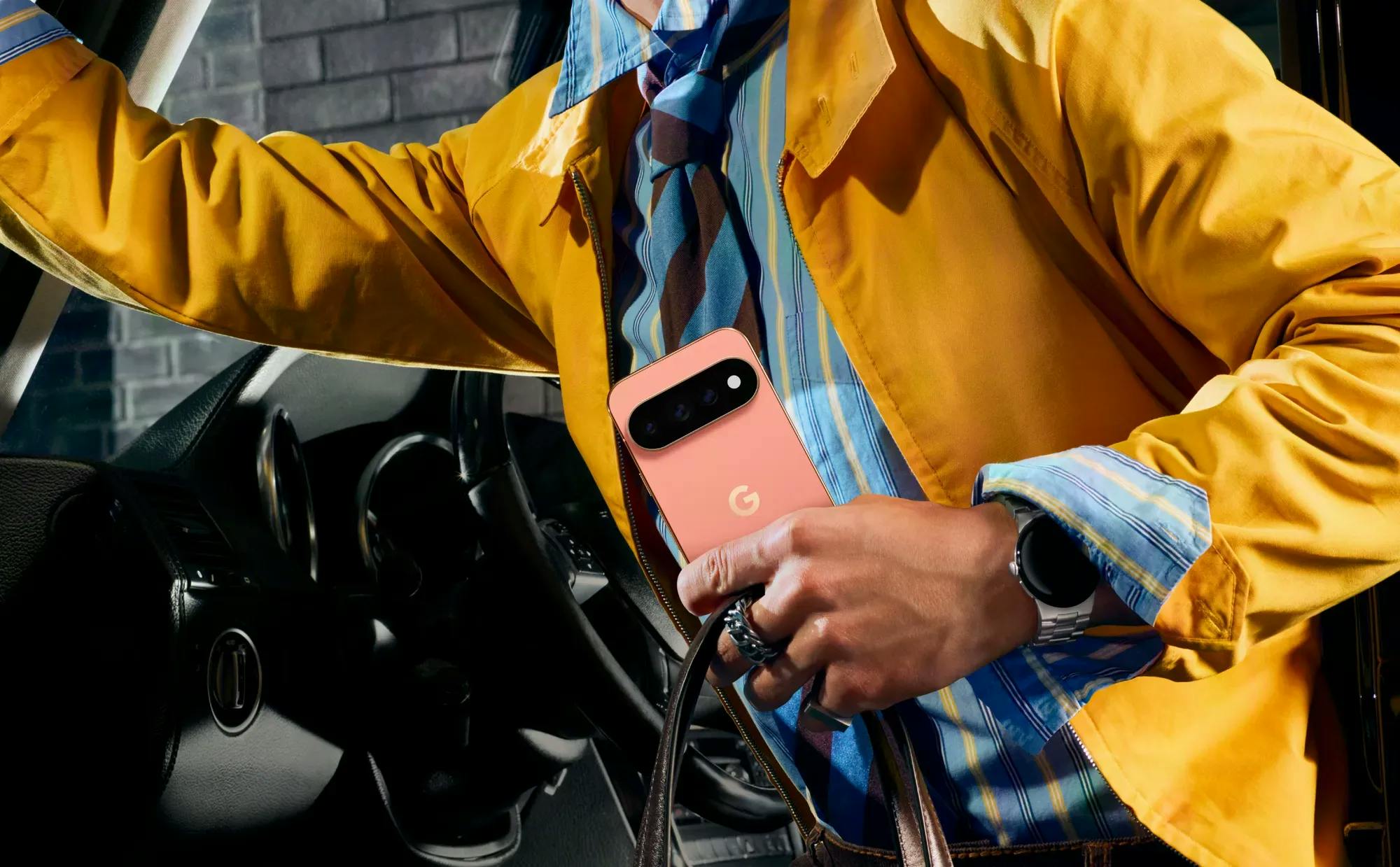
Pixel 11 combines Tensor G6, Gemini AI, and LED HiLight to push on-device AI as the smartphone differentiator.
Google Pixel 11 debuts with the Tensor G6 chip optimized for on-device AI inference, deep Gemini AI integration enabling offline intelligent features, upgraded computational photography hardware, and a revived LED HiLight notification system. The device exemplifies Google's vertical integration strategy from chip to OS to AI model, positioning AI-defined experiences as the next battleground in smartphone competition.
Pixel 11: Google's Most Personalized Flagship
Google has officially launched the Pixel 11 series, positioning it as "the most personalized Pixel ever." After going live on Product Hunt, the product garnered 91 upvotes and reached #11 on the daily leaderboard, introduced by Google's hardware chief Rick Osterloh. From a product positioning standpoint, Pixel 11 continues Google's longstanding strategy—winning not through hardware spec stacking, but through deep software-hardware integration, especially AI capability fusion, to build differentiated competitiveness.
For readers following the AI-hardware convergence trend, the Pixel 11's significance extends beyond just another new phone—it represents a critical step in Google pushing its Gemini ecosystem further down to edge devices. In a smartphone market with slowing growth and increasingly homogeneous innovation, Google has chosen "on-device AI experience" as its breakthrough strategy, an approach worth examining in depth.
Tensor G6 Chip: The Sixth-Generation Evolution of Google's Custom SoC
An Architecture Purpose-Built for AI Inference
Pixel 11 is powered by the new Tensor G6 chip. As the sixth generation of Google's custom SoC, the Tensor series has taken a fundamentally different path from Qualcomm Snapdragon and MediaTek Dimensity since its inception—it doesn't chase extreme benchmark performance, but instead optimizes specifically for machine learning and AI inference tasks.
Google's Tensor chip first debuted with the Pixel 6 in 2021, co-designed and manufactured with Samsung Semiconductor. Unlike general-purpose mobile SoCs from Qualcomm Snapdragon and MediaTek Dimensity, Tensor embedded a TPU (Tensor Processing Unit) as a core module within the chip from the very start of its architectural design. TPU was originally developed by Google as a dedicated AI accelerator for data centers, used for training and running inference on deep learning models. Miniaturizing and integrating it into a mobile SoC enables Pixel phones to run complex machine learning models locally without relying entirely on cloud computing. While previous Tensor chips haven't led the industry in CPU and GPU performance, they've excelled in AI-related tasks such as speech recognition, image processing, and natural language understanding—a "do some things well, let others go" design trade-off that reflects Google's clear product positioning.
The core value of the Tensor G6 lies in providing stronger computational support for on-device AI. This means more AI tasks that previously required cloud processing can now be completed locally on the device, reducing latency while better protecting user privacy.
From a technical perspective, on-device AI refers to completing machine learning model inference directly on the terminal device rather than uploading data to cloud servers for processing. The core challenge of this approach is that mobile devices have far less computing power, memory, and power budget than cloud servers, requiring model compression (such as quantization, distillation, and pruning) and hardware acceleration (dedicated NPU/TPU) to bridge the computing gap. The advantages of on-device AI include: instant response with zero network latency, privacy protection since user data never leaves the device, and the ability to use AI features even without network connectivity. As large model miniaturization technology matures, more and more AI capabilities that previously could only run in the cloud are migrating to edge devices—a trend widely viewed as a key aspect of AI democratization.
This "on-device first" design philosophy is a crucial part of Google's strategy for building a moat in the AI era.
Deep Gemini AI Integration: From Cloud to Edge
Google specifically emphasized Pixel 11's "faster Gemini AI support." Behind this statement lies Google's strategic intent to deeply bind its large model capabilities with terminal hardware. Compared to purely application-layer AI features, chip-level optimization enables qualitative improvements in Gemini's response speed, multimodal understanding, and real-time interactive experience.
Gemini is a multimodal large language model family launched by Google DeepMind in late 2023, capable of simultaneously understanding and generating text, images, audio, video, and code. Gemini comes in three scale tiers—Ultra, Pro, and Nano—with Gemini Nano being the lightweight version specifically designed for mobile devices, with significantly reduced parameters to fit within phone chip computational constraints. On Pixel devices, Gemini Nano runs through the Tensor chip's built-in TPU, enabling offline text summarization, smart replies, recording transcription, and other functions. Google's strategy of deeply integrating Gemini with the Android system essentially transforms large model capabilities from cloud API services into OS-level foundational capabilities, allowing third-party developers to leverage these AI abilities to enhance their own applications.
Pixel 11 will serve as Google's "showcase device" for demonstrating Gemini's full capabilities—from voice assistant and real-time translation to image processing and content generation, AI permeates every layer of the system. This aligns with the broader smartphone industry trend: AI is no longer an add-on feature but the core engine redefining user interaction.
Pixel 11 Camera Upgrade: Computational Photography Takes Another Step Forward
Hardware and Algorithm Co-Evolution
The Pixel series has long been known for computational photography, and Pixel 11 brings updated camera hardware. Google's photography advantage has never relied solely on sensor specs—it's the combination of software and hardware, using powerful image processing algorithms to compensate for hardware limitations and even achieve imaging results that surpass pure hardware solutions.
Computational Photography is a technology that uses digital computation rather than traditional optical elements to enhance or extend camera imaging capabilities. Its core approach involves capturing multiple frames and using algorithms to fuse them, thereby breaking through the physical limitations of a single exposure. Google's representative technologies in this field include HDR+ (multi-frame high dynamic range synthesis), Night Sight (super night mode, using long-duration multi-frame stacking for noise reduction), and machine learning-based portrait mode (using depth estimation algorithms to simulate large-aperture bokeh effects). The reason Pixel can consistently produce high-quality photos despite not having the largest sensors is Google's massive image training datasets and strong algorithm R&D capabilities, while the Tensor chip's AI acceleration ensures these complex algorithms complete real-time processing in the instant a photo is taken.
Combined with Tensor G6's AI computing power, the Pixel 11 camera is expected to deliver even better performance in night scenes, portraits, zoom, and other scenarios. AI-driven photo editing, scene recognition, and real-time optimization will further widen the experience gap with competitors.
LED HiLight Notification: An Overlooked Practical Innovation
Notably, Pixel 11 introduces a notification feature called "LED HiLight." This design is a modern reimagining of the classic notification LED.
The smartphone notification LED was a standard feature on early Android phones, typically implemented with a small RGB LED on the front of the device, conveying unread notifications, charging status, and other information through different colors and blink patterns. As bezel-less designs became mainstream after 2017, many manufacturers eliminated the physical notification light to achieve higher screen-to-body ratios. However, users' need to "perceive notifications without turning on the screen" never disappeared. Some manufacturers attempted alternatives like Always-on Display or screen edge lighting effects, but these solutions all consume screen power. Google's introduction of LED HiLight essentially acknowledges that physical notification indicators still have irreplaceable user value, reintroducing this function in a more modern industrial design form.
In the full-screen era, physical notification lights gradually disappeared, and Google's choice to bring them back in a new form shows manufacturers are re-examining those overlooked but practical interaction details. These seemingly minor innovations often deliver real usage value—letting users perceive important notifications without turning on the screen, balancing convenience with power savings.
Industry Observation: AI Phone Competition Enters a New Phase
The Pixel 11 launch reflects the smartphone industry entering a new competitive phase of "AI-defined experiences." As hardware specs approach saturation, the battleground between manufacturers has shifted to software ecosystems and deep AI capability integration.
Google's advantage lies in its complete AI technology stack: from the Tensor chip at the bottom, through the Android operating system in the middle, to the Gemini large model at the top, forming a vertical closed loop from hardware to software. This integrated capability is something few manufacturers besides Apple can match.
From an industry competitive landscape perspective, Google's vertical integration strategy spanning from chip (Tensor) to operating system (Android) to AI model (Gemini) has only one comparable parallel in the smartphone industry: Apple (A-series/M-series chips + iOS + Apple Intelligence). The core advantage of this vertical integration is that software-hardware co-optimization can eliminate performance losses in intermediate layers, achieving better power efficiency and response speed; simultaneously, a unified technology stack enables AI functions to be deeply embedded at the system level rather than merely serving as application-layer add-ons. In comparison, while Samsung also develops its own Exynos chips and has the One UI custom system, its AI capabilities primarily rely on collaboration with Google (Galaxy AI is partially based on Gemini). Other Android manufacturers like Xiaomi and OPPO must build differentiated AI experiences on top of Qualcomm/MediaTek chips, inherently limited in optimization depth.
However, the long-standing challenges facing the Pixel series remain—limited market share, restricted regional availability, and insufficient brand awareness in certain markets. Whether Pixel 11 can achieve a breakthrough through its AI experience remains to be proven by the market. But what's certain is that it clearly demonstrates Google's vision for the future of smartphones: a truly "understanding" personal device with AI at its core.
Summary
Google Pixel 11's core selling points are the Tensor G6 chip, upgraded camera hardware, LED HiLight notifications, and faster Gemini AI support, continuing Google's software-hardware integration product philosophy. It's not merely a hardware iteration but an important strategic move in Google's push to bring on-device AI to reality and build a complete AI ecosystem. For industry professionals and consumers following the AI-hardware convergence trend, Pixel 11 provides an excellent window into the future direction of smartphones.
Key Takeaways
Related articles

AI Agent Deployment: Three Things Developers Should Do
AI Agent deployment doesn't require rushing into multi-agent systems. This article outlines an actionable deployment path and engineering acceptance thresholds for developers, covering human baselines, bounded single-agent scope, and a controlled code-modification loop.

From Human-in-the-Loop to Out-of-the-Loop: A Hands-On Guide to Automated News Curation with Durable Agents
IndieDevDan shows how Durable News Agent uses durable agents and triggers to curate news automatically, filtering hype, facts, and signals with feedback weights.

AI-Powered SRC Vulnerability Hunting: A Hands-On Guide to Building the Hermes Agent Workbench
Based on a hands-on Bilibili video: how to build an AI-powered SRC vulnerability hunting workbench—three-step method, four report elements, Agent mode vs web chat, and tool selection.