Google Play App Reviews Now Routinely Take Over a Week — Here's Why
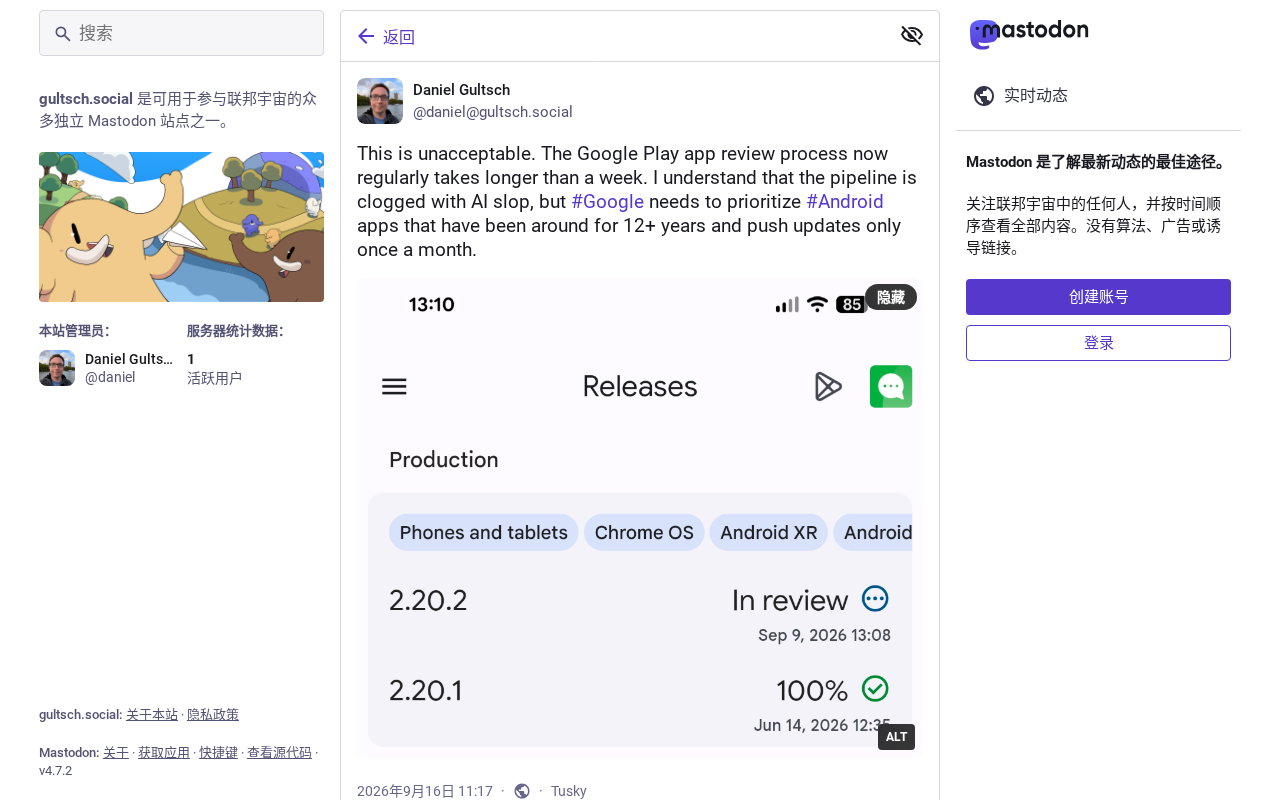
Google Play review cycles have stretched beyond a week, becoming a common pain point for indie developers.
Developers on Hacker News and beyond are reporting that Google Play app reviews now routinely exceed one week, sparking significant discussion (259 upvotes, 218 comments). The slowdown stems from a structural tension between increasingly strict compliance requirements and limited human review capacity. While large companies can absorb the delay, indie developers and small teams bear the brunt — with urgent bug fixes, iteration cycles, and marketing campaigns all at risk of slipping. Developers can mitigate the impact by planning ahead, leveraging internal testing tracks, and self-auditing for compliance.
A New Pain Point: Review Times Are Quietly Getting Longer
A discussion about Google Play's app review process recently gained traction on Hacker News, drawing 259 upvotes and 218 comments. Developer Daniel posted that Google Play's review process now routinely takes over a week to complete. For indie developers and small teams accustomed to rapid iteration, this shift is becoming a real obstacle to product development cycles.
For developers used to mobile app review times measured in hours or a day or two, waiting seven or more days for a review to clear means urgent bug fixes, feature launches, and marketing campaigns can all be forced to slip. That uncertainty directly disrupts product development and release planning.
Why Are Reviews Taking Longer?
Google hasn't offered an official explanation, but several likely causes emerge from community discussions.
Stricter Policy Compliance Reviews
In recent years, major app stores have significantly tightened compliance requirements around privacy, data collection, and permission usage. More rigorous standards mean each app must pass checks across more dimensions, naturally extending overall processing time. Every version submitted may now require both automated systems and human reviewers.
Looking at specific policy changes, Google Play has introduced several far-reaching compliance requirements in recent years: mandatory COPPA compliance reviews for children's apps starting in 2022; a "Target API Level" policy introduced in 2023 requiring apps to target recent Android API levels or face distribution restrictions for new users; and the Data Safety Section form, which has been mandatory since 2022, requiring developers to declare their app's data collection and sharing practices — which reviewers must then cross-verify. These compounding compliance dimensions mean each submission is no longer a simple binary pass/fail check, but a multi-axis compliance evaluation that objectively increases the frequency and complexity of human intervention.
The Challenge of Balancing Automation and Human Review
App store reviews have always combined automated detection with human review. When automated systems flag potential issues, those submissions are typically routed to a human review queue. If human review resources are stretched or backlogged, wait times climb significantly — an operational challenge that many platforms face as they scale.
Real-World Impact on the Developer Ecosystem
Longer review cycles don't affect all developers equally.
Large enterprises typically have sufficient buffer time and resources to plan their release cadences, so review delays are relatively manageable. But for indie developers and small teams, waiting a week or more can mean:
- Urgent bug fixes can't ship on time, degrading user experience
- Slower iteration cycles, making it harder to respond quickly to market feedback
- Missed operational windows, such as holiday promotions or timely marketing campaigns derailed by a pending review
In the Hacker News discussion, many developers shared similar frustrations, suggesting this is no longer an isolated issue but a widespread trend.
The Tension Between Platform and Developer
This situation reflects a long-standing tension between app store platforms and developers. Platforms must balance security and compliance against developer experience: stricter reviews offer better user protection, but at the cost of developer freedom and efficiency.
As the dominant distribution channel for the Android ecosystem, Google Play's review efficiency directly affects the health of the entire Android app ecosystem. When reviews become a bottleneck, developers may rethink their distribution strategies and even explore alternative channels — though those alternatives still have limited reach within the Android ecosystem.
How Developers Can Adapt
Faced with unpredictable review timelines, developers can take some practical steps to reduce the impact:
- Plan release schedules in advance, building in ample buffer time so you're not submitting right before a deadline
- Rigorously self-audit for compliance, reducing the chance of rejection and resubmission due to policy issues
- Use testing tracks, validating builds through internal and closed testing channels before the production submission
- Keep a contingency plan, and for critical fixes, assess whether an expedited review path exists to bypass the full review queue
Conclusion
The lengthening of Google Play review cycles may seem like a minor operational change on the surface, but it touches on the core mechanics of the mobile app ecosystem. It's a reminder to developers that when relying on a single dominant distribution platform, you need to stay sensitive to process uncertainty and build flexibility into your product planning. For Google, figuring out how to improve review efficiency while maintaining platform security will be a key challenge in preserving developer trust.
Background: Google Play's Testing Tracks
Google Play offers a multi-tier testing track system, including Internal Testing (up to 100 testers, typically accessible within a few hours), Closed Testing (Alpha), and Open Testing (Beta). Compared to production releases, the internal testing track bypasses most of the full review process, dramatically shortening distribution time. Developers can publish a new build to internal or closed testing tracks for functional validation while simultaneously submitting the production review — meaning core users or testers can experience new features before the official review clears, effectively offsetting the rhythm disruption caused by review delays.
Related articles

The Siberian Ice Maiden and the Archaeological Mysteries of the Scythian World
The Siberian Ice Maiden is a Scythian female mummy from the Ukok Plateau. Her tattoos, silk garments, and grave goods reveal ancient nomadic art, social hierarchy, and cross-regional trade — alongside ongoing repatriation controversies.
SQL Row Pattern Matching: Implementing "Row-Level Regex" with MATCH_RECOGNIZE
MATCH_RECOGNIZE gives SQL regex-like power over row sequences. Detect brute-force attacks, fraud patterns, and user behavior flows with clean, declarative syntax — no more messy self-joins.
Hackers Break Into Flock Surveillance Cameras, Exposing the Inner Workings of License Plate Recognition Systems
Hackers breached Flock Safety's ALPR cameras, exposing how license plate recognition systems collect data and the privacy and security risks they pose.