Google Project Suncatcher: TPU Chips Head to Space on SpaceX for the First Time

Google is testing its TPU chips in orbit via SpaceX to explore solar-powered AI compute in space.
Google has announced Project Suncatcher, a space computing initiative launching a prototype satellite aboard SpaceX's Transporter-18 mission in partnership with Planet. The core goal is verifying whether Google's TPU chips can withstand the radiation, vacuum, and extreme temperatures of low Earth orbit. The project's name reflects its central logic: orbital satellites can harvest near-continuous sunlight, bypassing the day/night and weather limitations of ground-based solar — a potential clean energy solution for surging AI compute demand. Google frames the launch as "one small step for TPU," a low-cost early-stage real-world test rather than a commercial product, with significant engineering hurdles in radiation hardening, thermal management, data downlink, and economics still ahead.
Google is sending its AI computing ambitions into orbit. The company recently announced Project Suncatcher, a space computing initiative that will launch aboard SpaceX's Transporter-18 mission. The mission will test a prototype satellite built in partnership with Earth imaging company Planet, with one core objective: verifying whether Google's TPU (Tensor Processing Unit) chips can survive and operate in the space environment.
In Google's own words: "This is one small step for TPU."
An AI Chip in Space: A Bold Proof-of-Concept
The central question behind this experiment is refreshingly direct: Can a TPU survive in space — and actually do its job?
AI accelerator chips in ground-based data centers operate in carefully controlled environments — temperature-regulated, radiation-shielded, and with stable power supplies. Low Earth orbit is an entirely different battlefield. Intense cosmic radiation can cause bit flips and hardware damage. Extreme temperature swings, vacuum conditions, and limited heat dissipation all pose severe challenges for consumer- and data-center-grade silicon.
The fact that Google is sending a physical prototype to orbit — rather than stopping at simulation — speaks volumes about how seriously the company is taking this technical path. The prototype satellite was built in collaboration with Planet, which brings deep experience in satellite manufacturing and operations and is responsible for getting Google's compute hardware into the right orbit.

The TPU (Tensor Processing Unit) is Google's in-house AI accelerator chip, developed since 2016 and purpose-built for the matrix operations at the heart of machine learning. Compared to general-purpose GPUs, TPUs offer superior power efficiency for neural network inference and training workloads. Now in its fifth generation (TPU v5), the chip is widely deployed across Google Cloud and internal data centers, powering AI services like Search and Gemini. The core hardware challenge of putting TPUs in space is the "Single Event Upset" (SEU) — when a high-energy cosmic ray particle strikes a transistor, it can randomly flip a stored 0 or 1, causing computation errors or even permanent hardware damage. Traditional aerospace chips address this through "radiation hardening" processes, but at the cost of significantly lagging behind commercial chips in performance. The implicit thesis of Google's experiment is whether commercial high-performance AI chips, paired with software-based fault tolerance, can be deployed in space at an acceptable reliability level.
Why Move Compute to Space? The Answer Is the Sun
The name Project Suncatcher points directly to the project's foundational logic: the sun is the ultimate energy source in our solar system.
The power consumption of AI training and inference is climbing sharply, and data center energy use and heat dissipation have become one of the key bottlenecks for industry growth. Ground-based solar power is constrained by day/night cycles, weather, and latitude — there's an obvious efficiency ceiling. But in the right orbital position, a satellite can receive nearly continuous sunlight — no atmospheric attenuation, no nighttime.
Google's reasoning forms a clear chain: once you start seriously thinking about solar power and ask "how do I scale this, how do I make it as simple as possible," doing it in space in the right orbit becomes the natural answer.
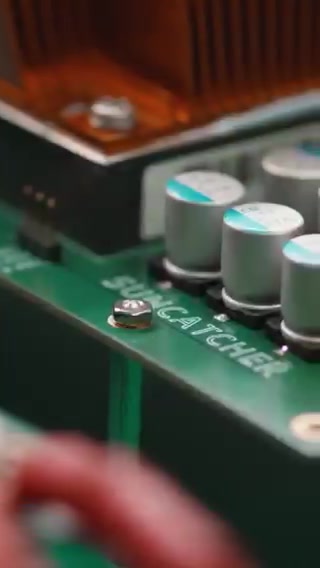
In other words, if the AI compute of the future requires massive, stable, clean energy, placing compute clusters in space — where continuous solar power is available and thermal management can be redesigned around the vacuum environment — is a direction worth betting on.

From Concept to Orbit: Hitching a Ride on Transporter-18
This mission is using a "rideshare" approach, launching aboard SpaceX's Transporter-18 shared-launch mission. The Transporter series is SpaceX's batch launch service aimed at small and medium satellites — relatively low cost and well-suited for proof-of-concept prototype missions like this one.
For Google, sending a single prototype satellite up at low cost for real-world validation is a prudent and pragmatic first step. Only by confirming that TPUs can operate stably on orbit does the grander vision of a "space data center" have any foundation.

SpaceX's Transporter series is a flagship product of the commercial rideshare launch model. Since Transporter-1's inaugural flight in 2021, the series has delivered hundreds of micro and nano satellites into Sun-Synchronous Orbit (SSO), with per-satellite launch prices as low as hundreds of thousands of dollars — far below the tens of millions traditionally required for a dedicated launch. SSO typically operates at altitudes of 500–600 km, with the orbital plane maintaining a fixed angle to the sun, allowing satellites to image the ground under consistent lighting conditions on every pass. This is why Planet and other Earth observation companies have long favored this orbit. For Project Suncatcher, SSO also means the satellite is in sunlight the vast majority of the time — closely aligned with the project's core goal of continuous solar energy access, making it a practical choice that balances launch cost with energy availability.
Space Data Centers: Hype or Trend?
Project Suncatcher is not an isolated case. The idea of migrating computing power to space has gained momentum in recent years, driven by the growing tension between AI compute demand and the limits of ground-based energy, land, and cooling resources.
But it's important to stay clear-eyed: this is still an early-stage validation. Actually moving large-scale AI compute to space faces a series of real-world challenges:
- Radiation shielding: How to keep high-density AI chips computing reliably under prolonged radiation exposure is the most fundamental engineering challenge.
- Thermal management: In the vacuum of space, there is no convective airflow — heat can only be dissipated through radiation. Designing cooling systems for high-power chips requires entirely new approaches.
- Data downlink and maintenance: How orbital compute communicates with the ground at high speed, and how hardware failures are handled or replaced, have no mature answers yet.
- Economics: While launch costs are falling, closing the gap with ground-based data centers on a cost-per-unit-of-compute basis still requires a long road ahead.
Google is clearly aware of these hurdles, which is why the first step is only a basic verification of "can it survive, can it run." This is both a technical pathfinding exercise and a statement of intent: the tech giants' exploration of what AI compute infrastructure looks like in the future has begun to push beyond the boundaries of the ground.
The physics of heat dissipation in space differ fundamentally from ground-based data centers. Ground cooling systems rely on air convection and liquid cooling to carry heat away, but in a vacuum, both conduction to air and convection are unavailable — the only viable mechanism is thermal radiation, releasing heat as infrared energy toward deep space via radiator panels. This mechanism actually has advantages at lower power densities: the background temperature of deep space is approximately -270°C, creating an enormous temperature differential that gives radiative cooling substantial theoretical capacity. However, for high-power-density AI chips like TPUs, the required radiator panel area grows linearly with power output — larger area means more complex satellite structures, greater mass, and higher launch costs, creating an engineering paradox that is difficult to escape. This is one of the key physical constraints on whether space data centers can ever scale.
The Significance of One Small Step
Google chose to describe this launch as "one small step for TPU" — modest phrasing with meaningful implications. It may not immediately reshape the AI infrastructure landscape, but it takes an idea that had previously lived at the conceptual stage and puts it on a real orbit to face real conditions.
What happens next will be told by the data from the satellite's on-orbit operations. But one thing is certain: as AI's hunger for energy and compute continues to grow, the vision of space as the "ultimate energy and deployment environment" is being taken more and more seriously.
Related articles

DeepCell: One-Click AI Generation of Documents, Spreadsheets, and Slides
DeepCell tops Product Hunt with one-click generation of documents, spreadsheets, and slides, using the .deepcell format for linked updates, designed for System 2 tasks like modeling and sales reviews.

Doneas: 15-Minute Daily Accountability Calls That Keep Indie Developers From Procrastinating
Doneas is a daily accountability tool for indie developers: plan tasks on Monday, join a 15-minute call with five builders each day, and log deliveries on a public progress page. This article analyzes its core mechanics, effectiveness, and potential issues around retention and matching.

Fastlane 2.0: Fully Automated AI Ad Campaigns, From Creative to Optimization
Fastlane 2.0 is an AI ad automation tool: enter your website and it learns your brand, generates video and image ads, and runs and optimizes them on Meta, TikTok, Instagram, and YouTube.