Google's $899 Googlebook: An All-In Bet on Gemini

Google bets $899 that users will buy a new laptop just for a truly AI-native Gemini experience.
Google has launched the Googlebook at $899, with Gemini AI embedded at the OS level rather than bolted on as a standalone app. System-level interactions — cursor, dictation, desktop widgets — are all connected to AI, keeping it available throughout the user's workflow without any manual invocation. The price puts it in direct competition with mainstream Windows laptops and entry-level MacBooks, with Google's bet being that deep system integration justifies a fresh hardware purchase. But tight coupling raises real concerns around privacy and software-hardware quality — success hinges on whether the AI features deliver a perceptibly meaningful improvement in daily use.
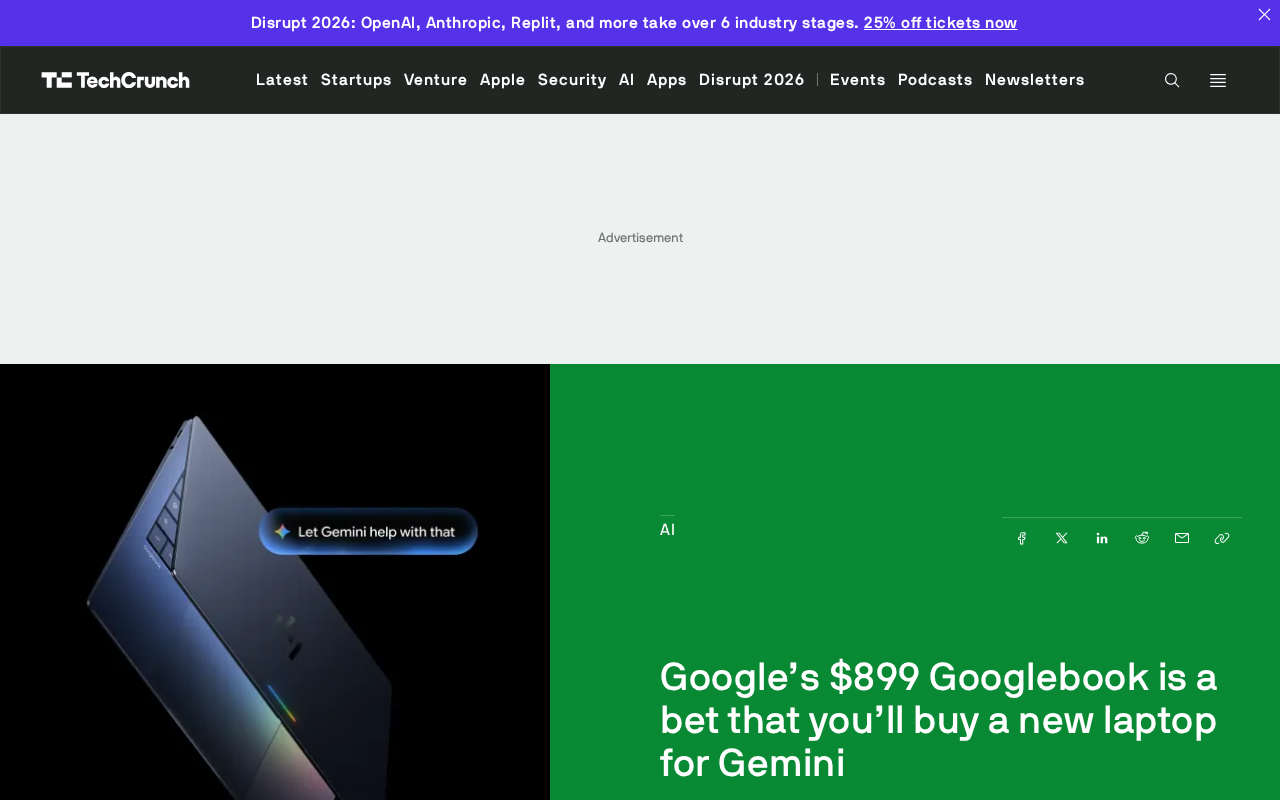
Google has unveiled a new laptop called the Googlebook, priced at $899. Its core selling point isn't hardware specs — it's the deep integration of Gemini AI into virtually every layer of the desktop operating system. From the cursor to dictation to desktop widgets, Google is trying to redefine what it actually means for a personal computer to be "AI-native."
What Does "AI-Native" Actually Mean?
Rather than layering an AI assistant on top of an existing system, the Googlebook redesigns the desktop experience from the ground up around Gemini. According to Google, Gemini is no longer just a standalone chat window — it's woven into the critical touch points of everyday computing: cursor interactions, voice dictation, desktop widgets, and other system-level features are all connected to AI capabilities.
This means users don't need to actively open an app to "use AI." Instead, the AI is always on standby throughout the natural course of using the computer. This design philosophy reflects how today's tech giants are thinking about the next generation of personal computing: AI should be part of the operating system, not an add-on.
The key distinction between "AI-native" and "AI-powered" comes down to the level of integration. The latter typically refers to overlaying an independent AI app or assistant shortcut on an existing OS — think early Cortana, or the sidebar chat windows many vendors now invoke with a keyboard shortcut. The former requires AI capabilities to be built into the system architecture from the start, with access to real-time screen content, input context, and even the file system state. This parallels Microsoft's approach with its Copilot+ PC initiative, which requires devices to include a dedicated NPU (neural processing unit) to run some AI inference tasks locally, reducing latency and cloud dependence. Google has not yet fully disclosed the technical architecture of the Googlebook, so how much of its "system-level integration" relies on local compute versus cloud processing remains a critical open question.
What Does the $899 Price Point Signal?
At $899, the Googlebook sits in the mainstream mid-to-high-end laptop segment, competing head-to-head with many standard Windows laptops and entry-level MacBooks. Google is clearly making a bet that users will be willing to buy a new device specifically for a more deeply integrated AI experience.
There's a business logic here worth scrutinizing. Today, most AI features are accessible through a browser, a subscription service, or a system update — users don't necessarily need new hardware. What Google has to convince consumers of is that the experience difference delivered by "system-level AI integration" is meaningful enough to justify a full device upgrade. This is ultimately a contest over user habits and perceived value.
The Opportunity and Risk of Deep Integration
Binding Gemini to interaction layers like the cursor, dictation, and widgets could theoretically enable a smoother, more seamless experience. When AI understands what you're currently doing on screen and what you're editing, it can offer far more contextually relevant help — something a standalone chat assistant simply cannot replicate.
But deep integration comes with real risks. On one hand, users may develop privacy and control concerns about AI continuously intervening in system-level interactions. On the other hand, if AI features fail to live up to expectations in practice, that tight coupling will drag down the entire user experience. The strong interdependence between hardware and software also means Google must maintain quality on two fronts simultaneously.
The question of AI's access to the OS at a low level has already generated significant industry debate. Microsoft's Recall feature — introduced in 2024 and designed to continuously screenshot and AI-index user screen content — was forced into a delayed launch and major revisions before release due to privacy and security concerns, ultimately shipping as opt-in and disabled by default. This episode exposed the central tension in "context-aware AI": the more AI knows about what you're doing, the more precise its assistance; but the data collection and storage required to achieve that creates an inherent privacy risk surface. For Google, this challenge is especially complex — Gemini's inference capabilities currently remain heavily dependent on cloud services, meaning system interaction data may need to be transmitted to Google's servers for processing. This sits in stark contrast to users' intuitive expectation of privacy in local computing.
A Bet on the Future of Computing
The Googlebook looks less like just a product and more like Google staking a position on what personal computing should look like next. It reflects a broad industry trend: AI is evolving from a "tool" into "infrastructure," and every major player is racing to define the next generation of interaction paradigms.
For consumers, the ultimate question is simple: is a better Gemini experience worth buying a new laptop for? The answer depends on how much of a real-world productivity gain these system-level AI features actually deliver, and whether they represent a genuine qualitative leap over existing software solutions. Google has placed its $899 bet. The market's response will determine whether this is a path worth taking.
Related articles

DeepCell: One-Click AI Generation of Documents, Spreadsheets, and Slides
DeepCell tops Product Hunt with one-click generation of documents, spreadsheets, and slides, using the .deepcell format for linked updates, designed for System 2 tasks like modeling and sales reviews.

Doneas: 15-Minute Daily Accountability Calls That Keep Indie Developers From Procrastinating
Doneas is a daily accountability tool for indie developers: plan tasks on Monday, join a 15-minute call with five builders each day, and log deliveries on a public progress page. This article analyzes its core mechanics, effectiveness, and potential issues around retention and matching.

Fastlane 2.0: Fully Automated AI Ad Campaigns, From Creative to Optimization
Fastlane 2.0 is an AI ad automation tool: enter your website and it learns your brand, generates video and image ads, and runs and optimizes them on Meta, TikTok, Instagram, and YouTube.