Google's AI Blitz: Gemini 3.5 Live Translate, NotebookLM Upgrades, and DiffusionGemma Explained

Google rolls out Gemini 3.5 Live Translate, agentic NotebookLM, DiffusionGemma, and more in one packed week.
Google released a wave of AI updates this week: Gemini 3.5 Live Translate brings end-to-end real-time speech translation, NotebookLM gains agentic capabilities and launches in Europe, DiffusionGemma explores parallel text generation via diffusion models, and Project Genie opens to top-tier subscribers — revealing a clear strategy of multimodal depth, agentic products, and dual open/closed-source development.
Google's Week in AI: From Real-Time Translation to Text Diffusion Models
This week, Google unleashed a flurry of major AI updates spanning real-time translation, note-taking tools, and experimental generative models. From an upgraded NotebookLM to the brand-new experimental open-source model DiffusionGemma, Google is advancing its AI strategy on multiple fronts simultaneously. This article breaks down each new release and examines the strategic significance behind them.

Gemini 3.5 Live Translate: A New Benchmark for Real-Time Voice Translation
One of Google's most headline-grabbing releases this week is Gemini 3.5 Live Translate, built specifically for real-time speech-to-speech translation.
Unlike traditional translation pipelines, real-time speech translation must chain together four stages — automatic speech recognition (ASR), natural language understanding (NLU), machine translation (MT), and text-to-speech synthesis (TTS) — with minimal latency. Humans perceive natural conversation as fluid within roughly a 300-millisecond tolerance window, and any bottleneck in any single stage breaks that fluency. In traditional cascade architectures, each module is trained and runs inference independently, with errors compounding as they pass from one stage to the next. This is reminiscent of the early shift in speech recognition from HMM-GMM hybrid systems to deep neural networks — the interpretability benefits of modular design have always come at the cost of cross-module error accumulation.
Google has addressed this by embedding the capability directly into Gemini 3.5's audio model, using an end-to-end learning paradigm: all four stages are jointly optimized within a single multimodal large model, eliminating the need for separate intermediate representations for each subtask. This fundamentally reduces error propagation and allows the model to learn implicit cross-modal alignment during training. It signals that the underlying large model's multimodal reasoning capabilities are now being brought into real-world, real-time interactive scenarios.
Real-time speech translation has long been considered one of the "holy grails" of AI applications. If Gemini 3.5 Live Translate can strike the right balance between latency and translation quality, it stands to unlock substantial practical value in high-frequency use cases like international conferences, cross-border business, and travel.
NotebookLM Major Upgrade: From Note-Taking Tool to Intelligent Research Assistant
Google's NotebookLM received three core capability upgrades this week, shifting its positioning from a "document Q&A tool" toward a fully-fledged "intelligent research assistant."
Agentic Capabilities in Chat
NotebookLM now features agentic capabilities within conversations. Agentic AI refers to systems that can autonomously form plans, break tasks into steps, call external tools, and execute iteratively — fundamentally different from traditional conversational models that only handle single-turn responses.
The technical foundation for this kind of capability typically consists of three layers: the ReAct (Reasoning + Acting) framework, which interleaves reasoning steps with tool-calling actions so the model can dynamically adjust based on intermediate results; Chain-of-Thought (CoT) prompting, which guides the model to explicitly output intermediate reasoning steps before arriving at a final answer, significantly improving accuracy on complex tasks; and Function Calling interfaces, which allow the model to make structured calls to external APIs or local tools during a conversation to retrieve real-time information or trigger actions. Together, these three elements make it possible to autonomously complete multi-step research workflows — for example, automatically executing the full chain of "search documents → extract key information → comparative analysis → generate report" without requiring the user to provide step-by-step guidance. This shift is a textbook example of the broader industry trend from "tools" to "assistants."
Stronger Cross-Document Reasoning
This upgrade also enhances reasoning capabilities, enabling NotebookLM to better understand relationships across multiple complex documents and perform synthesis across sources — particularly useful for research, learning, and content organization. Improved cross-document reasoning fundamentally depends on the underlying model's ability to handle long contexts and the knowledge association capabilities it develops from training on large document corpora.
Richer Output Formats
Google has added a full suite of output formats to NotebookLM. Building on the well-received "Audio Overview" feature, users can now present and share content in a much wider variety of ways.
In addition, the Notebooks feature in the Gemini app has officially launched in the European Economic Area (EEA), the UK, and Switzerland. This rollout is no small feat — AI products in the European market must simultaneously comply with both the General Data Protection Regulation (GDPR) and the EU AI Act, which came into full effect in 2024. Together, these two regulations form a unique two-tier regulatory framework: GDPR governs the lawfulness of data processing, data minimization principles, and data subject rights within AI systems; the EU AI Act applies differentiated oversight based on risk level (unacceptable / high / limited / minimal risk), with dedicated provisions for General Purpose AI (GPAI) models covering transparency disclosures (including training data summaries), copyright compliance, and data localization thresholds. For an AI product like NotebookLM that processes user-uploaded documents, finding the balance between full functionality and the data minimization principle is the central challenge of compliance design. Google's successful entry into the European market demonstrates its commitment to accelerating expansion under regulatory frameworks, and provides a useful reference point for other AI vendors considering European launches.
Project Genie: Experimental Features for Top-Tier Subscribers
Project Genie from Google Labs is now available to Google AI Ultra 5x subscribers worldwide.
Prioritizing access to cutting-edge experimental features for premium paying users is a consistent strategy for Google: it gives the most active core users early access while gathering real-world usage feedback before a large-scale public rollout. In product development, this is commonly referred to as controlled experimentation or closed beta testing — by selecting a highly engaged early-adopter cohort, Google can collect high-quality user feedback signals at relatively low operational risk, guiding subsequent product iteration. For users who closely follow AI developments, the AI Ultra subscription is increasingly becoming the primary channel for experiencing Google's latest technology.
DiffusionGemma: Bringing Diffusion Models to Text Generation
Among this week's many releases, DiffusionGemma is perhaps the most technically intriguing. As the latest experimental addition to the Gemma open-source model family, it focuses on text diffusion — a non-mainstream path for text generation.
It's worth noting that Gemma is the lightweight open-source large model series launched by Google DeepMind in 2024, available in sizes ranging from 2B to 27B parameters. Positioned as a deployable foundation model for researchers and developers, it competes directly with Meta's LLaMA series. The open-source strategy helps Google expand its technical ecosystem influence, attract external research contributions, and accelerate technical validation through community feedback. By incorporating DiffusionGemma into the Gemma family as an experimental model, Google signals a willingness to expose frontier technical approaches that are not yet fully mature to the community for collaborative exploration — consistent with Google DeepMind's long-standing approach of rapidly open-sourcing research outputs.
What Is Text Diffusion?
Virtually all mainstream large language models today use an autoregressive approach to generate text token by token in sequence — GPT series, LLaMA, and Gemma all fall into this category. The fundamental characteristic of this approach is strict sequential dependency: generating the N-th token requires all previous N-1 tokens to be completed first, meaning inference latency for long text generation grows linearly with sequence length.
Diffusion models work differently. Born in the image generation space (e.g., Stable Diffusion, DALL-E), their core idea is to start from noise and progressively denoise toward a complete output. Specifically, the training phase gradually adds Gaussian noise to data until it becomes fully random (the forward process), and the inference phase learns to progressively recover the original data from pure noise (the reverse process).
Applying this approach to discrete text spaces introduces additional challenges — unlike pixels, text tokens are not continuous values, so Gaussian noise cannot be directly applied to token IDs. Researchers have proposed several discrete diffusion variants: Masked Diffusion defines the "adding noise" operation as randomly replacing tokens with a [MASK] token, with "denoising" corresponding to predicting the original token at masked positions — similar in spirit to BERT's pretraining task, but capable of parallel denoising across all positions during inference. Absorbing Diffusion treats [MASK] as an "absorbing state" into which all tokens eventually collapse, with the model then learning a reverse process to recover them.
The biggest potential advantage lies in inference speed and parallelism: Google explicitly describes text diffusion as an "exceptionally fast" generation method. Because diffusion models can denoise the entire sequence in parallel — rather than advancing word by word like autoregressive models — they can theoretically achieve dramatically higher generation throughput in long-text generation and batch inference scenarios. This has significant cost implications for commercial deployments requiring high-concurrency serving.
The Significance of Open-Source Exploration
Releasing DiffusionGemma as an open-source experimental model continues the open approach Google has consistently applied to the Gemma ecosystem. Giving the research community access to a working text diffusion model not only advances a frontier technical direction but also provides the entire open-source AI community with a new research starting point. Academic research on text diffusion remains in its early stages, and Google's release effectively offers a high-quality public baseline that should accelerate external researchers' efforts to validate and improve on this technical approach. If text diffusion can prove its value in both generation quality and speed, it could become an important alternative technical pathway alongside autoregressive architectures.
Strategic Reading: Google's Multi-Front Advance
Taken together, this week's releases reveal several clear characteristics of Google's current AI strategy:
Continued deepening of multimodal capabilities. Gemini 3.5 Live Translate combines audio understanding with real-time interaction, showing that Google is extending large model capabilities into real-time scenarios closer to everyday life. The maturation of end-to-end multimodal architectures is transforming "full-sensory AI interaction" from a lab concept into deployable products.
A clear trend toward agentic products. NotebookLM's introduction of agentic capabilities is a vivid illustration of the industry-wide evolution from tools to assistants. The maturation of the ReAct framework and Function Calling is accelerating this shift from technical possibility to product reality.
Open-source and closed-source advancing in parallel. On one side, Project Genie targets high-end subscribers; on the other, DiffusionGemma is opened to the community. Google is seeking a dynamic balance between commercialization and technical openness. Open-sourcing expands ecosystem influence and accelerates technical validation, while keeping premium features proprietary protects the commercial monetization path.
Accelerating regional compliance expansion. The launch of Notebooks in Europe shows that Google is actively engaging with regulatory environments like GDPR and the EU AI Act, treating compliance capabilities as core infrastructure for global competition rather than an afterthought.
For practitioners and users following AI developments, Google's packed release week once again underscores the intensity of the current AI race — major players are shipping new capabilities on a weekly cadence, with a pace of technological iteration unlike anything seen before.
Key Takeaways
- Gemini 3.5 Live Translate uses an end-to-end multimodal architecture to jointly optimize ASR/NLU/MT/TTS, fundamentally resolving the error accumulation problem in traditional cascade architectures
- NotebookLM introduces agentic capabilities built on the ReAct framework, marking its evolution from a document Q&A tool to an autonomous multi-step research assistant; it has simultaneously achieved dual-compliance launch in the European market
- DiffusionGemma brings masked diffusion mechanisms to text generation, replacing autoregressive token-by-token inference with parallel denoising, theoretically enabling significant throughput gains for long-text generation
- Google's week of releases reflects a four-dimensional strategic thrust: deepening multimodality × productizing agentic AI × parallel open/closed-source development × global compliance expansion
Related articles
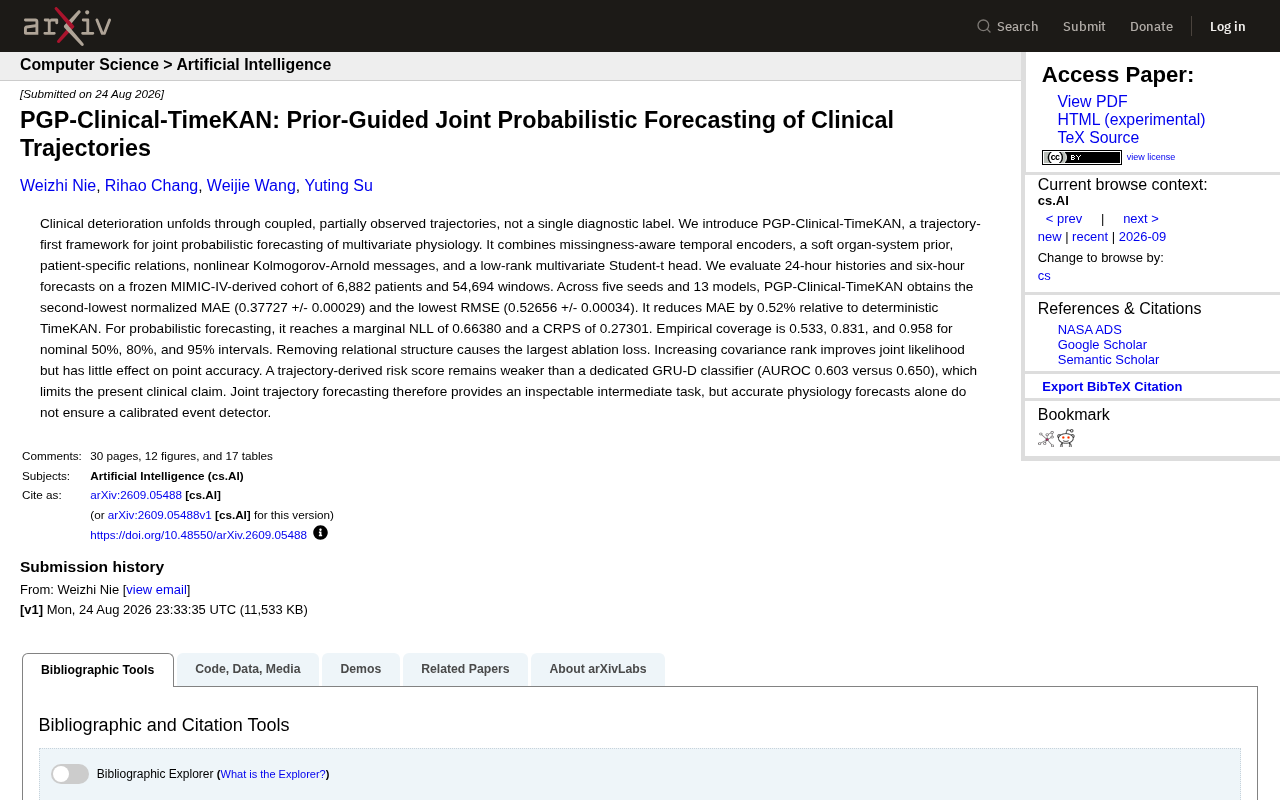
PGP-Clinical-TimeKAN: A Detailed Guide to the Multivariate Physiological Indicator Joint Prediction Framework
An in-depth analysis of the PGP-Clinical-TimeKAN framework for joint probabilistic prediction of multivariate physiological indicators, covering trajectory-first paradigm, KAN message passing, MIMIC-IV validation, and ablation studies.
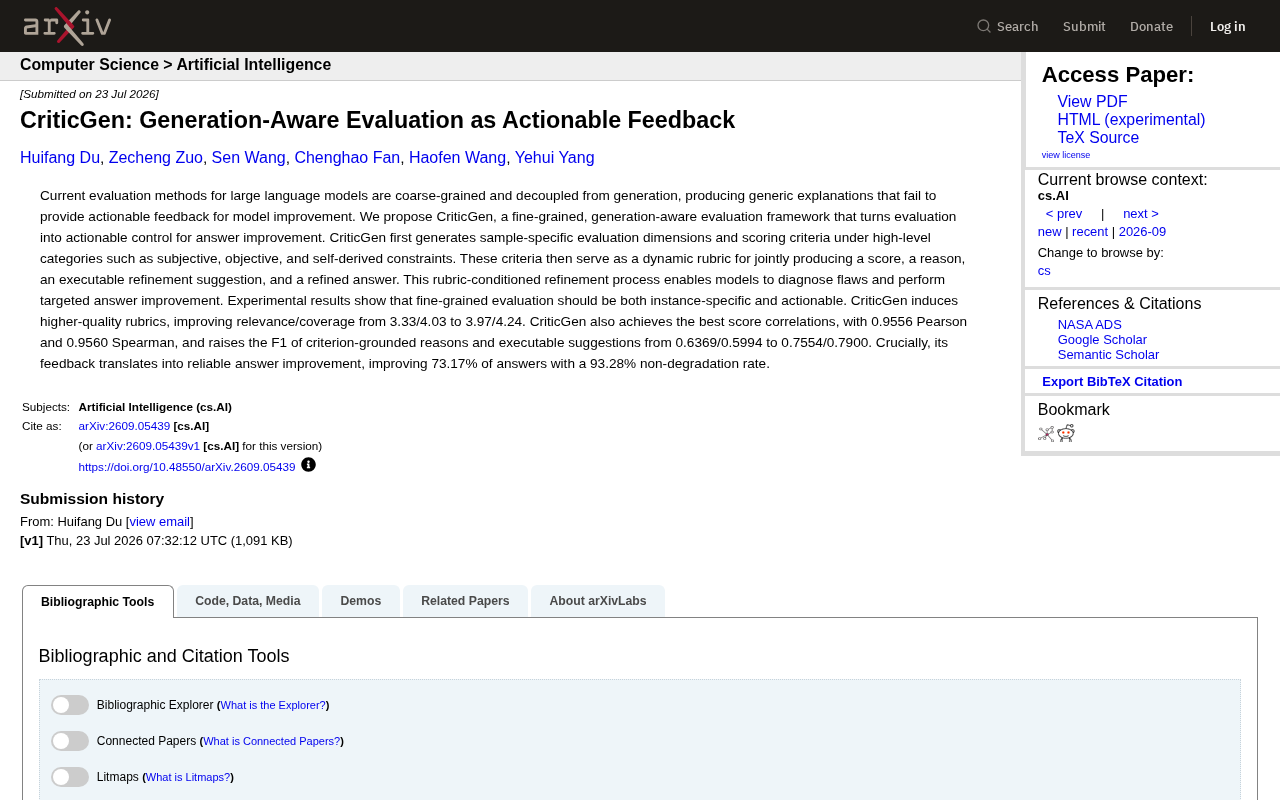
CriticGen: A New Framework That Transforms AI Evaluation into Actionable Improvement Feedback
CriticGen proposes a generation-aware evaluation framework that transforms AI assessment from passive scoring to an active optimization loop, achieving 73.17% answer improvement and 93.28% non-degradation rate.
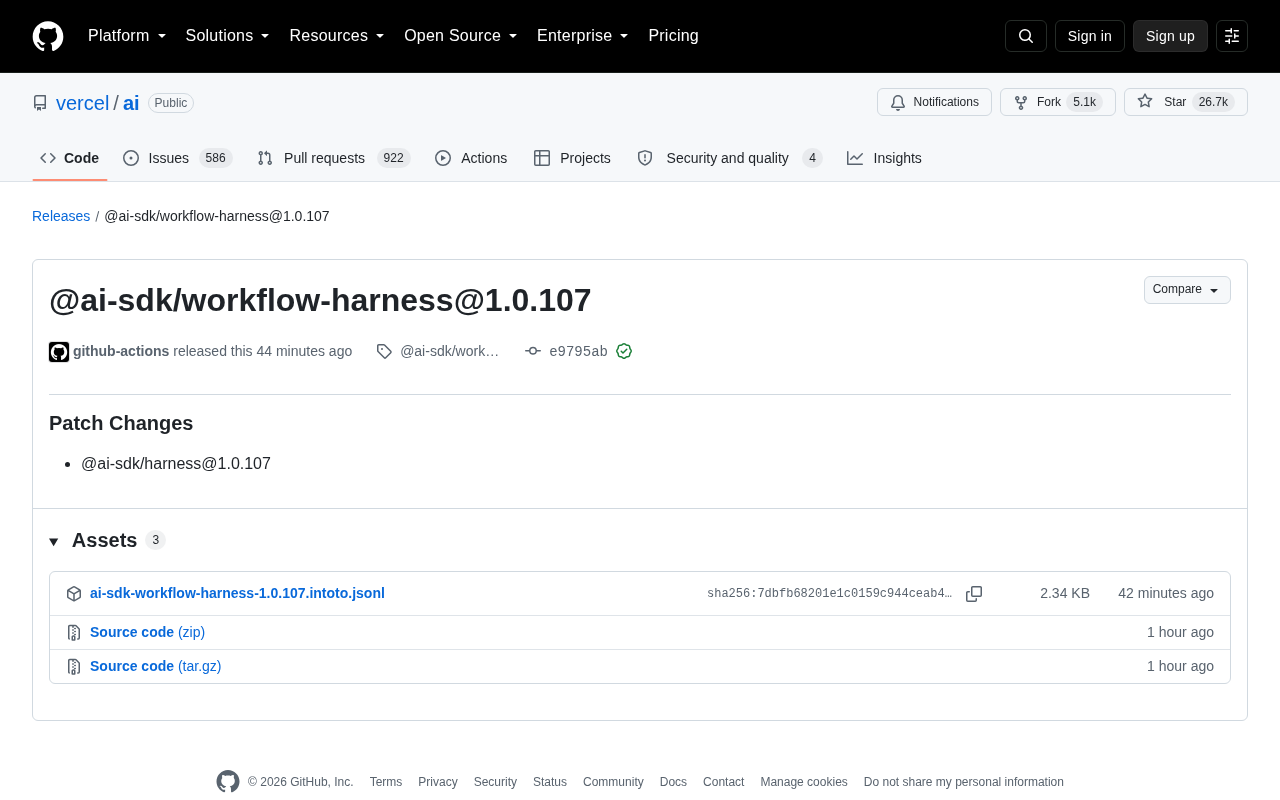
Vercel AI SDK workflow-harness Update Analysis
Deep analysis of Vercel AI SDK workflow-harness 1.0.107 update: architecture design, engineering practices, and developer value for building reliable AI apps.