Google Sparks Controversy by Replacing Git Tags with Google Drive for Source Code Releases

Google's shift from Git tags to Google Drive for source releases raises supply chain security concerns.
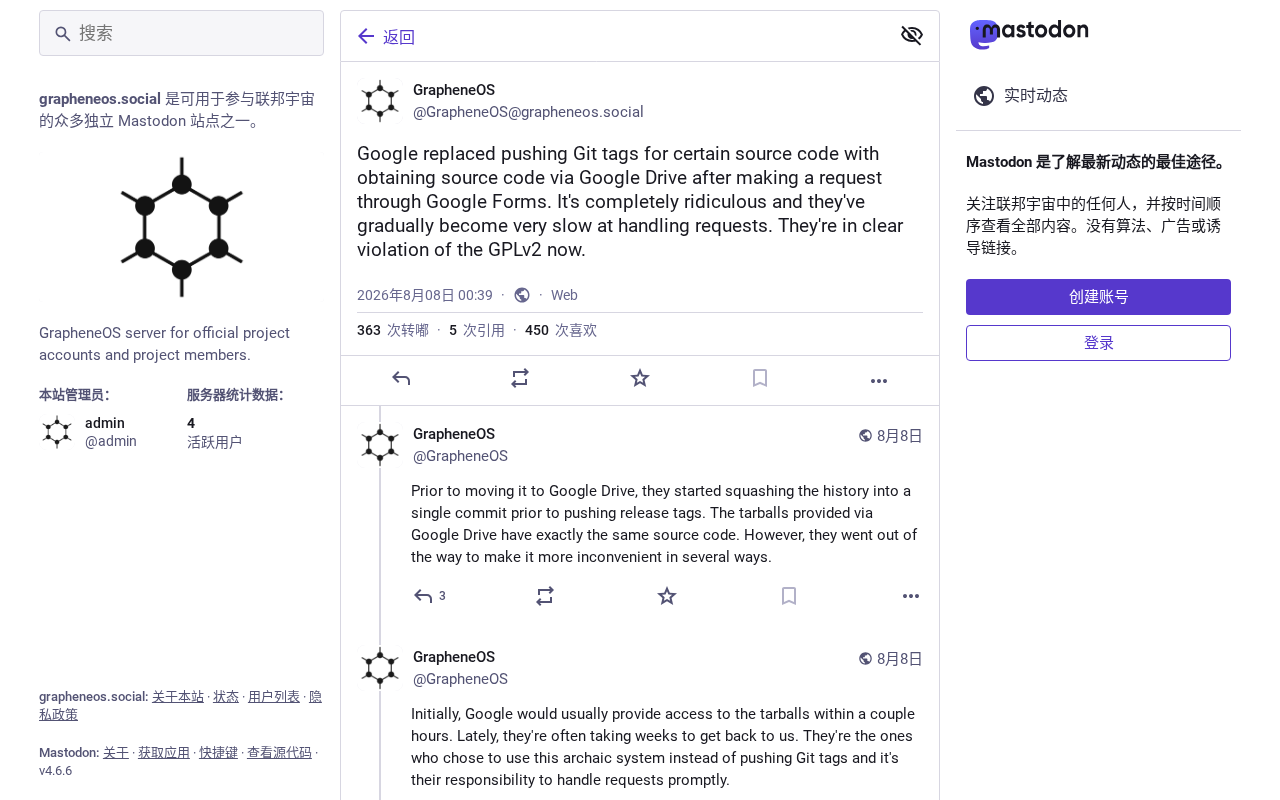
Google sparked controversy by distributing some open-source project source code via Google Drive instead of traditional Git tags. The developer community raised concerns about software supply chain security, reproducibility, long-term availability, and ecosystem compatibility. The change contradicts industry best practices and even Google's own advocacy for the SLSA framework, highlighting tensions between convenience and trustworthiness in open-source infrastructure.
Background: A Quiet Change in Source Code Distribution
Recently, a discussion about Google's open-source practices went viral on Hacker News, garnering 280 upvotes and over 114 comments. The core issue: Google has replaced the traditional Git tags release mechanism with Google Drive downloads for certain source code projects.
This change may seem like a minor engineering decision, but it has struck a nerve in the open-source community regarding long-standing concerns about reproducibility, traceability, and long-term availability. For developers and downstream projects that depend on this source code, the change in distribution method isn't merely a shift in workflow habits—it could affect the health of the entire software supply chain.
Why Are Git Tags So Important for Open-Source Projects?
The Technical Value of Git Tags
In software development practice, Git tags are the standard approach for marking specific version releases. With a command like git tag v1.0.0, developers can permanently mark a specific commit in a repository, allowing anyone to precisely checkout a particular release version.
It's worth understanding that Git tags come in two varieties: lightweight tags and annotated tags. Lightweight tags are simply pointers to a specific commit, while annotated tags are full objects in the Git database, containing tagger information, date, tag message, and an optional GPG signature. In formal open-source release workflows, annotated tags combined with GPG signatures have become an industry best practice—flagship projects like the Linux kernel, Go language, and Kubernetes all use this approach. Signed tags allow any downloader to verify through the maintainer's public key that a version was genuinely published by a legitimate maintainer and hasn't been tampered with since release. This cryptographic guarantee is one of the cornerstones of software supply chain security.
The advantages of this mechanism include:
- Reproducibility: Anyone can rebuild a completely identical build environment and artifacts based on a tag.
- Traceability: Tags are bound to specific commit hashes, providing clear and auditable history.
- Decentralization: Git's distributed nature means code can be freely cloned and mirrored without depending on a single service provider.
- Toolchain compatibility: Virtually all CI/CD systems, package managers, and dependency tools natively support pulling code via Git tags.
Limitations of Google Drive Distribution
By comparison, distributing source code archives through Google Drive has clear shortcomings. First, Google Drive links and files lack the content-addressable guarantees that Git tags provide—you cannot verify through an immutable hash whether downloaded content has been tampered with or replaced.
Git's underlying design is based on Content-Addressable Storage: every file, directory tree, and commit is identified by a SHA-1 hash (newer versions are migrating to SHA-256). This means that if any content in the repository changes, its hash value will be completely different, leaving tampering nowhere to hide. This design philosophy is shared by modern systems like IPFS and the Nix package manager. Files on Google Drive, however, are identified only by an opaque file ID—file contents can be replaced at any time by the owner while the URL remains unchanged. Downstream users have no way to detect whether content has changed unless they independently calculate and compare checksums.
Second, as a general-purpose cloud storage service, Google Drive links may expire, and files may be deleted or modified—a significant risk for projects requiring long-term stable references.
Core Concerns from the Open-Source Community
Software Supply Chain Security Concerns
In an era of increasingly frequent software supply chain attacks, source code verifiability is critical. Git tags combined with signed tags can provide cryptographic-level verification, ensuring trusted code provenance. Downloading archives from Google Drive, however, makes it difficult to establish the same level of trust chain. How can downstream users confirm that a downloaded file is genuinely the official, untampered release? This question recurred throughout the community discussion.
Supply Chain Attacks have surged in recent years, with several major incidents providing real-world context for this discussion. In the 2020 SolarWinds incident, attackers planted malicious code during the build process, affecting over 18,000 organizations including U.S. government agencies. The 2021 Codecov incident, the 2022 npm ecosystem colors.js/faker.js poisoning, and the 2024 xz-utils backdoor all demonstrate that every step from source code acquisition to compiled artifacts can become an attack surface. Against this backdrop, the SLSA (Supply-chain Levels for Software Artifacts) framework and the Sigstore project emerged to provide end-to-end provenance attestation and signature verification for software artifacts. Notably, Google itself is a primary driver of the SLSA framework, which creates a certain contradiction between its Google Drive distribution practice and its own advocated security principles.
Long-Term Availability Concerns
An implicit contract of open-source software is long-term availability. Historical versions of a project may still be needed years or even decades later—whether for reproducing old research, maintaining legacy systems, or conducting security audits. Git repositories naturally support this kind of long-term archiving, while the lifespan of cloud storage links depends entirely on the service provider's policies. If Google adjusts its Google Drive policies or deletes related files, this source code could be lost forever.
Long-term preservation of open-source software has become an important issue for digital civilization. The Software Heritage Foundation (initiated by INRIA, the French National Institute for Research in Digital Science and Technology) is systematically archiving publicly available source code repositories worldwide, having collected over 18 billion unique source files to date. Its archival mechanism is based on complete clones of Git repositories, not download links. Similarly, GitHub's Arctic Code Vault project stores open-source code in permafrost beneath Norway's Svalbard archipelago. These efforts all depend on source code existing in Git repositories in a standardized, machine-readable format. If critical source code exists only behind Google Drive links, it will escape the coverage of these preservation networks, becoming "dark matter" in our digital civilization.
Automation and Ecosystem Compatibility
Modern software development is heavily dependent on automation. Package managers, build scripts, and dependency resolution tools are almost all designed around Git and standard release channels. Switching to Google Drive means these toolchains require additional, non-standard adaptation work, increasing integration costs and reducing the overall smoothness of the development ecosystem.
Specifically, package managers in modern language ecosystems—such as Go modules, Rust's Cargo, Python's pip, and JavaScript's npm/yarn—mostly support pulling dependencies directly from Git repository tags. Go modules' design is particularly illustrative: through the GOPROXY protocol and the Go checksum database (sum.golang.org), it achieves globally consistent verification for every module version. Anyone fetching the same version of a module from anywhere will get identical content, guaranteed by a transparency log mechanism. When source code no longer exists in the standard Git tag format, these automated systems cannot properly index and verify dependencies. Developers are forced to write additional scripts to download, extract, and verify archives from Google Drive, greatly increasing build complexity and error probability.
Analysis of Google's Possible Motivations
Although this change has generated dissatisfaction, from Google's perspective, there may be several reasonable considerations:
- Repository size control: Some source code may include large binary files or datasets that would cause slow cloning and expensive storage if placed directly in Git repositories. Moving such content out of Git is a common engineering optimization.
- Legal and compliance requirements: Distribution of certain code or data may be subject to specific licensing or compliance constraints, and distributing through controlled cloud storage links makes access permission management easier.
- Infrastructure strategy adjustments: Google may wish to reduce dependence on public Git hosting services or unify internal distribution processes.
However, for the repository size problem, the industry already has mature alternative solutions. Git LFS (Large File Storage) allows large files to be stored on external servers while retaining pointer files in the Git repository, balancing version control integrity with storage efficiency. Additionally, platform features like GitHub Releases and GitLab Package Registry allow compiled artifacts, datasets, and other attachments to be attached to specific Git tags—maintaining association with the version management system while avoiding repository bloat. DVC (Data Version Control) is designed specifically for machine learning scenarios and can track version changes in large datasets. These solutions demonstrate that "the repository is too large" is not a sufficient reason to abandon Git tags—the issue isn't whether external storage is needed, but whether the association with and verifiability through the version control system is maintained.
Even if the motivations are reasonable, the community generally believes that Google, as a major participant in the open-source ecosystem, should have communicated more thoroughly before changing its release method and provided verifiable, mirrorable alternatives.
Implications for Open-Source Practices
The Value of Standardization Cannot Be Underestimated
This incident reminds us once again that the open-source ecosystem thrives largely because of shared standards and conventions. As the de facto standard for version releases, Git tags derive their value not only from their technical functionality but also from the cross-organization, cross-project foundation of trust and collaboration they establish. Any deviation from standards, even if well-intentioned, can trigger cascading effects downstream.
Big Tech Must Bear Greater Responsibility in Open Source
Tech giants like Google and Meta are maintainers of many critical open-source projects. Every one of their decisions has far-reaching impacts on the broader downstream user base. Therefore, when these companies adjust their open-source practices, they need more transparent communication, more thorough community engagement, and greater respect for the principles of decentralization and sustainability.
Conclusion
Google's practice of replacing Git tags with Google Drive may appear to be a minor technical adjustment on the surface, but it fundamentally reflects the enduring tension in the open-source software supply chain between convenience and trustworthiness, centralization and decentralization. For the developer community, this serves both as a wake-up call and an opportunity to discuss open-source best practices.
Regardless of whether Google ultimately adjusts this strategy, this discussion has reinforced a consensus: Reproducibility, verifiability, and long-term availability of source code are non-negotiable core values in the open-source promise.
Related articles

Python 3.15 New Feature: Is the sentinel Type Better Than None?
Python 3.15 adds the sentinel type, using named unique sentinel objects to replace None and bare object(), resolving confusion among missing values, explicit emptiness, and invalid input while avoiding type hint failures.

Deep Learning's Three Architectures and the Universal Approximation Theorem: A Complete Guide to MLPs, CNNs, and Transformers
Explaining the inductive bias differences among MLP, CNN, and Transformer, the existence meaning of the Universal Approximation Theorem (UAT), and the role of Taylor expansion in approximation analysis, while clearing up common misconceptions.

GitLab Emergency Patch Release: Analysis of Critical Security Fixes
GitLab releases critical patch 19.5.1, sparking 355 points of discussion on Hacker News. This article analyzes the background, upgrade steps for self-hosted instances, and verification points to help DevOps teams respond quickly to security updates.