GPT-5.5 Hands-On Review: Image Generation at Just 3 Cents Per Image, Plus a Full Breakdown of Coding Capabilities and API Costs

GPT-5.5 delivers powerful image generation and coding at remarkably low API costs.
GPT-5.5 excels in image generation and programming. API-based image generation costs as low as 6-7 cents (RMB) per image—far cheaper than competitors—making it ideal for batch scenarios like e-commerce and social media. Programming capabilities have also improved significantly, though non-technical users still face a "last mile" barrier. Beginners are advised to start with prompt engineering and Python basics, using GPT-5.5 itself as a learning assistant to gradually unlock AI programming potential.
Introduction
As OpenAI continues to iterate on the GPT series, the release of GPT-5.5 has attracted widespread attention. OpenAI's GPT (Generative Pre-trained Transformer) series has undergone several major leaps since the release of GPT-1 in 2018—GPT-2 demonstrated the text generation potential of large-scale language models, GPT-3 stunned the industry with its 175 billion parameters, and GPT-4 introduced multimodal capabilities (processing both text and images simultaneously). The progress of each generation is reflected not only in parameter scale but also in reasoning ability, context understanding length, and instruction-following precision. As the latest iteration, GPT-5.5 continues OpenAI's strategy of finding balance between model capabilities and commercialization, particularly adopting a more aggressive price reduction approach for API pricing. This aligns with the overall industry trend—as inference optimization techniques (such as quantization, distillation, speculative decoding, etc.) mature, the inference costs of large models are declining rapidly.
Many users have already started hands-on testing, especially in scenarios like image generation, programming, and content creation. This article is based on a real usage experience shared by a Bilibili user, examining GPT-5.5's actual performance and usage costs in everyday applications.
GPT-5.5 Image Generation: An Exceptional Value at Just Cents Per Image
Based on hands-on testing, GPT-5.5 demonstrates impressive cost-effectiveness in image generation. According to actual usage data, generating images via API calls costs very little—approximately 6-7 cents (RMB) per image.

Here's an explanation of how API calls work: An API (Application Programming Interface) is the standard way developers interact with AI models. Users send HTTP requests to OpenAI's servers, accompanied by text prompts or image instructions, and the model completes inference in the cloud before returning results. API billing is typically based on token count—tokens are the smallest units the model uses to process text, with one English word corresponding to roughly 1-2 tokens, and one Chinese character corresponding to approximately 1.5-2 tokens. Image generation billing is usually calculated based on resolution and number of generations. Compared to using the ChatGPT web interface directly (monthly subscription, with the Pro version at about $200/month), the pay-per-use API model is more flexible and economical for light users and developers, especially suitable for scenarios requiring programmatic batch processing.
This pricing is very friendly for individual creators and small teams. Compared to previous AI image generation services that often cost several cents to even a few yuan per image, GPT-5.5's cost advantage is very clear. The user mentioned that single image generation costs can be as low as approximately 3 cents (RMB), further lowering the barrier for batch content creation.

Practical Applications of Image Generation
This user primarily uses GPT-5.5 for image content generation and processing. From the screenshots, we can see that the model can complete basic image creation tasks based on instructions.
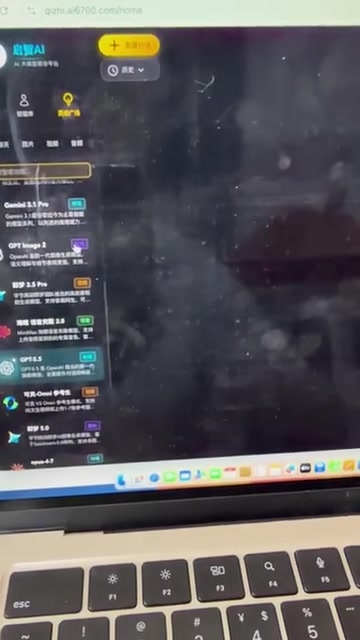
To understand the positioning of GPT-5.5's image generation capabilities, it's helpful to understand the overall evolution of AI image generation technology. The AI image generation field has experienced explosive growth in recent years: from Stable Diffusion's open-source release igniting the community in 2022, to Midjourney dominating the high-end market with artistic style quality, to the DALL·E series (under OpenAI) continuously iterating—image generation technology has progressively evolved from diffusion models. The core principle of diffusion models is to first add noise to an image, then train a neural network to learn the gradual denoising process, ultimately enabling the generation of high-quality images from pure noise. Currently, mainstream AI image generation services on the market vary significantly in price: Midjourney's basic subscription is about $10/month (approximately 200 images), Stable Diffusion can be deployed locally for zero marginal cost but requires high-performance GPUs, while domestic services like Tongyi Wanxiang and Wenxin Yige cost between 0.1-0.5 yuan per image. GPT-5.5's price of 6-7 cents per image indeed offers significant competitive advantage.
Although this user didn't deeply showcase complex image generation cases, based on cost and basic results, GPT-5.5 already has practical value in lightweight image generation scenarios, suitable for everyday needs like e-commerce product images and social media content creation.
GPT-5.5 Programming Capabilities: Enormous Code Generation Potential
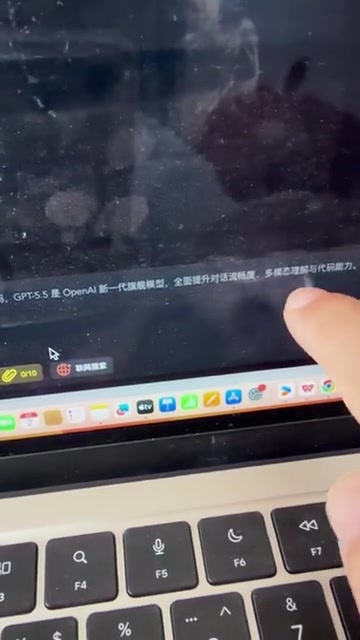
Beyond image generation, GPT-5.5's improved programming capabilities are another major highlight of this update. The user mentioned that many people are using GPT-5.5 to write code and build models, and can even quickly set up projects by pasting code.
Real-World Challenges for Non-Programmers Using AI for Coding
However, the user also honestly admitted to "not knowing how to code," currently staying primarily at the image generation level of usage. This reflects a common phenomenon: Despite AI tools becoming increasingly powerful, users still need a certain technical foundation to fully leverage their programming capabilities.
This phenomenon is known in academia as the "last mile problem." The democratization of AI has been an important trend in the tech industry in recent years—from needing a PhD to train models, to ordinary users being able to use AI through natural language conversations today, the technical barrier has been dramatically lowered. However, there remains a significant gap between "lowering the barrier" and "eliminating the barrier." Tools are becoming easier to use, but going from "can use" to "use well" still requires users to understand the underlying logic. By analogy, smartphones allow everyone to take photos, but professional photographers remain irreplaceable. Similarly, GPT-5.5 allows everyone to generate code, but understanding code logic, debugging errors, and optimizing performance still requires systematic learning.
The user called out in the video: "Is there anyone who knows how? I want to learn coding too." This demand represents the voice of a large number of non-technical users—they see the enormous potential of AI programming but lack an entry path and guidance.
How Beginners Can Get Started with GPT-5.5 Programming
If you're also a programming beginner who wants to leverage GPT-5.5 for code development, here are several directions worth focusing on:
-
Start with Prompt Engineering: Prompt engineering refers to the technique of carefully designing text instructions input to AI models to guide them toward producing more precise, higher-quality results. This isn't simply "asking questions"—it's a practical skill involving cognitive science and linguistics. Core techniques include: role assignment (having the AI act as a specific expert), few-shot learning (providing a few examples in the prompt), Chain-of-Thought (requiring the model to reason step by step), structured output (specifying formats like JSON/Markdown), and more. For image generation scenarios, good prompts need to include subject description, style specification, composition requirements, and lighting/atmosphere elements; for code generation, you need to clearly specify programming language, functional requirements, input/output formats, and error handling requirements. Mastering prompt engineering can significantly improve AI tool effectiveness for non-technical users without writing any code.
-
Learn Basic Python Syntax: Python has become the preferred programming language in the AI field due to its concise syntax design and extremely rich ecosystem. NumPy and Pandas handle data processing, TensorFlow and PyTorch are the two major deep learning frameworks, and OpenAI's official Python SDK (the openai library) enables API calls with just a few lines of code. A typical GPT-5.5 API call script might be no more than 20 lines of Python code, including importing libraries, setting the API key, constructing request parameters, sending the request, and processing the returned results. For beginners, Python's learning curve is relatively gentle—variables, conditional statements, loops, and functions can typically be grasped within a week, which is sufficient to support simple API call development.
-
Make Good Use of OpenAI API Documentation: The official documentation provides detailed API call instructions, and combined with GPT-5.5's own explanatory abilities, you can learn while doing. Currently, the most effective learning path is actually "AI-assisted learning"—using GPT-5.5 itself as a programming tutor, learning by doing in actual projects, asking the model directly about unfamiliar concepts, forming a closed loop of "learn-practice-feedback."
-
Start with Small Projects: Don't attempt complex models right away—start with simple tasks like image generation and text processing.
GPT-5.5 API Cost Breakdown
Based on the user's shared data, the GPT-5.5 API cost structure is approximately as follows:
| Use Case | Cost Per Call (RMB) |
|---|---|
| Image Generation | ~0.06-0.07 yuan/image |
| Single Drawing | ~0.03 yuan |
| Code Generation | ~0.065 yuan/call |
This pricing structure gives GPT-5.5 strong competitiveness in commercial applications. For scenarios requiring large-scale content generation—such as batch e-commerce image production, social media content creation, and marketing material design—the cost advantage is particularly pronounced.
Compared to other AI image generation services on the market, GPT-5.5's API pricing is at a relatively low level. Combined with OpenAI's inherent advantages in comprehension and generation quality, the overall value proposition is commendable. It's worth noting that the pay-per-use API model means users only pay for actual usage without monthly fee burdens, which is especially friendly for individual users and startups with irregular usage patterns. For high-frequency enterprise users, OpenAI also offers batch call discounts and enterprise-level packages to further reduce marginal costs.
Conclusion: Is GPT-5.5 Worth Trying?
GPT-5.5 shows improvement over its predecessors in multiple dimensions, particularly in cost control and multimodal capabilities. Image generation at just a few cents per image truly democratizes AI creation.
However, to fully unleash GPT-5.5's potential in programming and model building, users still need to invest time in learning foundational technical knowledge. AI has lowered the creative barrier but hasn't completely eliminated the learning curve. As discussed earlier, the distance between "can use" and "use well" is precisely where individual competitive advantage lies—those willing to spend time understanding prompt engineering, mastering Python basics, and familiarizing themselves with API call workflows will gain significant efficiency advantages in the AI era.
For users aspiring to explore deeper, now is an excellent time to get started—after all, with an extremely low-cost AI assistant available at any time, whether for image generation or learning to code, efficiency has improved dramatically compared to before.
Key Takeaways
- GPT-5.5 image generation costs are extremely low, approximately 6-7 cents (RMB) per image, with single drawings as low as 3 cents, offering clear price advantages over competitors like Midjourney and Tongyi Wanxiang
- Programming and code generation represent a major capability improvement direction for GPT-5.5, but non-technical users still face barriers—the "last mile problem"
- The pay-per-use API model is flexible and economical, suitable for batch content generation in commercial scenarios and individual users with irregular usage patterns
- Regular users can start with prompt engineering and Python basics, using GPT-5.5 itself as a learning tutor to gradually master AI programming capabilities
Related articles
 Product Reviews
The Programmer's Desk Setup Guide: Building a Workspace That Feels Like Home
Discover how programmers build productive, comfortable workspaces. From multi-monitor setups to ergonomic design, explore the desk philosophy that drives focus and flow.
 Product Reviews
Qoder vs Cursor Real-World Comparison: Which $20/Month AI IDE Is Better?
Hands-on comparison of Qoder vs Cursor AI IDEs: Agent autonomy, human interaction count, and architecture decisions. Qoder needed only 2 interactions vs Cursor's 8.
 Product Reviews
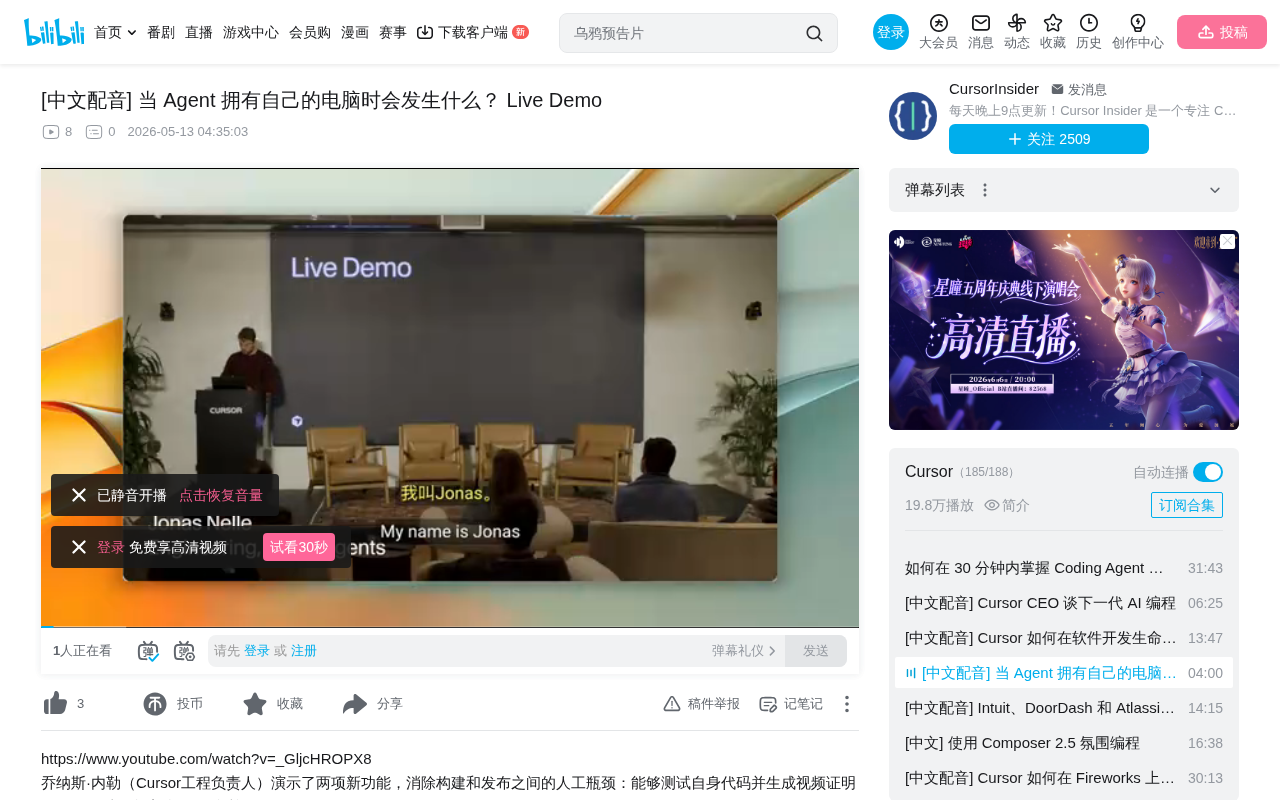
Cursor Cloud Agent Demo: Eliminating Bottlenecks Across the Entire Software Development Lifecycle
Deep analysis of Cursor's Cloud Agent demo showing how cloud VMs, automated test artifacts, and a full-chain control plane systematically eliminate human bottlenecks across the software development lifecycle.