GPT-5.6 Autonomously Writes 1,000 Lines of Code: AI Programming Enters the Task Delegation Era

GPT-5.6 autonomously wrote nearly 1,000 lines of code without prompting, signaling AI programming's shift to task delegation.
A Snorkel AI research scientist reports GPT-5.6 independently completed a nearly 1,000-line coding task end-to-end, without repeated prompting. This reflects improvements in context management, task decomposition, and self-reflection, marking AI programming's shift from assistive tools to autonomous task delegation.
A Real-World Test of a Thousand Lines of Code
Ankit Aich, a Senior Research Scientist at Snorkel AI, recently shared a firsthand experience: he used an early version of GPT-5.6 to complete a complex programming task involving nearly 1,000 lines of code. What makes this test truly noteworthy isn't the sheer volume of code, but the fact that GPT-5.6 completed the entire job independently from start to finish—without repeated prompting or manual intervention.
It's worth mentioning that Snorkel AI was incubated by Stanford University's AI Lab and focuses on Programmatic Data Labeling and Weak Supervision technologies. Programmatic data labeling is a paradigm that replaces manual human annotation by writing Labeling Functions—in traditional machine learning workflows, obtaining high-quality labeled data is often the most expensive and time-consuming step, while weak supervision allows models to learn from noisy labels, incomplete labels, or heuristic rules, rather than relying on 100% accurate human annotation. Its flagship product, Snorkel Flow, commercializes both technologies, allowing enterprises to build training datasets by writing labeling functions rather than labeling by hand, enabling them to complete data preparation in days rather than months and dramatically reducing AI development costs. The company's researchers routinely need to write large amounts of complex code such as data processing pipelines and model evaluation scripts, and they hold AI programming tools to a higher standard of practical usefulness than ordinary developers—which is an important reason why Aich's assessment carries significant weight.

In traditional AI-assisted programming scenarios, developers often have to continuously correct, supplement, and guide the model before they can get usable code. Aich's experience reveals a shift that is already underway: large language models are evolving from "code completion tools" into autonomous development assistants capable of handling complex tasks end-to-end.
Behind this evolution lies a leap in the overall development trajectory of AI programming tools. AI programming tools have gone through three stages:
- Stage One: Represented by early versions of GitHub Copilot (released in 2021, based on OpenAI's Codex model), offering single-line/multi-line code completion. It was essentially an enhanced form of autocomplete, with developers still leading the overall architectural design.
- Stage Two: Represented by tools like Cursor and Continue, offering conversational code generation. Developers could describe their requirements in natural language to obtain complete functions, but interactions were still based on single request-response units, with limited context continuity.
- Stage Three: The currently emerging Agentic Coding, represented by Devin (released by Cognition AI in 2024, the first AI agent publicly claimed to complete full software engineering tasks independently) and SWE-agent (developed by a Princeton University research team, specifically designed for GitHub Issue fixing tasks). These agents can autonomously execute terminal commands, debug errors, and search documentation, fundamentally changing the basic assumptions of human-machine collaboration—models no longer passively wait for instructions but proactively plan execution paths, invoke tools, and handle exceptions until the task is complete.
The capabilities demonstrated by GPT-5.6 are precisely a signal of moving toward this third stage—shifting from passive response to proactive planning and execution. Academically, this corresponds to improvements in Task Decomposition and Self-Reflection capabilities. Task decomposition enables the model to break down high-level instructions like "write a complete application" into executable atomic steps; self-reflection allows the model to detect logical errors in its own output and proactively correct them without relying on external human intervention.
The Key Leap from "Assistive Tool" to "Autonomous Assistant"
What Does "No Repeated Prompting" Really Mean?
Aich specifically highlighted GPT-5.6's core strength—"getting the job done from start to finish without repeated prompting." This statement may sound understated, but it strikes directly at the most common pain point of current AI programming tools.

The more complex the coding task, the higher the risk of the model experiencing "context loss" or "logical breakdown." For a coding project of nearly a thousand lines, the model must consistently maintain a coherent understanding of the overall architecture, variable naming conventions, and function dependencies. Any context drift could cause subsequent code to fail. GPT-5.6's ability to coherently complete a task of this scale demonstrates that its context management and long-range reasoning capabilities have indeed seen substantial improvement.
Why "A Thousand Lines of Code" Is a Threshold Worth Watching
A thousand lines of code typically means the coexistence of multiple functional modules, various data structures, and complex control flows. The model needs not only to understand the requirements but also to autonomously plan the code structure, handle edge cases, and maintain consistent code style throughout the generation process.

Moreover, long code generation poses an extremely demanding challenge in terms of "attention decay." The core challenge for large language models in handling long code tasks lies in the limitations of the Context Window and the decay of the attention mechanism. A Token is the basic unit through which a model processes text (an English word typically corresponds to 1-2 Tokens, and a Chinese character corresponds to roughly 1-2 Tokens). Early GPT models had a context window of only 4K Tokens, but with GPT-4 Turbo expanding it to 128K Tokens, the model's ability to handle long text improved dramatically—and 1,000 lines of code typically contain 20,000 to 40,000 Tokens.
However, window size doesn't equal effective utilization. The "Lost in the Middle" problem proposed by a Stanford University research team in 2023 revealed a key limitation: even when a model has a sufficiently large context window, the multi-head attention mechanism of the Transformer architecture experiences a significant decline in its ability to extract information located in the middle of a sequence when processing very long sequences—the model remembers information at the beginning and end far better than in the middle. This is particularly fatal for code generation tasks: function definitions, class structures, and variable naming often appear early in the code, while subsequently generated logic implementations need to continuously reference this information. Once attention decays, code consistency rapidly collapses. GPT-5.6's ability to run the entire process independently reflects its enhanced capabilities in task decomposition and self-verification, as well as its effective handling of this inherent limitation.
What This Real-World Test Reveals About AI Programming Workflows
An Assessment from a Professional Researcher Carries Different Weight
Snorkel AI focuses on data labeling and AI model development, and its researchers work with all kinds of large models on a daily basis, holding a high baseline for judging model capabilities. Aich used "very impressed" to describe this experience. For a research scientist who has seen vast amounts of model output, a leap capable of triggering such a reaction often means the model has crossed a genuine practical usefulness threshold.

A Paradigm Shift in AI Programming Collaboration Models
If GPT-5.6 can reliably and autonomously complete thousand-line-level coding tasks, the way developers collaborate with AI will undergo a fundamental change:
- From Micro-Collaboration to Macro-Delegation: Developers can hand over entire functional modules directly to AI, without needing line-by-line review and repeated prompting.
- Lowering the Programming Barrier: Non-professional developers can also independently complete larger-scale engineering tasks with AI assistance.
- Unleashing Research Efficiency: Professional teams can focus their energy on algorithm design and experimental innovation, rather than repetitive coding work.
A Rational Perspective: The Boundaries of a Single Case
It should be made clear that this assessment currently comes solely from Ankit Aich's personal sharing on Twitter. It is an experiential description from a single source, without accompanying quantitative data on code quality, success rate, or error rate, nor does it specify the exact task type and difficulty.
While witnessing the significant progress in AI's autonomous coding capabilities, we should also remain cautious:
- Early Version ≠ Stable Version: The test used an early access version; the performance of the official release may vary.
- Single Success ≠ Universal Applicability: Model performance may vary widely across different types and domains of coding tasks.
- "No Prompting" Comes with Preconditions: A clear, professional initial requirement description is often an implicit condition for autonomously completing tasks.
Conclusion
Regardless of how GPT-5.6's overall capabilities ultimately hold up to scrutiny, this case clearly points to a trend in the AI programming field—large models are continuously evolving toward greater autonomy and stronger context consistency. When AI can independently handle complex code of nearly a thousand lines, the relationship between developers and AI has begun to shift from "tool usage" to "task delegation." The technical foundations of this shift—larger effective context windows, stronger task decomposition capabilities, and more reliable self-reflection mechanisms—are maturing in parallel. Once this shift truly matures, it will have a profound impact on the efficiency and shape of the entire software development industry. We look forward to seeing quantitative evaluations from more teams to verify whether this capability has truly stabilized in practice.
Related articles
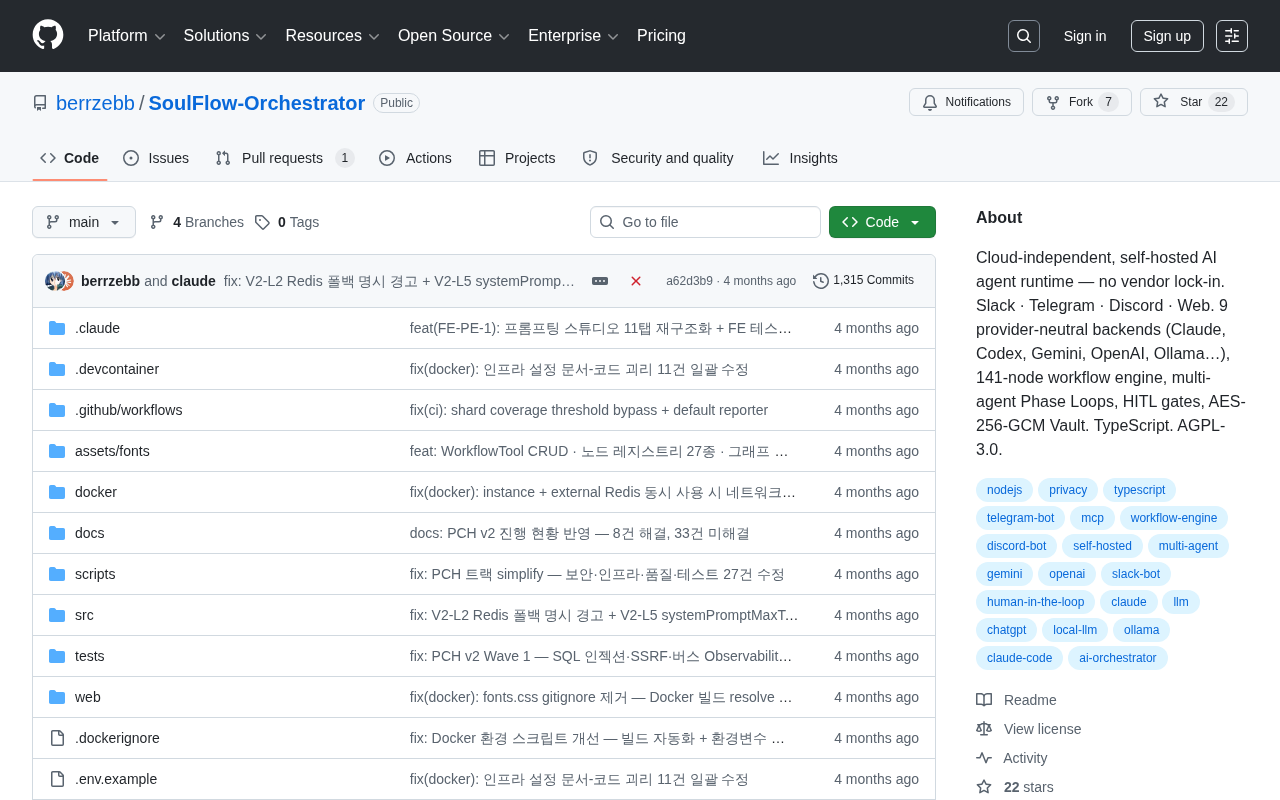
SoulFlow-Orchestrator: A Self-Hosted, Vendor-Lock-In-Free AI Agent Runtime
SoulFlow-Orchestrator is an open-source, self-hosted AI agent runtime with no vendor lock-in. Supports 9 neutral backends (Claude, OpenAI, Ollama), 141-node workflow engine, multi-agent loops, and HITL gates.
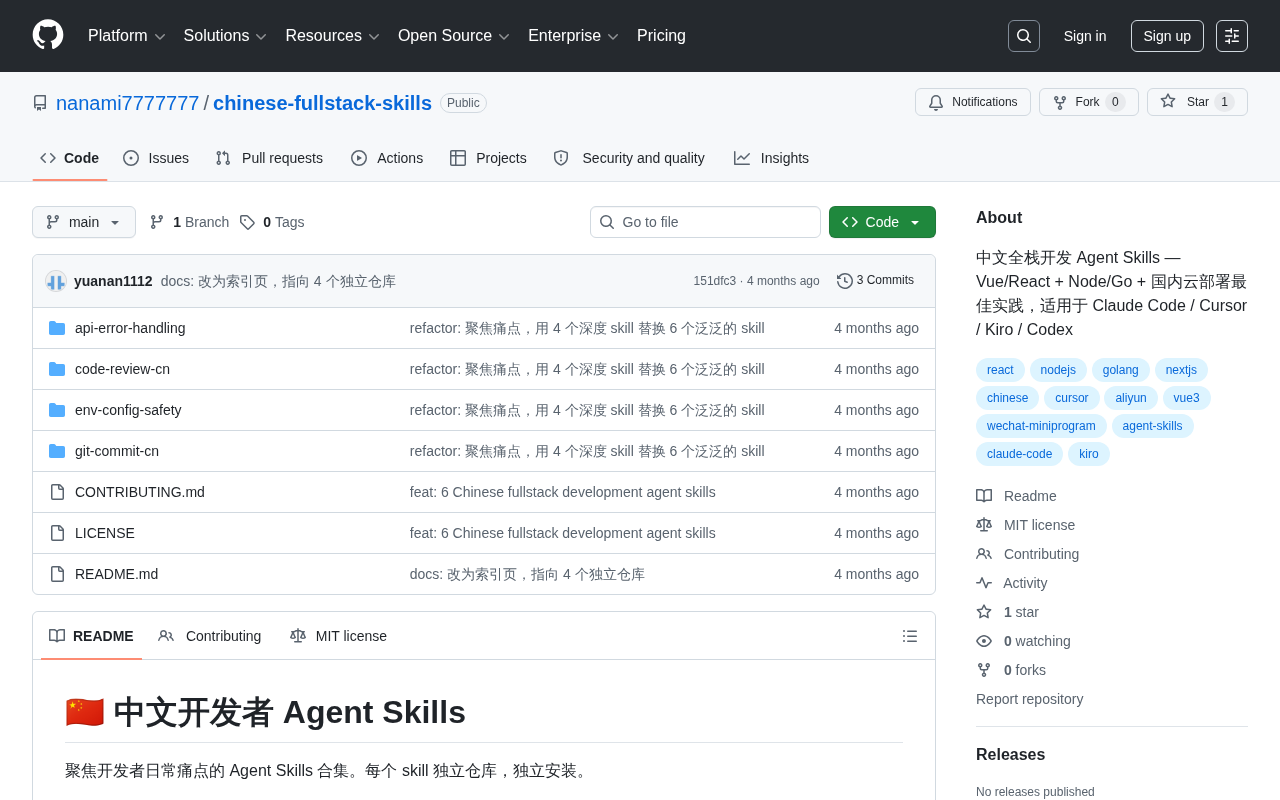
Chinese Full-Stack Agent Skills: A Skill Library Tailored for Domestic AI-Assisted Development
chinese-fullstack-skills is an Agent Skills library for Chinese full-stack development, covering Vue/React, Node/Go, and domestic cloud deployment best practices. Compatible with Claude Code, Cursor, Kiro, and Codex.
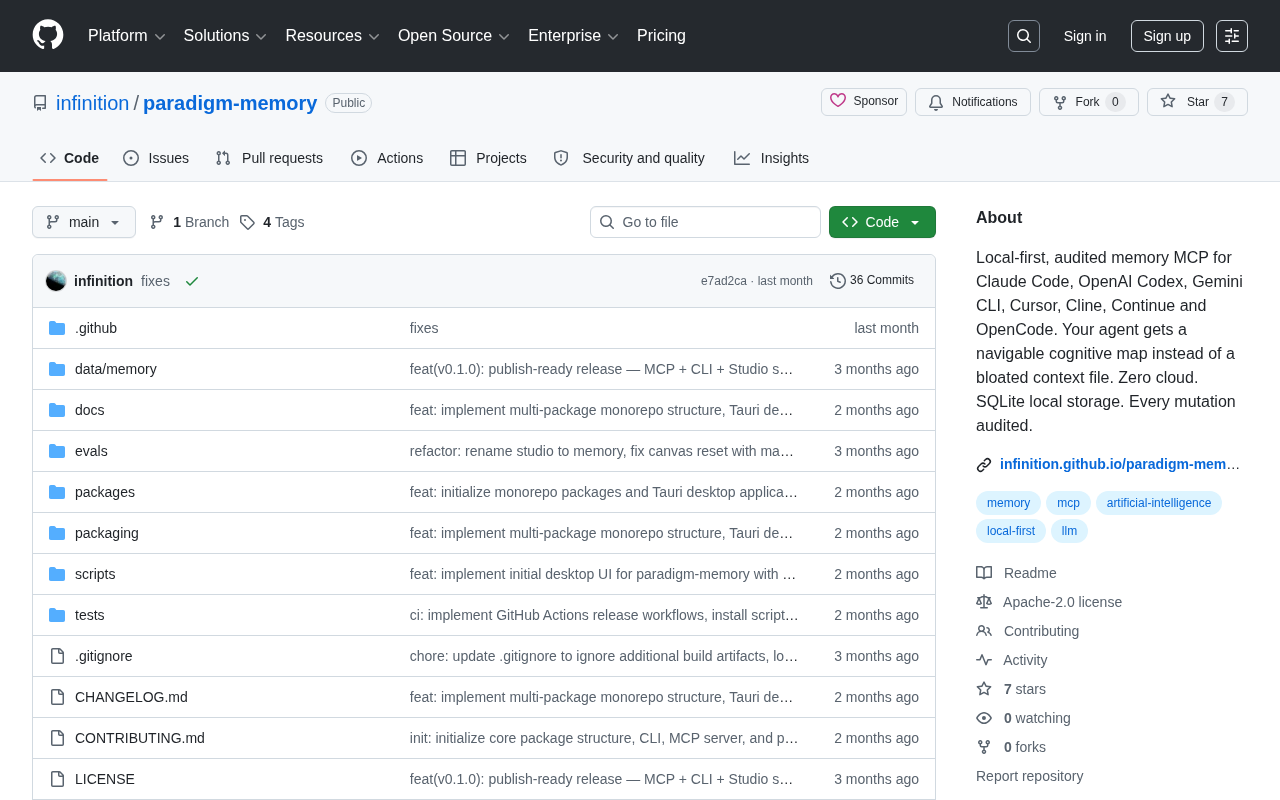
Paradigm Memory: A Local-First Memory System for AI Coding Assistants
paradigm-memory is a local MCP memory tool for Claude Code, Cursor, and Cline. It uses SQLite local storage, zero cloud, full audit trails, and a navigable cognitive map instead of bloated context files.